Quick answer: First calculate the basal metabolic rate (body weight × 30 + 70), then multiply by 1.2–1.8 depending on activity level. Main food should make up 70–80%, protein 10–20%, a small amount of vegetables and fruit, and treats ≤10%. Feed at regular times and in fixed amounts, and observe body condition to keep your dog just right.
How to determine dog feeding portions? Daily calorie calculation + 5 major feeding principles to keep your pet just right
Many dog owners share a common worry: "How much should I feed to be enough?" Feed too much and you fear obesity; feed too little and you fear nutritional deficiency. In fact, as long as you master scientific feeding principles, you can easily arrange the most suitable diet portions for your pet. This article will guide you through dogs' nutritional needs, daily portion calculation methods, and practical feeding tips.
How many calories does a dog need per day? First understand basal metabolic rate
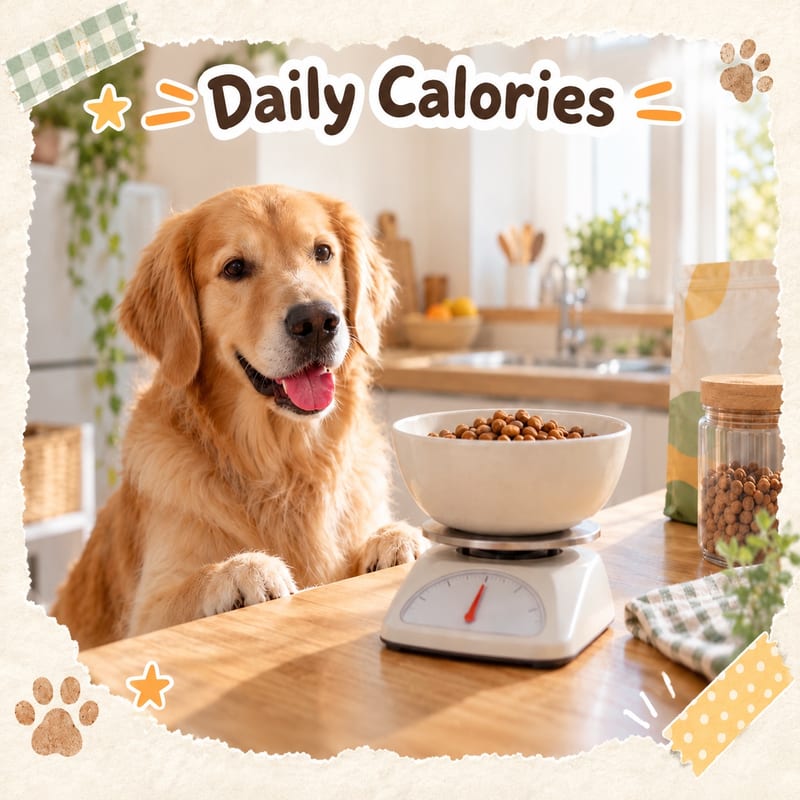
A dog's calorie needs depend on body weight, age, activity level, and health status. Generally, the daily calorie requirement for an adult dog can be estimated with the following formula:
Basal metabolic rate (BMR) = body weight (kg) × 30 + 70
For example, a 10 kg dog has a daily basal calorie requirement of about 10 × 30 + 70 = 370 kcal. But this is only the base value; actual needs must be adjusted according to activity level:
- Low activity (senior dogs, indoor dogs): BMR × 1.2
- Moderate activity (typical family dogs): BMR × 1.4
- High activity (working dogs, sport dogs): BMR × 1.8
5 major feeding principles: proportions of main food, protein, vegetables and fruit, water, and treats
According to pet nutrition guidelines, a dog's diet structure should follow these proportions:
Main food 70–80%: Based on complete dog food, providing balanced carbohydrates and basic nutrition. When choosing dog food, remember to check the ingredient list; the clearer the first few ingredients, the better.
High-quality protein 10–20%: Chicken, beef, fish, and eggs are all excellent protein sources. Adult dogs need about 4.8 grams of protein per kilogram of body weight per day, while puppies need more (about 9.6 grams).
A small amount of vegetables and fruit as supplement: Pumpkin, carrots, broccoli, and other vegetables can supplement vitamins and fiber, but the amount should not be excessive.
Plenty of clean drinking water: Adult dogs need about 100 ml of water per kilogram of body weight per day, and puppies need 150 ml. Increase water intake in hot seasons or after exercise.
Treats controlled within 10%: The total amount of treats should not exceed 10% of the daily diet to avoid affecting appetite for main meals and nutritional balance.
Feeding frequency and portions at different life stages
Puppies, adult dogs, and senior dogs have very different feeding methods:
From weaning to 3 months old: 3–4 times a day, mainly liquid or softened puppy food
3–6 months old: 2–3 times a day, gradually transitioning to solid food
6–12 months old: 2 times a day, can start eating adult dog food
Over 1 year old: 1–2 times a day, regular times and fixed amounts are ideal
Feeding times can fit your routine, but keep them regular. Observing your dog's stool, energy, and body condition is more important than just looking at the amount eaten. If stools are too soft or too hard, you may need to adjust the portion or type of food.
| Age stage | Meals per day | Food form | Notes |
|---|---|---|---|
| Weaning–3 months | 3–4 meals | Liquid/softened puppy food | More sensitive digestion |
| 3–6 months | 2–3 meals | Transition to solid | Gradually reduce softening |
| 6–12 months | 2 meals | Adult dog food | Watch for body condition changes |
| Over 1 year | 1–2 meals | Adult dog food | Regular times and fixed amounts ideal |
Common feeding mistakes and how to avoid them
Many dog owners easily make the following mistakes:
Long-term feeding of human food: Strong-flavored, high-salt, high-fat foods burden a dog's kidneys and may lead to chronic diseases.
Suddenly switching dog food: The digestive system needs time to adapt to new food. It is recommended to switch over 7 days gradually, mixing in half new food each time and increasing gradually.
Only looking at the amount eaten, not body condition: Some dogs have a good appetite but are already overweight; others eat little but are well-nourished. Regularly touching the ribs and observing the waistline is the correct way to judge fat or thin.
Ignoring water: Especially for dogs eating dry food, always ensure clean drinking water is available all day.
PetChill's Reminder
When choosing food for your dog, remember that "suitable is more important than expensive." Every dog has a different constitution, age, and activity level; no single food suits all dogs. Observing your pet's stool, coat, and energy is the best indicator of whether the diet is appropriate. If you have any questions about your dog's diet, welcome to consult at PetChill HK stores or website; our professional team will provide the most suitable advice.
Remember, feeding is not just filling the stomach; it is key to maintaining your dog's health and longevity. Feed scientifically so your pet can accompany you longer!
Practical tips for small Hong Kong flats: calculating portions at home + when to see a vet
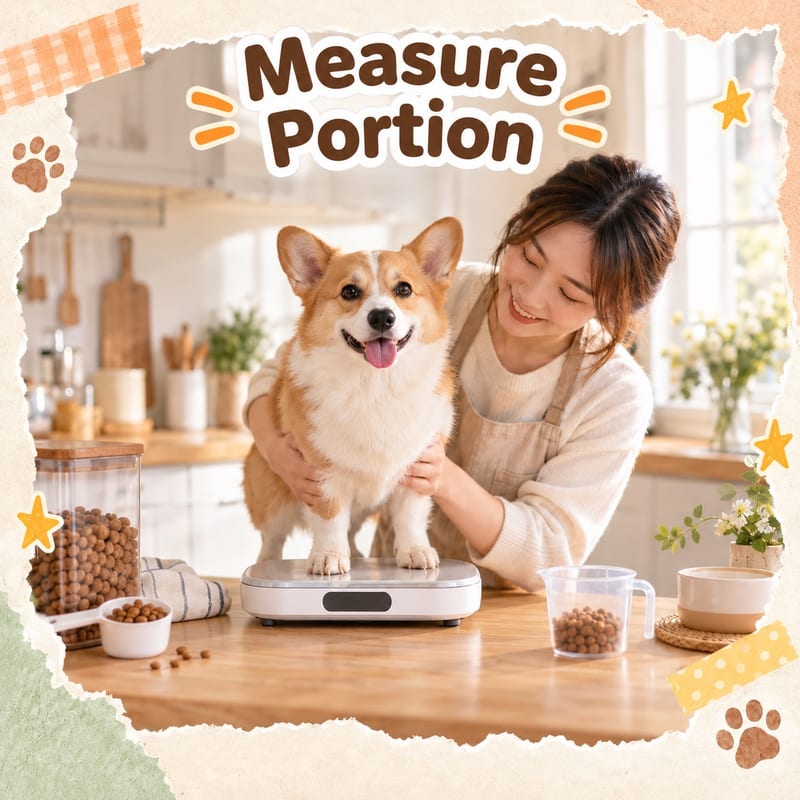
Hong Kong living spaces are small, with little room for a scale? A kitchen electronic scale works: first weigh yourself, then hold the dog and weigh together, and subtract to get the dog's weight; the error won't be large. Remember to weigh at the same time, preferably in the morning before breakfast.
After calculating daily calories, use the common estimate of about 350–400 kcal per 100g/cup of dry food. A 10 kg dog with moderate activity (about 518 kcal) equals 1.3–1.5 cups per day; split into two meals, that's a little over half a cup per meal, no need to hunt for a professional measuring cup.
For water, Hong Kong is hot all year round, so place two water bowls: one in the air-conditioned room and one in the living room, to avoid the dog having no water after the owner goes to work and the air-conditioning is turned off. Change the water once before work and once after work, and check the water level.
When to see a vet? If food intake drops by more than half for two consecutive days, water intake suddenly increases or decreases greatly, or you cannot feel the ribs and the belly sags, book a veterinarian immediately. Hong Kong has many daytime clinics; at night you can go to a 24-hour emergency center; don't delay.
Finally, Hong Kong is humid; after opening dog food, store it in an airtight container with desiccant packs, and finish it within a month to avoid spoilage affecting the calculated portions.
2026 update: complete formula and comparison table
This article is the 2025 portion guide; if you want detailed calculations using the metabolic weight formula from the book Nutrient Requirements of Dogs and Cats (RER = 70 × body weight (kg)^0.75), together with Table 15-4 and the complete comparison table of FEDIAF activity level factors, please see:
- Dog feeding amount calculation: daily calorie formula + weight comparison table — kcal and dry food grams comparison for 5-30kg dogs
- Cat calorie calculation: RER/MER formula + wet and dry food grams comparison — cat version calculation and conversion
- Understanding dog food labels: carbohydrate calculation + dry matter conversion — read kcal/kg and ingredient lists
- Difference between complete and complementary wet food — what standards main food must meet
- Pet food storage guide — storage after opening and nutrient retention
The above content is for reference only and cannot replace veterinary diagnosis and treatment. For feeding portions, please consult your veterinarian and refer to the food bag recommendations.
Related products (available in Hong Kong, checked 2026-10-12)
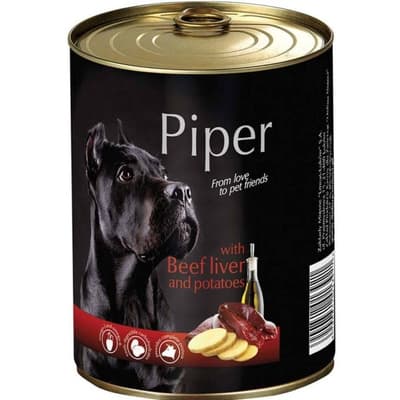
- Piper Black Diamond Dog Canned Food Series Adult Formula Beef Liver + Potato 400g — reference price HK$18/can
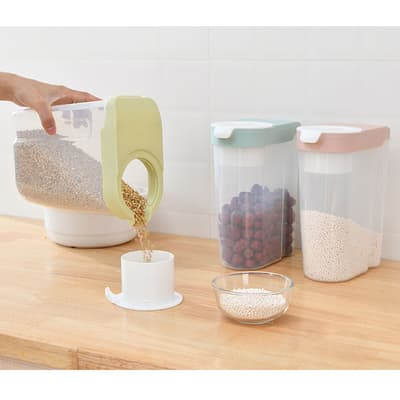
- Japanese moisture-proof sealed twist-top lid with measuring cup cat food dog food container — reference price HK$45
The above content is for reference only and cannot replace veterinary diagnosis and treatment. For feeding portions, please consult your veterinarian and refer to the food bag recommendations.
References
- Agriculture, Fisheries and Conservation Department (AFCD)
- Veterinary Surgeons Board of Hong Kong (VSBHK)
- National Research Council (NRC) Nutrient Requirements of Dogs and Cats (2006)
Further reading
📌 Key summary
- ✅ Daily calories = basal metabolic rate × activity factor
- ✅ Main food 70–80% + protein 10–20% + small amount of vegetables and fruit
- ✅ Treats ≤10%, avoid affecting main meals
- ❌ Long-term feeding of human food high in salt and oil
- ❌ Only looking at the amount eaten, not the ribs and waistline
Common questions
Q: How many grams should a dog eat a day? A: There is no single number; it takes two steps: first calculate the daily calorie requirement from body weight (RER × activity factor), then divide by your food's calorie density (kcal/100g) to convert to grams. The same dog will have different portion sizes with different brands of food.
Q: How do you calculate a puppy's portion? How many meals a day? A: Puppies should be calculated according to age and expected adult weight, and fed in multiple meals: about 4 meals a day at 2-3 months, 3 meals at 3-6 months, gradually reducing to 2 meals after 6 months. Puppies are growing, so it is recommended to weigh them every 1-2 weeks and fine-tune the portion.
Q: How do I know if I'm feeding too much or too little? A: Body condition scoring (BCS) is the most practical: you can feel the ribs but they are not prominent, and the waistline is visible—that is ideal. Also look at stool condition, energy, and weight trends; don't just rely on the dog "seeming to still want to eat" to increase the amount.