Quick answer: Check the label claim. If it says complete and balanced and meets AAFCO/FEDIAF standards for a specific life stage, it can be fed long-term as the sole diet. If it lacks that claim (e.g. pure meat cans, supplementary cans), it is an incomplete food — only for treats or toppers, ideally no more than 10% of daily calories. The book explicitly warns: an incomplete diet must not be used as the sole long-term food source.
Three layers: NRC → AAFCO/FEDIAF → your food bag
The book Forever Dog explains where the standards come from — once you understand this, you'll see why the label claim matters:
- NRC (US National Research Council) sets minimum nutritional requirements — the basic amounts of vitamins and minerals needed to sustain life and avoid deficiency.
- AAFCO (Association of American Feed Control Officials) and FEDIAF (European Pet Food Industry Federation) build their own pet food standards on NRC data.
- The claim on the bag is the manufacturer's statement that its formula meets a particular standard and life stage.
The book also makes a point worth noting: NRC figures are minimum requirements (to avoid deficiency), not "optimal." So "meets the standard" is the baseline, not the finish line.
Label claim comparison table
| What the label says | What it means | Can it be a main food? |
|---|---|---|
| "Complete and balanced, meets AAFCO nutritional levels for all life stages" | Suitable for young, adult and senior | ✅ Yes |
| "Meets AAFCO maintenance standard for adult dogs/cats" | Complete and balanced, but only for that stage | ✅ Yes, for that stage |
| "Complementary food", "topper", "treat" | Incomplete | ❌ ≤10% of calories |
| Only an ingredient list, no complete and balanced claim | Unclear | ❌ Treat as complementary |
| "With added kelp/ω-3, balanced and healthy" | Vague claim | ❌ Check for a complete and balanced statement |
| "Raw food/raw meaty bone recipe" (no complete claim) | Incomplete | ❌ Needs a veterinary nutritionist to balance |
Practical tip: Before buying, look for the keywords "complete", "balanced", "AAFCO", "FEDIAF", "all life stages". Many canned foods in Hong Kong are complementary in nature (e.g. pure tuna, pure chicken breast) — they're fine in themselves, but shouldn't be the entire daily diet.

How to use incomplete foods correctly
The book's recommendations are very specific:
- Use as a treat or food topper
- Keep to ≤10% of daily calories (the book's original wording: "less than 10% of the dog's daily calories")
- Can be used as a short-term temporary diet (e.g. 1 meal out of 7)
- Must not be the sole long-term food source
For a 4kg indoor cat (about 238 kcal per day): 10% = about 24 kcal/day, roughly a quarter of an 85g complementary can. If you feed a complementary can today, reduce the complete food portion accordingly.
Homemade fresh food: you have to calculate, not guess
The book points out the reality of homemade food: you can control the ingredients, but it is both expensive and time-consuming, and veterinarians often warn people against cooking at home because it's easy to get wrong — you have to guess how to provide minimum nutritional requirements.
Key principles:
- Same portion doesn't mean same nutrition: a high meat ratio doesn't mean micronutrients are complete.
- Micronutrients are key: insufficient vitamins, minerals and fatty acids won't show short-term but will cause problems long-term.
- Have the recipe reviewed by a veterinary nutritionist: especially for growing puppies and kittens, pregnancy and lactation, and animals with chronic disease.
- Don't rely on "adding supplements" to patch up a random recipe: the book notes supplements are supportive, not a substitute for a complete formula.
If you want to add fresh food, you can refer to the ratio principles in Fresh Food Nutrition while keeping a complete and balanced main food as the base.

Step-by-step: 3 steps to check the food in your hands
Step 1: Look for a complete and balanced statement No statement? Treat it as complementary immediately.
Step 2: Check the life stage Kittens and puppies, adult cats and dogs, senior cats and dogs have different needs — choose the right stage (or "all life stages").
Step 3: Calculate the calorie ratio Complete food should make up ≥90% of calories; complementary food/treats ≤10%. Use the cat calorie calculator or dog feeding amount guide to get the daily total, then allocate.
Common Hong Kong scenarios
| Scenario | Common practice | Problem | Recommendation |
|---|---|---|---|
| Feeding only pure tuna cans | Cats love it | Incomplete, lacking taurine and minerals | Only as ≤10% topper |
| Homemade chicken breast + vegetables | Feels natural | Calcium-phosphorus imbalance, lacking vitamins | Have a veterinary nutritionist balance it |
| Freeze-dried pieces as three meals | Convenient | Mostly topper formulas | Check for a complete and balanced statement |
| Complete wet food + a little complementary can | Improves palatability | Calories easily exceed | Subtract the corresponding calories from the complete food |
| Dry food + fresh food topper | Want to add freshness | Ratio out of control, becomes main food | Topper ≤10% of calories |
Three questions to ask the manufacturer
- Which standard does your formula meet? (AAFCO/FEDIAF, which life stage)
- Can it be fed long-term as the sole food source? (i.e. complete and balanced)
- Do you have kcal/kg and a full nutritional profile? (essential for portion calculation)
If they can't answer all three clearly, treat it as a topper, not a main food.
Early signs of long-term incomplete feeding
The book reminds us that outward signs of micronutrient deficiency usually appear very late, so rely mainly on periodic check-ups:
| What to observe | Possible warning |
|---|---|
| Dull coat, increased shedding | Fatty acids, zinc, biotin |
| Poor night vision | Taurine (cats), vitamin A |
| Bone or joint problems (young) | Calcium-phosphorus imbalance |
| Recurrent infections, slow recovery | Overall nutritional status |
| Stunted growth (puppies/kittens) | Insufficient energy and protein |
These signs don't necessarily mean a nutritional problem, but combined with a diet record, they are good material for discussion with your veterinarian.
Common mistakes
| Mistake | Problem | Fix |
|---|---|---|
| Feeding complementary cans long-term | Micronutrient deficiency | Switch to complete wet food or feed only as ≤10% topper |
| "Grain-free" or "natural" = complete | Label wording isn't a standard | Look for AAFCO/FEDIAF statement |
| Homemade fresh food without supplements | Common calcium-phosphorus imbalance | Have a veterinary nutritionist balance it |
| Feeding only freeze-dried raw meat pieces as main food | Mostly topper products | Check for a complete and balanced statement |
| Puppies eating adult dog food | Insufficient protein and energy | Use the appropriate life stage formula |
Related guides in this cluster
- How to calculate daily calories → Cat Calorie Calculator / Dog Feeding Amount Guide
- Choosing and storing canned food → Cat Wet Food Guide
- Wet vs dry comparison → Wet vs Dry Food
- Raw feeding risks → Raw Feeding Risk Guide
- Reading labels → Dog Food Label Guide
- Homemade fresh food ratios → Fresh Food Nutrition
References
- US National Research Council (NRC), Nutrient Requirements of Dogs and Cats (2006)
- AAFCO dog and cat nutrient profiles; FEDIAF nutritional guidelines (as cited in the book)
- Agriculture, Fisheries and Conservation Department (AFCD): AFCD
- Veterinary Surgeons Board of Hong Kong: VSBHK
Related products (available in Hong Kong, checked 2026-10-12)
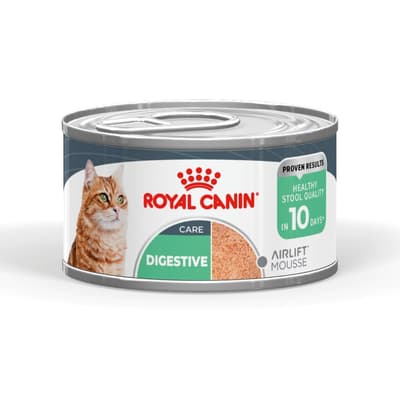
- Royal Canin AIRLIFT Adult Cat Digestive Care Complete Wet Food 85g — reference price HK$24/can
- Farmina N&D Quinoa Functional Cat Complete Wet Food Skin Care Formula Quail & Coconut 80g — reference price HK$23.4/can
- Fujiichi Freeze-Dried Raw Complete Food for Cats & Dogs Ostrich Recipe 500g — reference price HK$158
- Northwest Naturals Grain-Free Freeze-Dried Raw Dog Food Whitefish & Salmon 340g — reference price HK$228
The above is for reference only and cannot replace veterinary diagnosis and treatment. For pets with chronic disease or special life stages, consult your veterinarian about diet formulation.
How to calculate calories and feeding amounts (formulas + reference values)
All calorie/gram figures in this article can be recalculated using the following formulas:
- RER (Resting Energy Requirement) = 70 × body weight (kg)^0.75
- MER (Maintenance Energy Requirement) = RER × activity factor
- Activity factor reference: neutered adult cat 1.2 / intact adult cat 1.4 / indoor adult dog 1.6 / active dog 2.0 / weight loss 0.8 (must be supervised by a veterinarian)
- Example (4kg neutered indoor cat): RER = 70 × 4^0.75 ≈ 198 kcal → MER = 198 × 1.2 ≈ 238 kcal/day
- Dry food grams = daily kcal ÷ food calorie density (kcal/g; packaging often shows kcal/kg, remember to ÷ 1000)
⚠️ All of the above are reference values: every pet's body condition, age, activity level and disease status differ — actual feeding amounts should be based on veterinary assessment and product packaging recommendations.
📌 Key takeaways
-
Minimum nutritional requirements are set (book data)
-
A complete and balanced statement (AAFCO/FEDIAF) = can be a long-term main food
-
Incomplete foods are only for treats/toppers, ≤10% of daily calories
-
NRC sets minimum requirements, AAFCO/FEDIAF build standards; "meets the standard" is the baseline
-
Homemade fresh food requires calculating each micronutrient; have a veterinary nutritionist review it
-
Deficiency signs from long-term incomplete feeding often appear late

 Royal Canin full guide →

 K9 Natural full guide →
 Feline Natural full guide →