Quick answer: Canned food is about 75% water with an energy density of about 1 kcal/g (875-1,250 kcal/kg). A 4kg indoor cat needs about 238 kcal per day, which is roughly 2.8 cans of 85g complete wet food. Whether to add water depends on water intake and veterinary advice: canned food already provides a lot of water, and mixing in 1-3 tablespoons of warm water is the gentlest way to increase water intake. Complementary wet food cannot be used as a main meal.
Complete Wet Food vs Complementary Wet Food: Know the Difference First
| Type | Label characteristics | Can it be a main meal? |
|---|---|---|
| Complete wet food (complete and balanced) | States compliance with AAFCO/FEDIAF nutritional standards for all life stages or a specific life stage | Yes |
| Complementary wet food / supplement can | Only lists ingredients, states 'complementary food', or lacks a complete and balanced statement | No, ≤10% of calories |
| Pure meat can / tuna can | Usually only lists meat ingredients | Treat as a snack |
The book is clear: nutritionally incomplete food can be a very good treat or meal topper, but cannot be the sole food source continuously; long-term lack of micronutrients affects enzyme reactions and protein production, ultimately leading to metabolic stress and disease, and there are no visible signs until the body is depleted.
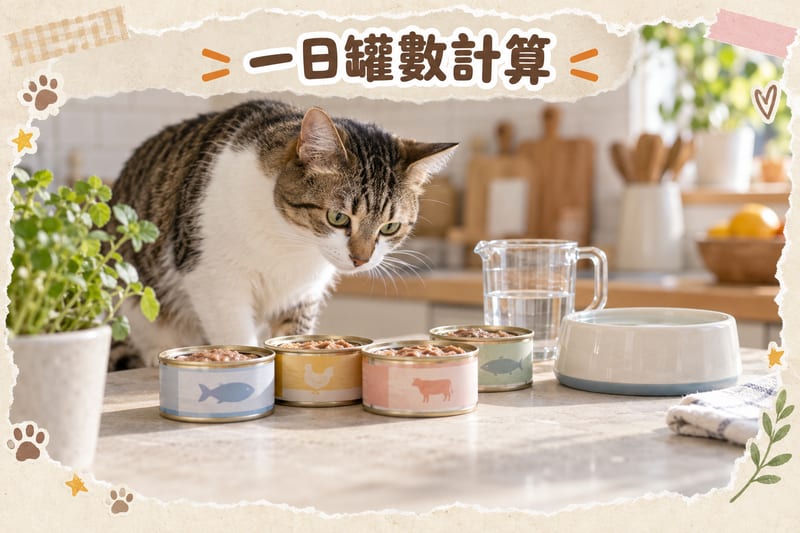
Calculating Can Count (1-2-3)
Step 1: Calculate daily kcal: RER = 70 × body weight (kg)^0.75; for a 4kg cat, RER = 198, multiply by 1.2 = 238 kcal.
Step 2: Check the can's labeled kcal/kg or kcal/can: Canned food is generally 875-1,250 kcal/kg. If an 85g can is 1,000 kcal/kg, then each can is about 85 kcal.
Step 3: Divide: 238 ÷ 85 ≈ 2.8 cans/day, which can be fed in 3-4 meals.
| Cat weight | Daily kcal (1.2) | 85g can (100 kcal/can) | 85g can (1,250 kcal/kg high calorie) |
|---|---|---|---|
| 3 kg | 191 | About 2.2 cans | About 1.8 cans |
| 4 kg | 238 | About 2.8 cans | About 2.2 cans |
| 5 kg | 281 | About 3.3 cans | About 2.6 cans |
Mixed feeding: If you feed wet food in the morning and evening and dry food during the day, remember that the calories from both must not exceed the daily total.
Wet Food and Urinary Health: Data from the Book
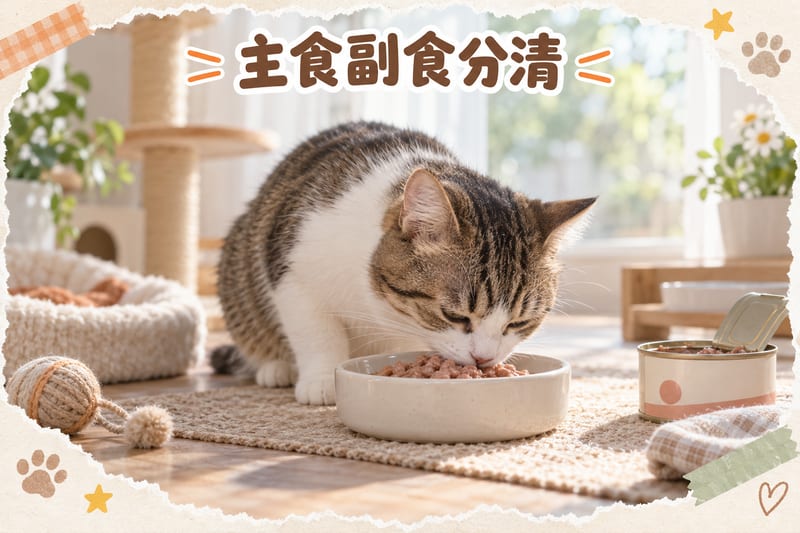
- The book states that epidemiological studies show dry cat food is a risk factor for feline lower urinary tract disease
- When food moisture content increases from 10% to 75%, the cat's average daily urine volume increases from 63 mL to 112 mL
- Canned food may cause a relative diuretic effect; the book also points out that cats eating dry food cannot compensate by voluntary drinking to achieve the same water intake as with canned food
- The book emphasizes that ensuring adequate water intake and avoiding excessive urine concentration is a reasonable approach (mineral concentration is related to crystal risk)
These data explain why many veterinarians recommend increasing the proportion of wet food for cats with a history of urinary problems.
Water-Adding Tips (Practical)
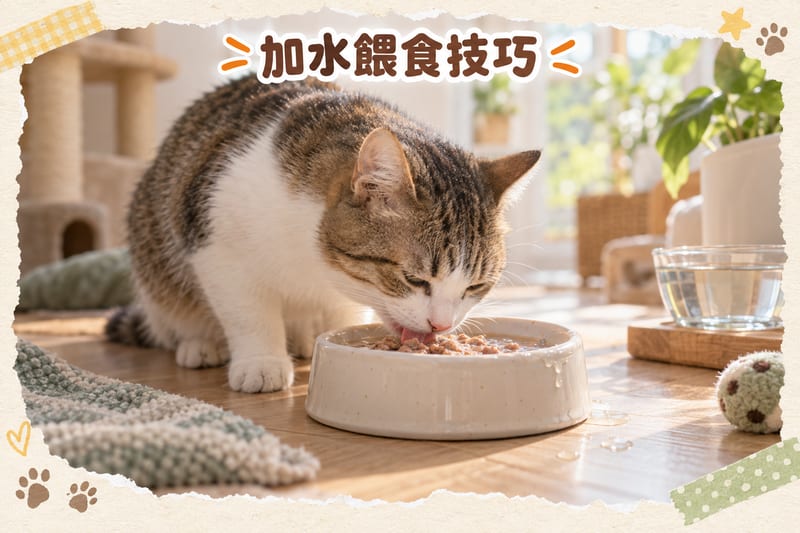
- Temperature: Adding warm water (about 30-35°C, slightly warm to the touch) enhances aroma more than cold water; never heat in a microwave until hot.
- Amount: 1-3 tablespoons each time, mix into a paste; too much water makes the texture thin and some cats will not accept it.
- Mousse/pate cans are easiest to mix with water; chunk cans can be mashed first.
- Feed within 30 minutes after adding water to avoid leaving at room temperature for too long.
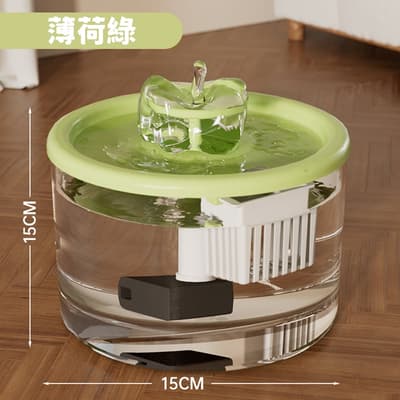
- Provide a separate flowing water source: Many cats prefer flowing water; a water fountain can help increase total water intake.
Storage After Opening
- Unopened: Avoid extreme temperatures (especially do not freeze), avoid impacts that deform the can.
- Opened: Seal, refrigerate, consume within 24-48 hours; the book reminds that contamination risk increases greatly after opening, and hygiene principles should be consistent with dry food.
- Container: Glass or ceramic is better; avoid leaving a metal spoon in the can for a long time.
- Do not store unfinished cans in the fridge door (temperature fluctuates); the inner shelves are more stable.
Hong Kong Examples: Daily Schedule for Three Feeding Methods
All wet food (4kg indoor cat, 238 kcal)
- 7:00 AM: 85g can (about 85 kcal)
- 1:00 PM: 85g can
- 7:00 PM: 80g can (about 80 kcal)
- Before bed: small amount (about 8 kcal) or leave a little warm water
- Total: about 258 kcal (slightly high; reduce by half a can based on body condition)
Half wet, half dry
- Morning and evening: half an 85g can each (total about 100 kcal)
- Daytime: 38g dry food (about 133 kcal, fed via puzzle toy)
- Total: about 238 kcal
Complementary wet food as a topper (≤10%)
- Complete wet food 215 kcal + complementary wet food 24 kcal (about 1/4 can)
- Remember to deduct the corresponding calories from the complete food to avoid exceeding the total
Canned Food Shopping Checklist
| Check item | Standard |
|---|---|
| Complete and balanced statement | Has AAFCO/FEDIAF standard |
| Life stage | Kitten/adult/senior or all life stages |
| kcal/kg or kcal/can | Clearly labeled (essential for portion calculation) |
| Expiry date | At least 6 months remaining |
| Texture | Mousse/pate/chunks, matching cat's preference |
| Ingredients | First ingredient is animal protein, not by-products or grain fillers |
| Packaging integrity | No dents or bulging |
Monitoring: How to Know If Wet Food Feeding Is Going Well
| Indicator | Ideal | Action if abnormal |
|---|---|---|
| Weight | Stable every two weeks | Adjust portion if weight changes |
| Stool | Formed, 1-2 times a day | If soft, first check can batch and portion |
| Urine volume | Normal (increases with wet food) | Watch for sudden large decrease |
| Teeth | No obvious tartar | Cats on mainly wet food should have regular oral checks |
| Water intake | Decrease is normal | Seek veterinary advice if not drinking at all |
Dental supplement: For cats on mainly wet food, food stays in the mouth longer and leaves more residue; regular brushing or veterinary checks are recommended (dry food does not automatically clean teeth; both require oral care).
Choosing Your First Can (Beginner Workflow)
- Confirm complete and balanced statement: First filter out products that are only for topping.
- Check texture: Mousse/pate is easiest to eat; chunks are chewier; cats with dental issues should have mousse.
- Check kcal/kg: Calculate daily portion to avoid 'looks like a lot but insufficient calories'.
- Buy a small amount to try: Buy 2-3 cans to test taste; only stock up if accepted.
- Record: Brand, flavor, portion, reaction (appetite, stool, vomiting); after two weeks you will have a clear preference list.
Canned Food vs Fresh Food Pouch (Comparison Within Wet Food Category)
| Item | Canned food | Fresh food pouch |
|---|---|---|
| Moisture | About 75% | Usually 70-80% |
| Storage | Room temperature unopened | Mostly require refrigeration |
| Shelf life | Long (1-3 years) | Short |
| Convenience | High | Lower |
| Key purchase point | Complete and balanced statement | Complete and balanced statement |
Opening Marker Method
Stick a small piece of tape on the can or container and write down the opening date and time. This small habit prevents feeding cans that have been open for more than a day because you forgot when they were opened.
Common Mistakes
| Mistake | Problem | Correction |
|---|---|---|
| Using complementary wet food as main meal | Micronutrient deficiency | Check complete and balanced statement |
| Feeding only by 'number of cans' | Large differences in calorie density | Calculate by kcal/can |
| Adding too much water | Cat refuses food, waste | 1-3 tablespoons, try gradually |
| Leaving opened can out all day | Bacterial growth | Refrigerate and consume within 24-48 hours |
| Ignoring batch differences | Fat content (calories) fluctuates | Monitor weight and body condition |
Related Articles in This Cluster
- Calorie and gram formula → Cat Calorie Calculator
- Wet vs dry food comparison → Wet vs Dry Food
- Complete vs complementary explained → Complete vs Complementary
- Transition methods → Cat Food Transition Guide
- Storage tips → Pet Food Storage Guide
- Basic nutrition → Cat Nutrition Complete Guide
References
- National Research Council (NRC) 'Nutrient Requirements of Dogs and Cats' (2006), Water and Urinary Health chapter
- Agriculture, Fisheries and Conservation Department (AFCD): AFCD
- Veterinary Surgeons Board of Hong Kong: VSBHK
Related Products (Available in Hong Kong, checked 2026-10-12)
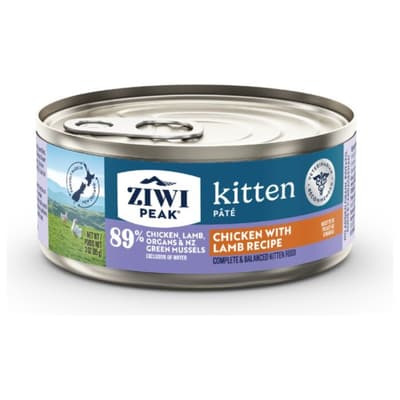
- ZiwiPeak Cat Canned Food Chicken with Lamb Kitten Recipe 85g — reference price HK$34/can
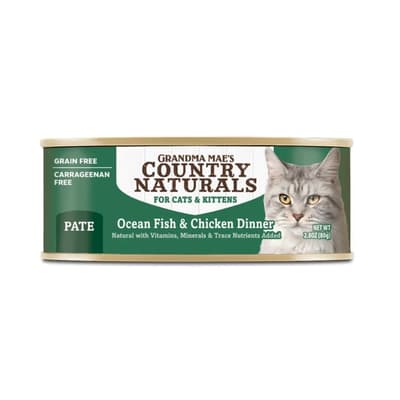
- Country Naturals Cat Canned Food No Additives Grain-Free Pate Series Ocean Fish Free-Range Chicken 80g — reference price HK$13/can
- AIME Kitchen Cat Canned Food Grain-Free Mousse Nutritional Cat Can Tuna Quail Egg Mousse 75g — reference price HK$14/can
- Pet Smart Flowing Water Fountain 1000ml (random style) — reference price HK$168
The above content is for reference only and cannot replace veterinary diagnosis and treatment. If your cat has a history of urinary, kidney, or heart disease, please consult your veterinarian for dietary adjustments.
How to Calculate Calories and Feeding Amount? (Formula + Reference Values)
All calorie/gram values in this article can be recalculated using the following formulas:
- RER (Resting Energy Requirement) = 70 × body weight (kg)^0.75
- MER (Maintenance Energy Requirement) = RER × activity factor
- Activity factor reference: neutered adult cat 1.2 / intact adult cat 1.4 / indoor adult dog 1.6 / active dog 2.0 / weight loss 0.8 (must be supervised by a veterinarian)
- Example (4kg neutered indoor cat): RER = 70 × 4^0.75 ≈ 198 kcal → MER = 198 × 1.2 ≈ 238 kcal/day
- Dry food grams = daily kcal ÷ food calorie density (kcal/g; packaging mostly states kcal/kg, remember to ÷ 1000)
⚠️ All of the above are reference values: each pet's body condition, age, activity level, and disease status are different. Actual feeding amount should be based on veterinary assessment and product packaging recommendations.
📌 Key Summary
- Canned food is about 75% water, about 1 kcal/g; a 4kg cat needs about 2.8 cans of 85g per day
- Complete wet food must have a complete and balanced statement; complementary wet food ≤10% of calories
- When food moisture increases from 10% to 75%, cat daily urine volume increases from 63 mL to 112 mL
- Add 1-3 tablespoons of warm water; feed within 30 minutes
- After opening, seal and refrigerate; consume within 24-48 hours
 ZiwiPeak full guide →
 K9 Natural full guide →
 Feline Natural full guide →