
Quick answer: From the wild cats of the Book of Songs to the Song dynasty 'cat betrothal' ceremony, Chinese people have long seen cats as farming partners and beloved pets—even spending money on beautiful cats and writing poems for them. The daily life of a 'cat slave' a thousand years ago was no different from that in Hong Kong today.
Chinese people did not start keeping cats in modern times: cats appear in the Book of Songs, Tang people began to care about coat colours and breeds, and Song people developed the 'cat betrothal' ritual and purely ornamental lion cats—spending money on beautiful cats and writing poems for beloved cats was already common a thousand years ago. This article uses precious historical documents to trace this thousand-year bond between humans and cats.
This is a follow-up to the Hong Kong Pet Culture History Overview series.
Pre-Qin to Han: Cats in the Book of Songs
The earliest 'cat' in Chinese literature appears in the Book of Songs (Daya, Han Yi): 'there are bears, there are brown bears, there are cats, there are tigers'—cats are listed alongside tigers and bears, showing they referred to wild cats. At this time cats had not yet entered the home, but they had entered the vision of early people.
In addition, the Book of Rites (Jiaote Sheng) records that the year-end sacrifice included 'welcoming the cat, because it eats pests'—a year-end ceremony specifically 'welcoming' cats because they eat harmful insects and rats. This word 'welcome' is the earliest portrayal of human-cat cooperation in farming.
It is worth noting that the character for 'cat' is composed of 'zhi' and 'miao'—one theory suggests cats protect seedlings from rats, and the character itself hints at the agricultural origins of human-cat cooperation.
Tang Dynasty: The Starting Point of Domestic Cat Culture
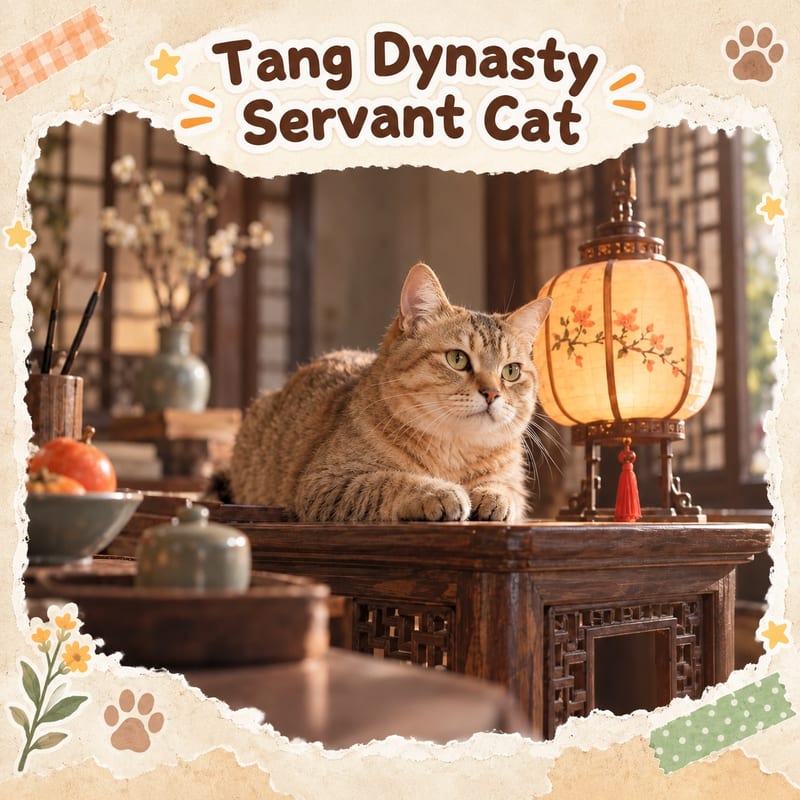
The Tang dynasty is when domestic cat culture clearly began. Duan Chengshi's Youyang Zazu records:
'Chuzhou Xieyang produces cats, some with brown patterns. Lingwu has red chitu and blue cong colours.'
That is, Chuzhou (modern Huai'an, Jiangsu) produced brown patterned cats, and Lingwu (modern Ningxia) had precious cats of red chitu and blue cong colours. This record is China's earliest record of local cat breeds: one near the eastern sea, one near the Silk Road, reflecting traces of exchange between Chinese domestic cats and foreign lands.
Song Dynasty: The Golden Age of Chinese Cat-Keeping
The Song dynasty was the peak of Chinese cat culture, when cat-keeping moved from practical to emotional:
1. Adoption ceremony—'cat betrothal'
Song people were particular about 'betrothal gifts' when taking a cat home: they would give salt or small dried fish to the owner of the mother cat. Lu You's poem 'wrapping salt to welcome the little li nu, to guard the mountain cottage's ten thousand books' describes this custom. Cats had value, ceremony, and status—as serious as signing a contract for adoption today.
2. Ornamental cats—'lion cats'
Qian Shiyou's Xianchun Lin'an Zhi records Southern Song Hangzhou:
'City people keep cats; there are long-haired white ones called lion cats. These are cats that do not catch mice, valued purely for their beauty.'
The long-haired white 'lion cat' did not catch mice and was cherished purely for its beauty—one of the world's earliest records of a purely ornamental pet cat, centuries before Western pedigree cat culture.
3. Cat painting art
Song painters left many cat paintings: Li Nu Tu, Xi Mao Tu, etc., making cats an independent painting subject.
4. Poet cat slave Lu You
Lu You was a famous Song dynasty 'cat slave' who wrote over ten poems about cats. Worried about his cat freezing in winter, he wrote 'the stream firewood burns soft, the barbarian blanket is warm; I and the li nu do not go out'—no different from a cat slave today with heating who cannot get out of bed.
Ming and Qing: The Compilation of Cat Studies
Ming dynasty Fang Yizhi's Wuli Xiaoshi records special coat colours of foreign cats:
'Those that come from foreign lands have golden eyes, silver eyes, and some with one gold and one silver.'
'One gold and one silver' refers to today's heterochromia cats (odd eyes), which ancients considered rare treasures.
Qing dynasty Huang Han's Cat Garden (1854) is China's first monograph on cats, collecting historical cat documents:
- Breed classification: li, lion cat, Linqing cat, etc.
- Coat colour spectrum: detailed classifications such as li colour and golden-brown
- Anecdotes: Linqing cats 'are beautiful and precious in form and colour, but are lazy and cannot catch mice'—the beautiful cats from Linqing, Shandong were too lazy to catch mice, and locals used 'Linqing cat' to mock men who are all show and no substance.
💡 Trivia: The 'Persian cats' in Qing dynasty documents may not be today's Persian cats—some scholars point out that China already had long-haired cats (lion cats) since the Song dynasty, while the modern Persian breed actually originated from British breeding in the 19th century; the name and the reality are different.
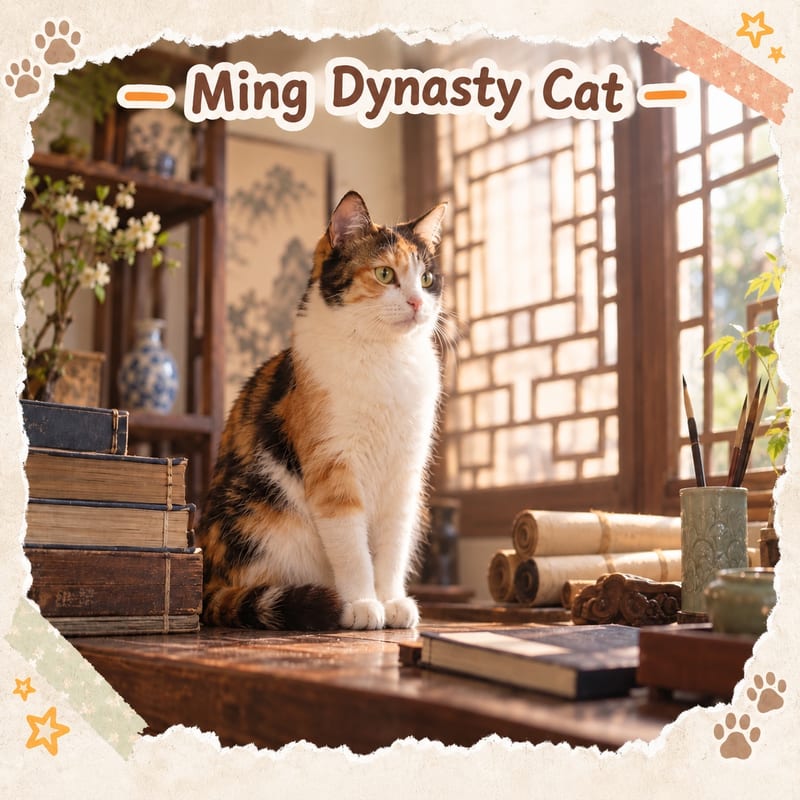
| Dynasty | Highlights of cats' roles | Hong Kong today |
|---|---|---|
| Pre-Qin | Cats sacrificed to drive away rats, farming guardians | Market warehouse cats guarding goods |
| Tang | Records of local famous cat breeds | Tang cat bloodline continues |
| Song | Cat betrothal ceremony, ornamental lion cats | Adoption contracts, pedigree cat shows |
| Ming-Qing | Cat Garden breed genealogy | Modern cat breed guides |
Chinese Cat Culture and Hong Kong
Hong Kong cat culture inherits Chinese traditions and local characteristics:
- Tang cat bloodline: Hong Kong Tang cats carry the genes and culture of southern Chinese cats
- Shop cat tradition: Warehouse cats in dried seafood shops and markets continue the traditional wisdom of 'cats guarding goods'
- Lucky cat culture: The lucky cat belief entered Hong Kong via Japan and became a lucky symbol for shops
Understanding Chinese cat culture history reveals that the daily life of Hong Kong 'cat slaves' today—being moved by beautiful cats, spending money on beloved cats, and living with cats—actually has a thousand-year tradition.
What You Can Do Starting Today
- Next time you adopt a cat, try the 'cat betrothal' ritual: bring a packet of dried fish as a betrothal gift.
- Look at ancient cat paintings (such as Li Nu Tu) and compare your own cat's poses.
- If you want to know how cats spread from the Near East to China, read
The History of Cat Domestication. 4. To understand your cat's coat colour genealogy, refer to Cat Garden-style classification and modern breed guides.
Further Reading
- Hong Kong Pet Culture History Overview
- The History of Cat Domestication: From Egyptian Sacred Cats to Hong Kong Homes
- Tang Cat Stories: A Century of Change for Hong Kong Street Cats
- The Influence of Japanese Cat Culture on Hong Kong
- Hong Kong Cat Breed Guide
A Practical Guide to 'Cat Betrothal' in Small Hong Kong Flats
Living in a 300-square-foot subdivided flat does not mean giving up ancient rituals. To continue the elegance of the Song dynasty's 'wrapping salt to welcome the li nu,' you can do this:
1. Lightweight betrothal gifts
In ancient times people gave salt or dried fish; today you can change to a small packet of freeze-dried small fish or handmade cat treats. A portion enough for two meals is thoughtful enough—no need to buy large packages.
2. Ritual space
Place a red envelope the size of A4 paper at the door as a mat, put the betrothal gifts on it, and add a fai chun written with 'Welcome little li nu.' Take a photo with the cat as soon as it arrives—instant ceremony.
3. Hong Kong-style 'betrothal letter'
Adoption agencies already have contracts, but you can write an extra mini 'betrothal letter': 'Today I betroth one li nu, willing to live and eat together, guard books and drive away rats, this is hereby recorded.' Sign it and stick it on the fridge door—it makes you happy just to see it.
4. Three steps to entering the home
- First let the cat sniff the betrothal gifts, symbolising acceptance of the gift
- Then carry it to inspect the toilet and food bowl locations, saying 'from now on this is your territory'
- Finally reward it with the small dried fish from the red envelope, completing the modern version of the ancient ritual
5. A shelter for small flats
Hong Kong ceilings are low, so you can put a soft cushion on top of the wardrobe to become the cat's 'book collection pavilion,' echoing Lu You's 'guarding the mountain cottage's ten thousand books.' Remember to leave a path for it to jump up and down—both ceremonial and practical.
 Fuji One full guide →

