
Quick answer: The British Shorthair descends from mousers brought by Roman legions, took root in Britain, became a formal breed after winning the first cat show at London's Crystal Palace in 1871, and ultimately became the 'blue cat' familiar to Hong Kong people.
The British Shorthair is recognised as the oldest British native cat breed: its lineage traces back to working mousers that set foot in Britain during the Roman era. It shot to fame at the first cat show at London's Crystal Palace in 1871 and was later nicknamed 'the Churchill of cats'. This article tells the 2,000-year journey of the British Shorthair from Roman warships to Hong Kong homes.
This article is part of the 'Breed Origin Stories' series, an extension of the Hong Kong pet culture history overview.
1st century AD: The mousers brought by the Romans
The British Shorthair's starting point lies in the expansion of the Roman Empire:
- Working cats on the move: When the Romans conquered Britain in the 1st century AD, legions and merchant ships brought cats to protect granaries and prevent rodent infestations — the Romans were history's famous 'cat-carrying travellers'.
- Putting down roots: These Mediterranean shorthairs bred with local British cats, and their descendants evolved thick coats (to withstand Britain's damp cold) and a round, sturdy build.
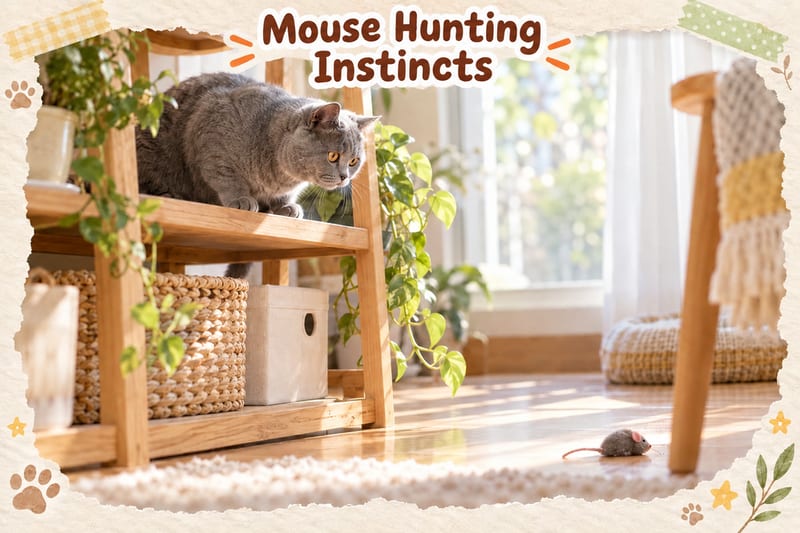
- A practical image: Unlike the aristocratic Persian, the British Shorthair's ancestors were 'working cats' — mousers in farms, warehouses and taverns.
Over two millennia, these cats formed a stable native British population — robust, reliable and worldly-wise, just without a name or pedigree yet. Like today's street cats, they were products of 'natural selection': only cats that survived British winters and caught mice had offspring. This practical 'working cat' foundation is exactly why the British Shorthair later came to be described as stable and easy to keep.
1871: The historic moment at Crystal Palace
In the 19th-century Victorian era, cat keeping moved from practical to fashionable. The key figure was Harrison Weir:
- 13 July 1871: Weir organised the world's first cat show at London's Crystal Palace, with about 160 cats exhibited and tens of thousands of visitors.
- The first champion: The Best in Show was Weir's own blue tabby shorthair — a representative of the British Shorthair's ancestors.
- Father of breed standards: Weir drew up the earliest breed standards for the cat show. Britain later revived cat shows and in 1887 helped establish the National Cat Club.
- 'Father of the Cat Fancy': Weir thus became known as the 'Father of the Cat Fancy'.
This cat show completely changed the cat's status: from 'mouser' to 'a breed worth exhibiting and breeding'. As the British native representative, the British Shorthair embarked on the path to breed standardisation. Notably, in the early cat show world dominated by Persians, the British Shorthair was the only British native cat on par with them, though it temporarily lost the spotlight to Persian bloodlines.
The 20th century: Recognition, crisis and revival
| Period | Event |
|---|---|
| Early 1900s | The British Shorthair established its place at British cat shows, with blue the most famous |
| The two World Wars | Breeding halted, cat numbers plummeted |
| Post-war | Breeders introduced Persian bloodlines to 'save the breed' |
| From the 1950s | GCCF tightened crossbreeding rules, restoring the native type |
| 1960s–70s | British and American international cat associations recognised the breed, returning it to the mainstream |
- Post-war low: The two World Wars caused a sharp drop in British Shorthair numbers, and breeders temporarily introduced Persian blood to save the breed, making the body rounder and the coat thicker.
- Crossbreeding controversy: The UK's Governing Council of the Cat Fancy (GCCF) later restricted Persian crosses from showing, requiring a return to the native shorthair physique.
- Overseas recognition: In the mid-20th century, major American cat associations (such as CFA) began registering the British Shorthair, making the breed truly international.
- The blue peak: The blue (blue-grey) British Shorthair became the classic — today's most familiar 'blue cat' in Hong Kong.
'The Churchill of cats': The British Shorthair's cultural image
The British Shorthair's cultural image is now fully established:
- Physical resemblance: Round face, round eyes, stocky body and serious expression — resembling the classic look of British Prime Minister Churchill.
- Personality match: Calm, composed and unassuming — the British gentlemanly style.
- Pop culture boost: The Cheshire Cat in Alice in Wonderland is often drawn as a British Shorthair; the British Shorthair in the film Doctor Strange further boosted the breed's popularity.
The British Shorthair comes to Hong Kong
- Arrived in the 1990s: Entered Hong Kong with international pet trade and pedigree cat culture.
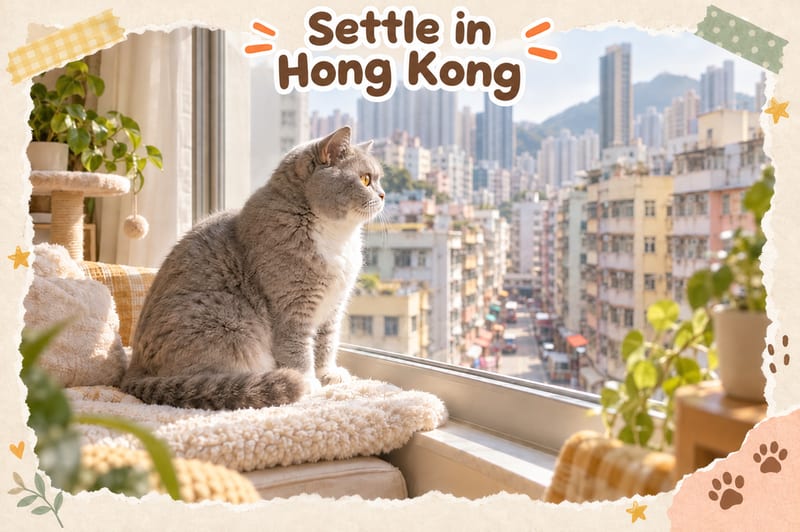
- Apartment-friendly: Medium to large in size but quiet and independent in temperament, suited to Hong Kong's living environment.
- Popularity king: The British Shorthair (especially blue) has long been among Hong Kong's most popular pedigree cats.
- 'Blue cat' culture: Hong Kong people nickname the British Shorthair 'blue cat'; its round face and round body have become synonymous with 'healing' comfort.
What you can do starting today
- When reading breed information, distinguish between 'cat show standard' and 'pet quality' British Shorthairs.
- Before considering a British Shorthair, understand whether its quiet, independent personality suits your lifestyle.
- Ask breeders about pedigree and health screening records.
- For more on practical care, see the British Shorthair complete guide.
Further reading
- Hong Kong pet culture history overview
- British Shorthair complete guide
- Siamese cat origin story: Thailand's royal cat
- Cat domestication history: From Egyptian sacred cats to Hong Kong homes
- Hong Kong cat breed guide
Practical checklist for keeping a British Shorthair in a small Hong Kong flat
Living in Hong Kong with limited space, the British Shorthair's calm personality and medium build actually suit small families perfectly. Here are practical steps to put the article's advice into action:
1. Space setup
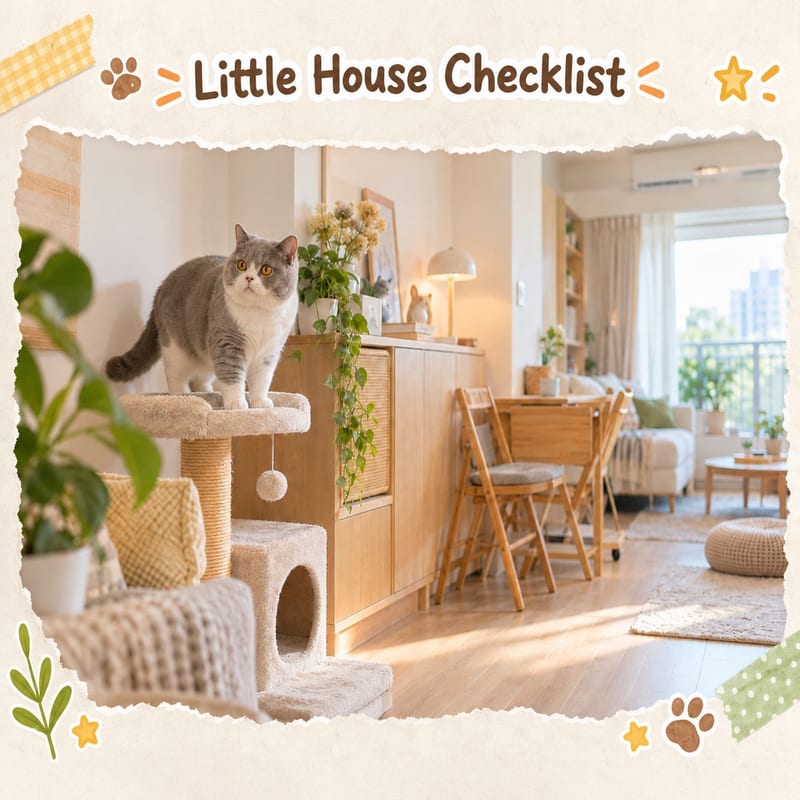
- Vertical space: British Shorthairs like to observe from high places. Install a two-tier cat tree or a window perch — enough for their daytime 'territory patrol'.
- Quiet corner: Place a semi-enclosed cat bed in a corner of the living room to satisfy their 'don't want to be disturbed' nature.
2. Noise management
- Quiet toys: Choose cloth mice or soft rubber balls; avoid bells that disturb neighbours.
- Synchronised routine: British Shorthairs naturally sleep at night and wake early. Just turn off the main lights before 11 pm and they will naturally sleep with you.
3. Diet and weight
- Timed, measured meals: Use an automatic feeder for two meals a day to prevent 'Hong Kong-style' sedentary weight gain.
- Wet food ratio: Aim for 70% wet food to reduce urinary problems and replenish moisture lost in Hong Kong's humid weather.
4. Health check schedule
- At six months old: First full check-up, including cardiac ultrasound (British Shorthairs are prone to hypertrophic cardiomyopathy).
- Annual renewal: After one year old, annual blood tests and dental checks, plus vaccine updates.
- Warning signs: If appetite suddenly drops or breathing becomes harsh, book the veterinarian immediately — don't wait.
5. Finding a breeder / adopting
- Check three generations of pedigree: Ask breeders for GCCF or CFA certificates to confirm no excessive Persian crossbreeding.
- Adoption option: Consider local rescue organisations; sometimes there are 'blue-cat-looking' British Shorthair mixes with equally steady temperaments.
Follow this checklist and even in a 300 sq ft flat, your British Shorthair can live comfortably and continue to be your home's 'Churchill of cats'.
📌 Key summary
- ✅ Roman legions brought cats to Britain, becoming the British Shorthair's ancestors
- ✅ The 1871 Crystal Palace cat show made the breed famous
- ✅ After the two World Wars, Persian blood saved the breed before it returned to its native physique
- ✅ Introduced to Hong Kong in the 1990s, its quiet, independent nature suits small flats
- ❌ Don't confuse 'cat show standard' with 'pet quality' British Shorthairs