
Quick answer: The Shiba Inu's ancestors landed in Japan with Jomon migrants as early as 7000 BC. Over nine millennia of hunting, near-extinction, preservation, and global fame, it became a Natural Monument and the internet's doge star.
Shiba Inu: Nine Thousand Years of Japan's Mountain Dog
The Shiba Inu is Japan's oldest dog breed—its ancestors set foot on the Japanese archipelago with humans during the Jomon period. From mountain hunting dog to Natural Monument to today's internet doge star, the Shiba's story spans nine thousand years.
This article is an extension of the 'Breed Origin Stories' series within the Hong Kong Pet Culture History Overview.
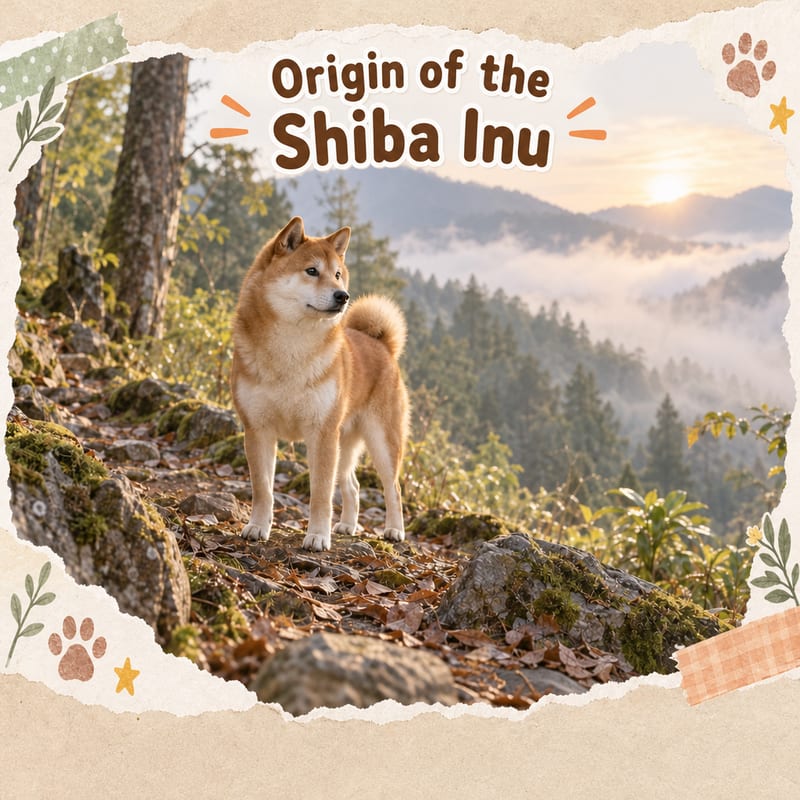
Jomon Period: Arriving with the First Migrants
The Shiba's history goes deeper than most breeds:
- Around 7000 BC: During the Jomon period, the first migrants arrived in the Japanese archipelago with their dogs—these dogs were the ancestors of the Shiba Inu.
- Archaeological evidence: Dog bones excavated from Jomon sites (shell mounds) show these ancient dogs were small and similar to modern Shiba Inus.
- Coexistence: The Jomon people were hunter-gatherers, and dogs were hunting partners and guards—the bond between Shiba and Japanese people began in the Stone Age.
In other words, when you look at a Shiba Inu, you are looking at an ancient breed that 'checked in' to Japan nine thousand years ago—among Japan's six native breeds (Nihon Ken: Shiba, Kishu, Shikoku, Hokkaido, Kai, and Tosa), the Shiba is the smallest and oldest.
Origin of the Name: What Does 'Shiba' Mean?
There are two mainstream explanations for the name 'Shiba Inu':
- Brushwood theory (mainstream): 'Shiba' means brushwood. Shiba Inus were used to flush birds and small animals from mountain brush, driving game out of the bushes for hunters—they were flushing dogs.
- Coat colour theory: The Shiba's coat resembles dried brushwood (the red-brown of the red Shiba).
'Inu' of course means dog—so 'Shiba Inu' is 'brushwood dog'.
Edo to Meiji: Hunting Dog of Mountain Farmers
During the long agricultural era, the Shiba was an all-purpose hunting dog for farmers in Japan's mountainous regions (especially the central highlands of Nagano and Gifu):
- Hunting tasks: Flushing birds, chasing rabbits and foxes, even assisting in boar hunts.
- Size advantage: Small and agile, suited to mountain terrain, and ate little (affordable for farming families).
- Three lines: Shinshu Shiba, San'in Shiba, and Mino Shiba—three regional strains, each adapted to local mountains.
1928-1936: Near-Extinction and the Preservation Movement
After the Meiji Restoration, Western breeds were imported in large numbers, diluting native dogs through crossbreeding. Combined with World War I (1918-1926) and food shortages, pure Japanese dogs faced extinction:
- 1928: Concerned individuals founded NIPPO (Nihon Ken Hozonkai), launching the native dog preservation movement.
- 1934: NIPPO established the first Shiba breed standard.
- December 1936: The Shiba was designated a Natural Monument by the Japanese government—legal protection for its bloodline and status.
This preservation movement transformed the Shiba from a 'farm tool dog' to a 'cultural asset'—a triple jump in status.
Post-War to the World: From Ruins to Star
During and after World War II, the Shiba faced near-extinction again (war, disease, food shortages):
- 1954: The first Shiba arrived in the US (brought back by a military family).
- 1979: The first US-born Shiba litter.
- 1992: The AKC (American Kennel Club) officially recognised the Shiba Inu.
- In Japan: The Shiba became Japan's most popular companion dog (topping Japanese breed registrations for many consecutive years).
Internet Era: Doge and Shiba Memes
The Shiba's modern legend is becoming an internet culture icon:
- 2008: A photo of 'Kabosu', a Shiba owned by Japanese kindergarten teacher Atsuko Sato, was uploaded.
- 2010s: Kabosu's side-glancing photo became the 'doge' meme—'much wow' and 'such doge' took the world by storm.
- 2024: Kabosu passed away at the age of 18, mourned by netizens worldwide.
- Doge culture: The Shiba's 'smile', head tilt, and stubborn 'Shiba refusal' (suddenly lying down and refusing to walk) became a universal internet language.

| Period | Key Event | Shiba's Status |
|---|---|---|
| Jomon period (7000 BC) | Arrived in Japanese archipelago with migrants | Hunting partner and guard dog |
| Edo to Meiji | All-purpose hunting dog for mountain farmers | Farm tool dog |
| 1928-1936 | NIPPO founded, designated Natural Monument | Cultural asset |
| 1954-1992 | Exported to US, AKC recognition | International companion dog |
| 2010s to present | Doge meme goes viral | Internet icon |
Shiba Inu Comes to Hong Kong
Shiba Inu in Hong Kong:
- Rise in the 2010s: Popularity soared with the Japanese culture wave (and the doge meme).
- Hong Kong challenges: Double thick coat vs Hong Kong's hot, humid summers (air-conditioning essential); stubborn personality requires patient training.
- Steady popularity: The Shiba has long been one of Hong Kong's most popular medium breeds.
Want to know how to care for a Shiba? See our complete Shiba Inu guide.
Further Reading
- Hong Kong Pet Culture History Overview
- Complete Shiba Inu Guide
- Dog Domestication History: From Wolf to Working Dog to Companion
- Golden Retriever Origin Story: Scottish Gundog
- Hong Kong Dog History: Police Dogs, AFCD, Adoption Culture
Practical Shiba Care in Hong Kong: Survival Guide for Small Flats and Hot Humid Weather
Living in Hong Kong, the two biggest challenges of keeping a Shiba are 'small space' and 'stuffy weather'. Below is a practical checklist based on the article's two key points: 'double thick coat vs Hong Kong's hot humidity' and 'stubborn personality'.
Air-conditioning and Ventilation Schedule
- 06:30–08:00: Turn on air-conditioning to 24°C, feed breakfast during the coolest part of the day to reduce refusal to eat due to stuffiness.
- 12:00–14:00: If no one is home, at least run a dehumidifier to keep humidity below 60% to prevent skin problems.
- 19:00–21:00: Turn on air-conditioning again after work, and brush for 10 minutes to remove undercoat and reduce heat build-up.
Small Flat Space Setup
- Corridor = runway: Place low cabinets on both sides, leaving a 1.2-metre-wide passage—enough for the Shiba to sprint back and forth and burn energy.
- Replace under-bed storage boxes with wheeled ones to free up space as a 'Shiba refusal' safe haven and reduce collisions.
- Place a cooling mat at the bathroom door, using the natural coolness of tiles to train the dog to lie there when hot.
Training Tips for a Stubborn Personality
Shiba 'lying down and refusing to walk' is normal, not unique to Hong Kong, but with many people and cars, it needs to be addressed quickly:
- Carry two types of treats on every walk: high-value (freeze-dried chicken) and low-value (dry food). When the dog lies down, use the high-value treat to lure it up for three steps, reward immediately, then switch to low-value and gradually lengthen the distance.
- Choose early morning or late night at quiet footbridges or car park rooftops for short training sessions to reduce distractions.
- Play the 'cardboard box drag' game at home: hide treats in a pile of boxes, encouraging the dog to use its nose to find food, burning energy and training focus, reducing 'Shiba refusal' outdoors.
When to See a Vet
- Not eating for two consecutive meals + constant panting: possible heatstroke, go to a 24-hour vet immediately.
- Red, swollen paws, constant licking: Hong Kong ground is hot, check for burns.
- Excessive shedding lasting more than two weeks during shedding season: possible dermatitis from damp heat, book a vet check.
Remember, the Shiba is not 'lazy' but 'strong-willed'. In Hong Kong, the key is to provide 'cool, quiet, and routine' so that nine thousand years of genes can blend well with the modern concrete jungle.
 K9 Natural full guide →
 Feline Natural full guide →