Quick answer: The Siamese cat originated in Thailand, formerly Siam. Centuries ago only royalty could keep them, and in the 1880s they went global via British cat shows. Today they are a common 'talkative' star breed in Hong Kong homes.
The Siamese is one of the oldest cat breeds on record: it originated in Thailand (formerly Siam), was originally named Wichianmat, the 'Moon Diamond', and centuries ago was a royal cat that only the palace could keep. In the 1880s it reached British cat shows and took the world by storm. This article traces the story from the Thai royal palace to Hong Kong homes.
This article is an extension of the 'Breed Origin Stories' series in the Hong Kong Pet Culture History Overview.
Tamra Maew: The Cat Book Poems of Centuries Ago
The earliest written record of the Siamese cat comes from the ancient Thai text Tamra Maew (cat book poems):
- Date: The manuscript is traditionally traced to the Ayutthaya period (1351–1767), and was copied many times in later generations; some copies are now held in the National Library of Thailand.
- Content: It records in verse the appearance and fate symbolism of various cats — Wichianmat (the Siamese predecessor) is described as a noble breed with point coloration and blue eyes.
- Cultural significance: It is one of Thailand's earliest systematic documents on cat breeds.
The 1767 wartime legend: In 1767 Ayutthaya fell to Burma, and legend says Siamese cats were taken to the Burmese palace; the dynasty fell, but the cat poems of Tamra Maew survived.
Royal Cats: Silver Bowls, Temples and Souls
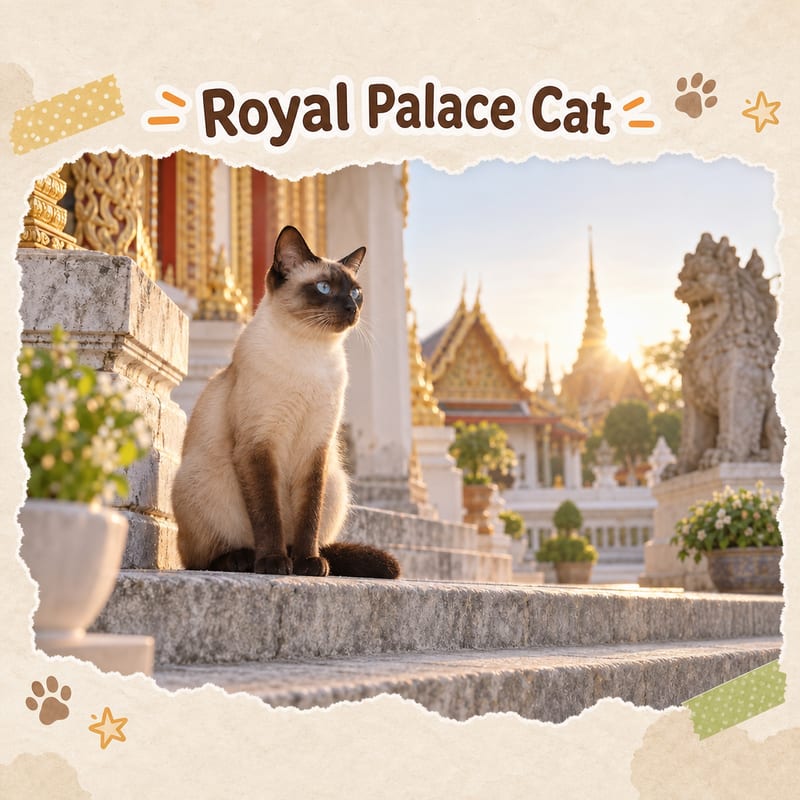
In ancient Siam, Siamese cats enjoyed extremely high status:
- Royal exclusive: Only the king and nobles could keep them.
- Silver bowl dining: Palace Siamese cats ate from silver bowls and had dedicated carers.
- Ceremonial role: They took part in royal ceremonies and were regarded as sacred guardians.
- Soul residence: Legend says that when a royal family member died, their soul would temporarily reside in a temple Siamese cat, which carried the soul until reincarnation.
These legends gave the Siamese a sacred aura — they were not just pets but a medium between humans and gods. Thai folklore also believes that a pair of Siamese cats with kinked tails and crossed eyes were 'guardians' entrusted with watching over the royal golden goblet — this traditional saying neatly explains why some Siamese are born with kinked tails and inward-turning eyes; the ancients turned defects into a sacred task, adding even more legend to the breed.
1878–1884: From Bangkok to London
In the late 19th century, Siamese cats left Thailand:
| Year | Event |
|---|---|
| 1878 | The American consul in Bangkok was given a Siamese cat and sent it back to the US |
| 1884 | The British consul brought a pair of Siamese cats to London |
| 1880–90s | They appeared at London cat shows and caused a sensation |
| 20th century | They became an internationally recognised breed |
- 1878: According to records, the American consul in Bangkok received a cat as a gift from the King of Siam and passed it on to the US President's wife — one of the earliest Western records of the Siamese.
- 1884: Edward Blencowe Gould, British consul in Bangkok, brought a pair of Siamese cats (Pho and Mia) to London and gave them to relatives.
- Cat show sensation: In the 1880s–90s Siamese cats appeared at London cat shows; their unique point coloration and blue eyes astonished audiences, and newspapers of the time described them as 'almost diabolical cats' — half curiosity, half fear — and they quickly became favourites of Western high society.
The Siamese 'Colour Change' Mystery: The Science of Point Coloration
The Siamese's point coloration is caused by a temperature-sensitive gene:
- Cooler body parts (ears, face, paws, tail) have more pigment deposition → darker
- The warmer body centre → lighter coat
- Kittens are born with uniform body temperature and are almost entirely white, gradually 'colouring up' over days
- Therefore: in winter and air-conditioning they 'go darker'; and the older they get, the darker the overall coat
To learn to tell the various point colours and pattern variants apart, see the Siamese Colour Guide.
This scientific trivia is in line with history — the ancients saw a blue-eyed cat that 'got more beautiful the colder it was', and naturally felt it was even more sacred.
The Siamese Era in Hong Kong
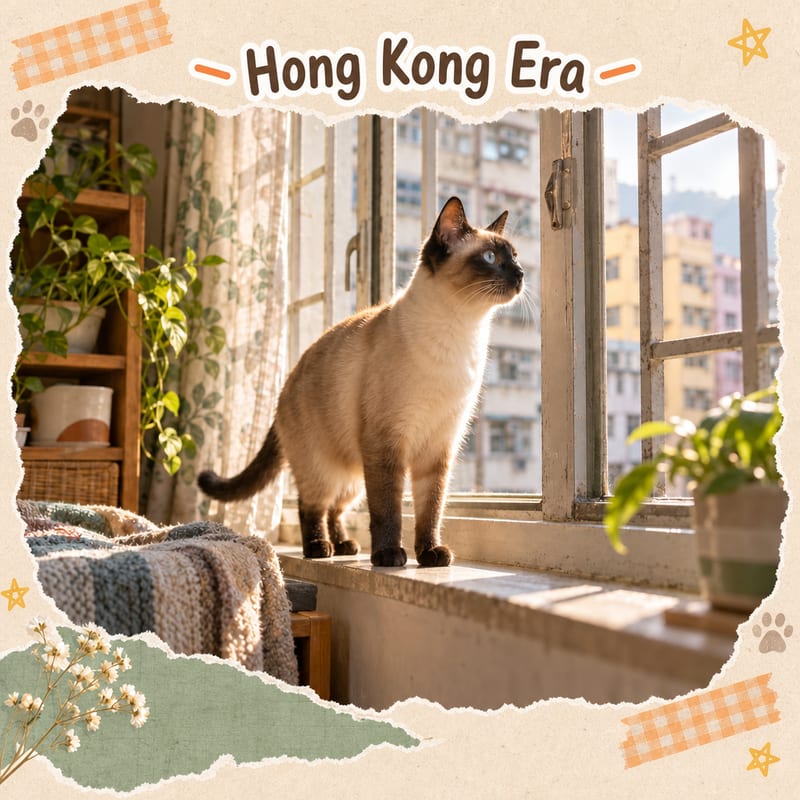
Siamese cats came to Hong Kong with British colonial culture and the cat show craze:
- 1960s–80s: The Siamese was one of the earliest popular 'foreign cat' breeds in Hong Kong, alongside the Persian and Himalayan.
- Status symbol: Early Hong Kong people saw the Siamese as a 'noble, aristocratic cat'; keeping one was a status symbol.
- Today in Hong Kong: Still popular, known for being 'talkative' and loyal — interestingly, this is in line with their history of being pampered in Thai palaces: a pampered cat will naturally be affectionate and chat with you.
What You Can Do Starting Today
- Notice your own Siamese's 'colour change': darker colour in air-conditioning and winter is normal.
- With a 'talkative' Siamese, chat with it more — it really will respond.
- Before getting one, read the Complete Siamese Guide to understand their care needs.
- If you're interested in cat history, continue with The History of Cat Domestication.
Further Reading
- Hong Kong Pet Culture History Overview
- Complete Siamese Guide
- British Shorthair Origin Story
- The History of Cat Domestication: From Egyptian Sacred Cats to Hong Kong Homes
- Chinese Cat Culture History: From the Book of Songs' Li Nu to the Lion Cat
Practical Checklist for Keeping a Siamese in a Small Hong Kong Flat
Space Setup
Hong Kong subsidised and private flats are commonly 300–500 sq ft, and Siamese cats are energetic, so we suggest:
- Vertical space: install a two-tier cat tree by the window to satisfy their 'patrolling' instinct.
- Conversation spot: leave a single stool next to the sofa so the cat can sit high and chat with you.
- Air-conditioning setting: keep it on at 25–26°C to avoid excessive darkening of the coat from being too cold.
Daily Interaction Schedule
Siamese are famously 'talkative' and can get depressed if ignored:
- 5 minutes before leaving in the morning: say good morning and pet their head.
- When you get home from work: 15 minutes with a wand toy to burn energy and chat.
- 10 minutes before bed: sit on the sofa and gaze at each other; they will naturally meow back.
Colour Change Observation Diary
To see how home temperature affects the coat, you can simply record:
- Take a photo from the same angle each month to compare the depth of the point colour.
- In winter, if you use a heater, watch whether the colour on the back of the ears lightens.
- If you notice a sudden local lightening or darkening, first check whether it is from long-term pressure (e.g. sleeping on the computer tower); if it remains abnormal after ruling that out, see a veterinarian.
When to See a Vet
Following the article's 'colour change' science:
- If an adult cat suddenly darkens significantly overall, it may be a thyroid or circulation problem; book a veterinarian as soon as possible.
- For local loss of colour or red, swollen skin, go to the clinic the same day; don't wait.
Tips for Finding a Cattery / Adopting
- Local registered catteries: check the list on CFA Hong Kong and visit the premises in person.
- Adoption: keep an eye on SAA / SPCA; they occasionally have Siamese mixes, and adult cats have stable personalities, suitable for beginners.
Follow these, and even in a 300 sq ft subdivided flat you can give a Siamese a palace-level life.
 Royal Canin full guide →