Quick answer: Over a century, Hong Kong's pet culture has transformed from 'practical tools' to 'family members', from the rat-catching cats and guard dogs of the early colonial period to today's Instagram stars and community cat shop managers, witnessing the simultaneous upgrade of urban civilization and emotional values.
The starting point of Hong Kong's pet culture history
Hong Kong's pet culture history is a century-long journey from 'practical partners' to 'family members'. From the guard dogs and rat-catching cats of the early 19th century colonial period to today's cat shop managers and dog stars on social media, the role of pets in Hong Kong people's lives has been completely reshaped. This overview presents the key milestones of Hong Kong's pet culture in a timeline format.
This article is the Pillar overview of PetChill's pet history series. Subsequent articles such as The History of Cat Domestication, The Story of Tong Cats, and Hong Kong Dog History will extend from here.
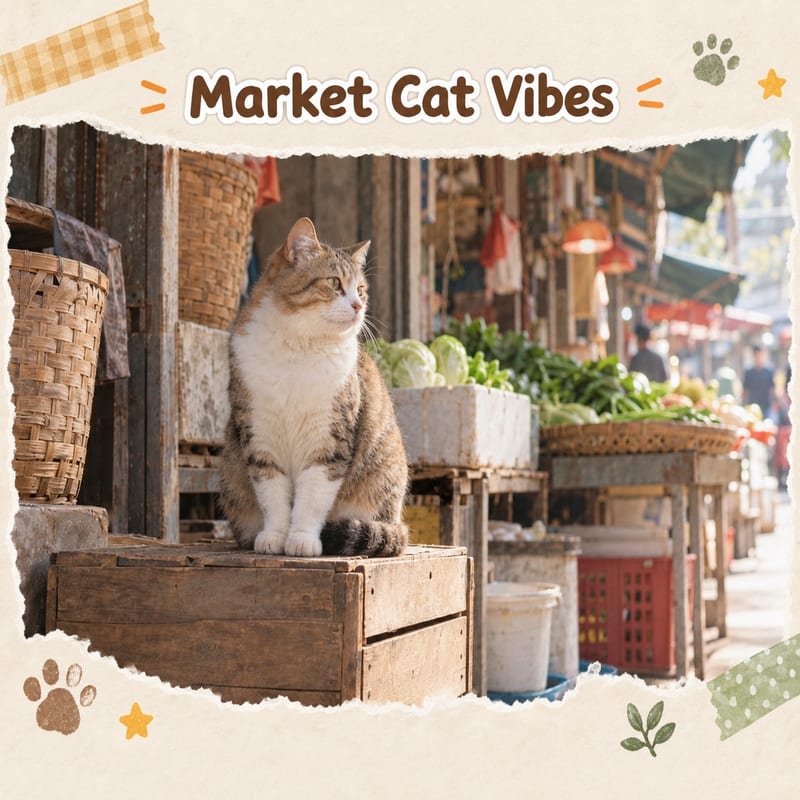
Timeline: A century of change in Hong Kong's pet culture
1840s-1890s: The colonial period — The era of practical animals
In the early days of Hong Kong's colonial period, cats and dogs mainly played practical roles in society:
- Rat-catching cats: 'Warehouse cats' in godowns, markets, and dried seafood shops, responsible for guarding dried goods and seafood
- 1894 plague: A severe plague broke out in Hong Kong, and the government encouraged citizens to keep cats to control the rat problem. Cats in the dried seafood street of Sai Ying Pun thus became heroes protecting the community
- Guard dogs: Guard dogs for village houses, factories, and warehouses
The concept of 'pets' did not exist in this period; animals were labour partners in a mutually beneficial relationship with humans.
1903-1950s: The dawn of animal welfare
- 1903: The 'Hong Kong Society for the Prevention of Cruelty to Animals' (predecessor of the SPCA) was founded by a group of volunteers, the first charity in Hong Kong to comprehensively address animal welfare
- 1921: The society was reorganized, with Governor Reginald Edward Stubbs as president, and animal welfare officially entered mainstream social awareness
- 1922: The first dog shelter (Dog's Home) opened on Waterloo Road in Kowloon
- 1953: The first veterinary clinic opened in Kowloon; in the 1950s, 'cat boxes' were introduced, allowing citizens to abandon unwanted cats — a system that seems cruel today, reflecting that animal welfare awareness was still in its infancy
1960s-1980s: Economic boom — The concept of pets takes shape
As Hong Kong's economy took off, keeping pets began to become part of the lifestyle:
- 1963: About 40,000 cats were destroyed that year, a shocking number reflecting the serious problem of abandonment
- 1978: The society was renamed 'Royal Hong Kong Society for the Prevention of Cruelty to Animals', and in 1989 changed to 'Royal Hong Kong Society for the Prevention of Cruelty to Animals'
- Rise of the pet market: Traditional pet markets such as Goldfish Street (formed in the 1950s) and Bird Street continued to thrive, while modern pet shops began to appear
- Introduction of pedigree cats and dogs: Foreign breeds such as Persian cats and Pomeranians entered Hong Kong households, and purebred pets became a status symbol
1990s-2000s: The era of pet humanization
- 1997: On the eve of the handover, the society dropped the word 'Royal'; in the same year, Yuen Po Street Bird Garden opened, continuing the Bird Street tradition
- 2000: The SPCA pioneered the 'Cat Colony Care Programme' in Asia, introducing the TNR (Trap-Neuter-Return) concept, shifting street cat management from culling to scientific and humane methods
- Rise of adoption culture: 'Adopt don't buy' gradually became a social consensus
2010s-2020s: Pet economy and cats and dogs as family
- Pet economy explosion: The pet food, supplies, medical, and grooming industries developed comprehensively, with Hong Kong's pet market size in the billions
- Cat shop manager culture: In the 2025 'My Favourite Cat Shop Manager' election, 'Tai Gau', a pharmacy cat in Yuen Long, won first place, and shop cats became emotional bridges in the community
- Social media era: Cat and dog IG/YouTube stars emerged, and pets became content protagonists
- Animal welfare legislation: In 2019, the Prevention of Cruelty to Animals Ordinance was amended to increase penalties for animal cruelty
- Pandemic effect: During the early 2020s pandemic, with more time spent at home, the number of pet-keeping households rose significantly
| Era | Role of pets | Key events | Representative landmarks |
|---|---|---|---|
| 1840s-1890s | Rat-catching cats, guard dogs | 1894 plague, government encouraged cat keeping | Sai Ying Pun dried seafood street |
| 1903-1950s | Dawn of welfare | 1903 Hong Kong Society for the Prevention of Cruelty to Animals founded | Waterloo Road dog shelter, Kowloon |
| 1960s-1980s | Status symbol | Introduction of Persian cats, Pomeranians | Goldfish Street, Bird Street |
| 1990s-2000s | Adoption culture | 2000 TNR programme launched | Yuen Po Street Bird Garden |
| 2010s-2020s | Family members | Cat shop manager culture, social media stars | 'Tai Gau' at Yuen Long pharmacy |
💡 Why do Hong Kong people love keeping cats so much?
Hong Kong's living spaces are small and the pace of life is fast. Cats' independent, quiet nature and the fact that they don't need walking perfectly suit Hong Kong people's lifestyle. In addition, mature adoption channels for Tong cats (SPCA, Society for the Prevention of Cruelty to Animals, etc.) make cat ownership relatively accessible. In recent years, the 'cat shop manager' culture has made cats part of Hong Kong's community culture.
📜 Interactive scroll: Open the pet history sketchbook
Want to revisit this history in another way? We have turned nine pet history stories into a flip-through sketchbook — drag the pages to experience page-turning, use a magnifying glass to examine illustration details, and click 'Read full article' on any page to jump to the complete article.
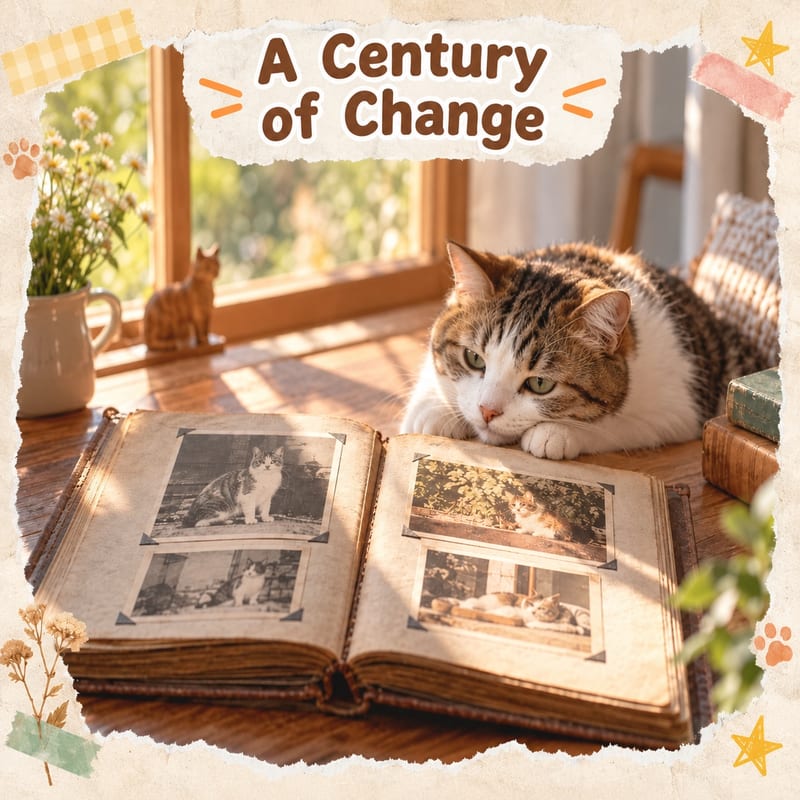
A century of insight: From practical to emotional
Looking back at Hong Kong's pet culture history, the most profound change is the shift in the status of animals: from rat-catching tools and guard dogs in the 19th century to 'fur kids' and 'masters' in the 21st century. This century-long transformation reflects not only the elevation of pets' status but also the evolution of Hong Kong's social civilization and emotional structure.
In today's Hong Kong, pets are already family members, social media stars, and symbols of community culture. Understanding this history helps us better appreciate the value of the human-animal relationship.
Further reading
- The History of Cat Domestication: From Egyptian Cat Gods to Hong Kong Families
- The History of Dog Domestication: From Wolves to Working Dogs to Companions
- The Story of Tong Cats: A Century of Change for Hong Kong Street Cats
- Hong Kong Dog History: Police Dogs, AFCD, and Adoption Culture
- The Evolution of Hong Kong Pet Shops: From Bird Garden to Modern Pet Shops
- The History of Chinese Cat Culture: From the Book of Songs to Modern Times
Practical guide to keeping pets in small Hong Kong flats: From adopting a Tong cat to daily management
Living in a 300-square-foot walk-up flat and want a cat but worried about space? Actually, just follow these three steps to create a cat paradise in your tiny home.
1. Before adoption: Target Tong cats and assess thoroughly
- Prioritize Tong cats: Local adoption centres (SPCA, Society for the Prevention of Cruelty to Animals) have the most Tong cats, with diverse personalities, making it easy to find a cat that suits your pace.
- Space assessment: Reserve at least two 'cat tree heights' — that is, think about how to give the cat access to the top of the wardrobe and the top of the fridge; vertical space is more important than floor space.
- Neighbour communication: For open-kitchen units, inform the neighbours in advance to avoid complaints about cat meowing or litter smell.
2. First month at home: Three-zone layout
- Rest area: Place a soft cushion on top of the wardrobe and add a small night light to give the cat a sense of security.
- Play area: Add a suction-cup cat tree to the windowsill, combining street views and sunbathing in one.
- Litter area: Keep the bathroom door open, place a covered litter box, and scoop the litter twice a day to control odour most effectively.
3. Long-term management: Save space and money
- Multi-functional furniture: Choose a coffee table with a cat scratching post, a foldable cat tunnel — one item, two uses.
- Shared space: Combine your dining table with the cat's feeding area, using elevated cat bowls to reduce bending.
- Regular check-ups: Take the cat to a nearby veterinary clinic for a basic check-up every six months. Clinics are plentiful in Yau Ma Tei and Prince Edward, convenient to visit after work.
Remember, keeping a cat in a small Hong Kong flat is not a dream. The key is to think about vertical space and odour management. Tong cats are highly adaptable and can more easily find their own little world in the concrete jungle.
📌 Key summary
- ✅ In the early colonial period, cats and dogs were practical partners for rat-catching and guarding
- ✅ In 1903, the Hong Kong Society for the Prevention of Cruelty to Animals was founded, marking the dawn of animal welfare
- ✅ In the 1960s-80s economic boom, pedigree cats and dogs became status symbols
- ✅ In 2000, the SPCA pioneered TNR, shifting street cat management towards humane methods
- ✅ After 2010, the pet economy exploded, and cats and dogs became 'fur kids and family'
- ❌ The 1950s 'cat box' abandonment system reflected insufficient early welfare awareness
 Royal Canin full guide →