
Quick answer: The Golden Retriever was born at Guisachan Estate in the Scottish Highlands, where the first Lord Tweedmouth bred Nous, a yellow wavy-coated retriever, with Belle, a Tweed Water Spaniel. In 1868 they produced three 'yellow' daughters, laying the foundation for today's 'gentleman' bloodline.
The Golden Retriever: A Golden Legend of the Scottish Highlands
The Golden Retriever is one of the world's most popular dog breeds — gentle, intelligent and loyal. But few people know that this 'gentleman' breed has an aristocratic bloodline: it was born at Guisachan Estate in the Scottish Highlands, and its creator was a Victorian aristocrat.
This article is an extension of the 'Breed Origin Stories' series within the Hong Kong Pet Culture History Overview.
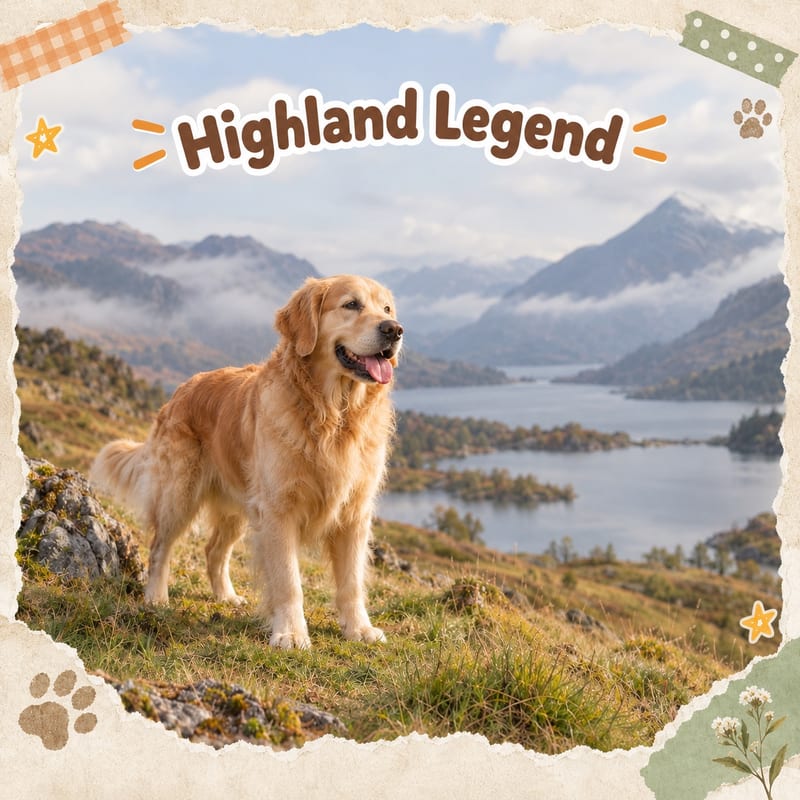
1865: A Yellow Dog by the Brighton Seaside
The story begins in 1865 in Brighton, Scotland:
Dudley Coutts Marjoribanks (later the first Lord Tweedmouth) saw a litter of black wavy-coated retrievers at a circus/cobbler's, and among them was the only yellow puppy. He bought this 'odd-coloured' pup, took it back to Guisachan Estate in the Scottish Highlands, and named it Nous (Greek for 'wisdom').
In those days, black was the 'standard' colour for retrievers, and yellow was considered a fault. But Marjoribanks saw the dog's working potential — and that decision led to today's Golden Retriever.
1868: The Golden Match at Guisachan
In 1868, Marjoribanks chose a mate for Nous:
- Nous (yellow wavy-coated retriever) × Belle (Tweed Water Spaniel, an extinct Scottish water dog)
- They produced Crocus, Cowslip and Primrose (three daughters named after yellow flowers) — this is the starting point of the Golden bloodline
- Later bred with Setters and more Tweed Water Spaniels, gradually stabilising the combination of 'golden colour + retrieving instinct + gentle temperament'
Marjoribanks' goal was clear: to breed a top-class waterfowl gun dog suited to the rainy, watery terrain of the Scottish Highlands — able to work in cold rivers and lochs, with a waterproof coat, a soft mouth (holding game without crushing it), and the patience to work with humans.
The Breeding Record Book: The Ironclad Evidence Made Public in 1952
This history is credible because Marjoribanks kept meticulous records:
- The Guisachan Breeding Record Book (1865-1890): detailed records of every mating's date, dogs, coat colour and working performance
- 1952: Marjoribanks' granddaughter Lady Pentland made the records public, and the Golden's 'official origin story' was established from then on
- Breeding principle: valuing working ability and temperament over appearance — this explains the genetic basis of the Golden's 'born gentleman' nature today
From Hunting Ground to Family Home: How the Golden's Character Conquered
The Golden's traits turned it from a gun dog into an all-round dog:
| Period | Role |
|---|---|
| 19th century | Waterfowl gun dog of Scottish aristocrats |
| Early 20th century | Frequent winner at British and American gun dog trials |
| Mid-20th century | Mainstay guide dog and search-and-rescue dog (intelligent + gentle + obedient) |
| Late 20th century | Top 3 family companion dog (the 'best family dog' image) |
| 21st century | Animal-assisted therapy, reading companion dog (children read to Goldens) |
1925: The Golden was first exported (to Ireland, India and New Zealand) and registered with the AKC — officially going global.
Guisachan Pilgrimage: The Mecca for Golden Fans
Golden enthusiasts still make pilgrimages 'back to the beginning':
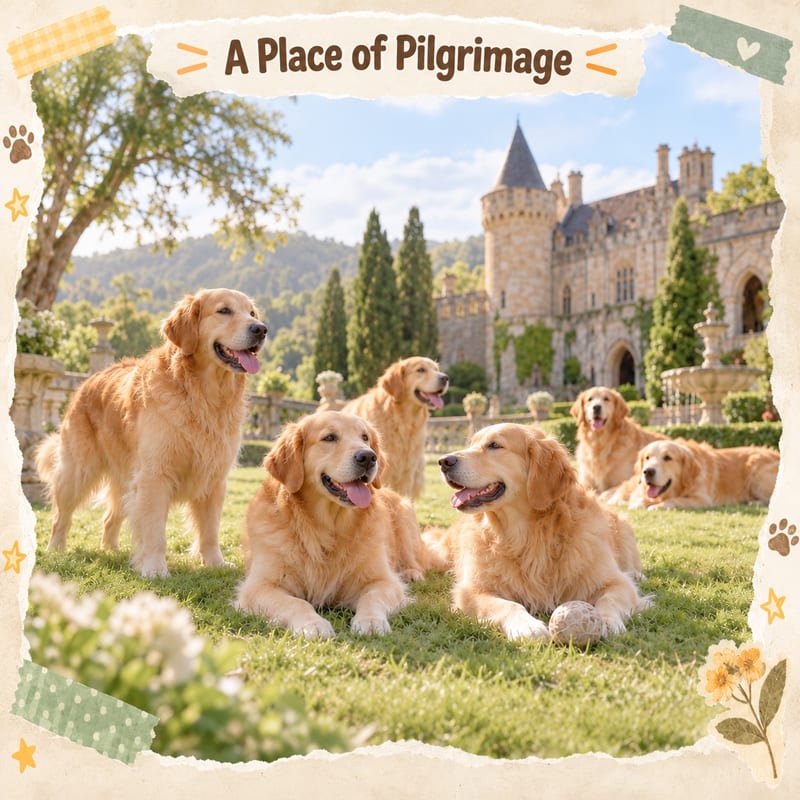
- 2013: 222 Goldens gathered at Guisachan, setting a record
- 2018: 361 Goldens reunited at Guisachan to celebrate the breed's 150th anniversary — the image of hundreds of Goldens running on the Scottish hills became a classic memory for Golden fans worldwide
The Golden Comes to Hong Kong
The Golden's position in Hong Kong:
- Arrived in the 1980s-90s: entered Hong Kong families with the international pet trade
- Model family dog: gentle, friendly to children, highly obedient — one of Hong Kong's top large breed choices
- Service dog pioneer: Hong Kong's guide dog services (such as the Hong Kong Guide Dogs Association) mainly use Golden Retrievers and Labradors
- Challenges: double thick coat + Hong Kong's hot, humid weather = needs air-conditioning and grooming; high exercise needs require daily energy release
Want to know how to care for a Golden? See our Golden Retriever Complete Guide.
Further Reading
- Hong Kong Pet Culture History Overview
- Golden Retriever Complete Guide
- Dog Domestication History: From Wolf to Working Dog to Companion
- Shiba Inu Origin Story: Japanese Mountain Hunting Dog
- Hong Kong Dog History: Police Dogs, AFCD, Adoption Culture
Practical Checklist for Keeping a Golden in Hong Kong: From Move-In to Daily Grooming
1. Hardware Preparation Before Move-In
- Air-conditioning/fan: the double thick coat hates stuffiness; in summer keep the air-conditioning at 24–26°C or run fans continuously to avoid heatstroke.
- Non-slip mats: Goldens are heavy and can slip easily on wooden floors; lay non-slip mats at the entrance and corridors to reduce joint stress.
- Large-capacity water dispenser: daily water intake can reach 2–3 litres; choose a 3L+ automatic refilling dispenser to reduce refilling frequency.
2. Daily Energy Release Routes
- Morning 6:30–7:30: West Kowloon Waterfront Promenade / Shing Mun River in Sha Tin, avoiding the midday heat.
- After 6:00 pm: Tai Mei Tuk, Quarry Bay Park lawns, where they can swim to cool down and rinse off.
- Rainy-day backup: Lai Chi Kok D2 Place indoor pet park or Tseung Kwan O Velodrome Park covered track to maintain exercise.
3. Coat Care Schedule
- Daily: gently brush with a pin brush for 5 minutes, focusing on armpits and behind ears to reduce matting.
- Weekly: bathe once with diluted aloe shampoo, then immediately blow-dry the undercoat to prevent skin problems.
- Seasonally: visit a professional pet groomer to trim paw pad hair and belly hair, reducing the 'wet feet' smell from Hong Kong Wetland Park.
4. When to See a Vet
- Constant panting, purple tongue: send immediately to a 24-hour emergency (CityU Veterinary Medical Centre, Kowloon Animal Hospital).
- Red spots on skin, hair loss: common mould in Hong Kong; book a dermatology specialist vet (e.g., SPCA Wan Chai Centre).
- Limping: large breeds prone to hip problems; after X-rays, can be referred for physiotherapy (e.g., TST Vet Rehab).
5. Community Resources Quick Reference
- Dog parks: Morse Park in Wong Tai Sin, Tseung Kwan O South Waterfront Promenade, large lawns with water fountains.
- Pet shop supplies: many pet shops in Prince Edward and Mong Kok have large-breed beds and frozen raw meat; online shopping can use PetChill next-day delivery.
- Training classes: Hong Kong Guide Dogs Association regularly runs 'Golden Basic Obedience Classes' using positive training, suitable for novice owners.
With the above steps, you can raise a healthy, happy Golden gentleman even in a 500 sq ft flat in Hong Kong.
Keeping a Golden in a Small Hong Kong Flat: Space Planning and Community Facilities in Practice
Space Amplification: A 500 sq ft Flat Is Enough
- Furniture rearrangement: push the sofa against the wall to free up a central 3×2 metre 'Golden play area', lay interlocking mats for non-slip and sound insulation.
- Vertical storage: install shelves high on the wall for dog treats and toys to avoid the Golden bumping into them; store a foldable dog crate under the bed and take it out at night.
- Air-conditioning airflow: use a fan facing the air-conditioning outlet to direct cool air to the floor, helping the undercoat dissipate heat and saving half the electricity bill.
Community Energy Release Map (Hong Kong Island, Kowloon, New Territories)
| District | Location | Features | Transport |
|---|---|---|---|
| Hong Kong Island | Quarry Bay Promenade | Large lawn, water fountain | 5 minutes from MTR Quarry Bay Station |
| Kowloon | Morse Park, Wong Tai Sin | Park No. 3 lawn is open | 10 minutes from MTR Wong Tai Sin Station |
| New Territories | Tai Mei Tuk | Can swim, rinse facilities | KMB 75K to Tai Mei Tuk stop |
| Tseung Kwan O | South Waterfront Promenade | Covered track usable on rainy days | MTR LOHAS Park Station then minibus |
Rainy Season Backup Plan
- Indoor dog parks: Lai Chi Kok D2 Place, Tseung Kwan O Velodrome, $60–80/hour, air-conditioned and non-slip.
- Pet-friendly mall hours: Harbour City, K11 Musea before 11:00 on weekdays have fewer people; take the Golden to the mall to release energy and enjoy the air-conditioning.
Emergency Medical Quick Reference
- 24-hour emergency: CityU Veterinary Medical Centre (Kowloon Tong), Kowloon Animal Hospital (Prince Edward)
- Dermatology specialist: SPCA Wan Chai Centre, North Point East District Animal Hospital
- Physiotherapy: TST Vet Rehab (Tsim Sha Tsui), Animal Rehab HK (Fo Tan)
Money-Saving Tips
- Group-buy shampoo: Golden groups in the same district can bulk-buy 5-litre aloe shampoo, saving about 30% on average.
- Shared blow-dry: arrange two or three Goldens to go to the groomer together and share the dryer; timed charging is cheaper than individual billing.
Remember, Hong Kong is small and crowded, but with good use of community facilities, you can raise a healthy, happy Golden gentleman even in a small flat.