
Quick answer: From guard and hunting working dogs at the time of the British colonial opening, through the post-war purebred craze and the AFCD's humane management reforms, to today when adopting a Tong Gau has become mainstream, the status of Hong Kong dogs has been thoroughly elevated to 'fur kid' family members.
Hong Kong Dog History: From Working Dogs to Fur Kids
Hong Kong's dog history is a story of rising status: from guard working dogs to today's 'fur kid' family members. This article traces the century-long changes in Hong Kong dogs, including the Police Dog Unit, the evolution of AFCD animal management, and the rise of adoption culture.
This article is an extension of the Hong Kong Pet Culture History Overview series.
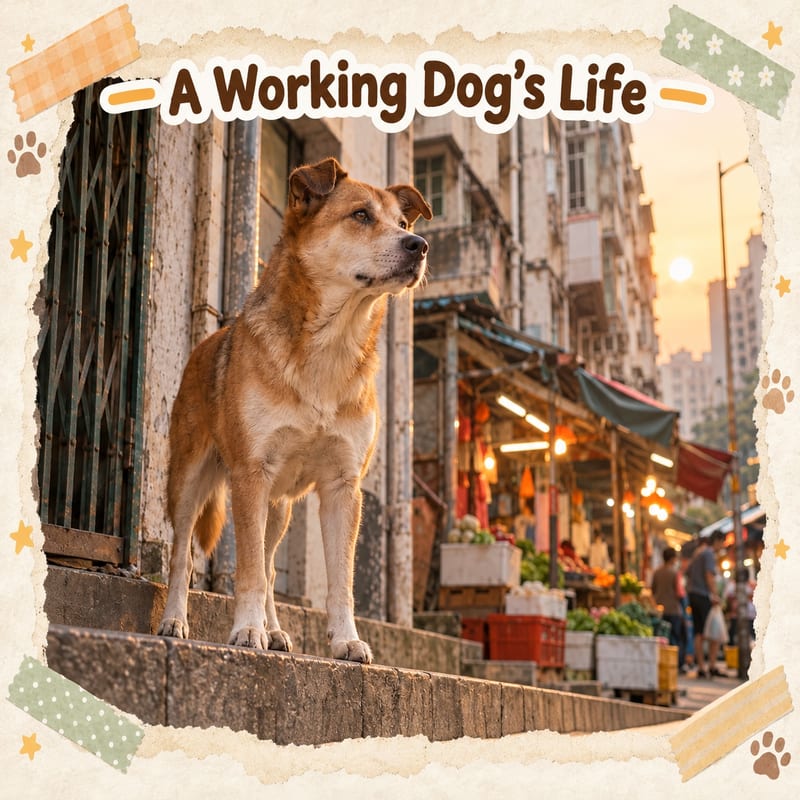
From the Colonial Opening to Pre-War: When Dogs Had Jobs
From Hong Kong's opening as a colony to before World War II, dogs played practical roles in society:
- Guard dogs: standard fixtures in village houses, warehouses, and factories, with local Tong Gau (mixed-breed dogs) as the mainstay
- Fishermen's working dogs: life assistants for boat people
- Hunting dogs: essential partners in the hunting culture of New Territories villages
- Western pedigree dogs: purebreds brought by taipans of foreign trading firms and colonial officials (such as English hounds), symbols of status
The Hong Kong Society for the Prevention of Cruelty to Animals (SPCA), reorganised in 1921 (originally founded in 1903), established its first Dog's Home on Waterloo Road in Kowloon in 1922 — showing that dog welfare issues had long been a concern.
Post-War to the 1980s: The Purebred Era
After the war, Hong Kong's economy took off and dog-keeping patterns changed:
- Purebred dogs became fashionable: small breeds such as Pomeranians, Pekingese, and Chihuahuas became new family favourites, reflecting changes in Hong Kong people's living environment and spending power
- Rise of dog farms and pet shops: the supply chain became commercialised, and purebred dog trading was active
- Establishment of the Police Dog Unit: the Hong Kong Police Dog Unit was established in the 1950s, with German Shepherds and others performing patrol and search tasks; it later developed specialised units for drug detection, explosive search, and rescue, with scent-oriented breeds such as Springer Spaniels joining gradually
- Stray dog problem: abandonment led to rising stray numbers, making animal management increasingly important
1990s-2000s: Animal Management and Welfare Transformation
During this period, Hong Kong's dog management system moved towards humane practices:
- Role of the AFCD: the Agriculture, Fisheries and Conservation Department (AFCD) is responsible for animal management, taking in stray and abandoned animals. In earlier years it was controversial due to the statutory minimum period of 'euthanasia after four days'
- Adoption scheme: the AFCD launched an animal adoption scheme, cooperating with partner organisations such as SPCA and the Society for Abandoned Animals (SAA) to arrange adoption for suitable animals
- Behavioural training: to raise the adoption rate, the department provides stray dogs with behavioural training, regular grooming, vaccinations, and flea prevention — 2026 data shows stray dogs stay an average of 53 days at the centre (40 days in 2023), with an adoption rate of about 40%
- Dog park construction: the Leisure and Cultural Services Department has been establishing pet parks; Hong Kong now has dozens of dog parks and pet shared gardens
Adoption Culture: 'Tong Gau Are Not Bad Too'
After 2000, Hong Kong's adoption culture underwent a key shift — the rising status of the Tong Gau (mixed-breed dog):
- Adopt don't shop: became a social consensus, with the AFCD and SPCA continuously urging it
- Tong Gau advantages recognised: healthy (hybrid vigour), intelligent, adaptable to Hong Kong's climate and living environment
- More mature adoption matching: organisations assess the family environment and the dog's personality to improve successful matching rates
- Demand for pedigree adoption: breeds such as Shar Peis and Chow Chows can still be found through adoption channels after neutering
💡 Adoption tip: Hong Kong law stipulates that selling dogs (even those born to one's own pets) requires a licence or permit; buyers must be at least 16 years old, and advertisements must state the licence number — adoption, assessed by organisations, offers more protection.
2020s: The Fur Kid Era
In today's Hong Kong, the status of dogs has been thoroughly 'familialised':
- Pet dog economy: dog food, supplies, medical care, grooming, training classes — Hong Kong's pet market is worth billions
- Pet-friendly facilities: pet-friendly malls, dog restaurants, dog hotels, and pet funeral services are all available
- Social media dog stars: Hong Kong dog IG pages and YouTube channels are proliferating
- Animal welfare legislation: the 2019 amendment to the Prevention of Cruelty to Animals Ordinance raised penalties to a maximum of HKD 200,000 and 3 years' imprisonment
- Dog sports culture: hiking with dogs, dog sports days, and Dog Agility are on the rise

| Era | Dog's role | Key changes |
|---|---|---|
| Colonial opening to pre-WWII | Guard, hunting, fishermen's assistant | First Dog's Home opened in 1922 |
| 1950-1980s | Purebred pets, police dogs | Police Dog Unit established; small purebreds became trendy |
| 1990-2000s | Managed, adoptable | AFCD adoption scheme; dog parks built |
| 2020s | Fur kid family members | Pet-friendly facilities, legislative protection, social media stars |
Police Dogs: Hong Kong's Most Professional Dogs
The Hong Kong Police Dog Unit represents the 'professionalisation' of dogs:
- Structure: the unit has specialised patrol dogs, drug detection dogs, explosive search dogs, and rescue dogs
- Breeds: German Shepherds (patrol), Springer Spaniels (drug and explosive detection), Labradors (rescue), etc.
- Human-dog bond: after retirement, most police dogs are adopted by their handlers and continue as 'home dogs'
Further Reading
- Hong Kong Pet Culture History Overview
- Dog Domestication History: From Wolf to Working Dog to Companion
- Shiba Inu Origin Story: Japanese Mountain Hunting Dog
- Golden Retriever Origin Story: Scottish Gundog
- Complete Guide to Cat Adoption in Hong Kong
Practical Checklist for Adopting a Tong Gau in a Small Hong Kong Flat
Living in a 300 sq ft flat doesn't mean you can't keep a dog; with adequate preparation, a Tong Gau can live comfortably too.
Space planning
- Choose a small to medium-sized Tong Gau, avoiding large active breeds.
- Use vertical space: hang a foldable dog bed in a corner and put it away during the day to free up activity space.
- Toilet area: place pee pads or a dog toilet on the balcony, train the dog to toilet in a fixed spot to reduce indoor odours.
Noise management
- Tong Gau are highly alert and will bark at footsteps outside the door. Add soundproofing strips to the door and reward the 'quiet' command with treats.
- If living in public housing, declare dog ownership to the Housing Department first to avoid neighbour complaints.
Daily exercise
- Walk at least twice a day for 15 minutes each, choosing early morning or late night when there are fewer people, avoiding peak times at mall dog parks.
- Hiking trails: Dragon's Back and Section 3 of the Wilson Trail allow dogs; remember to bring water and poop bags.
Adoption process at a glance
- Book online to meet dogs at the AFCD or SPCA, and bring the whole family for assessment.
- Staff will ask about home size, working hours, and acceptable barking level.
- After passing a home visit, sign the adoption agreement and pay the adoption fee (includes neutering, microchip, and vaccinations).
- The first two weeks are an adjustment period; you can seek free help from the organisation for behavioural issues.
Emergency medical care
- 24-hour veterinarians: CityU Veterinary Medical Centre (Kowloon Tong), North Point Emergency Veterinary Centre.
- Call ahead before night consultations to confirm waiting times, and bring the owner's ID card and vaccination record.
With enough homework, a Tong Gau can live a wonderful life in a small Hong Kong flat too.
📌 Key Summary
- ✅ Tong Gau are favoured by adopters for being healthy, intelligent, and adaptable to Hong Kong's environment
- ✅ Retired police dogs are mostly adopted by their handlers, continuing the human-dog bond
- ❌ Selling dogs requires a licence; privately selling your own puppies is also illegal
- ✅ Adoption organisations assess the family and dog's personality to improve matching success
- ✅ Hong Kong now has dozens of dog parks and pet shared gardens