Quick answers
- Common causes: bitter pills, disrupted gut bacteria, mild nausea.
- Usually most obvious in the first 1 to 2 days of the course, then gradually settles.
- Complete food refusal for more than 24 hours: contact your veterinarian immediately.
- Small, frequent meals 4 to 6 times a day, warmed to 35 to 40°C, works best.
- Probiotics should be given about 2 hours apart from antibiotics.
- Never stop the course on your own before it is finished.
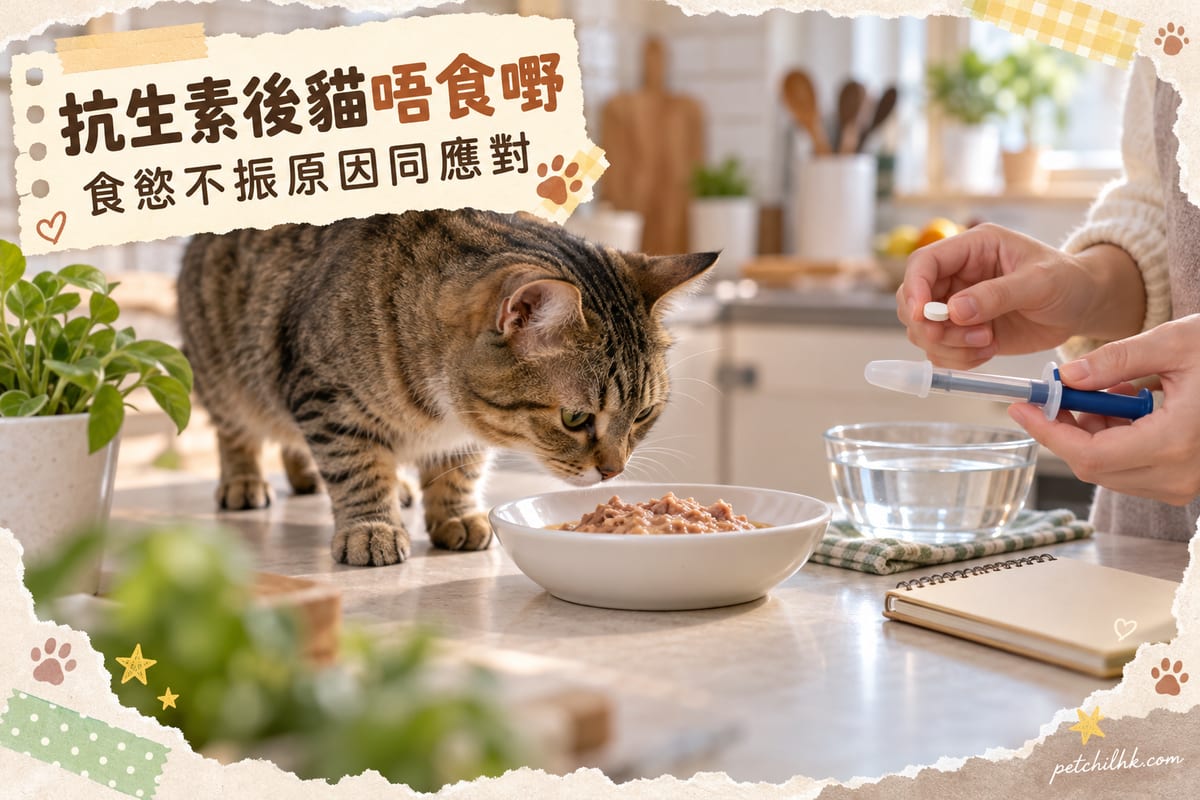
A cat refusing food after antibiotics is one of the most common questions in veterinary clinics. There is usually more than one reason: the pill itself is very bitter and cats have especially sensitive bitter taste receptors; antibiotics also kill good gut bacteria, upsetting the digestive system temporarily; and some drugs irritate the stomach when given on an empty stomach. Together, these three factors can turn your cat into one that walks away at the sight of the bowl.
The good news is that most cases are manageable side effects, most obvious in the first 1 to 2 days of the course, then gradually easing. The bad news is that cats are not dogs — the cost of not eating is much higher. If complete food refusal drags on for 3 to 5 days, the risk of fatty liver rises sharply, and even faster in overweight cats. So what really matters is not 'how to force it to eat' but 'when to call the veterinarian, and what you can do before you call'.
1. Why do antibiotics reduce a cat's appetite? 5 common mechanisms
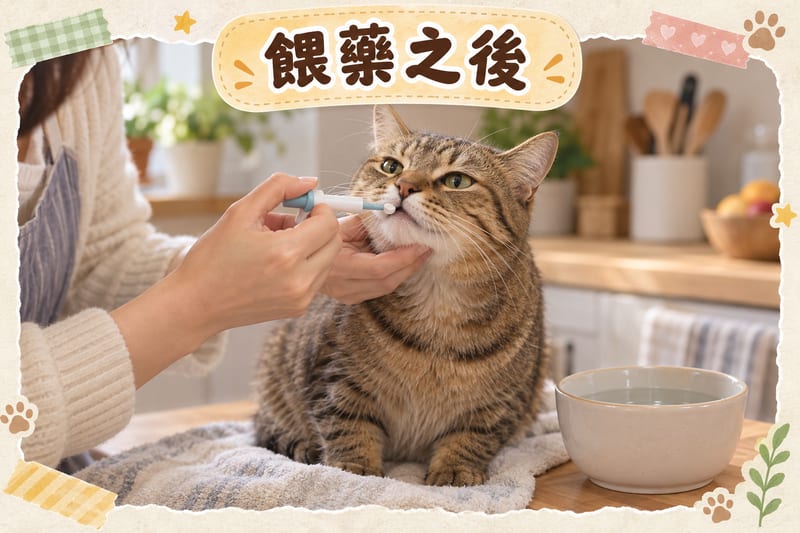
1. Bitter pills and the 'food aversion' effect. Cats are extremely sensitive to bitterness, so veterinarians usually will not split or crush pills unless specifically instructed. The biggest problem is that if you mix crushed pills into a whole bowl of wet food, the cat associates that taste with food after feeling bitter and nauseous, and may then refuse the same food even without medication — this is called food aversion and can last a long time. So always mix medication into just 'a small bite', and feed the rest normally.
2. Disrupted gut bacteria. Antibiotics do not distinguish good from bad bacteria; while killing bacteria they temporarily disrupt gut flora, resulting in soft stool, diarrhoea, gas and mild nausea. A nauseous cat may not vomit but will sniff and walk away, or take a couple of licks and stop.
3. Empty-stomach dosing irritates the stomach. Some antibiotics need to be given with food to reduce stomach irritation, while others need an empty stomach for absorption. Which applies depends on the drug, so 'when to give the medication' must follow veterinary instructions — do not change it yourself.
4. Drugs directly affect gut motility or cause drooling and nausea. Different classes of antibiotics have different side effects; some cause more gastrointestinal reactions, others more drooling, facial itching or even allergy. If your cat drools heavily, scratches its face or has facial swelling immediately after each dose, this is not a 'normal side effect' — stop and contact your veterinarian immediately.
5. The illness itself, not necessarily the drug. Fever, pain, mouth ulcers, dehydration, a blocked nose preventing smell, or even general malaise from the infection can all make a cat unwilling to eat. Poor appetite during an antibiotic course should not automatically be blamed on 'drug side effects', so look at other signs too.
Drug reactions vary between individuals, and cats are no different. This article only helps you judge 'when to contact your veterinarian immediately' and is not a substitute for veterinary advice.
2. When is it a normal side effect and when is it a warning sign? Action comparison table
| What you observe | When it is within the observation range | What you can do at home first | When to contact your veterinarian immediately |
|---|---|---|---|
| Sniffs and walks away, eats half the usual amount | First 1 to 2 days of the course | Open a fresh can, warm slightly, offer small frequent meals | Same situation lasts more than 48 hours |
| Not eating at all, but drinking normally | Less than 24 hours | Hand-feed, smear a little on the lips, record intake | More than 24 hours of complete food refusal |
| Not eating and drinking noticeably less | Not within observation range | Do not wait | 12 hours without drinking, or skin tent does not spring back immediately |
| Vomits immediately after medication, cannot keep the pill down | Not within observation range | Record vomiting time and drug | Same day — ask your veterinarian about changing the method or drug |
| Heavy drooling, face scratching, facial swelling after medication | Not within observation range | Do not give more, keep the box | Immediately — this is an allergic emergency |
| Lethargic, hiding, unresponsive | Not within observation range | Keep warm, prepare the carrier | Immediately |
The key is not 'how much less it ate' but 'whether other signals appear at the same time'. If it is just reduced intake, still bright, and willing to drink, you can observe for another day; once reduced drinking, vomiting, diarrhoea or lethargy are added, you should not wait any longer.
3. The biggest fear of not eating is fatty liver: risk timeline and weight warning line
Cat metabolism differs from dogs: when a cat does not eat for several days, the body mobilises large amounts of fat to the liver for processing. Once this exceeds the liver's capacity, it can develop into fatty liver (hepatic lipidosis), which can be fatal. So with 'cat not eating', time matters more than amount.
| Duration of fasting | What is roughly happening in the body | Recommended action |
|---|---|---|
| Less than 24 hours | Mostly still reversible | Observe more closely, record intake and drinking |
| 24 to 48 hours | Fat mobilisation begins, dehydration risk rises | Call your veterinarian, ask whether a follow-up is needed |
| 3 to 5 days of complete food refusal | Fatty liver risk rises sharply | Emergency level, seek veterinary care the same day |
| Overweight cats, or those with liver disease or diabetes | Risk rises even faster | Do not use the 'wait a few days' standard |
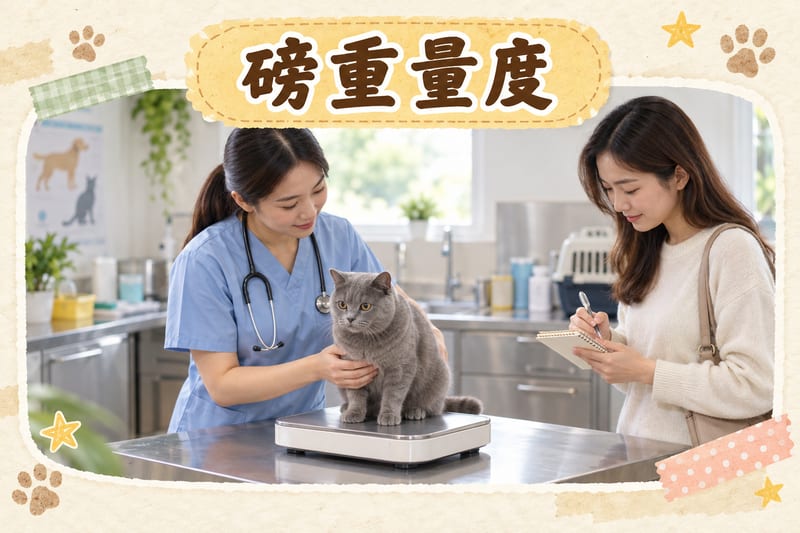
Besides time, weight is another warning line. Weigh your cat at the start of the course, then daily or every other day: if it loses more than 5% in a short period, or looks noticeably thinner in the same coat or at the same weighing spot, book a follow-up as soon as possible. Use a baby scale or the clinic's scale; weighing yourself holding the cat and subtracting your own weight gives a larger error.
One thought to abandon: 'Skip a meal and it will eat eventually.' For cats this is dangerous — not eating makes the gut even less willing to eat and accelerates fatty liver risk. Any 'starve it until it eats' approach should not be tried.
4. 7 ways to boost appetite (start with the easiest)
- Small, frequent meals. Change from 2 to 3 meals a day to 4 to 6 meals, each with only 1 to 2 tablespoons. It doesn't matter if not finished; the point is to increase the number of times it is willing to eat, not to put out a large bowl and add pressure.
- Warm to 35 to 40°C. Aroma is strongest when slightly warm. Warm by standing the bowl in hot water or mixing in a little warm water; do not use a microwave — uneven heating can burn the cat's tongue.
- Choose strong-smelling, soft-textured food. Wet food, pouches, pâté or mousse textures are easier to eat than dry food, especially for cats with a blocked nose, mouth pain or gum discomfort.
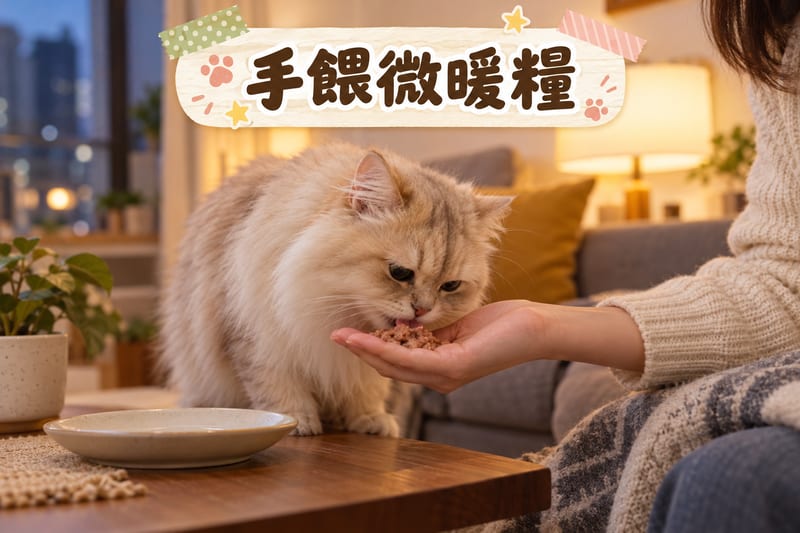
- Hand-feed or smear a little on the lips. Pick up a small amount with your finger and place it on the lips; most cats will lick it off reflexively. This is also a good way to test 'is it completely anorexic, or just unwilling to walk to the bowl'.
- Handle medication and food separately. Mix the drug into just a small bite; do not add it to the rest. If your cat already resists a certain food, switch immediately to another stronger-smelling flavour rather than forcing it.
- Change the bowl. Use a wide shallow dish instead of a deep bowl — many cats are uncomfortable when their whiskers press against the sides. Sick cats can be more sensitive to their environment, so place the bowl in a quiet corner away from other pets.
- Maintain water intake, but don't add things randomly. Put out several water bowls or use a flowing fountain. Never add salt, chicken stock powder or any human seasoning; spring onion, garlic and onion are toxic to cats and must never appear in their food. If you want to use unsalted chicken broth or prescription nutritional paste, ask your veterinarian first.
If you have tried all of the above and your cat still refuses all food, your veterinarian may arrange a prescription recovery diet or nutritional support, or even short-term syringe feeding — but these are medical decisions that must be assessed and guided by a veterinarian. Do not buy a syringe and force-feed on your own.
5. Course discipline: do not stop on your own, finish the medication
Poor appetite is the side effect that most makes people want to 'just stop the medication', but stopping on your own is the most common and most regrettable mistake: bacteria are not fully cleared, infection easily returns, and next time may require stronger drugs and a longer course.
- Dose, frequency and course length: always follow veterinary instructions; do not adjust on your own.
- Missed a dose: call your veterinarian, do not double up on your own.
- Do not keep leftover medication for next time, and do not give it to another pet. Different weights and conditions in the same household mean completely different dosing.
- Do not add medication on your own. This includes human painkillers: paracetamol (acetaminophen) and ibuprofen are clearly toxic to cats; even one tablet can cause serious harm.
- Do not use food to 'compensate'. A cat not eating does not mean you can feed treats, canned food or human food to tempt it; a sudden change can upset the gut further.
- Bring complete information to every follow-up: drug name and course progress, approximate percentage of daily intake, presence of vomiting or diarrhoea, weight changes. These numbers directly affect your veterinarian's next decision.
6. Environment and parasite management during the course
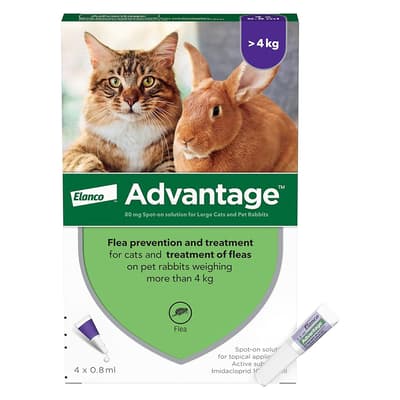
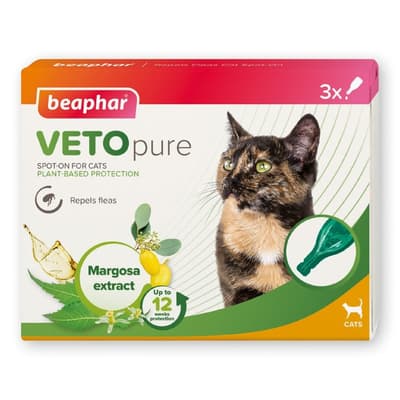
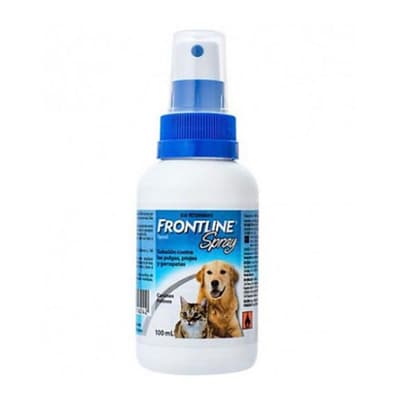
During an antibiotic course, do not add any new drugs or supplements on your own. But two things should be maintained: drinking water and environmental parasite control. Flea and tick bites cause itching and scratching; once a wound is scratched open there is a risk of secondary infection, and skin and wound infections are one of the common reasons cats need antibiotics. So parasite control should not be stopped just because 'it is on medication now', but which product and when to use it should be confirmed with your veterinarian for conflicts.
- Elanco (Bayer) Advantage for Cats 4-8kg, 1 box of 4 pipettes (BAC80) — HK$195 (out of stock, available for pre-order)
- Beaphar VETO pure Natural Spot-On for Adult Cats, 1 box of 3 pipettes (17812) (new packaging) — HK$111
- FRONTLINE Spray Flea and Tick Spray 100ml — HK$156 (out of stock, available for pre-order)
Prices and stock are subject to the live price on the online store.
Note: these products are topical spot-ons or sprays and can generally be used alongside oral antibiotics, but you must still follow the weight range and interval on the product label — 'more is more effective' is not true. For kittens, sick cats, or areas with skin wounds, always ask your veterinarian before use. Also, the above products are for parasite control, not for treating poor appetite; do not confuse the two.
7. Daily 3-minute record sheet (bring to follow-up)
You don't need to write in detail; three numbers are enough. Your veterinarian wants to see the 'trend', not single-day numbers.
| Item to record | How to measure | Warning line |
|---|---|---|
| Food intake | As a percentage of usual portion, e.g. 'ate half' | Drops by more than half, or zero intake for 24 consecutive hours |
| Water intake | Add water with a measuring cup, compare every other day | No drinking at all for 12 hours, or noticeably less |
| Weight | Same scale, same time (morning, empty stomach preferred) | Drops more than 5% in a short period |
| Stool and vomiting | Record frequency, shape, presence of blood | Bloody stool, black stool, multiple episodes of diarrhoea in a day |
| Demeanour | Comes out to greet you, jumps onto the sofa | Hiding, unresponsive, unsteady walking |
Of these five, water intake is the most easily overlooked. Many owners focus only on 'eating', but if a cat stops drinking too, there is a risk of dehydration and kidney strain within 48 hours — more urgent than missing a couple of meals.
Frequently asked questions
Q: Why might my cat lose its appetite after taking antibiotics? A: Mainly three mechanisms: the pill itself tastes bitter and cats are especially sensitive to bitterness, so they refuse it on smell; antibiotics also kill good bacteria, disrupting gut flora and causing soft stool, gas and mild nausea; and some drugs irritate the stomach when given on an empty stomach. It is usually most obvious in the first 1 to 2 days of the course. If your cat refuses food completely for more than 24 hours or goes 12 hours without drinking, contact your veterinarian immediately.
Q: My cat won't eat after antibiotics — can I stop the medication on my own? A: No. Poor appetite is a common side effect, but stopping before the course is finished means bacteria may not be cleared and the infection can return, possibly requiring stronger drugs next time. The right approach is to call your veterinarian and explain clearly: how many days it has been, how much of each meal is being eaten, and whether there is vomiting or diarrhoea. Let your veterinarian decide whether to change the drug, adjust feeding times, or add supportive treatment.
Q: If the antibiotic course isn't finished, will my cat's poor appetite resolve on its own? A: In some cases, yes. If it is only due to bitterness and mild gastrointestinal upset, it is usually worst in the first 1 to 2 days, starts to improve around day 3, and gradually returns to normal within a week. But if refusal to eat continues, weight drops, or there is vomiting, diarrhoea and lethargy, this is not a 'wait and see' situation — blood tests and examination are needed.
Q: Can I give probiotics while my cat is on antibiotics? A: Ask your veterinarian first, and separate probiotics from antibiotics by at least about 2 hours, otherwise the antibiotic will kill the probiotics too. Probiotics are supportive and cannot replace prescribed antibiotics, nor should they be used on your own to treat diarrhoea. If your cat won't even take the medication, deal with medication and hydration first — don't add new products.
Q: How many days do antibiotics need to be given? Will appetite return immediately afterwards? A: The length of the course is decided by your veterinarian based on the infection site and severity; commonly 5 to 14 days, and it must be completed. After finishing, gut flora usually takes a few days to a week to rebuild, and appetite and stool gradually return. If your cat still won't eat 2 to 3 days after stopping, or weight continues to drop, book a follow-up — don't dismiss it as 'post-antibiotic after-effects'.
Further reading
- Complete Guide to Safe Pet Medication | Dosage, Side Effects, Accidental Ingestion (2026) — complete safety principles for antibiotics, dewormers and accidental ingestion.
- Cat Medication Guide | 3 Essential Methods and Common Mistakes for Hong Kong Cat Owners — the three main methods (bare hands, hiding in treats, pill popper) and common mistakes.
- Complete Cat Vaccination Guide | When to Give the Hong Kong F3? Cost, Side Effects, Do Indoor Cats Need It? — understanding infection prevention and regular veterinary check-ups.
- Complete Cat Vaccination Guide | How to Choose Between F3 and F5 in Hong Kong? Full Vaccination Schedule — practical reference for medication and vaccine intervals, and follow-up schedules.
For emergencies, contact your veterinarian immediately; this article is for reference only and cannot replace veterinary diagnosis.
Information checked as of 2026-10-12Source: PetChill editorial team
 K9 Natural full guide →
 Feline Natural full guide →
 Fuji One full guide →