Quick answers
- There is only one formula for pet dosage: body weight (kg) × the per-kg amount on the vet's prescription = one dose; the numbers must come from the vet.
- Always measure medication with an oral syringe or a measuring device provided by the vet; household teaspoons can vary in actual volume by more than 20%.
- Weight must be in kilograms; in Hong Kong, 1 catty is about 605 grams, and reporting weight in 'catty' is a common and serious mistake.
- A 10% error in weighing leads to a 10% deviation in dosage; for a 5 kg cat, a 0.5 kg difference is already 10%.
- For liquid medication, first check the concentration on the label, convert to 'how many milligrams per millilitre', and then draw up to the mark the vet specified.
- For convulsions, difficulty breathing, persistent vomiting, or a dazed look, do not wait—go to a 24-hour animal hospital immediately.
- Under no circumstances should you increase the dose or frequency on your own, or give human medication to pets.
The question 'how to calculate emergency pet medication doses' really has only one answer: body weight (kg) multiplied by the per-kg amount on the vet's prescription gives one dose. The formula is simple; anyone who can multiply can calculate it. What really determines safety is not the formula, but the two input values behind it—whether the weight you have is accurate, and who provides the per-kg amount. Therefore, this article will not and cannot provide actual dosages for any medication; the 'generic dosage tables' circulating online are themselves a source of danger, because the same drug used in animals of different ages and different liver and kidney function can have vastly different safety margins.
What needs to be made clearer is that cats, dogs, and humans really do have different metabolic pathways. Cats' livers have an inherently lower ability to process some drugs, so some drugs that are completely safe for humans can poison a cat with just a small amount. This is why reasoning like 'a human takes 1 pill, so a dog takes 1/8 pill' is dangerous. Below, we start with the three input values, then cover six practical weighing and measuring steps, conversion traps, and finally the first thing you should do in an emergency. All principles are 'follow the vet's instructions' and no specific drug dosages will appear.
1. Why can't pet doses be 'scaled down from human doses'?
Many people's intuition is: animals are smaller, so just scale down the dose by body weight ratio. This intuition may hold within the same drug and same species, but it immediately fails across species. The reason is that drugs must be metabolised by the liver and excreted by the kidneys, and different species have different metabolic enzyme systems, excretion rates, and drug-binding capacities. Body weight only determines 'how much drug enters the body'; metabolic capacity determines 'how long the drug stays'.
| Comparison item | Humans | Dogs | Cats |
|---|---|---|---|
| Liver metabolic enzyme systems | Fine division of labour, mature metabolic pathways for most drugs | Generally faster metabolism than humans, shorter half-life for some drugs | Lower capacity for some conjugation reactions, slower metabolism |
| Response to human medications | Standard doses validated | Extremely sensitive to some human medications; small dose differences cause problems | More sensitive; small amounts of some human medications can cause poisoning |
| Common weight range | Adults 50 to 80 kg | 2 to 60 kg | 2 to 8 kg |
| Can human doses be scaled down? | — | No, must use vet prescription | No, must use vet prescription |
Besides species differences, there are three factors unrelated to weight: first, age. Kittens and puppies have immature liver and kidneys, and elderly pets have reduced liver and kidney function, narrowing the safety margin. Second, whether there is underlying disease. Animals with kidney, liver, or heart disease have different metabolism and excretion capacities from healthy animals. Third, whether they are already taking other medications. Drugs can enhance or reduce each other's effects; two drugs may each be safe, but together they may not be.
So this article's position is clear: the calculation method can be learned, but the dosage numbers must come from the vet. You can become an owner who calculates quickly and accurately, but you should not become an owner who sets doses yourself.
2. The three input values for safe dosing: weight, concentration, vet instructions
To calculate a safe single dose, you need three input values. If any one of the three is wrong, the result is wrong, and it is wrong proportionally—not 'a little off', but 'off by tens of percent'.
| Input value | Where it should come from | Most common mistake |
|---|---|---|
| Body weight (kg) | Vet clinic electronic scale; at home, use a baby scale or subtract two human weighings | Reporting in 'catty', subtracting incorrectly when weighing while holding the cat or dog, using old weight from previous records |
| Drug concentration (how many mg per ml / how many mg per tablet) | Label on the box or liquid bottle, vet prescription | Misreading mg and ml, not shaking the liquid well, misreading 'per 5 ml' as 'per ml' |
| Per-kg amount | Vet prescription; cannot be inferred on your own | Copying online tables, copying old prescriptions, listening to friends saying 'mine takes it this way too' |
Of these three values, only the first is something you can get right yourself. The second requires reading the label carefully, and the third is entirely up to the vet. So in practice, the owner's scope of responsibility is: weigh accurately, read the label accurately, measure out exactly the amount the vet wants, and report reactions truthfully. Decisions beyond this scope should be left to the vet.
By the way: if the vet's prescription says 'how many milligrams per kilogram' and you have a liquid, what you need to do is unit conversion, not re-judge the dose. Conversion mistakes are a common reason for clinic visits; Section 4 breaks them down. Similarly, if you have leftover medication from before, even if the dose looks the same, ask the vet whether it can be reused—drugs have expiry dates, and the condition may have changed.
3. Practical weighing and measuring: six steps
The following steps are general practice and apply to any medication and any prescription. Note that each step is only about 'measuring accurately'; none involves you deciding the dose yourself.
- Confirm the scale's unit first. Before turning on the scale, check whether it displays kg or lb. Many household scales default to pounds; 1 kg is about 2.2 lb. If you report the number without switching units, the weight will be off by more than double.
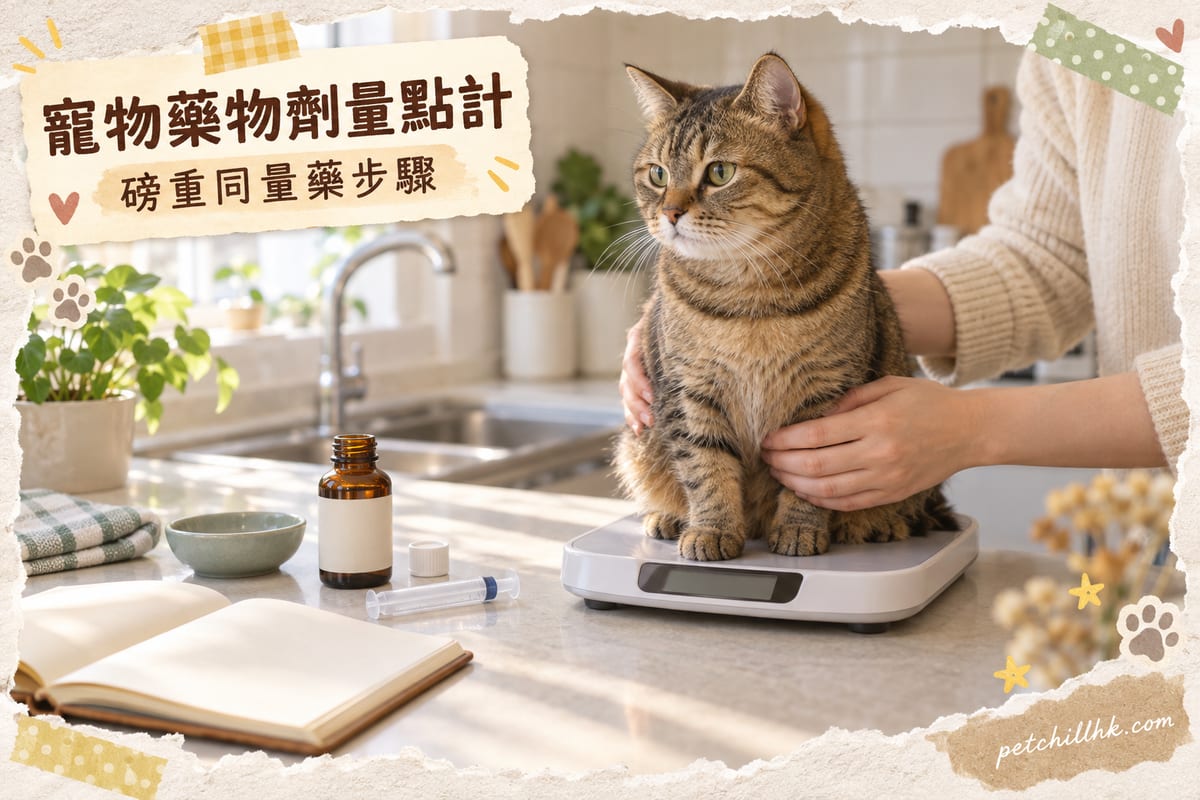
- Weigh. For small pets (cats, small dogs), weigh yourself first, then weigh yourself holding the pet, and subtract the two; remember to deduct the weight of the clothes you are wearing. For large dogs, take them to a clinic or pet shop to weigh; do not guess. Try to use the same scale throughout a course of treatment so the numbers are comparable.
- Write down the weight and date. In a notebook or phone memo, write 'date + weight (kg)'. Bring it to follow-up visits so the vet can recalculate, especially for kittens and puppies, whose weight can change within a week.
- Read the label concentration clearly. Liquid labels usually say 'contains X mg per 5 ml' or 'contains X mg per ml'; the two are different and require different conversions. Also confirm whether it is liquid, tablet, or capsule; different dosage forms are measured completely differently. Shake the liquid as directed on the label before each draw, otherwise the drug settles and the first few draws will be weaker.
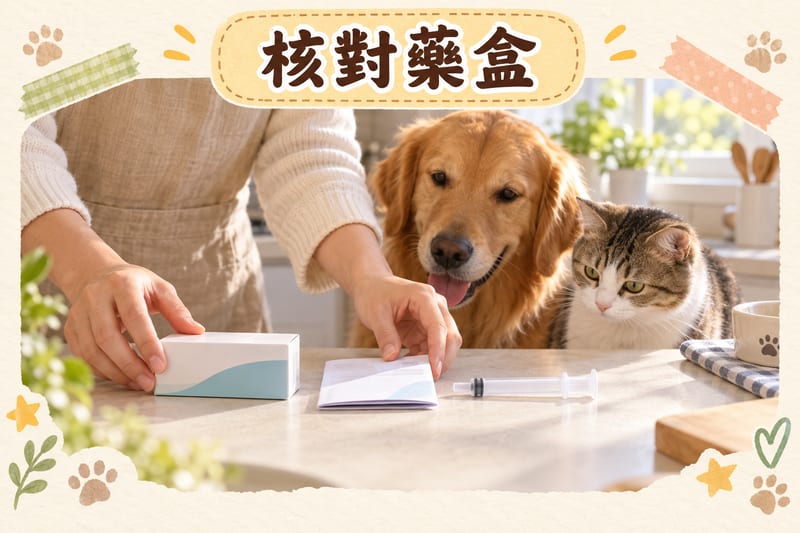
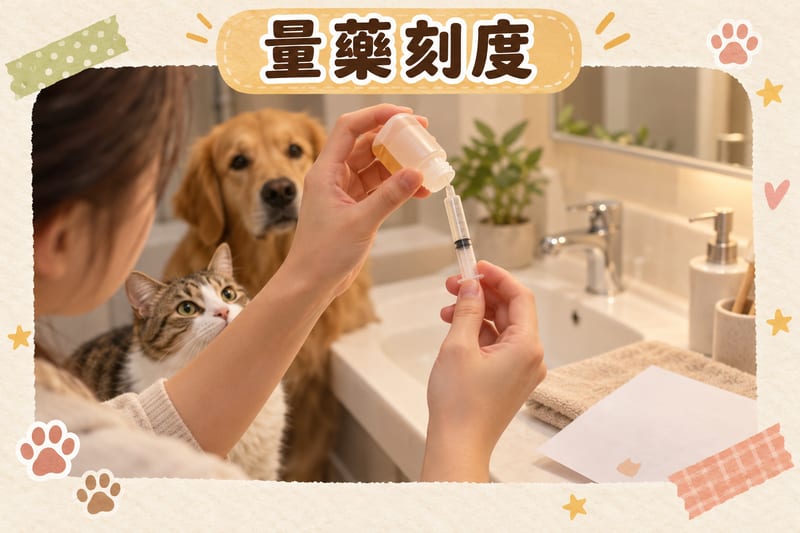
- Draw the medication with a syringe or a measuring device provided by the vet. Syringe markings are in millilitres; read the bottom of the meniscus against the mark. After drawing, check for air bubbles; if there are bubbles, push them out and draw again. Do not use household teaspoons, tablespoons, or measuring cups.
- Double-check with the vet after calculating. If you have calculated yourself, before administering, call or WhatsApp the clinic: 'The weight is X kg, the label concentration is Y, and I am about to draw Z ml.' This takes one minute but is the most effective error-prevention mechanism. If you cannot reach them and are in a hurry, do not administer; go to the clinic.
Among these six steps, steps 4 and 5 are where errors most often occur. Step 6 may seem redundant, but it is actually the only checkpoint that can catch conversion errors.
4. Where unit conversions most often go wrong
Unit errors are a major source of pet medication incidents because they do not immediately feel wrong—you think you have calculated accurately, but you are off by several times. Here are the most common conversion points.
| Unit you have | Correct conversion | Note |
|---|---|---|
| Kilogram (kg) | 1 kg = 1,000 g | Always record weight in kg; do not switch units midway |
| Hong Kong 'catty' | 1 catty ≈ 605 g ≈ 0.605 kg | Markets use 'catty', vets use 'kg'; the two cannot be mixed |
| Pound (lb) | 1 kg ≈ 2.2 lb | Household scales usually default to pounds; must switch before dosing |
| Household teaspoon | About 5 ml, but actual volume can vary by more than 20% | Cannot be used to measure medication; tablespoon is about 15 ml, with similarly large error |
| Liquid labelled '25 mg per 5 ml' | That is 5 mg per ml | This is only a unit conversion example, not a dosage recommendation for any drug |
The last row needs special mention. Suppose the liquid label says '25 mg per 5 ml'; your job is: first calculate 5 mg per ml, then use the vet's prescription instructions to decide how many ml to draw. The numbers '25 mg' and '5 mg' are concentration information on the label, not a prescribed dose for any animal. The actual number of ml to draw must always follow the vet's prescription; this article will not and should not provide that number.
Three other often-overlooked traps:
- Milligrams (mg) and micrograms (mcg/μg) differ by 1,000 times. Some drugs are labelled in micrograms; if you read them as milligrams, that is a 1,000-fold difference. Read every letter on the label.
- Tablets should not be cut at random. Some tablets have special coatings; cutting them changes absorption speed, and some must not be crushed at all. Whether a tablet can be split or mixed with food should always be asked of the vet or pharmacist.
- Liquids of different concentrations cannot be interchanged. The same drug can come in several concentration versions; if the leftover is a different concentration, the conversion is completely different, even if 'it is the same number of ml'.
Be conservative with medication. All of the above are measurement and unit principles; there are no dosage recommendations for any specific drug. The actual dose for your pet can only be decided by their vet.
5. What to do in an emergency: call the hotline and go to the vet
Back to the most practical scenario: your pet has already had an incident, and you have a box of medication and an uncertain number. At this point, what you need to do is not calculate, but triage. Here is the standard order of handling.
- Remove the medication immediately. Put away the box, bottle, prescription, and remaining medication to prevent further ingestion. Keep the packaging; do not throw it away—the packaging has the drug name, concentration, and expiry date, which is the most important information for the vet.
- Call immediately. Call your regular vet clinic; when closed, the phone usually has a recorded message with emergency arrangements. If the situation is clearly critical, go directly to the nearest 24-hour animal hospital and call on the way.
- State four things clearly. Drug name and concentration, estimated amount ingested, time of ingestion, and pet's weight in kg. If you have a photo of the packaging, WhatsApp it immediately.
- Do not induce vomiting yourself. Do not give salt water, do not give hydrogen peroxide, do not put your hand down the throat. Incorrect induction of vomiting can cause fluid to enter the lungs, with consequences worse than the original ingestion. Whether to induce vomiting is the vet's decision.
- Do not feed a second drug to 'neutralise' it. Also do not feed milk, oil, or any folk remedy. These have no scientific basis and will interfere with the vet's subsequent management.
- Prepare items for the hospital visit. Carrier bag or cage, pet's medical records and medication list, remaining medication with packaging, and a towel (for warmth).
If human medication, chemicals, pesticides, or an uncertain source is involved, the vet can contact the Hong Kong Poison Control Centre (operated by the Hospital Authority) for professional advice on your behalf. You do not need to judge toxicity yourself—that is the vet's job. Also, for on-site situations involving personal safety, such as gas leaks or fires, call 999 immediately.
| What you observe | Recommended action | Do not |
|---|---|---|
| Took medication but seems normal, only the dose may be slightly too high | Call the vet clinic immediately and follow instructions on whether to observe or bring in | Do not wait longer than the clinic advises |
| Vomiting, drooling, lethargy, unsteady walking | Take to hospital immediately, bring medication packaging | Do not give water to dilute, do not induce vomiting yourself |
| Convulsions, difficulty breathing, pale or purple gums, unconsciousness | Take to hospital immediately; life-threatening | Do not wait, do not make a slow phone call first |
| Discovered wrong medication several hours later | Still call the vet immediately and state the time truthfully | Do not ignore it because 'some time has passed' |
To avoid panic at that moment, do one thing today: save your vet clinic's phone number, the address of the nearest 24-hour animal hospital, your pet's weight (kg), and the most recent medication list on your phone and on the fridge door. In an emergency, you will not have time to search.
6. Do not use online calculators or human medication on your own
Finally, let us address a common idea directly: since the formula is so simple, why not find an online calculator and do it yourself?
Because a calculator is just a calculating machine. It cannot answer any of these questions: Does your pet have kidney disease? Are the liver values normal? Is it a kitten or an older cat? Are they taking other medications? Will this drug interact with others? These questions are the key to determining the dose, and all of them require the vet to review the medical history and test results. The calculator requires you to input a 'per-kg amount', and that is the one thing it cannot provide—if the input is wrong, even the most accurate calculation is wrong.
Similarly, human medication should not be given to pets on your own. Many human drugs have a very narrow safety margin for cats and dogs, and some ingredients are particularly burdensome for cats' metabolic systems. Even seemingly ordinary fever or pain relievers should not be used on your own. This is not 'being conservative'; it is because the dosage logic for veterinary and human medication is fundamentally different.
The correct approach is: use a calculator to help you check unit conversions, but always take the numbers from the vet's prescription, discard it after checking, and never use it as a basis for self-medicating. If the vet has prescribed medication, you are responsible for administering it accurately and recording reactions; if not, your responsibility is to take your pet to the vet.
Finally, about administering medication itself. To give it accurately, tools can help: pill pockets can hide tablets or capsules, reducing the chance of the medication being spat out or bitten. If your pet is in poor nutritional condition and needs support during recovery, you can also discuss the role of supplements with the vet. But all of these are 'support' and do not change one principle—the vet sets the dose, and you are responsible for accurate execution.
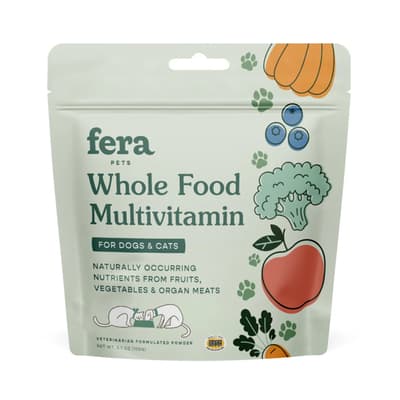
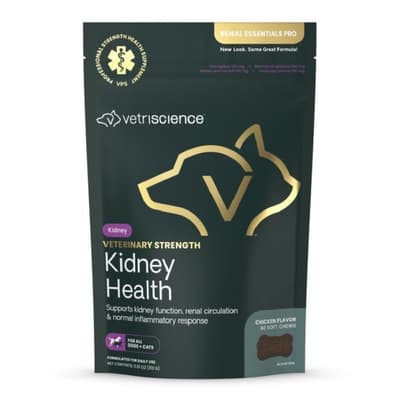
Related products for reference: VetriScience Dog Pill Pockets (for tablets or capsules) 45 pieces/bag — HK$108, makes daily medication easier. Two other nutritional support products, suitable for discussion with the vet during recovery: Fera Pets Supplement Cat and Dog Nutritional Supplement Pet Multivitamin 105g (for dogs and cats) (4628) — HK$346 (available for pre-order), VetriScience Kidney Support Advanced Formula for Dogs and Cats 60 tablets/bag — HK$355 (available for pre-order). Prices and stock are subject to the online store's current listed price. Supplements cannot replace vet-prescribed medication and should never be used to 'replace' a course of treatment under any circumstances.
If you want to reduce the risk of accidental ingestion at the source, you can first read our Pet Medication Safety Guide, which covers home medication storage and family medication guidelines; for deworming and ingestion-related handling, see the Pet Deworming Guide and Dewormer Safety Assessment; if your pet is on prescription medication and has appetite problems, Cat Loss of Appetite After Antibiotics has a specific observation timeline.

Further reading
- Pet Medication Safety Guide: Dosage, Side Effects, and Ingestion Management (2026)
- Complete Pet Deworming Guide: Schedule, Types, and Precautions
- Dewormer Safety Assessment: Ingredients, Timing, and Common Questions
- Why Do Cats Lose Appetite After Antibiotics? Causes and Solutions
In an emergency, contact your vet immediately; this article is for reference only and cannot replace veterinary diagnosis.
Information checked as of 2026-10-12Source: PetChill editorial team