Quick answers
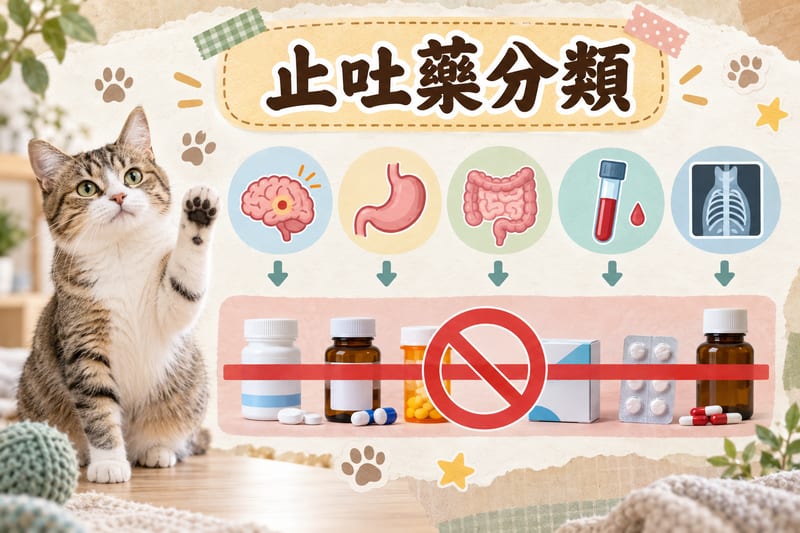
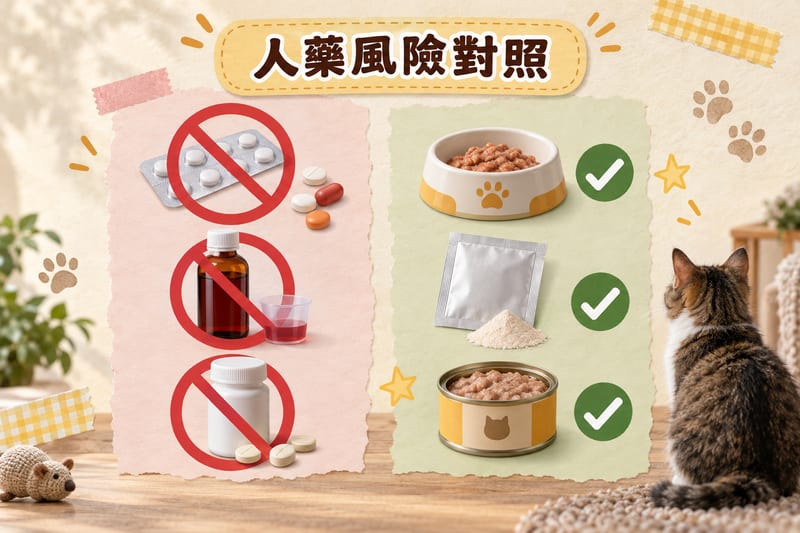
- Never give human anti-vomiting or anti-diarrhoea medicines to cats on your own. At least 5 types of human medicine in the home medicine cabinet should be locked away; loperamide and salicylate-containing anti-diarrhoea liquids can be fatal to cats.
- The 3 common cat anti-vomiting drugs (maropitant, ondansetron, metoclopramide) are all veterinary prescription-only, and the dose must be calculated according to body weight and cause.
- Giving anti-vomiting medicine before ruling out a foreign body obstruction can mask symptoms and miss the golden window of treatment within 24 hours.
- If a cat vomits more than 2 times a day, has diarrhoea for over 24 hours, or has vomiting and diarrhoea together, see a vet immediately.
- For young cats and seniors over 10 years old, the threshold is halved; if there is no improvement in 12 hours, go to the clinic, as they dehydrate much faster.
- The first line at home is 5 steps: record, hydrate, isolate, and secure the medicine cabinet—not giving medicine. Black stool and accidental ingestion are emergencies.
The question "What are the common anti-vomiting or anti-diarrhoea medicines for cats, and can I use them on my own?" needs a two-part answer. The drugs do exist, but all cat anti-vomiting and anti-diarrhoea medicines are veterinary prescription-only, and the risks of self-use by owners far outweigh the benefits. Anti-vomiting drugs used by vets include maropitant (NK1 receptor antagonist), ondansetron (5-HT3 receptor antagonist) and metoclopramide; for diarrhoea, vets mostly use dewormers, probiotics, adsorbents and prescription gastrointestinal diets, with antibiotics needed in a few cases. As for common human anti-diarrhoea medicines in the home cabinet, such as loperamide and salicylate-containing anti-diarrhoea liquids, these are contraindicated for cats and can cause neurological signs or even fatal poisoning.
Why so conservative? Because a cat's liver metabolism and body weight are very different from a human's, and the absolute dose of one adult tablet may already exceed the safe range for a 4 kg cat by many times. More importantly, vomiting and diarrhoea are only symptoms, not a diagnosis: the cause can range from a food change that was too quick (benign) to intestinal parasites, pancreatitis, kidney disease, or a foreign body obstruction (needs same-day treatment). Giving medicine before the cause is known is like switching off the fire alarm yourself. Below we break down the vet drugs, the risk comparison of human over-the-counter medicines, the physiological limits in cats, the timeline for seeing a vet, and the 5 steps of home care you can actually do. For an overall framework on medication safety, see Pet Medication Safety Guide.
Can cats take human anti-vomiting or anti-diarrhoea medicine? Remember 4 red lines first
The answer is "do not give on your own", and it is not a "just give a smaller dose" kind of no. The following 4 are hard red lines.
- Do not give any human anti-vomiting medicine. Human anti-vomiting medicines are formulated and dosed based on adult body weight; cats have a narrow therapeutic window, and the metabolism and side effects of the same drug in cats are different from humans.
- Do not "halve" the dose yourself or convert by body weight ratio. Drugs are not linearly converted in cats; liver function, kidney function, dehydration, and concurrent medicines all matter. Only a vet can make these calculations.
- Do not judge the cause from symptoms alone. Occasional vomiting from hairballs or eating too fast can look very similar to foreign body obstruction, pancreatitis, kidney failure, or poisoning (lilies, essential oils, dog spot-on products).
- Do not stop or increase the dose on your own. Medicines prescribed by a vet have a set course; changing them midway can cause a relapse or resistance.
A note on the home medicine cabinet. Keep the following 5 categories where cats absolutely cannot find them: human painkillers (paracetamol, ibuprofen), human anti-diarrhoea medicines (loperamide-type), antacids and anti-diarrhoea liquids containing salicylates, gastrointestinal over-the-counter medicines containing camphor or phenols, and dog spot-on products. If a cat ingests any of these, it is an emergency—do not wait for symptoms; take the packaging or a photo to the clinic immediately.
What anti-vomiting drugs do vets commonly use? All require prescription
The following are anti-vomiting drug classes used in veterinary practice. The purpose of listing them is to help you "understand what the vet is saying", not to let you buy or use them yourself. Any one of them requires a vet's diagnosis and prescription.
| Drug (generic name) | Mechanism | When vets typically use it | Can owners use it on their own? |
|---|---|---|---|
| Maropitant | NK1 receptor antagonist, blocks vomiting centre signals | Acute vomiting, before and after chemotherapy, motion sickness-related vomiting | No, must be assessed by a vet |
| Ondansetron | 5-HT3 receptor antagonist | Vomiting caused by gastroenteritis, pancreatitis, etc. | No, veterinary prescription only |
| Metoclopramide | Promotes gastrointestinal motility, inhibits the chemoreceptor trigger zone | Slow gastric emptying, some vomiting cases | No; contraindicated when obstruction is suspected |
| Domperidone | Promotes upper gastrointestinal motility | Some cases of poor gastric motility | No, requires veterinary judgement |
| Mirtazapine | Increases appetite, helps control vomiting | Long-term anorexia, ongoing weight loss | No, use determined by a vet |
The most important message from this table is: anti-vomiting drugs only treat symptoms, not the cause. If a cat is vomiting because it swallowed a string, hair tie or bone, the symptoms may temporarily disappear after an anti-vomiting injection; the owner thinks it is better and does not return for a follow-up, and by the time severe symptoms appear, there may already be intestinal perforation or peritonitis. So vets usually run tests first—blood tests, faecal tests, and X-rays or ultrasound if needed—to rule out obstruction, pancreatitis and kidney disease before deciding whether to use anti-vomiting medicine, and arrange fluid therapy to replace lost water and electrolytes.
Also note: the route of administration of anti-vomiting drugs is also decided by the vet. Some drugs are more stable by injection than orally; when a cat is actively vomiting, oral medicine may be vomited straight back up, delaying the effect. This decision should not be attempted at home by the owner, and there is no such thing as "give one tablet first to see if it works".
Common anti-diarrhoea drugs and home remedies: risk comparison table
This section is the most important part of the article to remember. Each item below is common in Hong Kong home medicine cabinets or traditional remedies, but the risks to cats are completely different.
| Human over-the-counter medicine or remedy | Common label use | Risk to cats | Can it be used on your own? |
|---|---|---|---|
| Loperamide (loperamide-type anti-diarrhoea) | Stop diarrhoea | Excessive slowing of gut motility, can cause central nervous system stimulation or sedation; highest risk in young cats; severe cases can be fatal | Absolutely not |
| Salicylate-containing anti-diarrhoea liquid or antacid | Diarrhoea, bloating, stomach acid | Cats metabolise salicylates extremely slowly, can cause gastrointestinal bleeding, anaemia, kidney damage | Absolutely not |
| Aspirin and other salicylate painkillers | Pain relief, fever reduction | Cats are extremely sensitive to salicylates; low poisoning threshold | Absolutely not |
| Paracetamol | Pain relief, fever reduction | Highly fatal to cats: methaemoglobinaemia, facial swelling, liver damage | Absolutely not |
| Ibuprofen and other NSAID painkillers | Pain relief, anti-inflammatory | Can cause gastrointestinal ulcers and acute kidney injury | Absolutely not |
| Kaolin-pectin | Old-style anti-diarrhoea | Limited anti-diarrhoea effect, can cause constipation, and adsorbs other drugs affecting absorption | Not recommended, requires vet instruction |
| Activated charcoal | Adsorbs toxins after ingestion | Should only be used under vet instruction; administering it yourself risks aspiration into the trachea | Do not use on your own |
| Probiotic products | Gut flora imbalance | Relatively low risk, but must use pet-specific products; ineffective when the cause is parasites or a foreign body | Ask your vet first |
| Gastrointestinal over-the-counter medicines containing camphor, phenols or wood tar oil | Stomach pain, diarrhoea | Cat liver struggles to metabolise camphor and phenolic compounds, can cause poisoning | Absolutely not |
One point many people misunderstand: diarrhoea does not always need to be stopped immediately. Diarrhoea is the body's mechanism for flushing out pathogens and irritants; forcibly stopping it may retain bacteria, toxins and parasites in the gut, prolonging or worsening the condition. The usual order vets handle diarrhoea is: first test the stool to rule out parasites and bacteria, then address dehydration, then consider dietary adjustment (e.g. prescription gastrointestinal diet) and supportive products (probiotics); only a minority of cases actually need medication. So "buy a pack of anti-diarrhoea medicine to hold things over" has a completely disproportionate risk-benefit ratio for cats.
If a cat develops diarrhoea or constipation while on antibiotics prescribed by a vet, the approach is different—you should notify the vet first, not add anti-diarrhoea medicine yourself. For details on this type of case, see How to handle diarrhoea or constipation in cats during antibiotics and Why cats lose appetite after antibiotics.
Why is the medication window for cats so narrow? 3 physiological reasons
Understanding the following 3 points will help you understand why vets are so conservative about "cat medication".
First, cats have low hepatic glucuronidation capacity. This metabolic pathway is the main route for handling phenols, salicylates, paracetamol and similar substances. Cats have significantly lower activity of the relevant enzymes, so many drugs and chemicals are metabolised extremely slowly, with half-lives several times longer, making toxic accumulation easy. This is why human anti-diarrhoea liquids and aspirin, which are ordinary over-the-counter medicines for people, become high-risk items for cats.
Second, small body weight means a narrow safety margin. A 4 kg adult cat and a 60 kg adult differ by about 15 times in body weight, and the absolute dose gap cannot be fixed by "cutting the tablet smaller"—tablet splitting errors, the cat's actual weight, and body fat ratio all affect absorption. In addition, cats are extremely sensitive to bitter tastes; the struggle and drooling during dosing make the actual amount ingested even harder to control.
Third, dosing itself carries risks. Cats can easily cough and choke when resisting; pushing liquid medicine forcefully can cause aspiration into the trachea and aspiration pneumonia, and this risk is even higher in a cat that is already vomiting and weak. Add "undiagnosed" and "dosing risk" together, and self-medicating is even less worthwhile.
Finally, a commonly overlooked population difference: young cats, seniors over 10 years old, and cats with kidney disease, liver disease, heart disease or diabetes have much lower drug tolerance and dehydrate much faster. For the same symptoms, the observation window in these cats should be shortened; you cannot wait according to the standard for a healthy adult cat.
When can you observe at home? Timeline for seeing a vet
Not every vomiting or diarrhoea case needs an immediate trip to the clinic, but the waiting limit is different for each situation. The table below lists the observation time and red lines by situation.
| Situation | How long you can observe | When to see a vet immediately |
|---|---|---|
| Occasional hairball vomiting, then normal energy and appetite | Observe 24 hours | Vomiting 2 or more times again the same day |
| Vomited once, after a food change or eating too fast | Observe 12 to 24 hours | Still recurring after 24 hours, or diarrhoea starts |
| Soft stool 1 to 2 times, normal energy | Observe 24 hours, pause new treats | Diarrhoea lasts more than 24 hours |
| Diarrhoea with fresh red blood streaks | Should not wait | See a vet within the same day, bring fresh stool |
| Black tarry stool, or vomit resembling coffee grounds | Should not wait | Same day or emergency; this is gastrointestinal bleeding |
| Vomiting and diarrhoea together | Should not wait | See a vet within the same day; immediately for young or senior cats |
| Not eating at all for more than 24 hours | Should not wait | See a vet within the same day; cats are at risk of fatty liver |
| Persistent retching without vomiting, abdominal bloating, drooling | Emergency | See a vet immediately; must rule out foreign body obstruction |
| Ingestion of human medicine, lilies, essential oils or dog spot-on products | Emergency | See a vet immediately; bring the packaging or a photo |
| Young cats (under 6 months) or senior cats (over 10 years) | Observation window halved | See a vet if no improvement in 12 hours |
Besides time, you need to recognise dehydration. You can check with 3 simple methods: gently lift the skin at the back of the neck and release; the skin should fall back slowly. Wet your finger and check the gums; they should be tacky and dry. Press the gum until it blanches and see how quickly the colour returns; it should be slow. Any obvious abnormality, together with lethargy and reduced urine output, is a combination that requires immediate veterinary attention—do not wait any longer.
Conversely, if the cat has normal energy and appetite, has vomited or had diarrhoea only 1 to 2 times, has no blood, no vomiting plus diarrhoea together, and it happened after a food change or environmental change, you can observe first, but the observation window should not exceed 24 hours, and you should start recording. The more detailed the record, the faster the vet's judgement.
5 steps of home care and a vet consultation checklist
Before going to the clinic, the following 5 steps are what actually help at home, and none involve giving medicine yourself.
- Keep a record. Write down the time, frequency, content and colour of vomit, whether there is blood, whether there is a hairball, stool form and smell, and the relationship to food. Score stool form on a 1 to 7 scale and record for 3 consecutive days, and you will have information the vet can use directly.
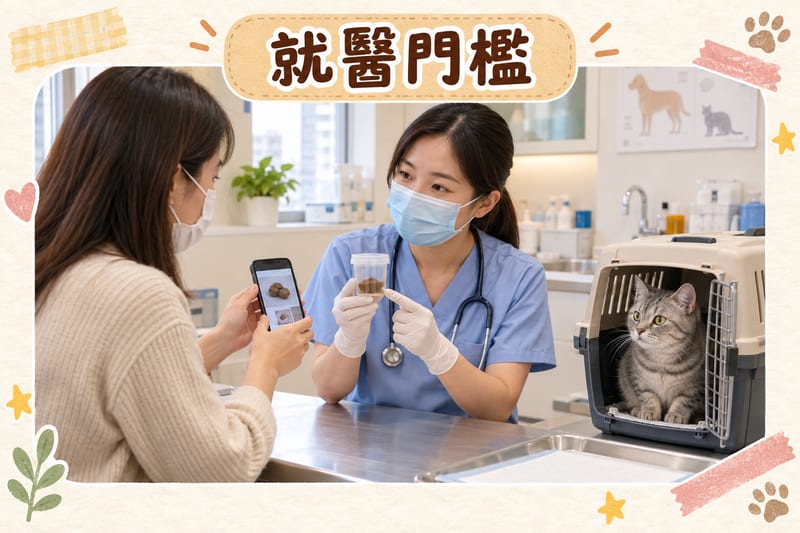
- Take photos and keep samples. Use your phone to photograph the vomit and stool; a fresh stool sample is best sent within 24 hours, and short-term storage can be in the lower part of the fridge, but do not freeze, as freezing destroys some parasite structures.
- Hydrate. Add a little warm water to wet food, place several water bowls around the home, or use a flowing water fountain to increase water intake. Do not give sports drinks or human electrolyte water on your own; the sugar and composition are not suitable for cats, and the actual electrolyte supplementation method should be decided by a vet.
- Isolate and clean. In multi-cat households, separate litter trays, clean daily, and wash hands after cleaning; wash food and water bowls daily. Parasite cysts can persist in the environment, and home cleaning itself is a line of defence.
- Secure the medicine cabinet and toxins. Besides human medicines, lilies, essential oils such as tea tree and eucalyptus, strings, rubber bands and plastic bags should all be put away. Essential oils and lilies are highly toxic to cats, and many poisoning cases start with home decor.
Two things not to do during this process: first, do not give human anti-vomiting or anti-diarrhoea medicine on your own; second, if the cat is taking medicine prescribed by a vet, do not stop or increase the dose on your own because of new symptoms—call the clinic first.
6 questions to ask the vet
Take the following checklist to the clinic to avoid "remembering what you forgot to ask only after getting home".
- Do we need blood tests, faecal tests, or X-rays/ultrasound?
- What is the cause? Do we need to rule out foreign body obstruction or other emergencies?
- Do we need fluid therapy (subcutaneous or intravenous)?
- What does the prescribed medicine do, how long should it be given, and what side effects mean we should stop?
- Does the diet need adjusting? For example, a prescription gastrointestinal diet or a temporary single protein?
- When is the follow-up? Which symptoms recurring mean we cannot wait?
On dosing technique, if the vet has indeed prescribed oral medicine, the method and common mistakes can be found in Cat Medication Guide; the key points are to act swiftly, place the medicine at the back of the tongue, and give a small amount of water by syringe afterwards.
Medication safety iron rules: even topical spot-on products must be chosen by weight
Finally, a scenario directly related to "medication safety" but often overlooked: many owners also need to deal with fleas while their cat has gastrointestinal problems. Two iron rules to remember. First, dog spot-on products must never be used on cats—especially dog spot-on products containing permethrin, which are highly toxic to cats and can cause tremors, seizures and even death. Second, use products labelled for cats and match the dosage form to the cat's body weight; if the cat is overweight or underweight, confirm with the vet.
Below are examples of cat-labelled spot-on products available at PetChill's online store:
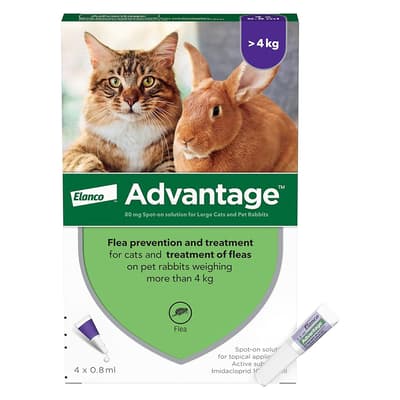
- Elanco (Bayer) Advantage for Cats 4-8kg Spot-On 1 box of 4 pipettes (BAC80) — HK$195 (available for pre-order)
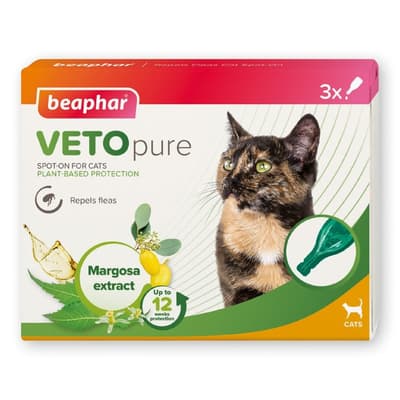
- Beaphar VETO pure Adult Cat Natural Spot-On 1 box of 3 pipettes (17812) (new packaging) — HK$111
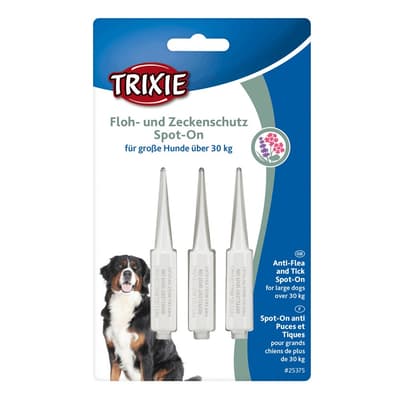
- Trixie Flea and Tick Spot-On Natural Flower Oil 3 x 5ml (25375) — HK$98 (available for pre-order)
Prices and stock are subject to the online store's current listed price.
Note that whether oral or topical, if the cat is taking medicine prescribed by a vet, you should ask the vet before adding any new product, as some ingredients can interact.
Further reading
- Pet Medication Safety Guide | Dose calculation, antibiotic side effects, dewormers, ingestion management (2026)
- How to handle diarrhoea or constipation in cats during antibiotics
- Why cats lose appetite after antibiotics: causes and how to respond
- Cat Medication Guide | 3 key methods and common mistakes every Hong Kong cat owner should learn
In an emergency, contact a vet immediately; this article is for reference only and cannot replace veterinary diagnosis.
Information checked as of 2026-10-12 · Source: PetChill editorial team
 K9 Natural full guide →
 Feline Natural full guide →
 Fuji One full guide →