Quick answers
- Common side effects tend to appear in the first 3 to 5 days of the course: soft stool/diarrhoea, vomiting, reduced appetite, lethargy, itchy skin, and swelling or pain at the injection site.
- The first step is not to stop the medication but to record: note the dosing time, symptoms, frequency, and energy/appetite.
- Mild soft stool or eating half the usual amount can be observed for 24 to 48 hours; complete refusal to eat for more than 24 hours means call immediately.
- 5 immediate emergency signals: facial swelling, rapid breathing, repeated vomiting, bloody or black stool, seizures or unsteady walking.
- Probiotics should be given about 2 hours apart from antibiotics; never give human anti-diarrhoeal or pain medications on your own.
- Always finish the course, commonly 5 to 14 days; return leftover medication to the clinic—do not save it for next time or give it to another pet.
What should you do if your pet has side effects during a course of antibiotics? The answer can be broken into three layers: first, you must not stop, reduce, or skip a dose on your own—stopping before the course is finished can leave the infection untreated and may select for resistant bacteria; any decision to stop, change, or adjust the dose must be made by your veterinarian. Second, distinguish severity: mild soft stool or eating half the usual amount can usually be observed at home for 24 to 48 hours, but facial swelling, rapid breathing, bloody stool, or seizures are emergencies requiring immediate veterinary care. Third, hydration, record-keeping, and giving doses on time are the most practical home measures, and probiotics should be given about 2 hours apart from the antibiotic.
Most antibiotics are broad-spectrum; after administration the gut flora is temporarily disrupted and the stomach may be irritated. The drugs are also metabolised by the liver and kidneys, so the same drug can affect different pets very differently. Discomfort during the course may not all come from the drug—uncontrolled infection, dehydration, and pain can produce similar signs. So the focus of this article is not to have you adjust medication yourself but to provide a decision sequence: look at the timeline first, then distinguish the cause, check against the emergency red lines, and finally keep good records and provide home care. For overall medication safety principles, you can review the Pet Medication Safety Guide.
1. How common are antibiotic side effects? 6 reactions and when they appear
Antibiotics are designed to kill bacteria and do not distinguish between pathogens and beneficial gut bacteria. When the flora is temporarily unbalanced, soft stool, gas, and appetite changes occur; some drugs directly irritate the stomach, causing vomiting or drooling; a few cause immune-mediated allergic reactions unrelated to dose. The same drug can affect different pets very differently.
Based on what Hong Kong veterinary clinics most commonly see, antibiotic side effects fall into three groups:
- Gastrointestinal reactions (most common): soft stool, diarrhoea, vomiting, reduced appetite, gas, drooling; mostly appear within hours of dosing to the first 3 to 5 days.
- Allergic reactions (rare but can be urgent): facial or eyelid swelling, hives, rapid breathing; severe cases can cause anaphylactic shock, unrelated to dose.
- Others: swelling or pain at the injection site, lethargy, drowsiness, occasional neurological signs; long courses are monitored with blood tests by the veterinarian for liver and kidney values.
| Common reaction | Typical onset | What you can do at home first | When to contact the veterinarian immediately |
|---|---|---|---|
| Soft stool/diarrhoea | Hours after dosing to day 3–5 | Hydration, small frequent meals, record frequency and consistency | Watery diarrhoea lasting more than 24 hours, fresh blood, or black stool |
| Vomiting | Within 30 minutes to 2 hours after dosing | Record the time relationship between vomiting and dosing | Vomiting after every dose, cannot keep the medication down |
| Reduced appetite | Most obvious in the first 1–2 days | Slightly warmed wet food, small frequent meals, mix medication in just a small bite | Complete refusal to eat for more than 24 hours, no drinking for 12 hours |
| Lethargy/drowsiness | Early in the course | Keep warm, quiet environment, minimise handling and visitors | Unresponsive, unsteady walking, low body temperature |
| Itchy skin/rash | Minutes to days | Stop any newly introduced products immediately, photograph the extent | Facial or eyelid swelling, spreading hives, scratching to bleeding |
| Injection-site swelling/pain | 1–3 days after injection | Do not massage or apply heat, measure the swelling daily | Marked swelling within 24 hours, pus, accompanied by fever |
The table is only a quick guide; what really determines whether you need to seek veterinary care is the "direction of symptoms" and whether other signs are present.

2. Side effect or worsening disease? 4 ways to tell
Discomfort during an antibiotic course should not automatically be attributed to side effects: some is uncontrolled infection or even another concurrent disease, and the approach is completely different. The following 4 directions help you decide "when to call", not to diagnose yourself.
- Relationship to dosing time: symptoms that consistently appear after dosing (e.g. drooling or vomiting within 1 hour) are more likely drug-related; if unrelated to dosing time, consider the infection itself.
- Direction of symptoms: drug reactions are usually worst in the first few days then ease; worsening day by day is not an "adjustment period".
- Any new symptoms: fever, jaundice (yellow gums or whites of eyes), difficulty urinating, marked abdominal distension or pain are not simple gastrointestinal side effects and should be ruled out by a veterinarian.
- General state: drinking and urinating, coming out to greet you—even if stool is soft, relatively reassuring; hiding, not moving, refusing food and drinking much less—seek help earlier.
| Observation | Favours drug reaction | Favours worsening disease or other problem | Suggested action |
|---|---|---|---|
| Onset | Consistently after each dose | Unrelated to dosing time, sudden | Record time, bring to follow-up |
| Direction | Worst in first few days, then eases | Worsens daily, spreads | Do not wait for the course to finish; seek care earlier |
| Energy and appetite | Okay energy, eating half | Hiding, unresponsive, complete refusal | Seek care if complete refusal >24 hours |
| Accompanying signs | Only gastrointestinal or skin signs | Fever, jaundice, abdominal distension, difficulty urinating | Same-day or immediate care; these are exclusion checks |
| Drinking and urine output | Normal | No drinking for 12 hours, markedly reduced urine | Contact veterinarian immediately, do not wait |
If the problem centres on bowel movements or appetite, add another layer of recording: frequency, consistency, presence of blood. Steps for bowel issues are in 〈What to do about diarrhoea or constipation during antibiotics〉; if stool is normal but your pet "won't eat", see 〈Reduced appetite during a course of antibiotics〉.
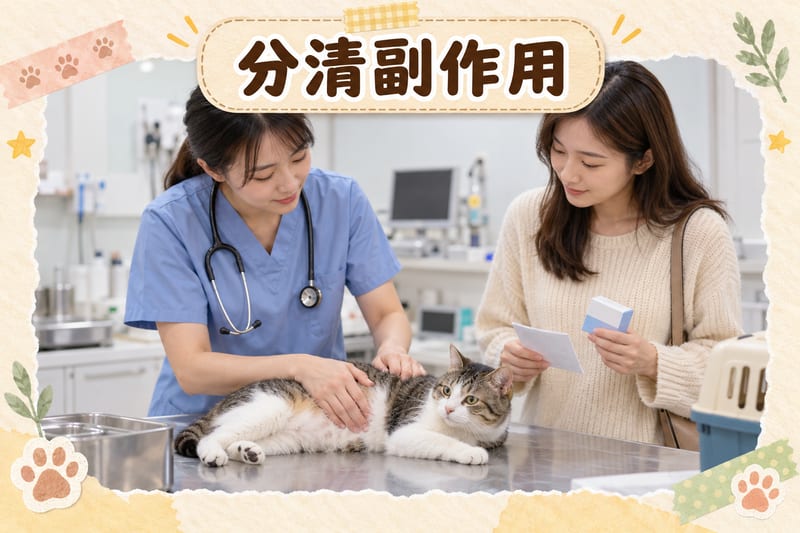
3. 5 emergency signals for immediate veterinary care, and 2 situations not to wait on
Some side effects are not in the "observe" category—act immediately if they appear:
- Swelling of the face, eyelids, or lips, with pawing at the face or noisy breathing—an allergic reaction that can deteriorate rapidly.
- Rapid breathing, pale or bluish gums—signs of anaphylactic shock or severe hypoxia.
- Repeated vomiting, cannot keep down medication or water—dehydration and poor absorption occur together.
- Diarrhoea with fresh blood, black, or jelly-like mucus—possible severe intestinal inflammation.
- Seizures, unsteady walking, or sudden extreme weakness—need to immediately rule out neurological or other emergencies.
There are also 2 situations where you should not wait even if symptoms are mild: no drinking at all for more than 12 hours, or skin that does not spring back immediately when pinched; kittens, puppies, senior pets, or those with liver or kidney disease have much lower tolerance. Long courses or multiple concurrent medications should also prompt a mid-course check-up.
4. Course discipline: do not stop, reduce, or skip a dose on your own
This section is the most important part of the article: any decision to stop, reduce, change, or alter the timing of medication must be made by your veterinarian. Not finishing antibiotics not only leaves the infection untreated but also teaches bacteria to become "resistant".
| Common mistake | Why not | Correct approach |
|---|---|---|
| Stopping when symptoms improve | Bacteria remain, infection can relapse, and resistant bacteria may be selected | Finish the entire course specified by the veterinarian, including the last dose |
| Halving the dose because side effects seem severe | Sub-therapeutic dose fails to reach effective concentration—half-measures | Call the veterinarian first; they decide whether to change drug or add support |
| Doubling the next dose after a missed one | Too high a dose in a short time increases gastrointestinal and liver/kidney burden | Call the veterinarian and follow instructions for missed doses |
| Adding human anti-diarrhoeal, anti-vomiting, or pain medication | Some ingredients are clearly toxic to cats and dogs and can mask the condition | Only use medications prescribed by the veterinarian; do not add your own |
| Saving leftovers for next time or giving to another pet | Condition, weight, and infection site differ; medication is completely different | Return leftovers to the clinic or pharmacy for disposal |
A few points on giving medication: if it can be mixed, mix only in a small bite of food, feed the rest normally to avoid one bitter taste putting them off the whole food; do not crush or open capsules on your own—some formulations are sustained-release or enteric-coated, and breaking them affects absorption; observe for 30 to 60 minutes after dosing for drooling, pawing at the face, or vomiting.
5. 6 steps of home care: doing your best without changing the course
The following six steps are supportive home measures, provided you continue the medication as directed by your veterinarian.
- Keep a daily log: use a phone memo or calendar to note the time of each dose, the amount, and any changes within 1 to 2 hours afterwards. A few days of consistent recording will reveal a pattern.
- Hydration first: wet food is about 75–80% water, dry food only about 6–10%. Add 2 to 3 tablespoons of warm water to wet food and place several water bowls—directly helpful for diarrhoea and poor appetite.
- Keep the diet unchanged, feed small frequent meals: do not switch food or add new treats during the course; instead feed 3 to 5 small meals daily; avoid high-fat canned food during diarrhoea.
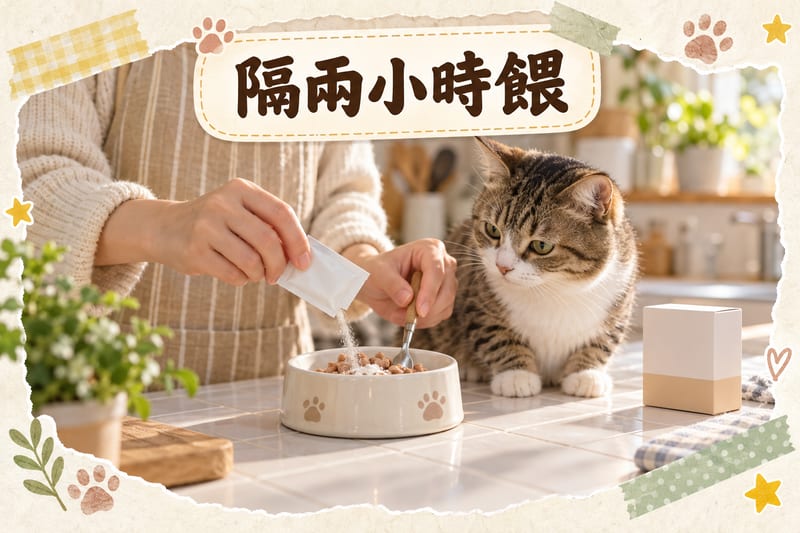
- Probiotics about 2 hours apart: probiotics are supportive and cannot replace the course. Giving them at the same time directly reduces probiotic survival; if the veterinarian schedules two doses a day, give probiotics between the two.
- Skin and injection-site care: check the injection site for swelling, heat, pain, or pus; do not massage or apply heat; clean wounds as directed by the veterinarian and do not apply human ointments on your own.
- Maintain environment and parasite control: flea and tick bites cause itching and scratching, and damaged skin risks secondary infection—skin infections are one of the common reasons antibiotics are needed. Confirm with your veterinarian that any new product will not conflict.
Examples of related products currently sold by PetChill:
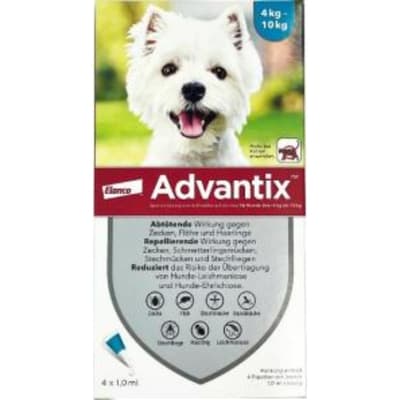
- Elanco (Bayer) Advantix for Dogs 4kg-10kg, box of 4 pipettes (X-02) — HK$295
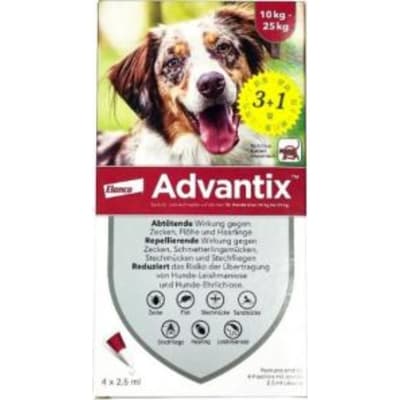
- Elanco (Bayer) Advantix for Dogs 10kg-25kg, box of 4 pipettes (BAX250) — HK$318
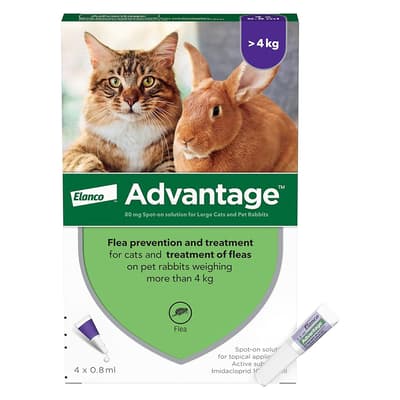
- Elanco (Bayer) Advantage for Cats 4-8kg, box of 4 pipettes (BAC80) — HK$195 (stock 0, available for pre-order)
Prices and stock are subject to the online store's current listed price. These products are topical spot-ons and can generally be used alongside oral antibiotics, but follow the product label's weight range and interval—do not think "more is more effective"; if your pet is ill or has skin wounds, ask your veterinarian before use. The products are for parasite control, not for treating antibiotic side effects.
6. The 5 numbers to tell the veterinarian
When calling or at a follow-up, how clearly you communicate directly affects how quickly the veterinarian can judge. Write down these 5 numbers in advance:
- Drug name and course progress: drug name, times per day, how many days given, how many days left.
- Time gap between symptoms and dosing: e.g. "drooling starts 40 minutes after each dose".
- Frequency: how many times vomiting per day, how many times diarrhoea, stool consistency (soft, watery, bloody).
- Food and water intake: as a percentage of usual amount, e.g. "ate 30%", "no drinking for 12 hours".
- Weight change: weigh once at the start of the course, then re-weigh on the same scale at the same time; a short-term loss of more than 5% should be highlighted.
Easy to forget but useful information: the medication box or bag (drug name and dose), previous allergy history, current supplements and prescription medications, and whether there was a food change or grooming/boarding before the illness.
7. After the course: recovery period and leftover medication
Stopping the medication does not mean immediate return to normal. Gut flora usually takes several days to one to two weeks to stabilise; maintain the proportion of wet food and adequate hydration during this time. If treating a skin or wound infection, also attend follow-ups as arranged by the veterinarian to confirm true healing rather than "surface improvement".
Set a review point: most pets show clear improvement in energy and appetite within two to three days after stopping; if soft stool or vomiting persists after one to two weeks and weight continues to fall, arrange a follow-up to check for parasites, food intolerance, or other chronic causes. If the course was stopped or doses missed due to side effects, proactively mention the reaction at the follow-up—this information helps the veterinarian avoid similar ingredients next time or choose a more suitable formulation.
Finally, leftover medication. Having leftovers before the course is finished usually means it was stopped or doses were missed; do not keep them in the medicine cabinet for "next time": antibiotics have expiry dates, potency declines with storage, and doses are calculated by weight—sharing medication is high risk. The correct approach is to take them back to the clinic or pharmacy; some clinics in Hong Kong have return arrangements. As for deworming and other preventive medications, do not start new ones during the course; for background see the Cat and Dog Deworming Guide.
Further reading
- Pet Medication Safety Guide | Dosage, side effects, accidental ingestion (2026) — safety principles for antibiotics, dewormers, and accidental ingestion.
- How to handle diarrhoea or constipation in cats during antibiotics — bowel movement timeline, severity assessment, and probiotic use.
- Why does my cat lose appetite after antibiotics? Causes and solutions — refusal-to-eat timeline and ways to improve appetite.
- Cat and Dog Deworming Guide | Hong Kong dosing schedule and safety principles — interval arrangements for deworming and other preventive medications.
In an emergency, contact your veterinarian immediately; this article is for reference only and cannot replace veterinary diagnosis.
Information checked as of 2026-10-12Source: PetChill editorial team