
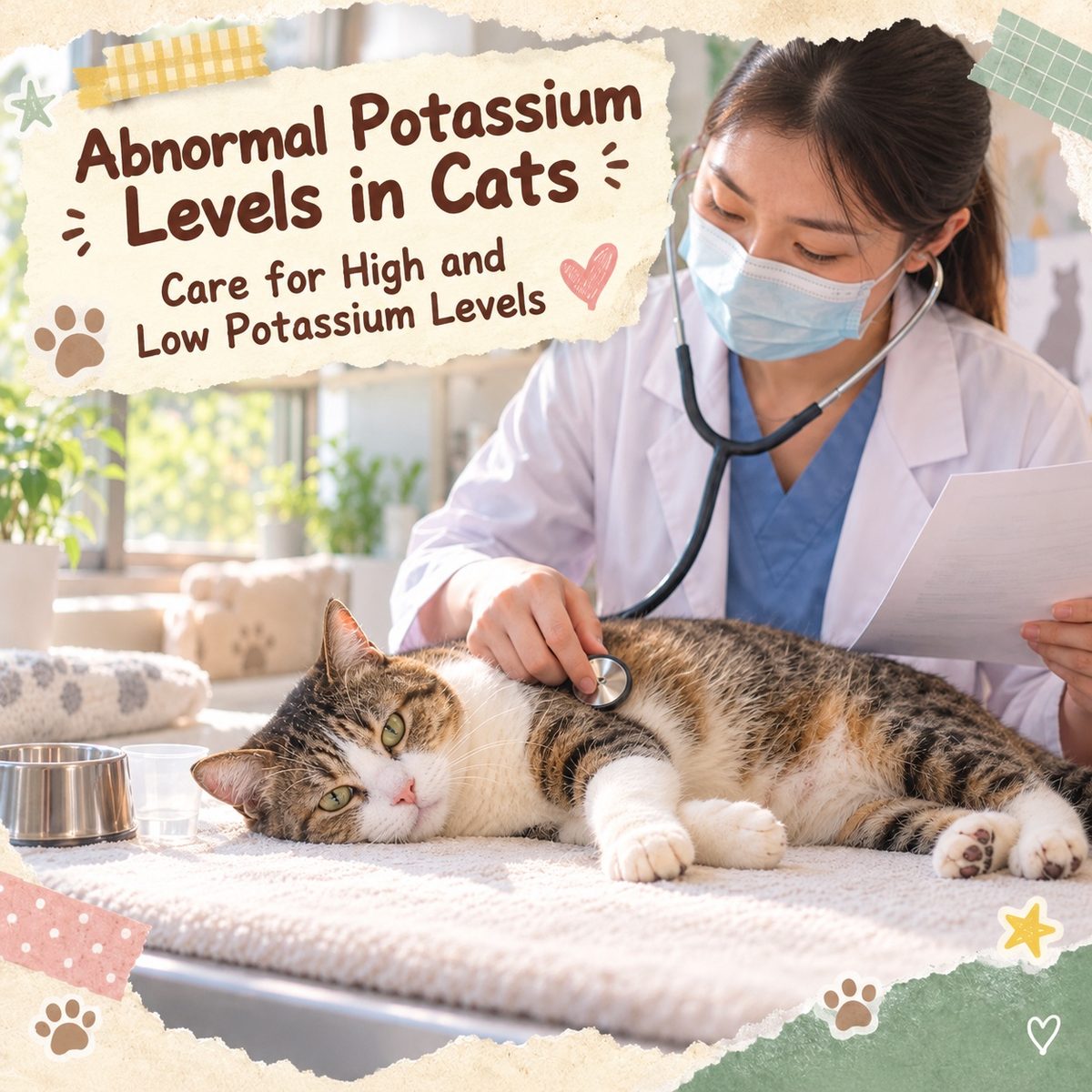
Quick Answers
- The typical reference range for cat blood potassium is about 3.5 to 5.5 mmol/L; each laboratory is different, so always use the reference range printed on your report.
- High potassium has 3 major mechanisms: reduced kidney potassium excretion (complete urethral obstruction is the most urgent), potassium shifting out of cells, and increased intake or medication; pseudohyperkalemia must also be ruled out.
- Low potassium has 3 major mechanisms: increased loss (vomiting, diarrhea, diuretics, polyuria), insufficient intake (not eating for more than 3 days), and potassium shifting into cells.
- High potassium is an emergency: if bradycardia, arrhythmia, or extreme weakness appears, seek veterinary care immediately; do not wait 24 hours.
- Blood potassium cannot be accurately measured at home; the practical approach is to weigh every 1 to 2 weeks, record 24-hour water intake, and have blood tests every 1 to 3 months as arranged by the veterinarian.
- Potassium supplementation or restriction must always be decided by a veterinarian based on blood tests; if a cat eats nothing for more than 24 to 48 hours, there is a risk of fatty liver, so seek veterinary care immediately.
Blood potassium is one of the most commonly tested electrolytes in cats, but most cat owners, when they get the report, only see a number with an up or down arrow next to it, and then search online for "what disease is high potassium". The reality is: abnormal blood potassium itself is not a disease, but a signal—the same elevated number could come from an emergency like complete urethral obstruction that needs immediate treatment, or it could just be a false alarm caused by hemolysis of the blood sample; similarly, a low number could be from polyuria loss in chronic kidney disease, or simply from the cat eating poorly for three consecutive days.
Therefore, this article will not judge for you "whether this number is serious", because severity must be assessed together with heart rate, acid-base status, kidney function, and history. What this article does is organize the scattered information into a framework you can follow: first explain the normal range and how "abnormal" is defined, then separate high and low potassium into cause classification tables; then teach you what 5 other items to look at in a blood test report besides potassium, clarify the mediating mechanisms by which liver impairment, steroids, and diuretics affect potassium balance; finally, the diagnostic process, dietary management, and what can be done for home monitoring, and when to take the cat to the hospital immediately.
All numbers in this article are based on commonly used veterinary reference values and publicly available information compiled by the PetChill editorial team; any judgment about an individual cat must be based on its own blood test report and veterinary instructions.
What is blood potassium? Normal range in cats and how "abnormal" is defined
Potassium is the body's main intracellular cation: about 98% of potassium is inside cells, with only a small portion in the blood and extracellular fluid. This distribution is crucial because what a blood test measures is "the potassium in the blood", not "the body's total potassium". So two situations can occur: the body may already be potassium-deficient, but the blood potassium number looks normal or even high (potassium temporarily moved from cells into the blood); conversely, the body's total potassium may not be too bad, but the blood potassium number is clearly low.
Potassium has three main jobs: maintaining cell membrane potential, coordinating nerve and muscle (including heart muscle) signal transmission, and supporting acid-base balance. The heart muscle is particularly sensitive to changes in blood potassium, so whether blood potassium is high or low, the most dangerous manifestations are heart-related.
As for the "normal range", different veterinary laboratories have different instruments and methods, so reference ranges vary; for cats it is generally around 3.5 to 5.5 mmol/L (some laboratories write 3.4 to 5.3 mmol/L, others 3.6 to 5.2 mmol/L). The only correct approach is to look at the reference range printed on your own report, not to copy any number from the internet. If the report does not print it, ask your veterinarian to explain.
The table below is a general comparison to help you understand "which range the number falls into and what manifestations usually accompany it":
| Blood potassium level | Approximate value (based on report reference range) | Common manifestations | Management direction |
|---|---|---|---|
| Markedly low | Below lower reference limit | Muscle weakness, ventroflexion of the neck, stiff gait, poor spirit, constipation, decreased appetite | Find the cause (loss, insufficient intake, potassium shift into cells); do not supplement potassium on your own |
| Mildly low | Slightly below lower reference limit | Mostly no obvious symptoms, found only on recheck | Review diet, medications, and chronic disease control; recheck as arranged by veterinarian |
| Normal | Within reference range | Does not mean total body potassium is normal | If symptoms persist, continue investigation, including urine potassium and blood gas |
| Mildly high | Slightly above upper reference limit | Mostly no symptoms, may be a sample issue | First rule out pseudohyperkalemia such as hemolysis or delayed testing, then retest |
| Markedly high | Above upper reference limit | Bradycardia, arrhythmia, extreme weakness, shallow breathing | Emergency; seek veterinary care immediately, do not wait for the next appointment |
One point to remember: "normal" does not mean "nothing wrong". Cats with chronic kidney disease, diabetic ketoacidosis, and severe dehydration may have temporarily normal blood potassium, but their total body potassium status is already problematic, so veterinarians usually test sodium, chloride, blood gas, and kidney function at the same time, rather than looking at the blood potassium cell alone.
Causes of high potassium: breaking down the three major mechanisms
Hyperkalemia means blood potassium is above the report's upper reference limit. Many cat owners first think "is it because the cat ate too much potassium-containing food", but in reality excessive intake is only one pathway, and not the most common one. Clinically, the most likely are the kidneys cannot excrete potassium and potassium has shifted from inside cells into the blood.
The following classification by mechanism will help you check item by item against the report and with your veterinarian:
| Mechanism | Common examples | Why it raises blood potassium | Clues to watch |
|---|---|---|---|
| 1. Reduced kidney potassium excretion | Complete urethral obstruction, acute kidney injury, end-stage chronic kidney disease, bilateral ureteral obstruction | The kidneys are the main exit for potassium; if they cannot excrete it, it accumulates in the blood | Significantly reduced or no urine, abdominal distension and pain, rapid deterioration |
| 2. Potassium shifts out of cells | Acidosis, diabetic ketoacidosis, severe tissue necrosis or tumor lysis, depolarizing muscle relaxants | Cell damage or acid-base changes cause large amounts of intracellular potassium to enter the blood | Deep rapid breathing, dehydration, abnormal blood glucose and urine ketones |
| 3. Increased intake or medication | Potassium chloride-containing salt substitutes or low-sodium salt, potassium-sparing diuretics, some antihypertensives and anti-inflammatory painkillers, potassium-containing supplements | Potassium entering the body exceeds the kidneys' ability to excrete | History must be asked in detail, including supplements and human medications |
| 4. Pseudohyperkalemia | Hemolysis from difficult blood draw, samples left too long, extremely high platelets or white blood cells | Potassium leaks from cells during testing, not true hyperkalemia | Cat has no related symptoms, retest returns to normal |
The most easily overlooked part of the third pathway is salt substitutes. Some salts or seasonings labeled "low sodium" use potassium chloride instead of sodium chloride; this is not a big problem for humans, but if a cat gets some in its bowl long-term, it can become a hidden potassium source. So when veterinarians ask about history, they will even ask "what salt do you use at home".
The fourth pathway (pseudohyperkalemia) also deserves clarification: if the cat has normal spirit and appetite, no heart rhythm problems at all, and only one blood test shows high potassium, the veterinarian will usually retest first and check whether the sample was hemolyzed. There is no need to panic, but it cannot be completely ignored—the retest result is the basis for conclusion.
By the way, a frequently searched question: can aluminum potassium sulfate (alum) in pet food or cat litter raise blood potassium? Alum is a salt containing potassium and aluminum, used mainly in water purification and antiperspirant products; in pet supplies it mostly appears in some crystal cat litters as a deodorizing or clumping ingredient, and is not a nutritional potassium source in cat food. The potassium in it is in a bound form, which is different from "dietary potassium"; there is also no public information showing that general contact use directly affects a cat's blood potassium. What really needs attention is still the four mechanisms above.
Causes of low potassium: loss, insufficient intake, and potassium shift into cells
Hypokalemia is actually more common in cats than hyperkalemia, especially in cats with chronic disease. The causes can also be divided into three main mechanisms:
| Mechanism | Common examples | Key clues | Notes |
|---|---|---|---|
| 1. Increased loss | Vomiting, diarrhea, diuretics, polyuria in chronic kidney disease, poorly controlled diabetes causing glycosuria that carries away water and electrolytes | Weight loss, increased water intake and urine output, poor coat | The most common pathway in cats |
| 2. Insufficient intake | Poor appetite for several consecutive days, long-term picky eating, diet itself low in potassium | Clear drop in food intake records, slight weight loss | Cats not eating for more than 24 to 48 hours have a risk of fatty liver |
| 3. Potassium shifts into cells | Insulin action, alkalosis, stress or elevated catecholamines | Low blood potassium but total body potassium may not be poor | Must interpret with blood gas and electrolytes together |
| 4. Medication-related | Some diuretics, some respiratory medications | Medication history | Never stop or change dose on your own; ask the veterinarian |
The most typical manifestation of low potassium in cats is muscle weakness, including hind leg weakness when walking, inability to jump to usual heights, reduced grooming, and in severe cases ventroflexion of the neck, stiff gait, and even shallow breathing due to respiratory muscle weakness. These manifestations can overlap with arthritis, aging, and muscle loss, so the way to distinguish is not by guessing but by blood tests. If your senior cat is on steroids and shows limb weakness, there may be more than one cause; for this differentiation approach, see the site's analysis of senior cats on steroids with limb weakness.
Also note that cats with hyperthyroidism commonly have low blood potassium, because increased metabolism, muscle wasting, and appetite fluctuations all affect potassium balance. If a cat "eats a lot but gets thinner and thinner", thyroid levels should be tested along with blood tests; see the cat hyperthyroidism guide.
As for muscle weakness caused by low potassium, recovery after treatment should be discussed separately: if the cause is correctable (such as electrolyte loss or dietary problems), most cats will gradually improve muscle strength after veterinary treatment and adjustment; but if the cause is long-term chronic disease or has been dragging on for several weeks, recovery may be slower. Any direction and progress of potassium supplementation must follow veterinary instructions; do not buy potassium tablets, potassium powder, or potassium-containing supplements to feed your cat, because the wrong dose can make blood potassium jump from too low to too high, which also affects the heart.
How to read a blood test report: 5 other items to look at besides potassium
The information value of a single blood potassium number is actually very little. Veterinarians read the report as a combination; the following 5 items are most commonly looked at together with blood potassium:
| Test item | What to look at | Relationship with blood potassium |
|---|---|---|
| Sodium (Na) and sodium-potassium ratio | Degree of dehydration, endocrine status | Sodium-potassium ratio imbalance is common in adrenal problems and severe dehydration, and affects potassium at the same time |
| Chloride (Cl) and acid-base status | Whether there is metabolic acidosis or alkalosis | Acidosis causes potassium to shift out of cells, making measured blood potassium high |
| BUN, creatinine, SDMA | Kidney function and staging | The kidneys are the main exit for potassium; poor kidney function is one of the main causes of high potassium |
| Blood glucose and urine ketones | Whether there is diabetes or ketoacidosis | Insulin deficiency causes potassium to shift out of cells, and treatment can cause a rapid drop |
| Thyroid T4 | Whether there is hyperthyroidism | Hyperthyroid cats commonly have low blood potassium, and it also affects weight and subsequent medication |
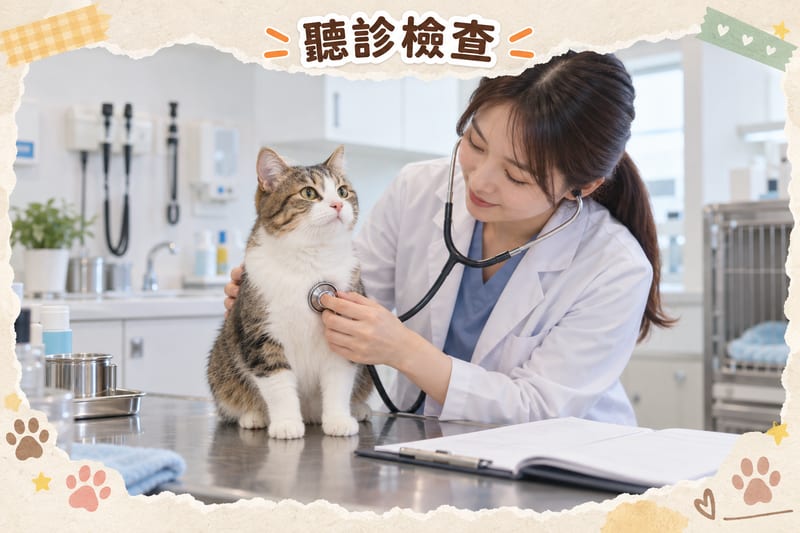
Besides laboratory numbers, veterinarians usually also use ECG to check heart rhythm. The reason is that the heart muscle is most sensitive to blood potassium; when blood potassium is markedly high, characteristic changes appear on the ECG, and heart rate may slow. These changes reflect danger faster than numbers. If there is urethral obstruction or acute kidney injury, the veterinarian will add abdominal ultrasound and urinalysis to confirm the obstruction site and urine output. The overall diagnostic process is roughly as follows:
- Blood test confirms blood potassium is above or below the report reference range, and also check sodium, chloride, BUN, creatinine, SDMA, and blood glucose.
- Immediately assess heart rate and ECG to determine whether it is an emergency.
- Perform blood gas analysis to distinguish acidosis from alkalosis, because acid-base status directly affects potassium distribution.
- Add urinalysis (urine specific gravity, urine glucose, urine ketones, urine potassium) and abdominal ultrasound to find obstruction, kidney disease, or endocrine problems.
- Check history item by item: whether the cat has eaten salt substitutes, human medications, supplements, recent vomiting or diarrhea, and how many days food intake has changed.
- After ruling out pseudohyperkalemia, retest once to confirm, then decide treatment direction.
In this process, step 5 is the part that most needs the cat owner's cooperation. Often the answer is not in the analyzer, but in details like "what food, supplement, or salt did you recently change at home". For the rhythm of ongoing blood tests and rechecks, see the annual checkup guide and senior cat checkup guide.

Liver impairment and steroids: why they are linked to potassium
These two are the most searched questions, but the online answers are the vaguest; it is worth clarifying the causal chain rather than just saying "liver disease affects potassium".
First, liver impairment. The liver itself is not the main regulator of potassium (that job is done by the kidneys, aldosterone, and insulin), so the statement "liver disease directly causes abnormal potassium levels" is inaccurate. What is real are four mediating pathways:
- Insufficient intake. One of the most common symptoms in cats with liver disease is poor appetite or even complete anorexia. Eating less than three days already means significantly insufficient potassium intake.
- Gastrointestinal loss. Cats with liver disease are prone to vomiting and diarrhea, and potassium is lost through gastrointestinal fluids; this pathway has a greater impact than many people imagine.
- Diuretics. Hepatic ascites or edema requires diuretics, and some diuretics accelerate potassium excretion in urine.
- Acid-base imbalance. Liver disease can be accompanied by changes in acid-base status, and acid-base status directly determines how potassium is distributed inside and outside cells—so the blood test number reflects "the distribution at that time", not necessarily total body potassium.
Therefore, if you see the question "Why does impaired liver function lead to abnormal potassium levels?", the most accurate answer is: the liver affects potassium through appetite, gastrointestinal symptoms, diuretics, and acid-base mediation, not by directly producing potassium abnormalities. To determine which pathway dominates, serum potassium, sodium, chloride, blood gas, BUN, creatinine, and medication records must be looked at together.
Now steroids. Long-term, high-dose steroid medication, besides its main anti-inflammatory effect, also has a mild mineralocorticoid effect that can cause more potassium to be excreted by the kidneys; at the same time, steroids cause polyuria and polydipsia, further affecting electrolyte and water balance. But note two points: first, significant hypokalemia caused by steroids alone is actually uncommon; second, clinically hypokalemia is usually multifactorial—steroids plus chronic kidney disease plus poor appetite plus diuretics, all four together produce obvious manifestations.
So the practical answer to "how to assess potassium intake risk in elderly cats on long-term steroids?" is a set of monitoring, not a single number:
- Check serum potassium and electrolytes every 1 to 3 months (more frequently early in medication).
- Measure blood pressure regularly, especially in cats with kidney or heart disease.
- Weigh every 2 to 4 weeks, and record 24-hour water intake.
- Any dose adjustment, discontinuation, or addition or removal of supplements must be decided by the veterinarian; owners must not adjust on their own.
For a deeper understanding of the liver and kidney burden of steroids and monitoring schedules, see Do long-term steroids damage the liver and kidneys? and the pet medication safety feature.
Dietary management: choosing low-potassium low-phosphorus treats and how long to transition food
Diet is the most frequently asked part of blood potassium management, but also the part most simplified by folk information. First, distinguish two completely opposite directions:
- When potassium restriction is needed: blood tests confirm persistently high blood potassium, and the cause is related to the kidneys' ability to excrete potassium.
- When potassium deficiency should be avoided: blood potassium is low or food intake is chronically insufficient.
Both directions must not be decided by the owner, because getting the direction wrong directly pushes toward the other risk. Long-term inappropriate potassium-restricted food can cause hypokalemia, while self-supplementing potassium can cause hyperkalemia. Electrolyte adjustment in cats must always be decided by a veterinarian based on blood tests and disease course.
If you have a treat or staple food labeled "low potassium low phosphorus", to judge whether it is suitable for long-term feeding to a cat with chronic kidney disease, check in 4 steps:
- Look at the expected analysis for phosphorus and potassium numbers, not the big words on the package. At minimum there should be phosphorus content; if potassium content is not even stated, it cannot claim "low potassium".
- Convert to dry matter basis. The moisture difference between wet and dry food is several times, so directly comparing labeled percentages is wrong. Use "labeled percentage ÷ dry matter percentage" to calculate comparable numbers.
- Check whether it is a complete staple or a supplement. Only those labeled "complete and balanced" can be used as a long-term staple; those labeled "complementary" can only be used occasionally.
- Have the veterinarian check. Bring the ingredient list, expected analysis, and your cat's most recent blood test report to ask; do not rely only on online reviews.
Also pay attention to the pace of food transition. For cats with chronic kidney disease or unstable electrolytes, it is not recommended to change all food at once; generally use a 7 to 10 day gradual transition, changing only about 10% each time, and weigh and record food intake during this period. If the cat vomits, has diarrhea, or completely refuses food, stop and see the veterinarian, because these symptoms themselves further affect potassium balance.
The following are two reference products available in Hong Kong online stores related to kidney care; prices are as of 12 October 2026:
- Royal Canin Veterinary Diet Early Renal + Mobility 2kg — HK$319
- Kyoritsu Seiyaku Nefguard Activated Carbon Kidney Health Formula for Cats and Dogs (Granules) 400mg×50 sachets — HK$210
Prices and stock are subject to the online store's current price. The above two products are currently shown as available for pre-order on the online store. To be clear: prescription diets are always a category selected after veterinary evaluation, and health supplements cannot replace blood tests and diagnosis; the prices listed here are only to give you a practical reference when discussing with your veterinarian, and do not represent any brand position, nor constitute any agency, genuine product, or authorization statement. To compare how different nutritional indicators are written, see the cat food nutrition labeling guide and kidney diet phosphorus control guide.
Home monitoring: 4 things you can do, 1 you cannot
The most searched related question is "how to monitor blood potassium levels at home". The answer must be direct: it is not possible to accurately measure blood potassium at home. Blood potassium must be tested with laboratory instruments; home glucose meters or other home devices are not designed to measure potassium, and the values are unreliable. What can be done at home is indirect observation, and these observations are actually very useful for veterinarians in judging the condition:
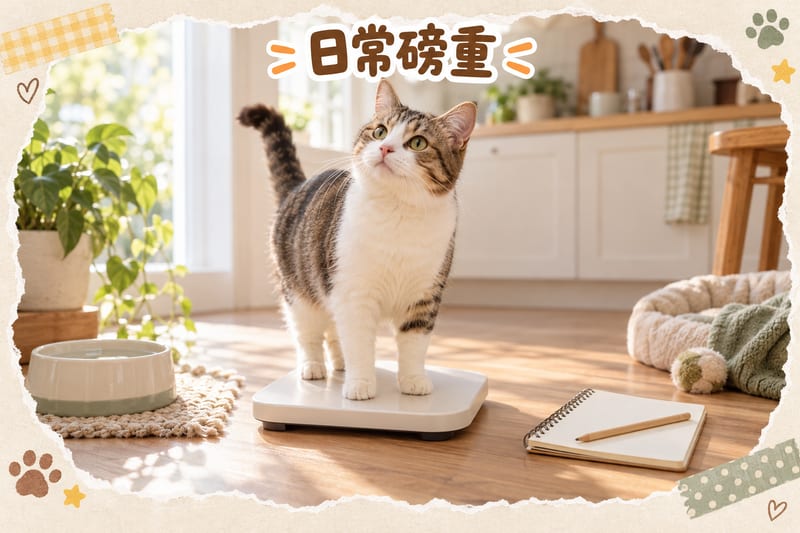
- Weight. Weigh at the same time every 1 to 2 weeks, record to one decimal place. A loss of more than 5% in a month warrants a recheck.
- Water intake. Use a graduated water bowl or the scale on a water fountain to measure actual 24-hour water intake; a sudden increase should be noted.
- Food intake. Record the actual grams eaten each day, not just "whether it ate". If food intake drops by half for two consecutive days, ask the veterinarian.
- Muscle strength and activity. Remember how high it usually jumps, whether it can get onto the windowsill, and whether grooming has slowed; these are the earliest functional clues of low potassium.
The one thing that cannot be done is the blood test itself, so the recheck schedule must be set by the veterinarian: cats with chronic disease generally have blood and electrolytes tested every 1 to 3 months; during medication adjustment, food transition, or unstable condition, it may be increased to every 1 to 4 weeks. The specific interval should be decided according to your cat's disease course and medication, and should not be extended on your own.
When to seek veterinary care immediately (cannot wait)
If any of the following occurs, it is an emergency; do not wait for the next appointment, and do not search online for answers first:
- No urine at all, or frequent visits to the litter box but unable to urinate (urethral obstruction can cause blood potassium to rise rapidly in a short time).
- Significantly slowed heart rate, irregular heart rhythm, sudden extreme weakness, or inability to stand.
- Shallow, rapid breathing, or open-mouth breathing.
- Ventroflexion of the neck, stiff walking, inability to jump.
- Persistent vomiting or diarrhea for more than 24 hours.
- Complete anorexia for more than 24 to 48 hours.
These situations must be handled by a veterinarian. Owners must not supplement potassium on their own, stop medication on their own, or change steroid or diuretic doses on their own, nor should they skip rechecks because the cat "looks better"—blood potassium can change quickly, and numerical changes often precede symptoms.
Further Reading
- Senior cats on steroids with limb weakness: relationship with insufficient potassium intake
- Complete guide to chronic kidney disease CKD in senior cats: IRIS staging and care
- Cat chronic kidney disease care guide
- Cat diabetes guide: control, monitoring, and diet
- Senior cat care feature
In emergencies, contact a veterinarian immediately; this article is for reference only and cannot replace veterinary diagnosis.
Information checked as of 2026-10-12Source: PetChill editorial team
 Royal Canin full guide →


 Fuji One full guide →

