Quick answers
- Ear infection drops fall into 2 categories: non-medicated ear cleaners and vet-prescription ear drops.
- Otitis externa accounts for about 7.5% to 16.5% of general practice canine cases.
- Yeast is detected in affected ear canals at rates up to 57.1%.
- The 'gentle' criteria are neutral pH, no alcohol, no essential oils, no fragrance—4 items.
- The eardrum can perforate, and careless drops carry ototoxicity risk, so 1 otoscope exam is needed before dripping.
- Symptom improvement does not mean cured; at least 1 recheck is needed before stopping medication.
The question 'Which brands of ear drops are recommended for a dog's ear infection, effective and gentle?' is not answered by a brand name but by a dividing line: products that clean versus medicated products that require a vet prescription. Their purposes are completely different. Most 'ear cleaners' you can buy freely are designed to dissolve earwax, soften secretions and adjust the ear canal's pH; drops that actually contain antibacterial or antifungal ingredients and can treat infection are veterinary prescription medicines, and the vet decides which ingredient based on ear swab results. 'Gentle' is also not about brand fame but about the ingredient list—pH, whether there is alcohol, whether there are essential oils, whether there is fragrance—and the most important step: whether the eardrum was examined before dripping.
Why be so careful? Because a dog's ear canal is L-shaped, with a vertical and a horizontal section, so wax, moisture and secretions are hard to clear naturally; combined with Hong Kong's humid weather, an inflamed ear canal is especially prone to recurrence. Ear infection is only an umbrella term; behind it can be yeast, bacteria, ear mites, foreign bodies, allergies or endocrine problems, each with a completely different approach. Using the wrong medication not only fails but can worsen the ear canal environment and push infection into the middle ear. Below we break down: the difference between the two product types, a neutral ingredient comparison table, the practical criteria for 'gentle', the structural reasons behind Hong Kong's humid weather, the correct steps for cleaning and dripping, and the red lines and timeline for when a vet visit is essential. To first build an overall framework for medication safety, see Pet Medication Safety Guide.
Dog ear infection drops actually fall into 2 categories: ear cleaners and prescription drops
The first category is non-medicated ear cleaners. Their role is cleaning and support; they are not medicines. A common design uses low-concentration chlorhexidine with Tris-EDTA: chlorhexidine inhibits surface microbes in the ear canal, while Tris-EDTA helps loosen earwax and enhances the former; some products use lactic acid, salicylic acid or boric acid-type ingredients to soften wax and adjust pH. The value of these products is that they 'prevent wax and secretions from accumulating', but they cannot clear an established infection.
The second category is medicated ear drops. Ingredients fall into three directions: anti-yeast or antifungal (ketoconazole, miconazole, clotrimazole types), antibacterial (gentamicin, neomycin, polymyxin B, marbofloxacin types), and anti-inflammatory (hydrocortisone, dexamethasone and other steroids). All of these are veterinary prescription-only for two reasons. First, choosing the drug requires evidence: the vet uses an otoscope to examine the ear canal and eardrum, then takes a swab to determine whether yeast, cocci or rods predominate, and may even do a bacterial culture. International veterinary literature indicates that yeast (Malassezia) detection in affected dog ear canals can reach up to 57.1%, and Staphylococcus pseudintermedius, a coagulase-positive staphylococcus, is the most commonly isolated bacterium; chronic purulent cases often involve Pseudomonas aeruginosa, with notable resistance issues. Second, the safety threshold: many prescription ear drops cannot be used in dogs with a perforated eardrum, because drug entering the middle ear can cause ototoxicity affecting hearing and balance. Only a vet can make that judgement—owners cannot see the eardrum at home.
By the way, what does one statistic mean: international practice statistics show otitis externa accounts for about 7.5% to 16.5% of general practice canine cases. That means ear infections are extremely common, so there is an unusually large choice of 'cleaner plus drops' products, but common does not mean you can choose yourself. What owners really need to distinguish is: cleaning products can be used regularly per the label; when medicated products enter the picture, it means a diagnosis is needed.
Ingredient comparison table: which are cleaners, which are medicines
The table below classifies common ear product ingredients in Hong Kong pet shops and clinics by nature. The aim is to help you read labels, not to compound medicines yourself; every medicated ingredient in the table requires a vet diagnosis before use.
| Ingredient or type | Main action | Product nature | Usage notes |
|---|---|---|---|
| Chlorhexidine + Tris-EDTA | Dissolves earwax, inhibits surface bacteria and yeast in the ear canal | Common combination in non-medicated ear cleaners, usually at lower concentration (e.g. 0.15% chlorhexidine) | Use at label dose; cannot be treated as a drug for an established infection |
| Lactic acid, salicylic acid, boric acid types | Softens earwax, adjusts ear canal pH | Non-medicated cleaning products | Stop use if the ear canal has wounds, ulcers or suspected eardrum perforation |
| Ketoconazole, miconazole, clotrimazole | Targets yeast and fungi | Medicated, mostly veterinary prescription | Needs a swab confirming yeast predominance first for effect to be meaningful |
| Gentamicin, neomycin, polymyxin B, marbofloxacin | Targets bacteria | Medicated, veterinary prescription | Cannot be used with a perforated eardrum; dose and course decided by the vet |
| Hydrocortisone, dexamethasone and other steroids | Anti-inflammatory, anti-itch, reduces swelling | Medicated, veterinary prescription | Long-term self-use masks infection and thins ear canal skin |
| Tea tree, peppermint, eucalyptus, clove and other essential oils | Labelled 'natural' or 'fresh' | Not recommended for the ear canal | Essential oils carry irritation and toxicity risk for dogs, and problems if licked |
| Alcohol, hydrogen peroxide | Disinfection, cleaning | Not recommended for self-use | Irritates an already inflamed ear canal, worsens pain, and is even less suitable for deep ear canals |
After reading the table, one point stands out: everything you can buy yourself is a cleaner; every truly 'effective' ingredient is medicated and prescription-only. This is not merchant conservatism but medical reality—ear canal infections need ingredients matched to the pathogen, and the pathogen must be confirmed by examination. So if someone sells solely on 'gentle' and 'natural' and claims to helps manage ear infections, be suspicious: cleaning helps, but it is not treatment.
As for brands, ear products usually print the main ingredients on the front label, such as 'chlorhexidine + Tris-EDTA' or 'ketoconazole'. A neutral approach: read the ingredient list first to see whether it is a cleaner or a medicine; for medicated products, take them to the clinic and check with the vet that they match your dog's situation, rather than choosing based on recommended wording or popularity rankings on the packaging.
'Gentle' is not an adjective: 5 criteria you can check one by one
'Effective and gentle' sounds reasonable, but at the product level 'gentle' can be broken into 5 concrete criteria. When buying an ear cleaner, you can check each against the label.
- pH close to neutral, avoid clearly alkaline. A dog's ear canal is normally mildly acidic; a cleaner with too alkaline a pH disrupts the ear canal's natural barrier and makes skin more prone to reinfection. Labels that state pH or 'physiological pH' are better.
- No alcohol, no hydrogen peroxide. Both irritate inflamed ear canal mucosa, worsen pain, and make the dog more resistant to you touching its ear next time.
- No essential oils. Tea tree, peppermint, eucalyptus, clove and other essential oils are often packaged as 'natural antibacterial', but essential oils are complex and carry irritation and toxicity risk for dogs; they should not go into the ear canal. This is the clearest dividing line between 'gentle' and 'not gentle'.
- No fragrance or colouring. Ear canal mucosa absorbs well; extra fragrance, colouring and preservatives only add irritants and do nothing for cleaning.
- Labelled for use in dogs, with clear dilution and dosage instructions. Some ingredients (e.g. permethrin types) are toxic to cats, so cat-and-dog shared products must never be assumed safe; also follow the label's 'how many ml each time' and 'how many times daily'—there is no 'more is faster'.
One more point: gentle does not equal effective. Cleaners should be gentle, but they will not clear an infection; medicated products, even if gentle, are still medicines and must follow vet instructions. What really makes ear infections recur is often not 'the drops are not gentle enough' but the cause not being identified, the course not completed, or the ear canal environment (moisture, ear hair, allergies) never improving.
Hong Kong's humid weather and ear canal structure: why ear infections recur so easily
From Hong Kong's spring 'returning south' dampness to summer, relative humidity stays high for long periods, and combined with the dog's natural ear canal structure, ear infections easily recur. Here are 5 key factors and what you can do at home.
| Structural or environmental factor | Effect on the ear canal | What you can do at home |
|---|---|---|
| L-shaped ear canal (vertical + horizontal) | Wax, moisture and secretions are hard to clear naturally, accumulating as a microbial breeding ground | After every swim, bath or rain soaking, clean once with a reviewed by our editorial team ear cleaner and dry |
| Dense ear hair (poodle, schnauzer, Shih Tzu, etc.) | Blocks ear canal ventilation, raising humidity | Do not pluck ear hair yourself; leave it to the vet or an experienced groomer |
| Floppy ears (cocker, beagle, golden retriever, etc.) | The pinna covers the ear canal, reducing airflow further | 1 to 2 times a week, lift the pinna and check colour, smell and discharge |
| High-humidity season (about March to September) | Ear canal environment favours yeast and bacterial growth | Strengthen dryness management; after bathing, always dry the pinna and outer ear canal opening |
| Allergies (food or environmental) | An underlying cause of recurrent ear infections; cleaning alone will not stop it | Discuss with the vet whether allergy workup is needed; do not rely long-term on drops to suppress symptoms |
One point many owners overlook: recurrent ear infection does not mean the drops are not strong enough. If your dog has trouble in the same ear in the same season every year, or still relapses within a month despite adequate cleaning, treat it as 'chronic otitis externa' and have the vet re-examine the ear canal, and even assess the middle ear, allergies and thyroid issues, rather than endlessly buying new products.
The correct 5 steps for ear cleaning and dripping (follow vet instructions)
Below is the routine most vet clinics demonstrate; the key is 'safe, clean, and not injuring the ear canal'. Actual amounts and frequency always follow the product label and vet instructions.
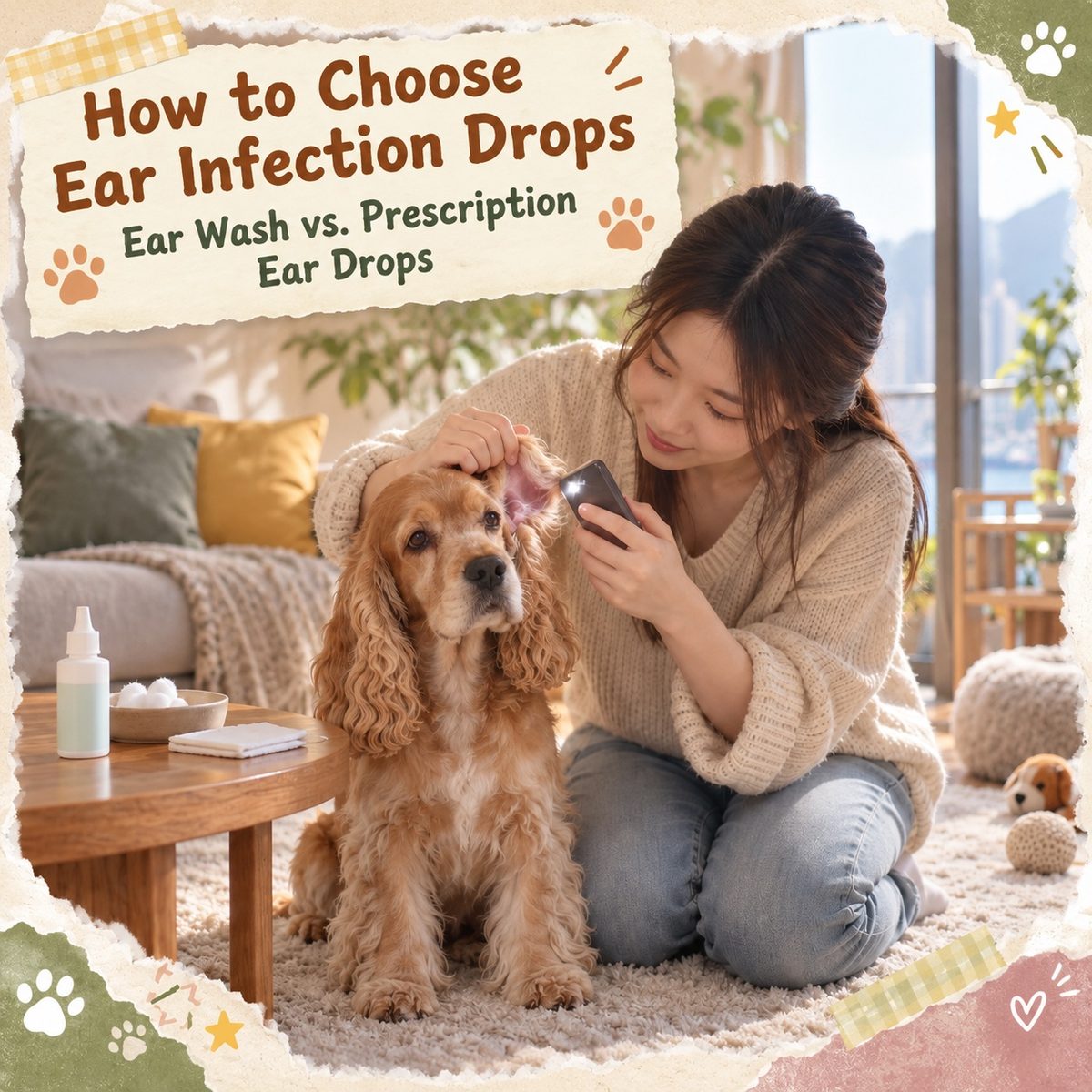
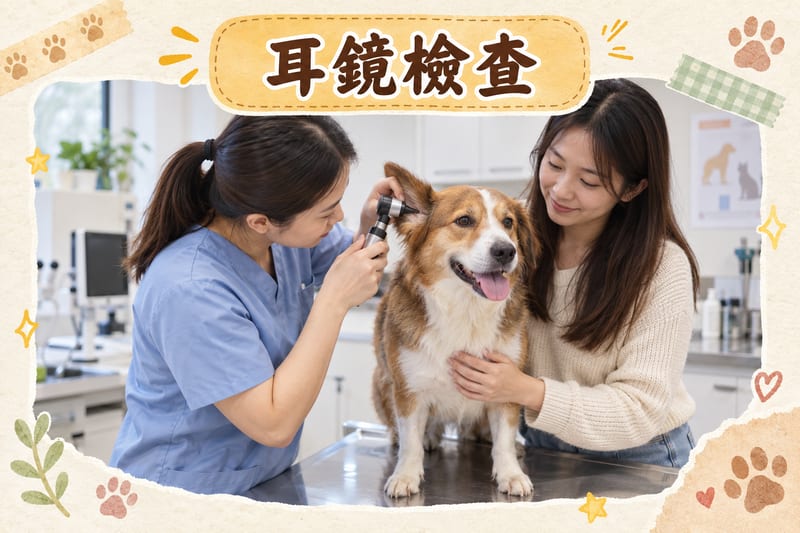
- Examine the eardrum first. Ear cleaner or drops entering a perforated eardrum can cause middle ear irritation, so for dogs with long-standing or recurrent ear infections, a vet should examine with an otoscope before using products. Owners cannot do this step at home.
- Prepare tools. Let the product come to room temperature first (if from the fridge, wait 10 to 15 minutes), and prepare clean cotton balls. Cotton buds may only clean visible parts of the pinna, never inserted into the ear canal, because they push wax deeper and can injure the eardrum.
- Clean the ear. Gently lift the pinna up and out to straighten the L-shaped canal as much as possible, pour the labelled amount of cleaner into the canal, then hold the ear base and massage gently for 10 to 20 seconds; slight water sounds are normal.
- Let go and let the dog shake its head, then wipe away debris. Head shaking is part of bringing wax out; do not stop it; then wipe the pinna and outer ear canal opening with a cotton ball. If the discharge is dark brown or clearly smelly, photograph it and inform the vet.
- Drip and reward. If the vet has prescribed ear drops, drip as instructed, massage the ear base, then immediately give treats and praise so the dog associates 'ear handling' with good things, making next time easier. Oral medication works the same way; see What to do about antibiotic side effects in pets? Common reactions and management; the key is to follow the vet completely on dose and course, never adjust yourself.
Three things not to do during the process: do not squeeze the ear canal forcefully, do not insert cotton buds deep into the canal, and do not stop medication midway because the dog resists. If the dog cries in pain every time its ear is touched, that is a negative signal; book an appointment the same day rather than forcing it.
When must you see a vet? Red lines and timeline
Ear infections are worst when delayed: chronic inflammation thickens the ear canal skin and narrows the canal, so even good drugs become hard to instil.
| Situation | What to do |
|---|---|
| Head shaking, ear scratching for 1 to 2 days | If still ongoing within 24 hours, book an appointment; do not observe beyond 2 days |
| Obvious smell, dark brown or yellow-green discharge | See the vet the same day or within 1 to 2 days, bring photos |
| Pinna red and swollen, painful to touch or crying | Seek care the same day; avoid dripping any drops yourself |
| Ear swollen like a water bag (aural haematoma) | Seek care the same day; usually needs vet management |
| Persistent head tilt, circling, nystagmus | Emergency; middle or inner ear may be involved; seek care immediately |
| Suspected eardrum perforation or pus from the ear canal | Seek care the same day; do not drip medication yourself |
| Puppies, senior dogs or dogs with chronic illness | Lower the threshold by half; book an appointment as soon as symptoms appear |
| No improvement at all after 3 to 5 days of medication | Recheck for swab, bacterial culture or treatment adjustment |
Beyond ear symptoms, medication safety itself has several general red lines. First, never use human medicines or dog spot-on products on cats; second, if a dog accidentally ingests any human medicine, essential oil or toxin, take the packaging to the clinic immediately and do not wait for symptoms—see Dangerous foods dogs cannot eat and first aid steps.
In-store products related to ear care
The following are sold on the PetChill online shop and are directly related to the ear care routine (medication giving, parasite prevention):
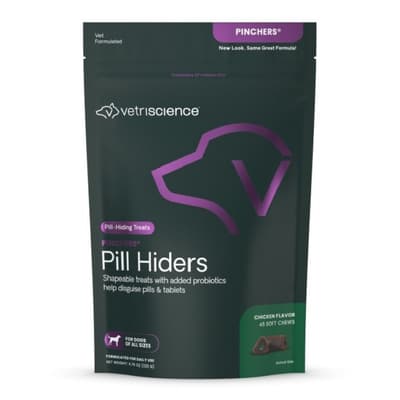
- VetriScience Dog Pill Wrap Treats (for tablets or capsules) 45 pieces/bag — HK$108
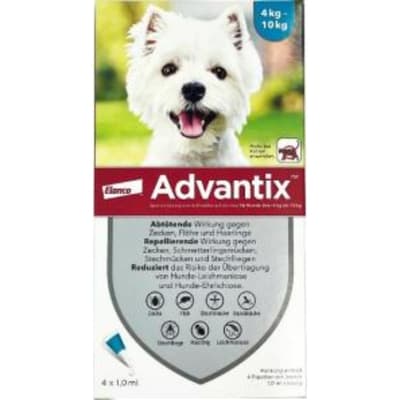
- Elanco (Bayer) Advantix for Dogs 4kg-10kg 1 box of 4 pipettes (X-02) — HK$295
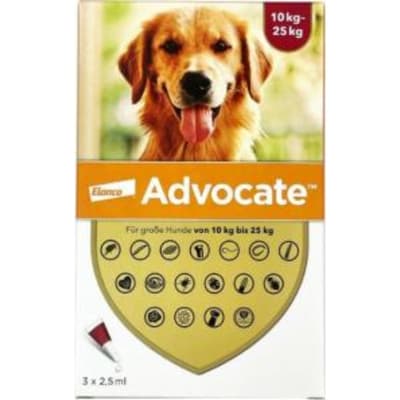
- Elanco (Bayer) Advocate for Dogs 10kg-25kg 1 box of 3 pipettes (D-03) — HK$408
Prices and stock are subject to the online shop's current listed price.
To clarify the role of each: the pill wrap treat is a medication-giving aid, used to make oral medicines (such as vet-prescribed antibiotics) easier to swallow; it has no antibacterial or antifungal action itself. The two spot-on products are parasite prevention medicines; use and indications follow the product label: Advocate's labelled indications include ear mite (Otodectes cynotis) infection, so if the vet confirms ear mites are one cause of the ear infection, such a product may be part of the treatment plan; Advantix mainly targets fleas, ticks, mosquitoes and sandflies and is not an ear infection medicine. Whether to use which product, and for how long, must always be decided by the vet based on ear examination and swab results; do not see the word 'drops' and assume it is an ear infection drop.
Further reading
- Pet Medication Safety Guide | Dose calculation, antibiotic side effects, dewormers, accidental ingestion management (2026) — the overall framework for medication safety, clarifying which products you can buy yourself and which require prescription.
- Dog Vaccine Schedule | Essential for Hong Kong dog owners: when puppies get their first shot + annual booster arrangements — regular health checks and vaccine arrangements are the foundation for early detection of chronic ear infections and other problems.
- Dangerous foods dogs cannot eat and first aid steps — accidental ingestion management and a home toxin list, directly related to medication safety.
- What to do about antibiotic side effects in pets? Common reactions and management — if gastrointestinal reactions occur during an ear infection course, the approach and precautions.
For emergencies, contact a vet immediately; this article is for reference only and cannot replace veterinary diagnosis.
Information checked as of 2026-10-12Source: PetChill editorial team
 Fuji One full guide →