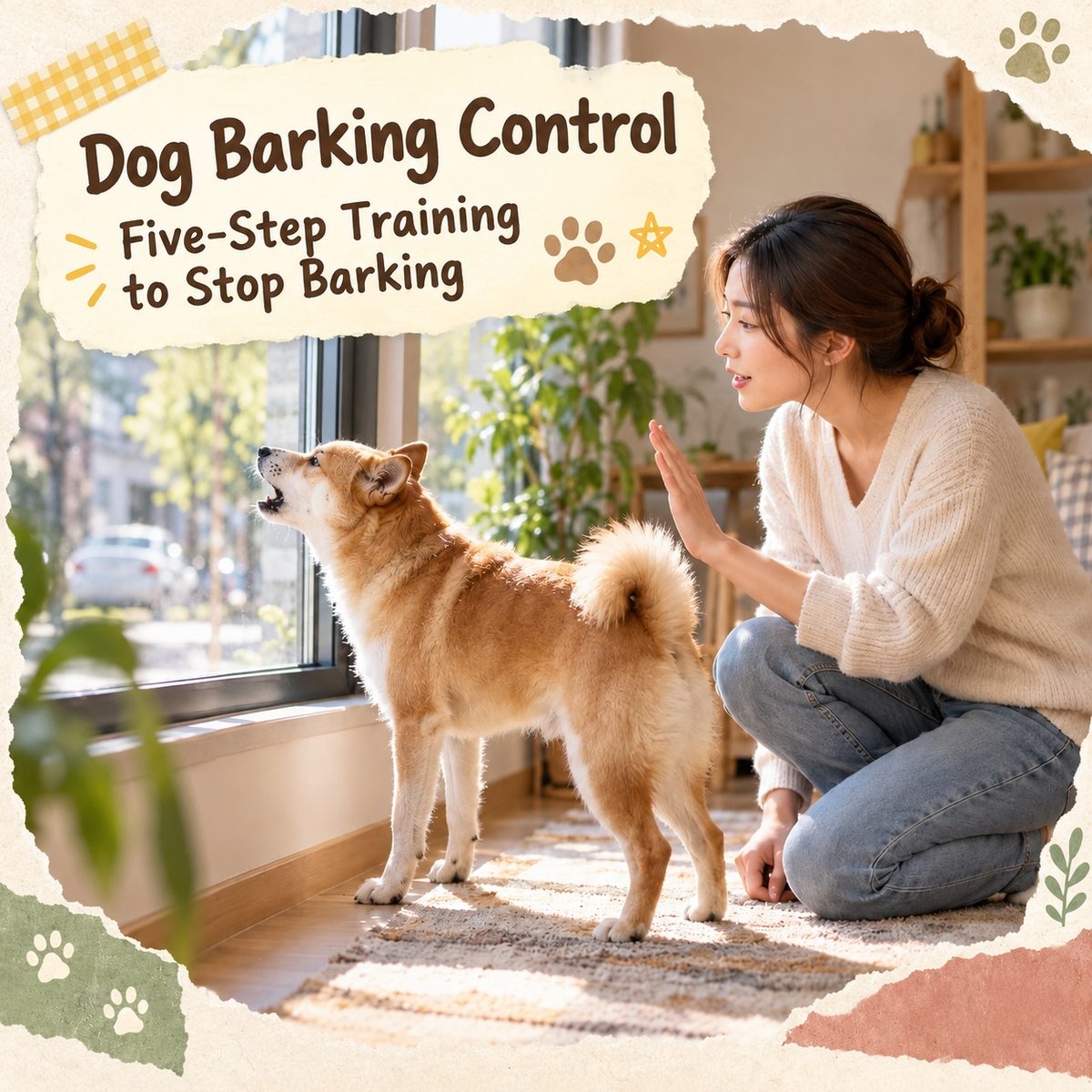
Quick answer: Dog barking mainly falls into four types: excitement, fear or loneliness, attention-seeking, and alerting/defensive. The core approach is 'zero attention for barking, reward for quiet'—when the dog barks, don't comfort, scold, or pick it up; wait until it's been quiet for two minutes before interacting, then address the specific cause. If barking increases after 3 consecutive days of training, or is accompanied by decreased appetite, pacing, or drooling, book a veterinarian behaviourist or certified trainer.
Detailed version: Once you recognise that barking is communication, not mischief, and apply the core principle of 'zero attention for barking, reward for quiet', Hong Kong owners can see results even in small spaces within a day.
Have you ever been troubled by your dog barking non-stop? Whether it's barking at every sound in the middle of the night, barking at strangers, or whining when you don't pet it, barking is one of the most headache-inducing behaviours for dog owners. In fact, barking is not a 'bad behaviour' but a way dogs communicate with the world. As long as you understand the reasons behind the barking and use the right training methods, you can teach your furry friend to stay quiet at appropriate times.
Why do dogs bark? 4 common reasons
According to the book Learn to Talk with Your Dog, barking reasons can be broadly divided into 4 situations:
Quick reference table (barking reason → on-site signs → solution):
| Barking reason | On-site signs | Solution |
|---|---|---|
| Excitement (playing, seeing you come home, preparing for a walk) | Wagging tail, jumping, relaxed body | Stop what you're doing as soon as barking starts; continue only when sitting quietly; no play 20 minutes before going out |
| Fear or loneliness (thunder, vacuum cleaner, left alone) | Ears back, tucked tail, pacing | Reduce loneliness: leave favourite toys and turn on the radio; feed near the vacuum cleaner for desensitisation |
| Attention-seeking or responding to sounds (doorbell, phone, noises outside) | Looking at you, barking then waiting for a reaction | Zero attention: get up and walk away immediately; interact only after two minutes of quiet; Sit For Everything—sit before anything |
| Alerting and defensive (strangers, postman, courier) | Facing the door, standing still, low growl | Take to the room farthest from the door in advance, give a hollow bone stuffed with peanut butter; pair doorbell with treats |
1. Excited barking when having fun
Dogs bark out of excitement when playing, seeing their owner come home, or preparing for a walk. This barking is usually accompanied by happy body language such as wagging tail and jumping.
2. Fear or loneliness
Dogs are social animals. When they feel scared (e.g., thunder, vacuum cleaner sounds) or are left alone at home, they express their unease by barking. Research shows that about 70% of dogs have experienced separation anxiety-related barking.
3. Attention-seeking or responding to sounds
When dogs hear the doorbell, phone, or noises outside, they instinctively bark to alert their owner. If every bark gets a response from the owner (even scolding), the dog learns the pattern 'barking = getting attention'.
4. Alerting and defensive
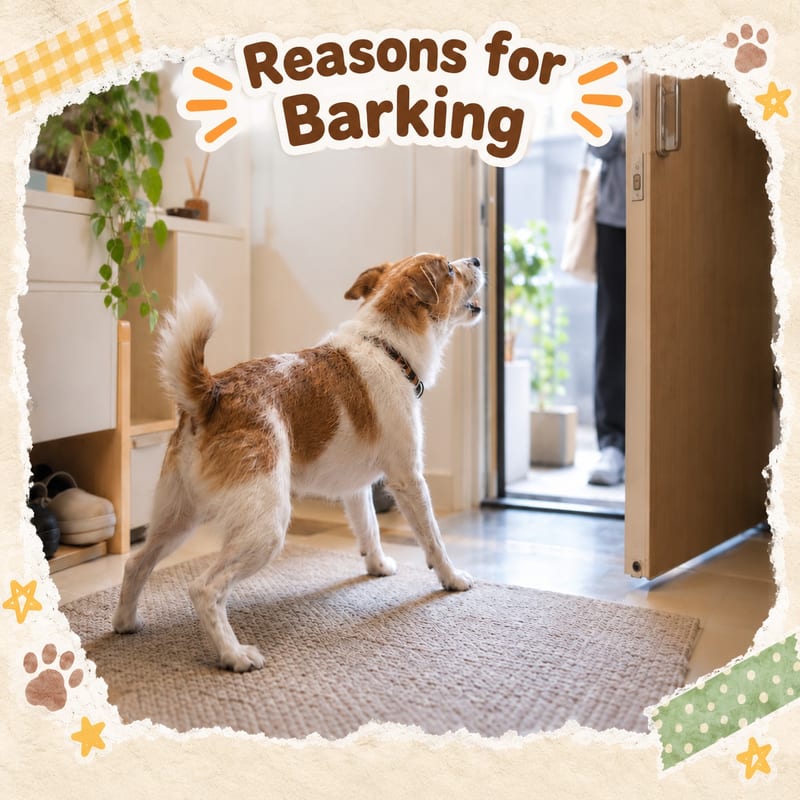
This is a dog's nature—when strangers approach the door, the postman rings the bell, or they sense a potential threat, dogs bark to warn their family and drive away the 'intruder'. Taiwan's renowned animal behaviour expert Dr Tai Keng-Chi points out that the postman always leaves after appearing, which to the dog means 'barking successfully drove them away', greatly reinforcing the barking behaviour.
5 common barking scenarios and how to handle them
Scenario 1: Barking non-stop when out
The real reason a dog barks non-stop when out is often not lack of socialisation, but the owner starting to talk to, comfort, or scold the dog when it barks. Dr Tai Keng-Chi explains this is 'trial-and-error learning'—every time the dog barks it gets verbal social interaction from the owner, so the barking doesn't decrease but dramatically increases.
Tip: Use 'control and utilisation of resources'. Want to go out? Fine, but you must sit quietly before going out. As soon as barking starts, stop all actions and only continue when the dog is calm. If it barks on the walk, turn around and take it home at the first sign, without any interaction. If it doesn't bark, immediately smile broadly, pat its body and say 'good boy'. Normally, results can be seen within a day.
Scenario 2: Barking at the postman or strangers
The postman appears quickly and leaves quickly, so the dog learns that 'barking drives them away'. Sometimes the postman needs to come in to sign, and the dog thinks 'how did they chase into the house?' and barks even harder.
Tip: Prepare a hollow bone stuffed with peanut butter or cheese—the dog's favourite treat (never given at other times). Before the postman or stranger arrives, take the dog to the room farthest from the door and give the bone. Put the bone away within two minutes after the stranger leaves. To the dog, the postman equals 'bone delivery'—the bone only appears when they show up.
Scenario 3: Barking when not petted
The root cause is usually the owner unintentionally reinforcing the barking. When the dog barks, the owner softly says 'don't bark~' or asks 'what do you want?' From the owner's perspective it's communication, but from the dog's perspective it's 'gentle verbal social interaction' plus 'actual social contact', which is positive reinforcement.
Tip: As soon as the dog barks, immediately stand up and walk away until the dog is quiet. Remember to wait 'two minutes' of quiet before interacting. If it barks even more after you stand up, just slam the door and leave the room. A few times will solve the problem.
Scenario 4: Barking at night at every sound
The same sound doesn't cause barking during the day but does at night—what changes is not the volume but 'the owner being nearby'. Because it's quiet at night, the owner is afraid of disturbing neighbours and rushes to quiet the dog, which actually reinforces the barking. Every bark gets verbal social interaction from the owner, so the barking only increases.
Tip: Never give any form of attention (including scolding) when the dog barks at night. Stay calm and wait for it to quiet down naturally, then reward. During the day, let the dog get used to various environmental sounds to reduce night-time sensitivity.
Scenario 5: Barking at other dogs
When out, the dog sees another dog and rushes over wagging its tail and barking. This is often because the owner tightens the leash or shouts to stop it when it barks, which teaches the dog that 'barking = getting to approach'.
Tip: Before the dog sees another dog and barks, use treats or toys to redirect its attention. Keep the leash loose and walk away with calm steps. Reward immediately when you pass successfully.
| Barking scenario | Immediate handling | Long-term training |
|---|---|---|
| Excited barking before going out | Stop as soon as barking starts; sit before opening the door | Exaggerated reward after quiet |
| Postman visits | Take to far room in advance, give bone stuffed with peanut butter | Postman = bone delivery; put bone away when they leave |
| Barking when not petted | Get up and walk away immediately; interact only after two minutes of quiet | Barking = social interaction disappears; quiet = owner returns |
| Barking at night sounds | Zero response; wait for it to stop naturally | Play sounds during the day for habituation |
| Barking at other dogs | Redirect attention before barking; keep leash loose | Reward with treats when passing successfully |
5 core training principles to stop dog barking
Principle 1: Never reinforce barking
Whether it's comforting, scolding, or physical contact (picking up, pulling, hitting), giving attention when the dog barks reinforces the barking. Remember: any form of attention is positive reinforcement.
Principle 2: Reward quiet behaviour
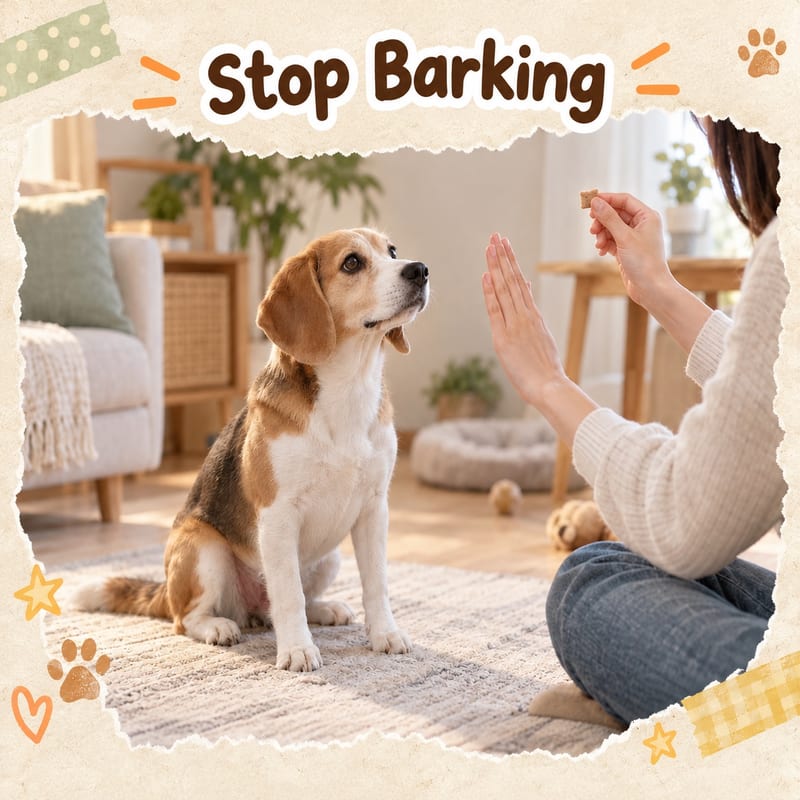
When the dog voluntarily stays quiet, reward immediately—with treats, a pat, or verbal praise 'good boy'. Let the dog learn that 'quiet = good things happen'.
Principle 3: Burn excess energy
Take the dog out for walks in your free time. Long daily walks not only improve fitness but also help the dog calm down from physical exhaustion. At least 30 minutes of walking per day is recommended.
Principle 4: Reduce loneliness
Before leaving home, leave the dog's favourite toys, plenty of food and water. You can turn on the radio or TV before leaving so the dog associates it with the owner being home. Do not play with the dog within 20 minutes before leaving, to avoid sudden departure causing unease. Put the dog's favourite food in a puzzle feeder to keep it busy for hours.
Principle 5: Reduce environmental sensitivity
If the dog is sensitive to specific sounds (e.g., doorbell, vacuum cleaner), feed it near these things to associate the pleasure of eating with these 'scary things', gradually reducing sensitivity.
Book breakdown: the four barking reasons (Learn to Talk with Your Dog)
The book divides barking reasons into four categories, and you must treat the cause before prescribing:
- Enjoying some fun (excited play, seeing someone they like)
- Fear or loneliness
- Wanting your attention, or hearing sounds
- Alerting, warning of danger or strangers approaching
Book methods: start with 'burn, company, desensitisation'
- Burn excess energy: long daily walks; physical exhaustion naturally quiets them; for attention-seeking barking, do obedience training first
- Eliminate loneliness: before going out, leave favourite toys, enough food and water; if the dog must be left alone, turn on the radio or TV before leaving to associate with the owner being home; no play 20 minutes before going out (if you play and then suddenly shut the door and leave, it's harder for them to adjust)
- Puzzle toys: put favourite food in a puzzle feeder to keep them busy for hours, burning energy and reducing barking frequency
- Reduce fear (desensitisation): if the dog barks at strangers every time, close the windows so it can't see outside; if it's afraid of the vacuum cleaner or lawnmower, feed it near the object to link 'the pleasure of eating' with 'the scary thing'
Why bark at the doorbell? The book explains with classical conditioning
The book analyses: a stranger is an unconditioned stimulus (UCS), the dog's fear is the response (UCR); the doorbell is initially neutral (NS), but every time the doorbell rings a stranger appears, so the doorbell becomes a conditioned stimulus (CS), and ringing alone triggers the fear response (CR). Plus operant conditioning: the dog thinks 'barking successfully drove the stranger away', so barking is reinforced.
Practical conclusion: Don't wait until the doorbell rings to rush to stop it. Pair the doorbell with good things (bell = treats/play) in daily life, and change the routine for receiving parcels and visitors.
Book suggestion: Sit For Everything
Dr Tai Keng-Chi's 100 Behaviour Problems recommends for dogs that 'use barking to control your behaviour': sit before everything. Before going out the door—sit first; before getting in the car—sit first; before eating—sit first; when meeting other dogs and wanting to rush—sit first. You don't need to nag; just wait for the dog to calm down. If it doesn't sit, you go nowhere. This takes 'control' back from the dog.
Hong Kong small-flat practical guide: how to see results in a day in a small unit
Hong Kong homes are small, so the whole flat hears the dog bark, and neighbour complaints can quickly reach the owners' incorporation. To achieve 'zero attention for barking' even in 300 sq ft, follow this checklist:
1. Prepare supplies
- Hollow bone + peanut butter (keep in the fridge, for postman use only)
- High-value small treats (freeze-dried chicken cubes, cheese cubes), only for training
- Puzzle feeder or enrichment toy, given 20 minutes before going out
2. Space layout
- Put a baby gate at the door so you can immediately isolate the dog to the far room when strangers arrive
- Install soundproof strips on the bedroom door so the owner can be completely silent when the dog barks at night
- Apply frosted film to windows to reduce barking at people and dogs outside
3. Schedule (one-day results version)
- Morning before going out: dog sits before the door opens; stop immediately if it barks, only go out after 10 seconds of quiet
- Coming home from work: ignore the dog first, put down bags, change shoes, reward only when the dog is calm
- 9 pm: play TVB drama as background sound to simulate voices and reduce sensitivity to real sounds
4. Neighbour communication
- Proactively post a memo: 'Barking training in progress. If there's noise, please WhatsApp me. Thank you for your understanding.'
- Update neighbours on progress daily during training to reduce complaint pressure
5. When to see a vet
- Barking frequency hasn't decreased but increased after three consecutive days of training
- The dog also shows decreased appetite, constant pacing, drooling
- Loses control and rushes at the door or hits walls at sounds—may have progressed from a behaviour problem to anxiety disorder; book a veterinarian behaviourist immediately
Remember, Hong Kong buildings are dense, and the owner staying calm is key. As long as you persist with 'barking = zero response, quiet = big reward', you can raise a quiet, well-behaved dog even in a small flat.
Further reading
📌 Key summary
- ✅ Any attention during barking is a reward; immediate withdrawal is the only effective way
- ✅ Interact only after two minutes of quiet to establish 'no bark = good things'
- ✅ 30 minutes of daily walking burns energy and reduces unnecessary barking
- ❌ Never make a sound to stop night barking, or it will get worse
- ❌ Scolding the dog when it sees the postman makes it think barking successfully drove them away
Coordination with the cluster
This article is part of the 'dog training' cluster: Dog training basics (overview), Leash walking training, Crate training, Barking training, Separation anxiety, Biting correction, Toilet training, Socialisation, Recall training, Positive reinforcement training. Related behaviour problems: Jumping correction, Destructive behaviour correction.
References
- Agriculture, Fisheries and Conservation Department (Hong Kong Government) — Pet care information
- Veterinary Surgeons Board of Hong Kong
- This article's knowledge points are compiled from dog training books such as Dr Tai Keng-Chi Teaches You to Effectively Solve 100 Behaviour Problems in Dogs, Don't Kill the Dog, How to Train a Puppy, and Learn to Talk with Your Dog.
The above content is for reference only and cannot replace assessment by a veterinarian or professional trainer. If your dog shows aggression, self-harm, or persistent anxiety behaviour, please consult a registered veterinarian or certified trainer.
Related products (available in Hong Kong)
- HelloDOG Dog Training Let's Have a Bag of Chips (with squeaker) ($38)
- Charming Pet Selected Dog Training Chew Toy Big Head Chicken ($60)
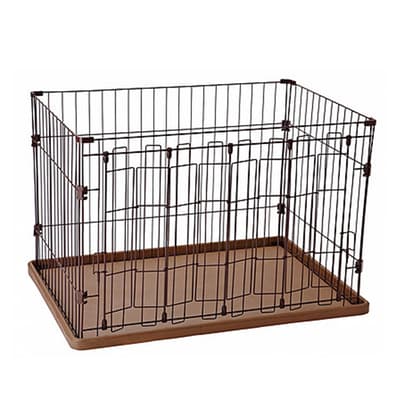
- Petio Full-Open Foldable Playpen (for dogs) ($876)
- The Innocent Hound Puppy Training Treats Lamb & Pea 70g ($75)
Prices checked on 2026-10-12; all in stock at retail stores.