Quick answer: Separation anxiety is not your dog being 'naughty' but a psychological condition built up over time; as long as you stop exaggerated goodbyes and train alone time gradually, 90% of dogs can improve.
Every time you leave for work, does your dog bark, scratch the door and destroy things behind it, and you come home to a mess? Your pet may not be 'misbehaving' but suffering from separation anxiety. Taiwan's 'dog father' Tai Keng-chi points out that separation anxiety is a gradually accumulating psychological illness; research shows about 20%–40% of dogs referred to behavioural specialists have separation anxiety, and 90% of dogs can actually improve with correct training. This article covers causes, symptoms and training steps so your dog can learn to be calm alone.
What is dog separation anxiety? First distinguish 'anxiety' from 'poor training'
Separation anxiety refers to persistent and intense fear reactions when a dog is separated from its owner, not simply mischief or revenge. Dr Tai Keng-chi highlights two key points for diagnosis:
-
Age factor: Separation anxiety never forms in a day or two; dogs under 18 months even with similar symptoms are mostly 'poorly socialised' or on the way to anxiety — do not jump to conclusions too early.
-
Gradual accumulation: True separation anxiety is the result of day-by-day accumulation and is closely related to the owner's daily attitude.
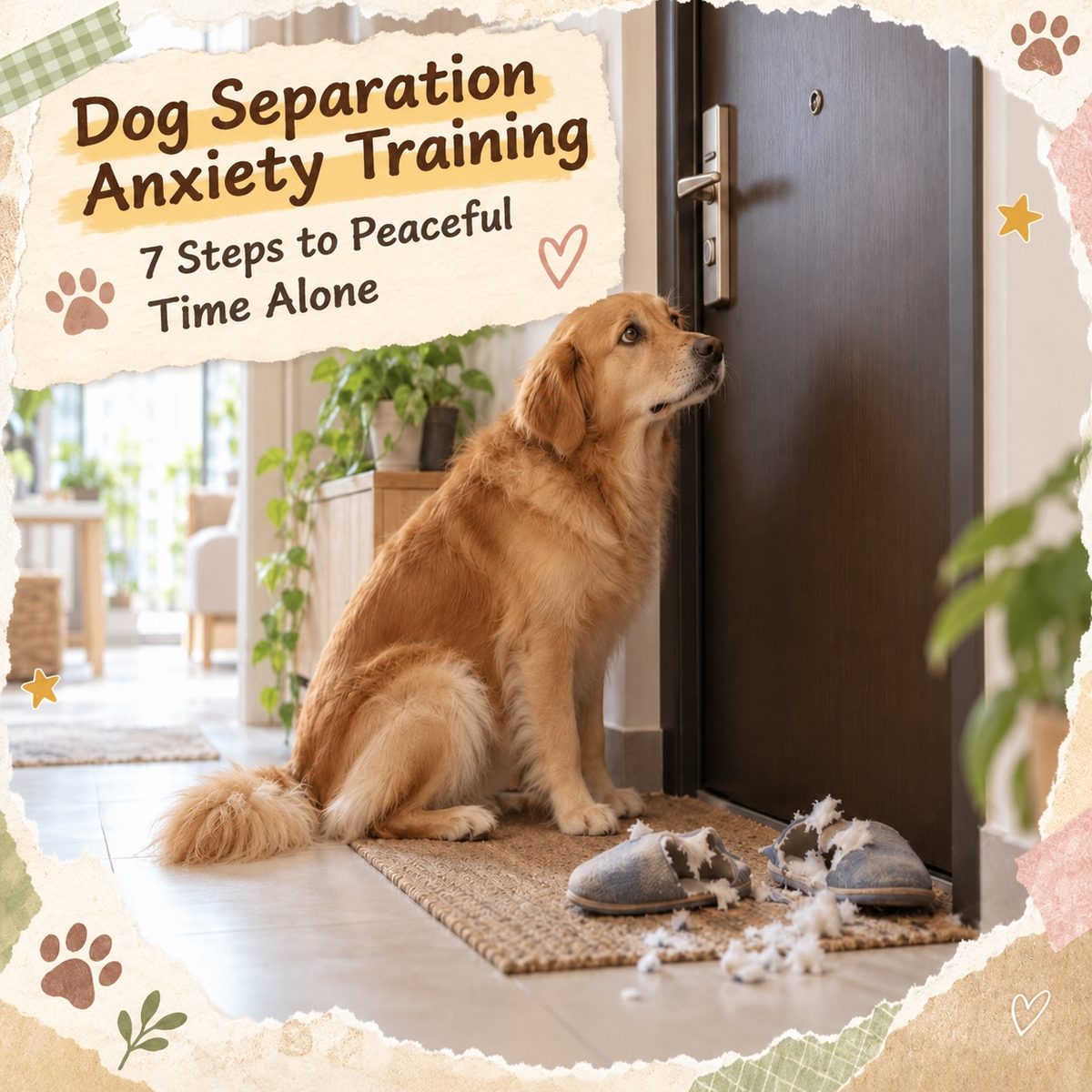
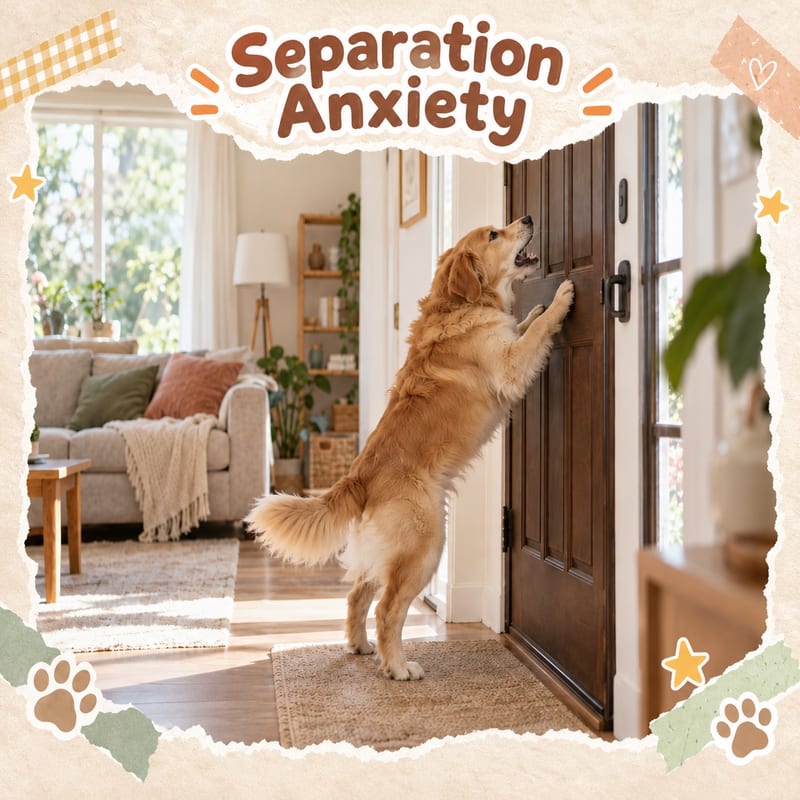
Typical symptoms include: barking and howling non-stop once the owner leaves, scratching doors and windows, inappropriate urination/defecation (even if normally toilet-trained), chewing furniture, excessive drooling, pacing, and even self-mutilation by licking and biting the body. If your dog only shows these behaviours when you leave, pay special attention.
5 major causes: is the problem actually the owner?
Tai Keng-chi says bluntly: 'The one who is truly anxious and believes the dog cannot be independent is often the owner.' A dog's behavioural norms are based on the owner as reference; the following 5 common causes are worth reflecting on:
-
Exaggerated goodbye ritual: Hugging the dog reluctantly before leaving, saying 'Mummy will be back soon', and crying out its name dramatically when you return — the dog interprets this as 'every time the owner leaves, they might not come back', and anxiety arises.
-
Fixed pre-departure routine: Dogs observe your every move from getting up, changing clothes to picking up keys; once the pattern starts, they realise 'you are leaving' and anxiety erupts.
-
Over-attached lifestyle: Being inseparable at home and petting constantly, the dog has never learned what 'being alone' means.
-
Sudden life changes: Moving house, changes in family members, or the owner switching from working at home to going to the office are common triggers.
-
Lack of alone-time training: Dogs that have never practised being alone gradually from a young age are at a loss when left home alone.
Understand your dog's world: it cannot open the door, buy food, or turn on the tap. Your disappearance means the disappearance of its entire future — that is why separation anxiety is so painful.
7-step training method: help your dog love being alone step by step
The core of improving separation anxiety is gradual desensitisation training; never rush. The following 7 steps combine Tai Keng-chi's behavioural therapy principles with trainers' alone-time methods:
Step 1 | Build indoor distance: Practise while you are at home. Go to the bathroom or another corner without the dog, letting it learn to keep distance. If it barks or whines, ignore it and only return when it calms down — otherwise it will think whining works.
Step 2 | Add a short cue: Each time you leave the room or put the dog in the crate, say only 'wait', linking the cue with brief separation.
Step 3 | Cancel the goodbye ritual: When leaving home, just say 'wait' and add no farewell actions; when returning, give at most a brief greeting and interact only after the dog is calm.
Step 4 | Gradually extend alone time: Start with a few minutes, e.g. going downstairs to throw rubbish and staying a few minutes, then slowly extend to half an hour, one hour, two hours. Adjust the pace to the dog's temperament; sensitive dogs need to go slower.
Step 5 | Drain energy before leaving: Before alone-time training, let the dog relieve itself and exercise fully; a tired dog rests more quietly.
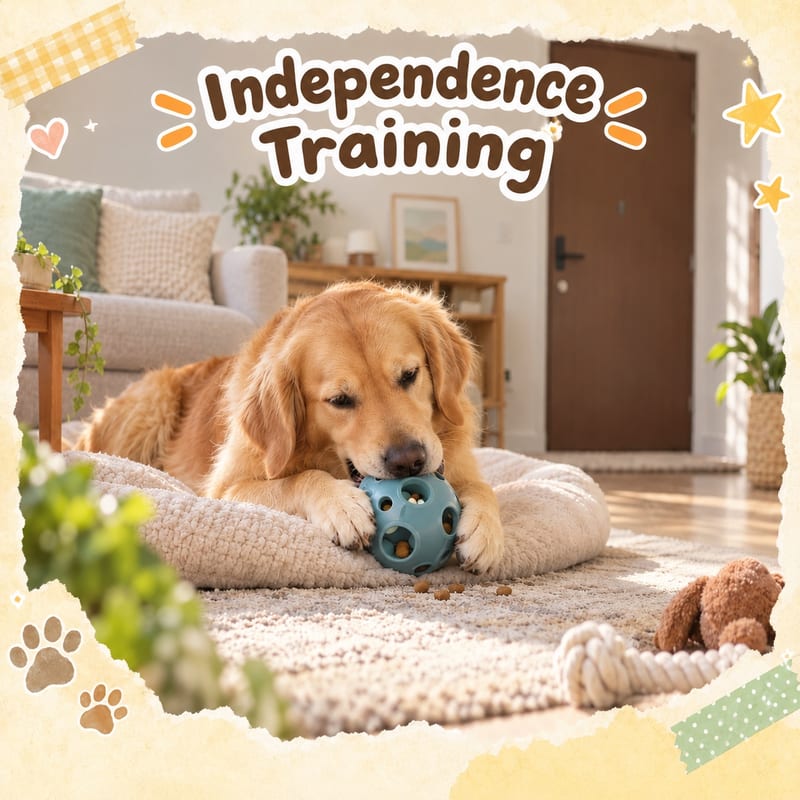
Step 6 | Check the alone environment: Ensure the crate or bed is large enough for the dog to lie down with limbs stretched; leave safe chew toys or puzzle toys to distract.
Step 7 | Get help for long outings: If you must be away for several hours, ask a friend, neighbour or pet sitter to care for the dog; do not force an untrained dog to stay alone too long, or the training will be wasted.
| Training step | Key action | Common mistake |
|---|---|---|
| 1. Build indoor distance | Owner goes to bathroom/corner, ignore barking | Comforting as soon as the dog barks, reinforcing whining |
| 2. Add a short cue | Say 'wait' before leaving the room | Giving long speeches or adding gestures |
| 3. Cancel goodbye ritual | Only say 'wait' when leaving, stay cool on return | Hugging and crying 'Mummy will be back soon' before leaving |
| 4. Extend alone time | A few minutes → half an hour → two hours | Leaving all day at once, dog breaks down |
| 5. Drain energy before leaving | Walk + toilet first, tired dog rests easily | Leaving directly, dog has excess energy |
| 6. Check alone environment | Safe toys + enough space | Leaving dangerous items or crate too small |
| 7. Get help for long outings | Ask friend/pet sitter to visit midway | Forcing an untrained dog to stay 8 hours |
When to seek professional help? Medication and training together
Tai Keng-chi suggests grading treatment by the duration of anxiety:
- Anxiety within 1–2 years: Find a professional trainer for classes immediately (repeating the same course is fine) with relaxation training. Because the biggest problem comes from the owner's interaction style, teaching methods without the owner changing will still result in anxiety.
- Anxiety over 2 years: Suggest the veterinarian prescribes medication first to make the dog more comfortable, then carry out behavioural training simultaneously until anxiety disappears.
Remember: 90% of dogs can improve through training (or medication plus training), but about 10% may need lifelong medication support. Separation anxiety is a very painful illness; please take it seriously and do not use hitting or scolding — punishment only deepens fear.
Three-step solo activity training from the book (step-by-step)
The method demonstrated in How to Train a Puppy is simple but effective:
- Start by creating distance at home: Go to the bathroom or another corner without the dog. If it barks or whines, let it be; do not go back immediately — wait until it calms down before checking on it (otherwise it learns that 'whining works')
- Establish the 'wait' cue + expand range: Say 'wait' each time you go to the bathroom or put it in the crate; then expand to going out to throw rubbish and staying a few minutes. Only say 'wait' when leaving, no goodbye ritual; on return, give at most a brief greeting
- Gradually extend time: Adjust speed to its temperament — the book says generally you can train up to about two hours alone. If you need to be away for more than a few hours, the book suggests asking a friend or neighbour to care for the dog; do not force training, or you will undo previous progress
How to tell 'separation anxiety' from 'not yet trained'? (One trick from the book)
The method taught in Tai Keng-chi's 100 Behaviour Problems: Set up a camera to see what your dog does after you leave. If its restlessness and anxiety do not stop, it is separation anxiety; if it rests or sleeps in between, it is not.
Another clue: dogs with separation anxiety will mess both urine and faeces (not just one), and will drink water constantly, pace, and lie at the front door or where your scent is strongest. If only one is messed, it is mostly not truly toilet-trained — a training problem, not anxiety.
When to see a veterinarian
- Anxiety lasts more than a few weeks and training shows no progress
- Completely refuses food and water, barks or whines continuously until hoarse
- Self-harm (biting doors, biting itself)
- History of anxiety for over two years
The veterinarian can rule out pain and endocrine problems, and assess whether medication combined with behavioural training is needed.
Hong Kong small-flat practicalities: a lazy guide to separation anxiety training in small units
Hong Kong homes are small and working hours long, so training separation anxiety must be more down-to-earth.
Space planning
- Use a screen or baby gate to partition a 'dog corner' in the living room; it need not be big, just enough for it to lie down with limbs stretched.
- Avoid the main door and neighbour walls to reduce tension from hearing footsteps in the corridor.
Neighbour management
- Greet upstairs and downstairs neighbours first, explain you are training and there may be brief barking, and leave WhatsApp for instant notification.
- Choose weekends during the day for early training when management patrols less, reducing extra pressure.
Sample schedule
- 07:30 Wake up + go downstairs for 20 minutes of energy burning
- 07:55 Return home, drink water and calm down for 5 minutes
- 08:00 Owner changes clothes, picks up keys, says 'wait' → leaves for 3 minutes (throw rubbish)
- 08:05 Return home, ignore the dog, wait until calm before petting
- Add 5 minutes each day, aim to reach 1.5 hours within two weeks, enough for commuting by MTR.
Coordinating with domestic helper/family
- If you have a helper, ask her to follow the script: come out 10 minutes after the owner leaves, do not comfort the dog immediately, to avoid disrupting training.
When to see a doctor
- If the dog has chewed through three wooden doors or licked itself until skin is broken and bleeding, book a vet immediately; do not delay.
- For night emergencies in Hong Kong, you can go to 24-hour clinics in Kowloon City or North Point; stabilise emotions first, then refer to a behavioural specialist.
Remember: Hong Kong is fast-paced, but dogs need slow; gradual progress is king.
Further reading
📌 Key summary
- ✅ Separation anxiety is a fear response, not revenge or mischief
- ❌ Labelling anxiety before 18 months leads to wrong training direction
- ✅ Owner's exaggerated goodbye + fixed departure routine are the biggest causes
- ✅ 7-step desensitisation training: indoor distance first → short cue → extend outings
- ❌ Hitting and scolding only deepen fear and undo training
- ✅ Anxiety over 2 years needs vet-prescribed medication + behavioural training
Coordination with the cluster
This article is part of the 'dog training' cluster: Dog training basics (overview), Leash walking training, Crate training, Barking control, Separation anxiety, Biting correction, Toilet training, Socialisation, Recall training, Positive reinforcement training. For related behavioural issues: Jumping correction, Destructive behaviour correction, Calming signals interpretation.
References
- Agriculture, Fisheries and Conservation Department (Hong Kong Government) — Pet keeping information
- Veterinary Surgeons Board of Hong Kong
- This article's knowledge points are compiled from dog training books including Tai Keng-chi Teaches You to Effectively Solve 100 Behaviour Problems in Dogs, Don't Kill That Dog, How to Train a Puppy, and Learn to Talk with Your Dog.
The above is for reference only and cannot replace assessment by a veterinarian or professional trainer. If your dog has aggression, self-harm or persistent anxiety, consult a registered veterinarian or certified trainer.
Related products (available in Hong Kong)
'Alone-time work' can burn energy and reduce anxiety (the book suggests leaving your dog's favourite toys before going out):
- HelloDOG Dog Training — Let's Have a Bag of Chips (with squeaker) ($38)
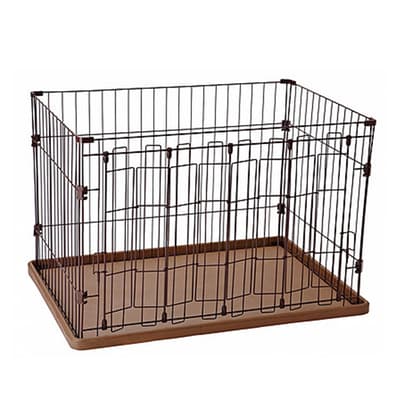
- Petio Full-Open Foldable Pen (for dogs) ($876)
- My Potty Pad LITE Activated Carbon Pee Pads 60×90 L size 24 sheets ($73)
- Training Treats The Innocent Hound Puppy Training Treats Lamb & Pea 70g ($75)
Prices checked on 2026-10-12; all in stock at stores.
 Fuji One full guide →