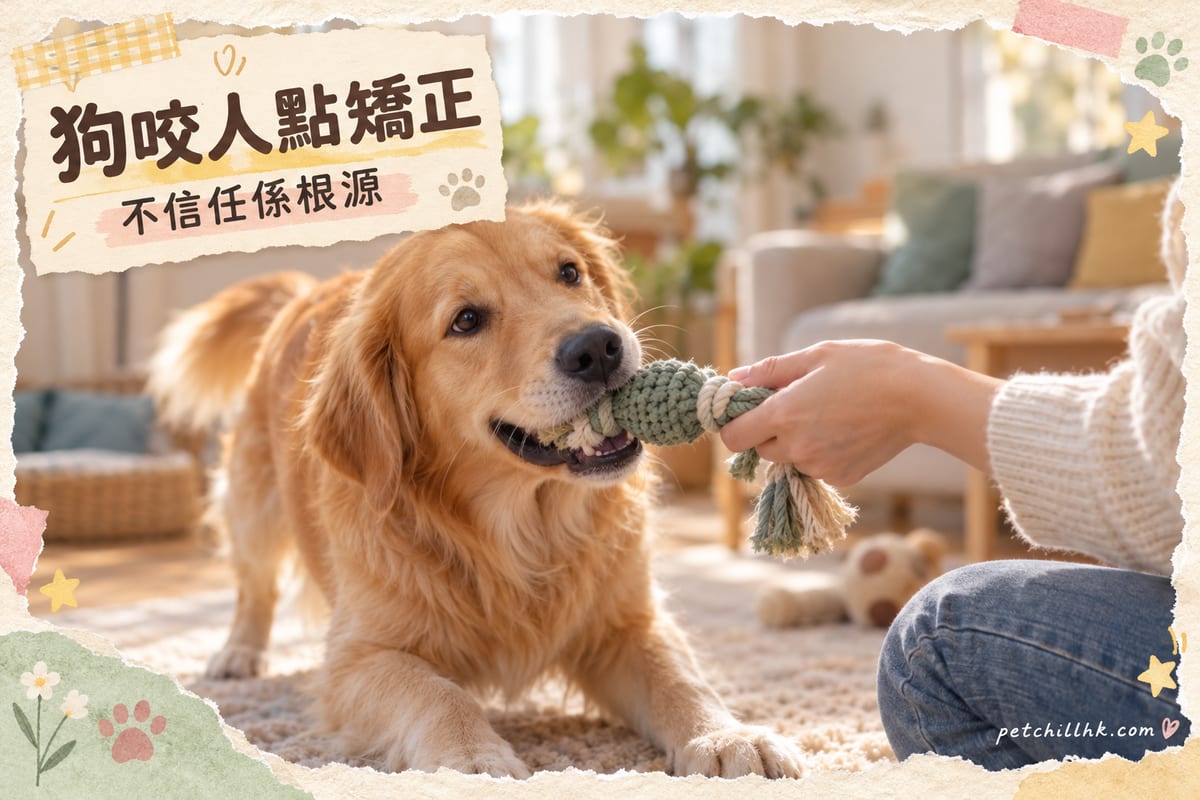
Quick answer: The book's answer is direct — the root of dog biting is mistrust. It is not 'born aggressive', but the result of two experiences: first, the mother dog herself was aggressive towards humans (imprint learning); second, the dog has been over-punished by people. The correction direction is rebuilding trust + alternative behaviour training, not increasing punishment. If biting has already drawn blood or there is a sudden drastic change in temperament, see a veterinarian first to rule out pain, then find a certified trainer.
Why do dogs bite? (Book analysis)
Dai Gengji's 100 Behaviour Problems asks directly: humans provide dogs with life, food, walks, play — why would it bite you? Because of 'mistrust'.
The book points to two sources:
- The mother dog is very aggressive: if the mother is aggressive towards humans during the imprint learning period, the puppy will grow up unfriendly to humans.
- The dog has been over-punished: the book's original words — 'repeatedly deepening punishment will have a serious impact on the dog'. Each dog reacts differently: some become timid, some start to learn to bite.
The book also has an observation worth remembering: 'When a dog bites only men and not women, it means the person who hurt it was male.' This is not mysticism; it is a fear association — the dog links 'a certain type of person' with 'pain'.
Puppy hand-biting: different from adult biting
Puppy hand-biting is mostly two things: exploring the world and teething discomfort. It should not be treated as aggression, nor handled with punishment.
Handling principles (step-by-step):
- Immediately stop interaction: the moment it bites your hand, give a short 'ouch', withdraw your hand, turn away and ignore it for 10-20 seconds — remove what it wants most (you).
- Offer a legal target: immediately turn and offer a chew toy; praise and reward when it bites the toy.
- Whole family consistency: if one family member tolerates hand-biting and another does not, the dog cannot learn.
- Enough energy release: a tired puppy bites much less — walks, sniffing games, puzzle toys.
- Avoid using hands as toys: do not wave your hands in front of it to tease play.
For detailed puppy hand-biting handling, see: Puppy Hand-Biting Guide.
Adult dog biting/growling: five-step safe handling
Growling is actually the dog's warning and communication, meaning 'I am uncomfortable, please stop' — the book and the modern training world agree: do not punish growling, because after suppressing the warning, the dog may skip the warning and bite directly.
Steps:
- Safety management first: for dogs with a biting record, add management when in contact with children and strangers (fences, leash, muzzle as instructed by veterinarian/trainer). Safety first, training second.
- Rule out medical factors: pain, toothache, joint pain, thyroid or neurological problems can all make a dog suddenly irritable — see a veterinarian first.
- Record the context (ABC): Antecedent (what happened before) → Behavior (what it did) → Consequence (what happened after). A week of recording will reveal the pattern: food guarding? Object guarding? Fear of strangers? Or being touched in a certain spot?
- Stop using punishment: the book clearly states punishment only deepens the problem. Switch to management + positive reinforcement.
- Rebuild trust + alternative behaviour: have someone who does not scare it interact using positive reinforcement. The book suggests letting the dog interact with people who 'will not be aggressive, will not scold, and only use positive reinforcement', gradually expanding contact; at the same time teach alternative behaviours (e.g. 'Sit For Everything' — sit before any request), putting control back in the owner's hands.
Biting scenario comparison table
| Scenario | Possible cause | Handling direction |
|---|---|---|
| Puppy bites hands, bites heels | Exploration, teething, excitement | Stop interaction + offer toy + enough energy release |
| Bites when a certain body part is touched | Pain, fear of being controlled | Vet check first, then desensitisation |
| Bites when approached while eating | Food guarding (resource guarding) | Start rebuilding from a distance with 'adding value' |
| Bites when seeing strangers | Fear, insufficient socialisation | Increase distance, positive pairing, professional help |
| Bites only a certain type of person | Past trauma association (book: the hurter was male) | Rebuild trust with someone who does not scare it |
| Sudden drastic change in temperament | Pain, endocrine, neurological problems | See a veterinarian immediately |
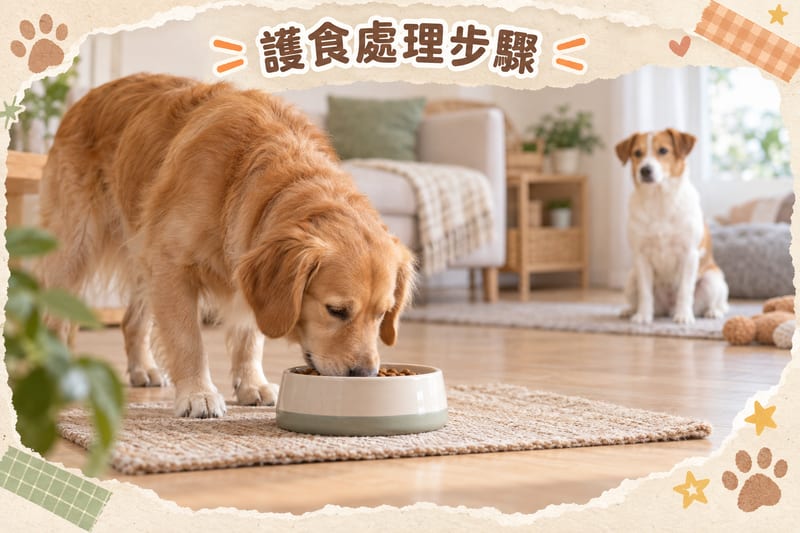
How to handle food and object guarding?
- Do not reach in and grab — this is the action most likely to earn you a bite.
- Start with 'adding': while it is eating, gently drop something better into the bowl from a distance, building 'human approaching bowl = good thing'.
- Gradually shorten the distance, keeping it relaxed throughout.
- This training must be slow, not rushed — rushing is the most common trigger in biting cases.
Rules for children and dogs (Hong Kong family practice)
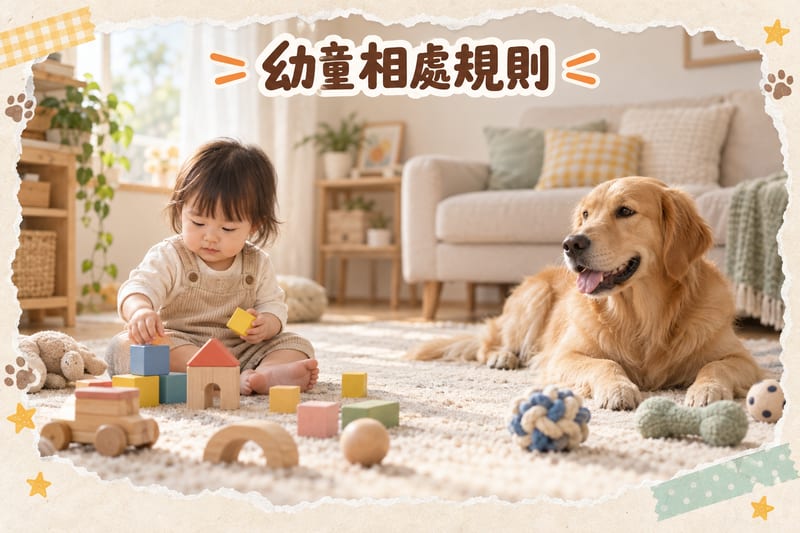
Many biting cases involve children, because children's behaviour is the hardest to predict. Setting a few house rules can greatly reduce risk:
- Do not approach while the dog is eating or chewing a toy — food and object guarding are the most common triggers.
- Do not hug the dog's head, do not ride on it, do not sneak up while it sleeps.
- Teach children 'no running, no screaming' — chasing and screaming trigger the chase instinct.
- Adults present at all times: children and dogs must be supervised by an adult.
- Give the dog an escape route: do not corner the dog; it needs to be able to walk away at any time.
- Teach 'ask the owner before petting': always ask the owner first for unfamiliar dogs, then slowly extend a hand for it to sniff.
Advanced food guarding: three steps to rebuild 'human approaching = good thing'
- Distance adding value: while it is eating, gently drop a better piece of food into the bowl from two or three metres away, then walk away. Repeat for a few days until it looks at the bowl when you approach (expecting something good).
- Shorten distance: slowly move to one metre, half a metre, staying relaxed throughout; if it stiffens, go back a step.
- Add a cue: say 'swap' when approaching, drop something good into the bowl, then walk away — the goal is 'you approaching the bowl = something better appears'.
This process must be slow: only improve a little each time; any session that makes it nervous will set you back to the start. If at any point it stiffens, bares teeth, or growls, stop and find a certified trainer.
When to use a muzzle
A muzzle is not a punishment tool but a safety management tool — used for dogs with a biting record in necessary situations (veterinary clinic, crowded places) during the transition period. It must be paired with positive training: introduce the muzzle slowly, reward when wearing it, so it treats the muzzle as routine. Always under veterinarian or trainer guidance.
Coordination with the cluster
- Dog Training Basics: learning principles and the four operations
- Positive Reinforcement Training: how to use rewards instead of punishment
- Socialisation: building goodwill towards people in puppyhood
- Calming Signals: reading warning signals
- Dog Body Language: how to read stiffening, baring teeth, tail position
- Barking Training, Jumping Correction
References
- Agriculture, Fisheries and Conservation Department (Hong Kong Government) — Pet Keeping Information
- Veterinary Surgeons Board of Hong Kong
- This article's knowledge points are compiled from Dai Gengji Teaches You to Effectively Solve 100 Behaviour Problems in Dogs and Learn to Talk with Your Beloved Dog.
Related products (available in Hong Kong)
Legal targets to replace hand-biting (toys must be better to bite than hands):
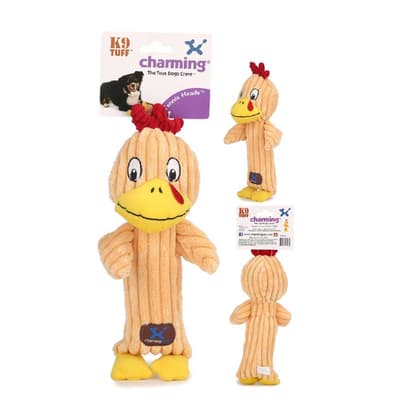
- Charming Pet Selected Dog Training Chew Toy Big Head Chicken ($60)
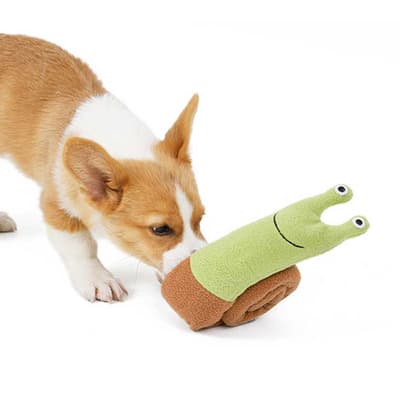
- DogLemi Dog Chew Training Toy Green Head Snail ($68)
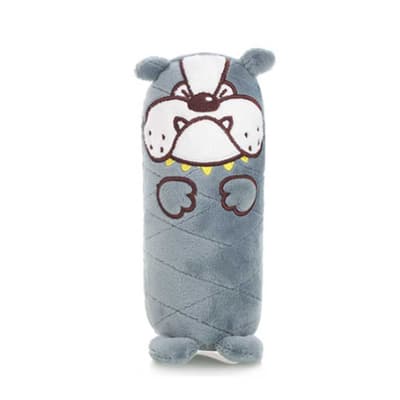
- Charming Pet Selected Dog Training Chew Toy Grey Bulldog ($60)
Prices checked on 2026-10-12, all in stock at stores.
The above content is for reference only and cannot replace the assessment of a veterinarian or professional trainer. Biting behaviour involves safety risks; please consult a registered veterinarian and certified trainer first, and never handle it yourself with punishment.
📌 Key takeaways
- ✅ The root of biting is mistrust, not being born aggressive
- ✅ Puppy hand-biting = exploration + teething; use stopping interaction instead of punishment
- ✅ Growling is a warning; suppressing warnings is more dangerous
- ✅ Rule out pain first, then address behaviour
- ❌ Using hands as toys to tease biting
- ❌ Using punishment to 'correct' aggressive behaviour