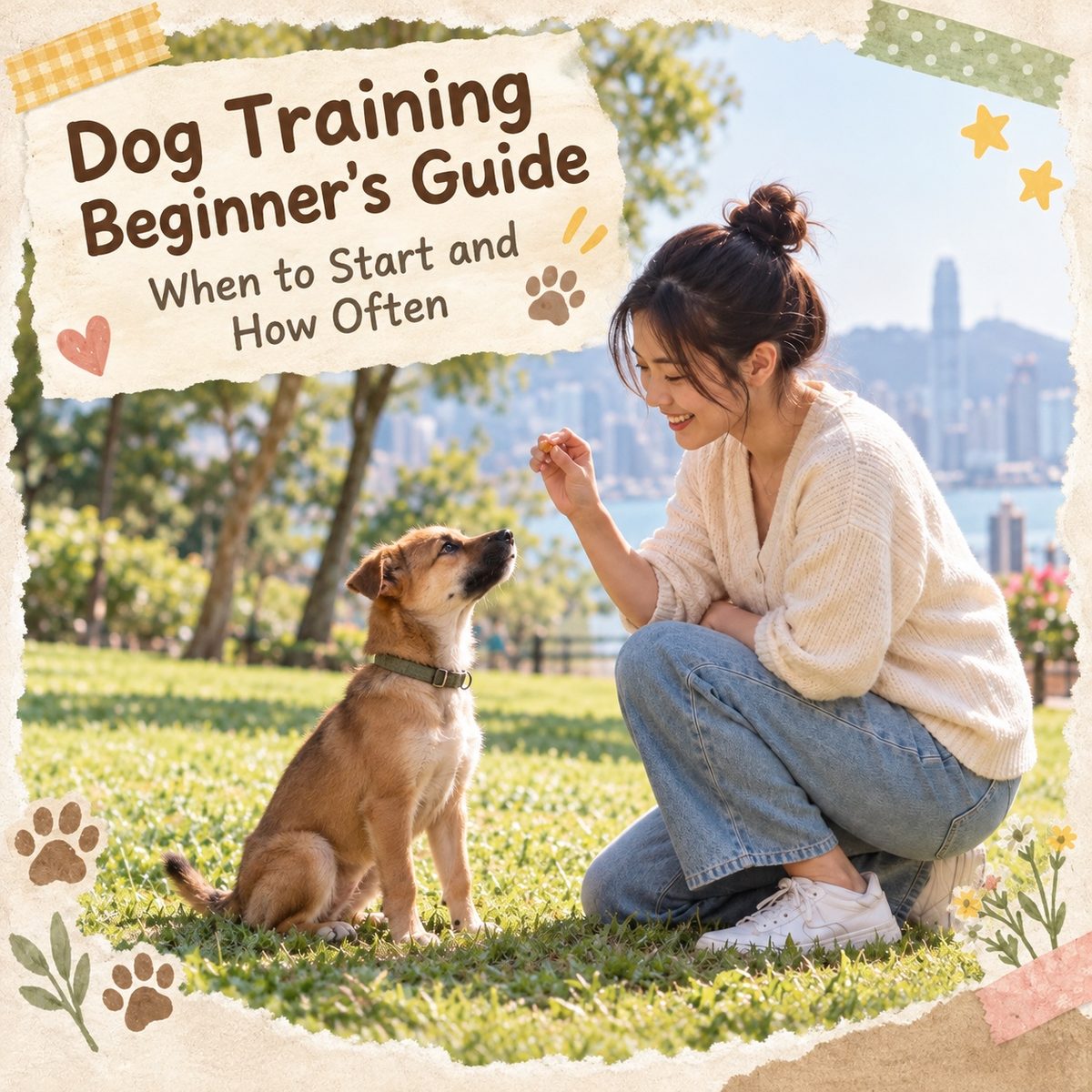
Quick answer: Books suggest the ideal time to start training a puppy is around 70 days after birth; practise for 5-10 minutes a day, split into several sessions, which is more effective than one hour-long session. The method is mainly positive reinforcement—immediately reward the behaviour you want to see, rather than waiting for it to do something wrong and then punishing. Hong Kong's cramped flats are actually more suitable for short, frequent practice: practise 'sit' in the living room, 'recall' in the corridor, and 'wait' at the lift entrance when going out.
Six Types of Learning: First Understand How Dogs Learn
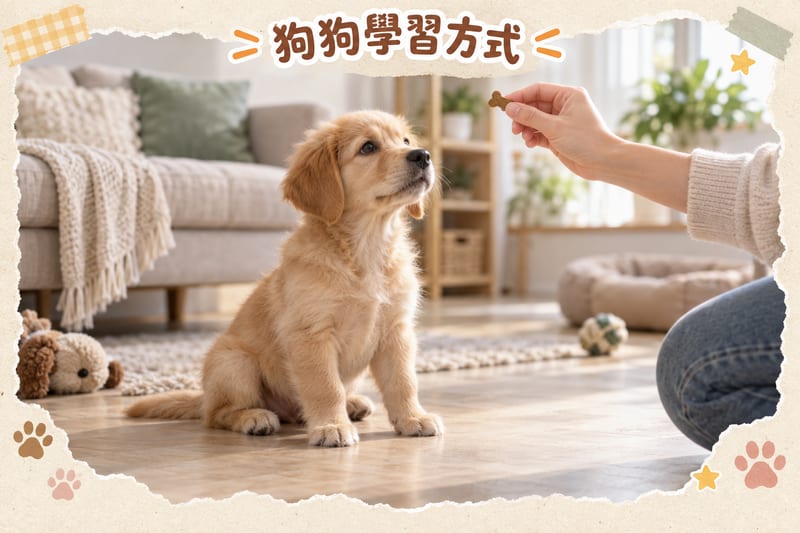
The book Dai Gengji Teaches You to Effectively Solve 100 Dog Behaviour Problems says at the very beginning: there are shortcuts to behaviour modification, but you first need to know how dogs learn. The book lists six types of learning, several of the most practical ones being:
- Trial and Error Learning: The dog randomly performs an action, and if the result is a positive reward, that behaviour is reinforced. Even if you don't reward every time, the behaviour is still reinforced—so 'sometimes reward, sometimes not' actually makes it more solid.
- Classical Conditioning: After a neutral stimulus (e.g., the doorbell) is repeatedly paired with something meaningful (a stranger appearing), the stimulus alone triggers the response. This explains why the doorbell ringing sets off barking.
- Imprint Learning: Learning at a very early stage in puppies has far-reaching effects—the book notes that if the mother dog is aggressive towards humans, the puppy will grow up unfriendly towards humans too.
- Latent Learning: Dogs quietly learn environmental information without necessarily showing it immediately.
- Observational Learning: Animals can learn new behaviours by watching and imitating.
Practical implication: The behaviours you think are 'deliberate disobedience' are actually 90% the result of the learning mechanisms above. So the entry point for changing behaviour is changing the consequence, not increasing the volume.
The Four Operations: Positive Reinforcement, Negative Reinforcement, Positive Punishment, Negative Punishment
The book's definitions are worth writing down:
| Operation | Method | Effect |
|---|---|---|
| Positive reinforcement | Give the dog something it likes (treats, praise) | Behaviour occurs more often |
| Negative reinforcement | Remove something the dog dislikes | Behaviour occurs more often |
| Positive punishment | Add something the dog dislikes | Behaviour decreases |
| Negative punishment | Remove something the dog likes | Behaviour decreases |
The book specifically reminds us of a commonly misunderstood point: 'positive' = add, 'negative' = remove, not 'good' and 'bad'. Reinforcement increases behaviour, punishment decreases behaviour.
This article and the entire cluster consistently focus on positive reinforcement: reward the behaviour you want to see—this approach doesn't rely on aversive stimuli, and the learned behaviour is more stable.
Four Key Techniques
1. Timing of Rewards: A Second Late Makes a World of Difference
The book Don't Shoot the Dog puts it plainly: poor timing of reinforcement is the biggest problem for novice trainers. For example, when the dog sits and you say 'good boy', by then it has already stood up again—so what actually gets reinforced is the behaviour of 'standing there'.
Self-check method: When training goes wrong, the first question to ask yourself is—'Am I rewarding too late?' If necessary, ask someone to observe your timing.
2. Size of Reinforcers: The Smaller the Better
The book uses a zoo example: a keeper used a whole carrot to train a panda, and the panda slowly savoured it, getting only three reinforcements in fifteen minutes; switching to a thin slice of carrot made things much smoother.
Principle: The smaller the reinforcer, the faster the animal eats it, the more reinforcements you can do in one session, and it won't get full or bored so quickly. For dogs, a treat the size of a mung bean is enough.
3. Shaping: Target Only One Aspect at a Time
The shaping principle from Don't Shoot the Dog: train only one characteristic of the behaviour at a time. For example, if you want to teach 'lie down', don't demand perfect posture all at once—first reward 'lowering the body a little', then once that's stable, reward 'belly on the ground', and finally require 'stay'. The book describes this method as training that is 'no hitting, no scolding, no pressure'.
4. Behavioural Initiative: You Decide When to Eat and Play
How to Train a Puppy reminds us of a very important principle: the initiative for behaviour is in your hands—you decide when to feed, when to play, when to walk. If you immediately satisfy every demand it makes, you lose the initiative, and it may become anxious and controlling. For stubborn dogs, always maintain control of the initiative; for obedient dogs, you can relax a little.
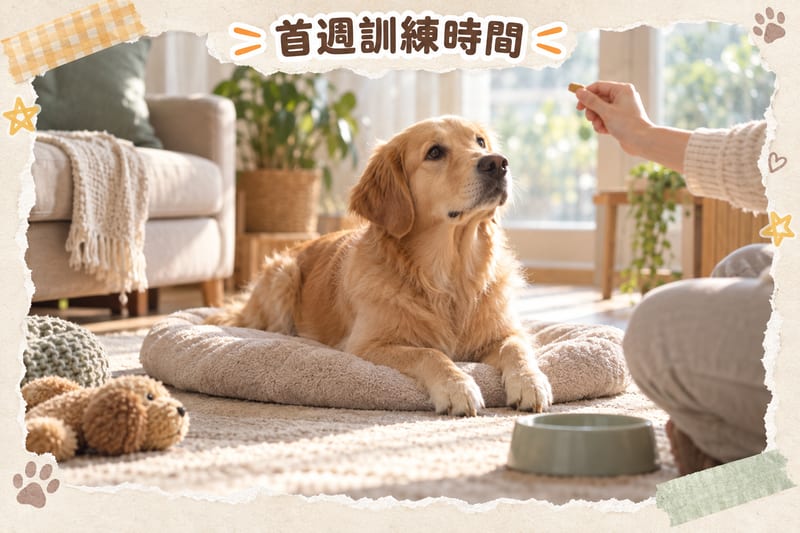
Hong Kong Cramped Flats: Week 1 Training Schedule
The theme of Week 1 in How to Train a Puppy is 'adapting to a new life'—don't be greedy:
| Training item | Frequency | How to do it in a Hong Kong flat |
|---|---|---|
| Getting used to its own name | Anytime (call before feeding, playing, petting) | Call its name in the living room → looks at you → reward |
| Toilet training | Take it to the same spot at regular times | Put the pee pad in a fixed corner; take it there after meals and upon waking |
| Getting used to the crate | Short periods daily | Keep the crate door open; going in = treats |
| Recall | Every meal time | Practise at a distance of 3 metres in the corridor or at the end of the living room |
| 'Sit' | 5-10 times daily | Before meals, before going out, before putting on the leash |
| 'Watch me' | 5-10 times daily | At the lift entrance, before seeing other dogs |
Note: In the first week, don't take it on outings to the countryside or crowded places—the book suggests first giving it time to observe the new home; if friends and children want to visit, wait until it has adapted.
Common Mistakes (Most Common Among Beginners)
- Practising too long at once: Dogs have limited attention; 5-10 minutes is enough. Practising until it 'doesn't want to practise' is counterproductive.
- Different standards among family members: The book emphasises that training standards must be consistent; if one person allows something and another doesn't, the dog can't learn.
- Skipping steps: Don't add new requirements to a behaviour that isn't stable yet—reviewing all the shaping steps is the book's advice.
- Satisfying all its demands at once: You will lose the behavioural initiative.
- Relying on volume: For problems like barking and pulling, increasing volume will only be 'reinforced' by the learning mechanism, not eliminated.
Coordination with the Cluster
This is the overview of the 'dog training' cluster; each topic has a dedicated article:
- Leash walking training: no pulling, training on roads and in shopping malls
- Crate training: getting the dog to enter the crate voluntarily
- Barking training: four main reasons and how to respond
- Separation anxiety: alone-time training and video analysis method
- Biting correction: the root of distrust and how to handle it
- Toilet training: ten methods from the book
- Socialisation: the three-minute rule
- Recall training: coming when called
- Positive reinforcement training: in-depth on reinforcement principles
Related behaviour problems: jumping up correction, destructive behaviour correction, calming signals interpretation.
References
- Agriculture, Fisheries and Conservation Department (Hong Kong Government) — Pet Care Information
- Veterinary Surgeons Board of Hong Kong
- The knowledge points in this article are compiled from dog training books such as Dai Gengji Teaches You to Effectively Solve 100 Dog Behaviour Problems, Don't Shoot the Dog, and How to Train a Puppy.
Related Products (Available in Hong Kong)
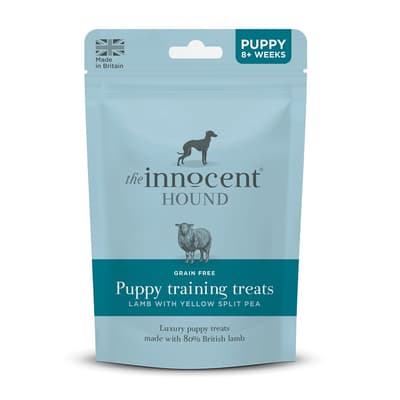
Training requires rewards that are 'small, quick to eat, and won't fill the dog up':
- The Innocent Hound Puppy Training Treats Lamb and Pea 70g ($75)
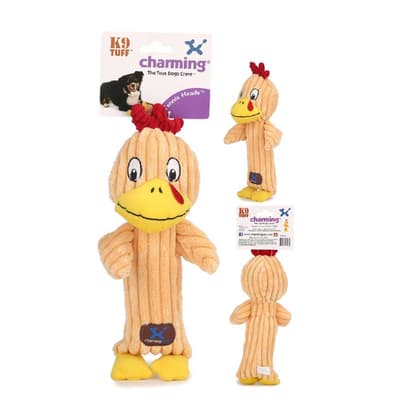
- Charming Pet Selected Dog Training Chew Toy Big Head Chicken ($60)
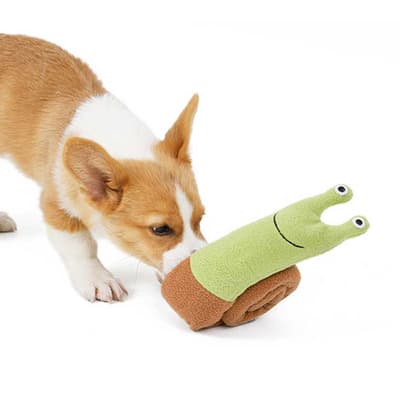
- DogLemi Dog Chew Training Toy Green Snail ($68)
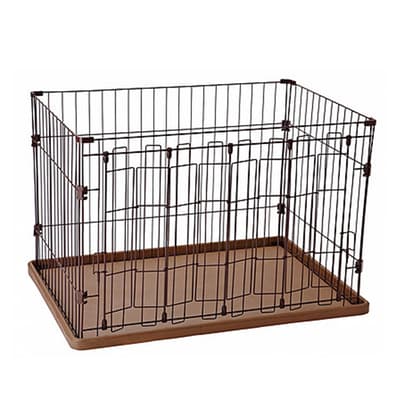
- Petio Fully Open Foldable Playpen (for dogs) ($876)
Prices checked on 2026-10-12; all in stock at retail stores.
The above content is for reference only and cannot replace the assessment of a veterinarian or professional trainer. If your dog shows aggression, self-harm, or persistent anxiety, please consult a registered veterinarian or certified trainer.
 Fuji One full guide →