Quick answer: Just stick to "stop when the leash tightens" and never let your dog move forward by pulling. Combine that with heel practice in unfamiliar places and recall to a food bowl, and within eight weeks you'll go from being walked by your dog to walking your dog easily.
Does every walk feel like your dog is dragging you along? The leash is taut, your arm aches, and you can't enjoy the walk at all? Almost every dog owner has been there. The good news is that with the right training methods, both you and your dog can enjoy relaxed, pleasant walks. This article breaks down the 3 core walking training techniques so you can go from "being walked by your dog" to "walking expert"!
Why does my dog pull so hard on the leash?
Before we start training, we need to understand why dogs pull. Dogs usually pull on the leash for these reasons:
- Scent exploration: A dog's sense of smell is over 10,000 times more sensitive than a human's; the smells on the street are like a gripping novel to them.
- Social desire: When they see other dogs or people, they want to rush over and say hello.
- Excitement: Going out is extremely exciting for dogs, and they find it hard to control themselves.
- Habit: If a dog has ever pulled on the leash and successfully reached a destination, that behaviour gets reinforced.
Once we understand the reasons, we can train accordingly. Remember one core principle: a successful experience tells your dog they can do it again. If they pull on the leash and you follow, they learn that "pulling = getting where I want to go".
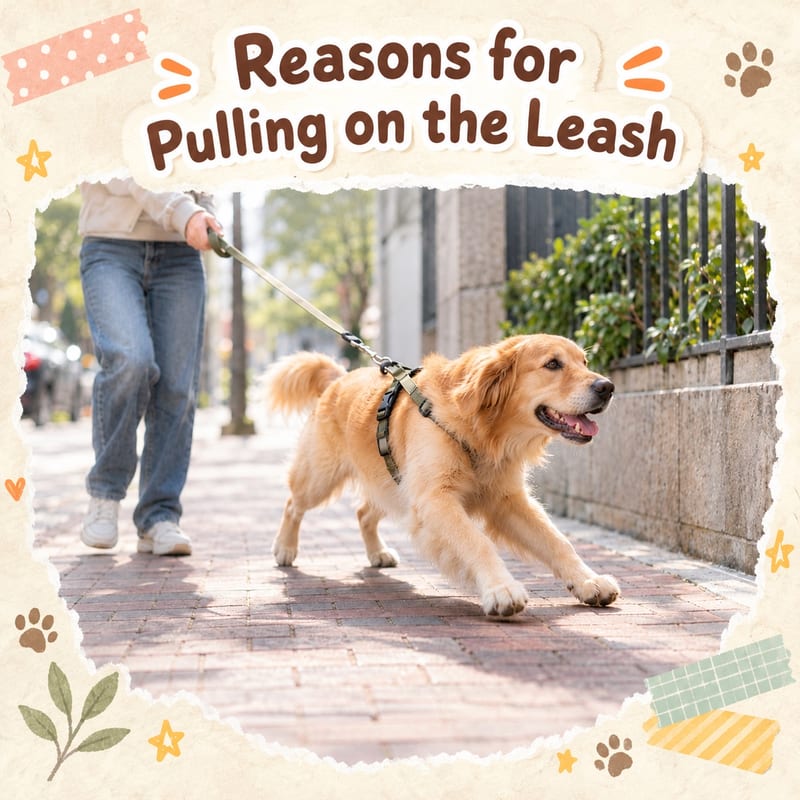
Technique 1: No-pulling leash training
This is the most basic and most important walking training. The core principle is very simple: the moment the leash tightens, stop moving.
Training steps
-
Choose a suitable location: Find a wide, quiet place, such as a grassy riverbank or an open park area, where there aren't too many things to attract your dog's attention.
-
Start walking: Walk with your dog on a loose leash.
-
Stop when the leash tightens: As soon as your dog starts pulling, stand still. Don't try to pull your dog back, and don't speak — just stand quietly.
-
Wait for them to turn back: Your dog may sit down first, then back up a few steps, or turn around and come back to you.
-
Continue forward: When the leash goes slack, continue walking. Take two steps and pause to check that the leash is still loose.
-
Repeat: Be consistent and never give your dog any chance to get what they want by pulling.
Advanced practice: Food target method
Training becomes more fun if there's a specific goal. Put five or six pieces of dry food in a bowl or hide them in short grass about 7 metres away, where your dog can see the food. Then walk them towards it on the leash. The closer you get to the food, the more you need to watch the leash tension — even if you're only 10 cm from the bowl, stop if you need to.
Common mistakes
- ❌ Following passively when the leash is tight — this reinforces pulling.
- ❌ Using brute force to yank your dog back — this only makes them more excited.
- ❌ Talking or scolding while walking — your dog doesn't understand and gets distracted.
- ❌ Occasionally relaxing the standard — one success undoes all your previous work.
Technique 2: Loose-leash heel training
Once your dog learns not to pull, the next step is to get them to walk willingly by your side. This uses your dog's following instinct — they naturally tend to follow the leader of the group.
Training steps
-
Choose an unfamiliar place: Take your dog to a quiet spot they don't know. In unfamiliar surroundings, dogs instinctively stay closer.
-
Practise off-leash: In a safe environment, take off the leash and let your dog move freely.
-
Lead actively: Walk forward with big strides. If your dog hasn't noticed you've walked ahead, make some noise to get their attention.
-
Change direction: Change direction randomly — walk in a cross, diagonally, or turn suddenly. Don't give any warning signal beforehand.
-
Correct overtaking: When your dog starts to overtake you, change direction so they learn that overtaking the owner is not allowed.
-
Control your pace: Don't walk so fast that your dog has to run, and don't walk so slowly that they lose attention.
Four steps for heel training
-
Walk forward with big strides, and your dog will follow.
-
When your dog starts to overtake, turn around and keep walking.
-
Your dog turns too and catches up with you.
-
Keep repeating until your dog habitually stays by your side.
Tip: 5–7 minutes of practice per walk is enough. Once a day is best during puppyhood. If you're worried about your dog running off, attach a thin 1.5–2 metre cord to their collar and let it trail on the ground as a backup.
Technique 3: Recall training — come when called
Recall training is the last line of defence for walk safety. When your dog learns to come back to you immediately when called, you can control any situation.
Choose a sound signal
First, choose a clear, consistent sound signal. We recommend using a drawn-out "here" or a whistle. Avoid using "come" because it's used so often in daily life that it can confuse your dog.
Two-person training steps
-
Preparation: At feeding time, prepare your dog's favourite food or treats.
-
Hold the dog: One family member holds your dog's collar or harness, about 3 metres away.
-
Give the signal: Crouch down with the food bowl in your hand and call "here" or blow the whistle once.
-
Release: The other person releases the leash, and your dog will run straight to you.
-
Reward immediately: As soon as your dog comes to you, give food and verbal praise.
-
Repeat: Repeat this every mealtime to build a strong conditioned reflex.
Important notes
- Don't use the recall cue in uncontrolled situations: If your dog is playing happily or sniffing around and you call "here" but they don't come, the signal loses its meaning.
- Reward promptly: Have the reward ready in your hand when you give the cue.
- Avoid wrong associations: Don't ask your dog to sit immediately after coming, or they'll think the reward is for "sitting" rather than "coming".
Golden timetable for walking training
| Stage | Training content | Suggested time |
|---|---|---|
| Weeks 1–2 | Leash familiarisation, putting on and taking off the leash | 5 minutes daily |
| Weeks 3–4 | No-pulling training (fixed location) | 10 minutes daily |
| Weeks 5–6 | Loose-leash heel training | 10–15 minutes daily |
| Weeks 7–8 | Recall training | 5 minutes daily |
| Week 9 onwards | Combined walking practice | 15–20 minutes daily |
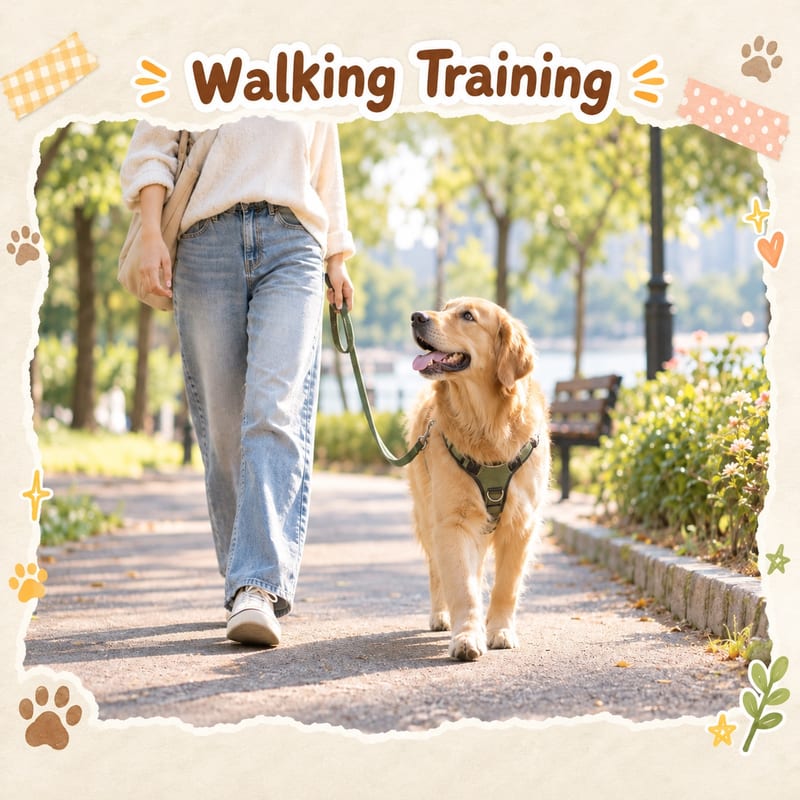
Book breakdown: Why does pulling get worse? (from How to Train a Puppy)
The book's core sentence: "A successful experience tells your dog they can do it again." They pull, you follow = they learn "pulling = getting where I want to go". Even sneakier: even if you stand still and don't follow, as long as you extend your arm forward or let the leash lengthen, they'll credit it to "pulling works".
So the book's rule is strict: never let your dog drag you along by the leash. If you really need to get from A to B (e.g. going home), carry them or take a vehicle — don't walk while pulling. Otherwise, one "compromise because you're in a hurry" today will override the ten times you practised before.
Roads and shopping malls: advanced environment training (step by step)
- Go during quiet hours to a station or the outskirts of a mall. Stand to one side and watch doors open and close and people come and go. Don't approach immediately.
- Observe their state: If they're too nervous, increase the distance. If they can adjust back to a relaxed state, reward them (treats or play).
- Add distractions: Start on a quiet path and gradually move closer to busy roadsides. The criterion is "can they still keep their attention on you?"
- Walk steadily, and they'll follow steadily: The book reminds us that dogs read hesitation from your body language. Keep your steps smooth and confident, and don't keep looking back at them (that gives them room to look around). If they try to veer off, speed up or slip around a corner, and they'll naturally catch up.
Practical checklist for small Hong Kong flats: perfect walks without a garden
Hong Kong is cramped, and not everyone has a back garden, but that doesn't mean you can't train for good walks. Here's a five-step plan designed for Hong Kong people, bringing the article's advice down to a 300-square-foot space.
1. Indoor "stop when the leash tightens" warm-up
Every evening during a TV ad break, put the leash on your dog and walk a circle in the living room. The moment the leash tightens, stand still and don't move until your dog comes back to you. Stop when the ads end — it doesn't need to be long, but do it daily so your dog understands "the same rules apply at home".
2. Rooftop / podium "heel" quick session
At 6 am or 10 pm, take your dog to the rooftop or the estate podium. First take off the leash (if safe), then walk in a zigzag with big strides, and your dog will naturally stay close. 5 minutes each time, and training is done before you take the lift downstairs.
3. Corridor "recall" sprint
If you live in a long corridor, play the "here" game. A family member holds your dog at one end of the corridor, you crouch down and call "here", and as soon as they're released, they dash over for a treat. Short corridor distance — safe and space-saving.
4. Weekend "upgrade" routes
On Saturdays and Sundays, go to Shing Mun River or the grassy area at Shek O and scale up your weekday indoor/corridor practice. Because your dog already knows the cues, they'll be more focused in a new environment and progress faster.
5. Rainy-day backup
When it rains, go to the rear section of a mall car park's lorry spaces (during non-peak hours). The ground is dry and there are pillars to walk circles around for heel practice. Remember to avoid vehicles and bring a water bottle and towel.
As long as you stick to "indoor warm-up + weekend scale-up" every day, even the smallest Hong Kong flat can produce a dog with perfect walking manners.
If you want to change locations for weekend practice, check the list of pet parks across Hong Kong and pick one nearby.
Further reading
📌 Key takeaways
- ✅ The moment the leash tightens, stand still and never give in.
- ✅ Practise heel in unfamiliar places, and your dog will naturally stay close.
- ✅ Use a fixed recall cue "here" and reward immediately with the food bowl.
- ❌ Never yank your dog with brute force — it only makes them more excited.
- ❌ Don't occasionally relax the rules — one success undoes all your work.
This article is compiled from breed consensus and clinical care guidelines; individual dogs vary. For health issues, consult a registered veterinarian first.
Related articles in this cluster
This is part of the "dog training" cluster: Dog training basics (overview), Leash walking training, Crate training, Barking control, Separation anxiety, Biting correction, Toilet training, Socialisation, Recall training, Positive reinforcement training. Related behaviour issues: Jumping up correction, Destructive behaviour correction.
References
- Agriculture, Fisheries and Conservation Department (Hong Kong Government) — Pet care information
- Veterinary Surgeons Board of Hong Kong
- This article's key points are compiled from dog training books including Dai Gengji Teaches You to Effectively Solve 100 Dog Behavior Problems, Don't Kill That Dog, How to Train a Puppy, and Learn to Communicate with Your Dog.
The above is for reference only and cannot replace assessment by a veterinarian or professional trainer. If your dog shows aggression, self-harm, or persistent anxiety, consult a registered veterinarian or certified trainer.
Related products (available in Hong Kong)
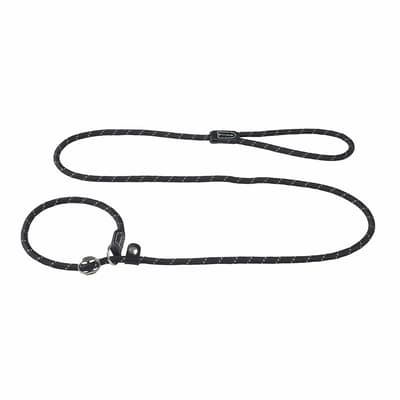
- ROGZ training rope leash, round rope, size M (HLXR09) ($184)
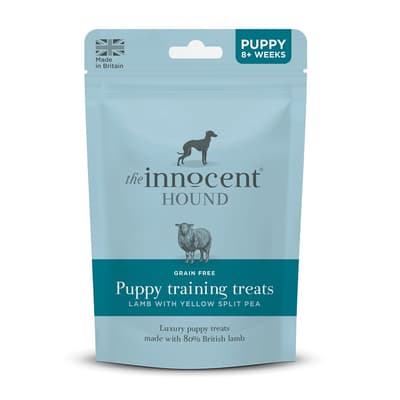
- The Innocent Hound puppy training treats, lamb & pea, 70g ($75)
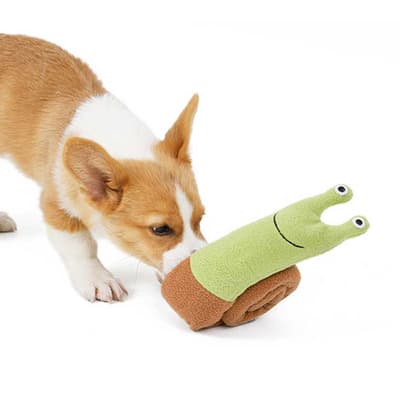
- DogLemi dog chew training toy, green snail ($68)
Prices checked on 2026-10-12; all in stock at retail stores.
 Almo Nature full guide →
 Fuji One full guide →