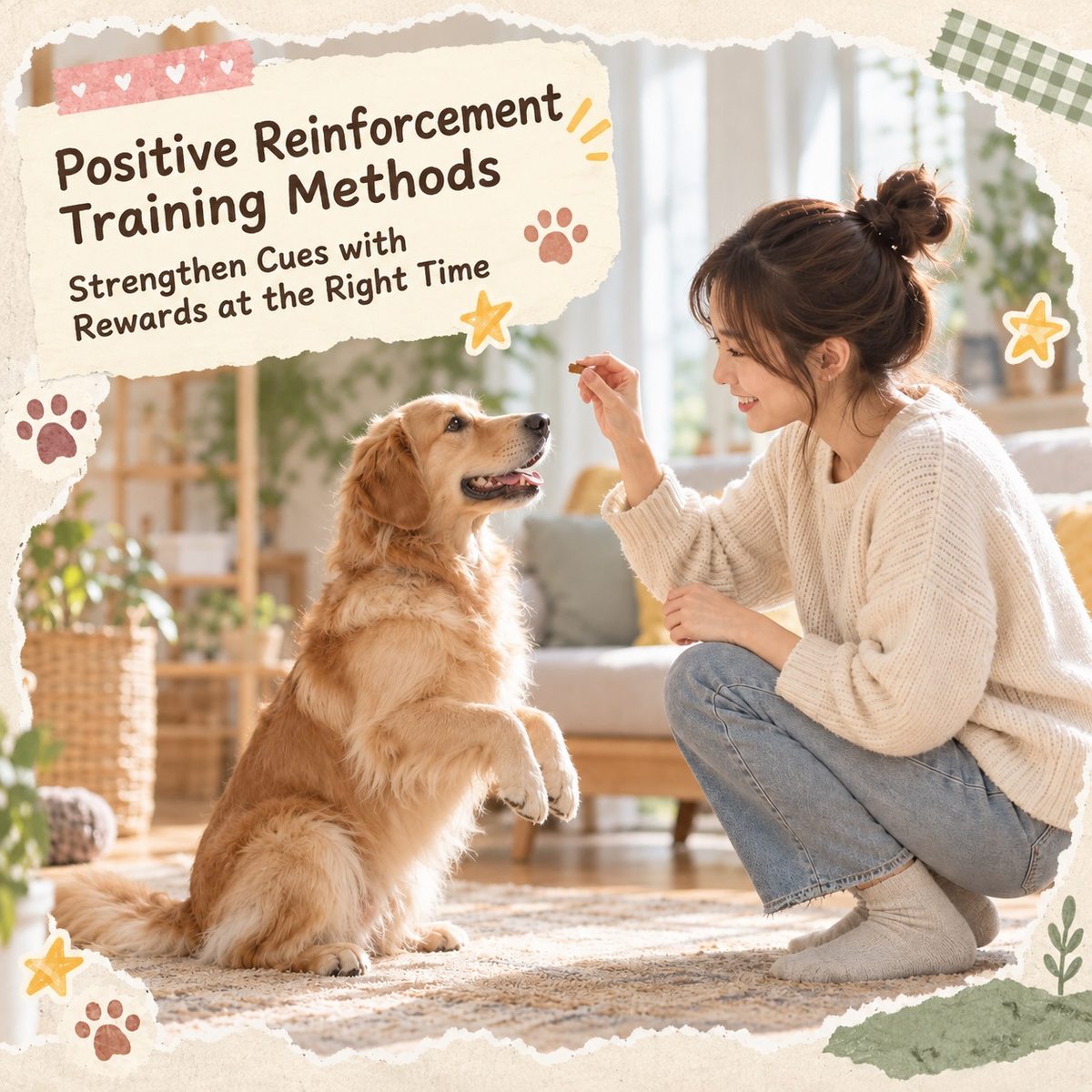
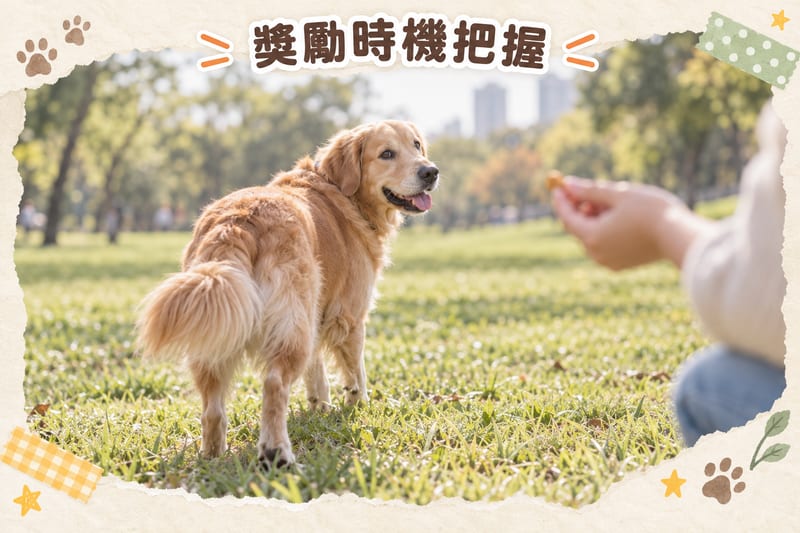
Quick answer: The point of positive reinforcement is not 'whether there's a reward' but that the reinforcer appears at the same moment as the target behaviour. The book Don't Shoot the Dog defines it this way: reinforcement training 'is not rewards and punishments' — a reward is only a tool; what matters is timing and frequency. Reinforcers should be small (for a dog, a piece of meat half a centimetre across is enough), you should work on only one feature at a time (shaping), and the whole family should use consistent cues.
What is a reinforcer?
The book's definition: 'A reinforcer is anything that, occurring in conjunction with an act, tends to increase the probability that the act will occur again.' It comes in two kinds:
- Positive reinforcer: something the trainee wants to get — food, petting, praise, play
- Negative reinforcer: something the trainee wants to avoid — this is not part of positive reinforcement training and is not used in this article
The book has a very important principle: 'You can't reinforce a behaviour that never happens.' So the first step in training is to create the opportunity for the target behaviour to appear — even if it's only a very rough version.
Choosing a reinforcer, and how big?
- Choose what he genuinely wants: How to Train a Puppy reminds us to 'set the rewards according to the dog's taste' — some dogs work for treats, some for toys, some for a word of praise
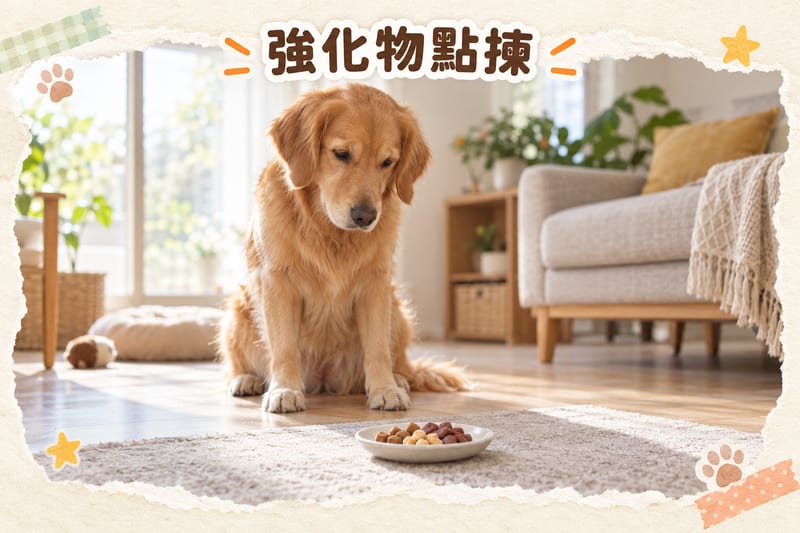
- The smaller the better: the book's zoo example — a panda given a whole carrot managed only three reinforcements in fifteen minutes; cut into thin slices, things went much more smoothly. The book specifies a small piece of meat half a centimetre across for a dog, the same order for a cat, and half an apple for an elephant
- Don't let him fill up: train before meals and deduct the training treats from the meal portion — the step Hong Kong dog owners most often overlook
- Favourites can be even smaller: the book notes that the more it is his absolute favourite food, the smaller the portion can be
Timing: one second late makes all the difference
The book's plainest line: 'The timing of the reinforcer is itself information' — it tells the animal which action you are actually rewarding.
A failure example: the dog sits, but by the time you say 'good boy' he has already stood up again — what got reinforced was 'standing'. Hence the book's conclusion: whenever training goes wrong, the first question to ask yourself is "was the timing too late?"
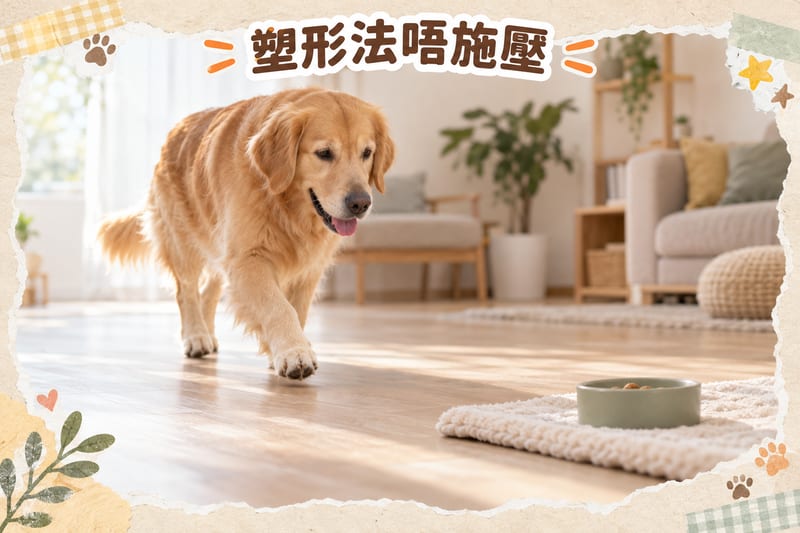
Shaping: no hitting, no scolding, no pressure
Shaping means gradually rewarding behaviour that gets 'closer and closer to the goal'. The book lists these points:
- Work on only one feature of the behaviour at a time (posture first, then duration)
- Don't switch trainers midway (different people's pace and standards confuse the dog)
- If performance gets worse, review all the steps — usually a step was skipped
- Occasionally not rewarding is normal: the book explains that skipping an expected reinforcer makes the next performance vary, so you can 'pick' a better version to reward (differential reinforcement)
Schedules of reinforcement: why you don't need to reward every time
The book mentions fixed and variable schedules of reinforcement: a fixed schedule (e.g. reward once every six repetitions) makes the earlier repetitions sloppier and sloppier, because only the last one gets reinforced; whereas occasionally reinforcing earlier actions at random works just as well. This is why behaviour that is 'sometimes rewarded, sometimes not' is the most durable — and it also explains why gambling-style intermittent rewards are so hard to give up.
The 'wrong' signal (no-reward marker)
The book's design: say 'wrong' in a flat tone, meaning 'that won't earn a reward' — it is information, not a scolding. But the book warns:
- It only applies to dogs that already have training experience and understand that 'change what you're doing and you get rewarded'
- Using 'wrong' on a dog that doesn't understand what you want easily turns into punishment, with the same consequences as any other punishment
- Don't treat it as a 'P-chain-style' correction command
Anti-training: removing unwanted behaviour through reinforcement
Chapter 4 of the book sets out methods for removing behaviour through reinforcement; the two most practical for Hong Kong dog owners:
Method five: train an incompatible behaviour. Pick an action that 'cannot be done at the same time' as the problem behaviour and train that. Example: a dog that barks all night in the yard can be trained to lie down on cue — the book notes that dogs, like people, rarely keep barking once lying down.
Method six: train the behaviour to occur only on signal. If a behaviour becomes 'only done when there's a signal', it won't happen without one — then simply stop giving the signal and the behaviour fades. This works very well for situations like 'barking madly before meals' or 'jumping up before the leash goes on'.
Applying it in everyday Hong Kong life
| Situation | Reinforcer | Timing |
|---|---|---|
| Waiting at the lift | One small treat | The moment he stops his feet (not when the doors open) |
| Leashing up at the front door | The door opening = reward | The second he sits still and doesn't jump up |
| Walking without pulling | Moving forward = reward | Every step the leash is loose |
| Recall | Toy / treat | Reward the instant he reaches you |
| Grooming and tooth brushing | Treats midway | After each short section |
| Before being left alone | Food-stuffed toy | Set it up before you leave |
Common problems checklist
| Symptom | What it usually means | How to fix it |
|---|---|---|
| The dog gets more confused the more you train | Too many requirements at once | Go back a step and reward only the version that is already solid |
| He only obeys when you have treats in your hand | Reinforcers are too uniform | Mix in life rewards (walks, ball games, opening the door) |
| He listens to you but not to family members | Inconsistent standards | Hold a family meeting to agree on cues and reward methods |
| He regresses after a few days | Practice density too low | Change to 5-10 reps a day, a few tens of seconds each |
| He starts avoiding training | Sessions too long / too hard | Shorten them, lower the difficulty, and end on a success |
Why you should 'reinforce yourself'
The book reminds trainers: don't forget to reinforce yourself. Training takes patience — when you manage one success, reward yourself with a drink; when practice improves, tell yourself 'well done'. This is no joke: your own behaviour is subject to the same principles of reinforcement, and positive feedback makes you more willing to keep training.
How this fits with the cluster
This is the theory piece; for practical application see: Dog Training Basics (overview), Recall Training, Leash Walking Training, Barking Training, Crate Training, Biting Correction, Toilet Training, Separation Anxiety, Socialisation; behaviour follow-ups: Jumping Up Correction, Destructive Behaviour Correction.
References
- Agriculture, Fisheries and Conservation Department (Hong Kong Government) — Pet Care Information
- Veterinary Surgeons Board of Hong Kong
- The knowledge points in this article are compiled from Don't Shoot the Dog: The New Art of Teaching and Training (Karen Pryor) and Dr. Tai Geng-chi Teaches You How to Effectively Solve 100 Dog Behaviour Problems
Related products (available in Hong Kong)
- The Innocent Hound Puppy Training Treats Lamb & Pea 70g ($75)
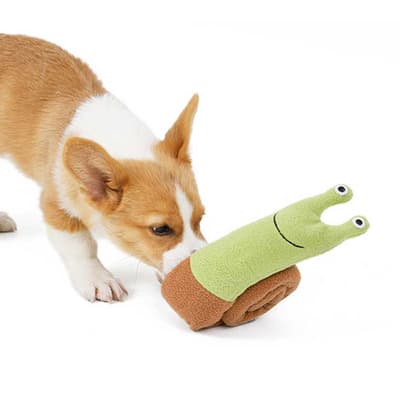
- DogLemi Dog Chew Training Toy Green Snail ($68)
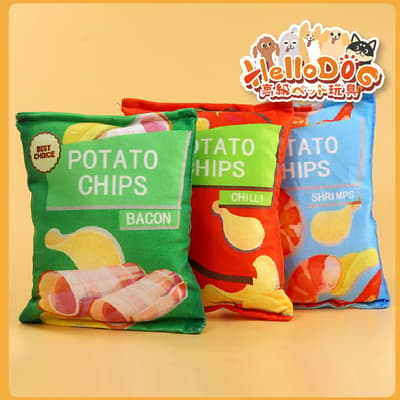
- HelloDOG Dog Training 'Let's Have a Bag of Crisps' Dog (with squeaker) ($38)
- Charming Pet Selected Dog Training Chew Toy Big Head Chicken ($60)
Prices checked on 2026-10-12; all in stock at our stores.
The above is for reference only and cannot replace the assessment of a veterinarian or professional trainer. If your dog shows aggression, self-harm or persistent anxiety, please consult a registered veterinarian or certified trainer.
📌 Key takeaways
- ✅ The reinforcer must appear at the same moment as the target behaviour
- ✅ The smaller the better: a piece of meat half a centimetre across for a dog
- ✅ Occasionally not rewarding actually makes the behaviour more durable
- ✅ Shaping targets only one feature at a time
- ❌ Rewarding a step late = reinforcing the wrong action
- ❌ Using the 'wrong' signal as a correction command on beginners
 Fuji One full guide →