
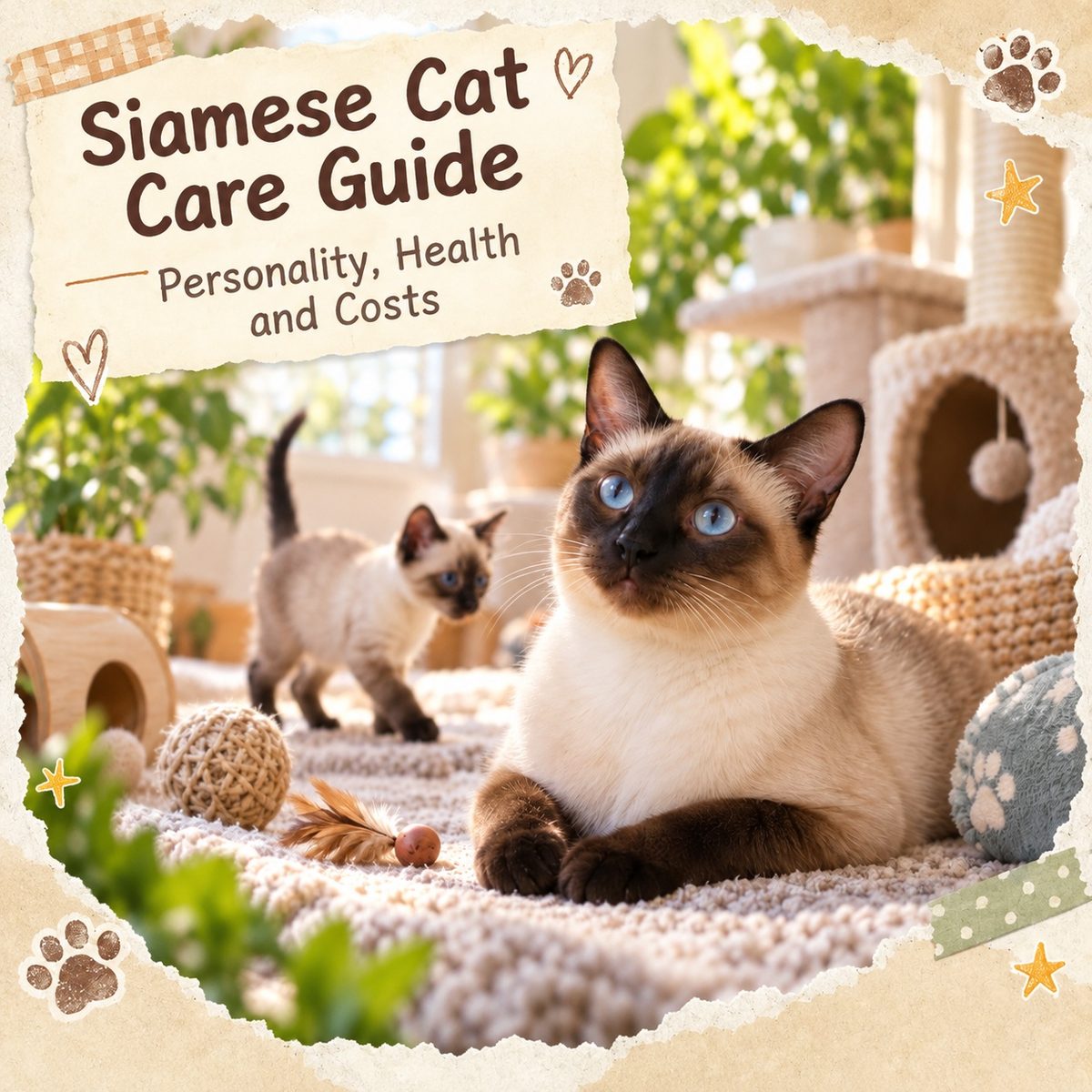
Quick answer: The Siamese is the 'dog among cats', with blue eyes and point colouring, extremely clingy. In Hong Kong, ensure sufficient daily companionship, vertical space and warmth; buying costs about $8,000-25,000, adoption $1,000-3,000. Short hair is easy to manage but they feel the cold, and they live long, 15-20 years.
Answer first: The Siamese is one of the oldest cat breeds in the world, known for its blue eyes, point-coloured coat and extreme clinginess, earning it the nickname 'dog among cats'. In Hong Kong, two things need the most attention: they need a lot of companionship and are not suited to long periods alone; short hair is easy to manage but they feel the cold. Price is about $8,000-25,000, adoption about $1,000-3,000.
This is one of the Hong Kong cat breed guide series.
Siamese Cat Quick Reference: Price, Point Colours and Care at a Glance
The table below is a condensed version of the key points; look at the big picture first, then go into details below.
| What you want to know | Quick answer |
|---|---|
| Hong Kong price | Registered catteries HK$12,000–20,000; licensed pet shops HK$8,000–15,000; adoption HK$0–2,000 (some organisations $1,000-3,000) |
| Four point colours (dark → light) | Seal → Blue → Chocolate → Lilac |
| Which is rarest | Lilac (pale purple-grey) |
| What affects price | Depth of point colour and vaccination records; not directly related to being purebred |
| Monthly expenses | About HK$800–1,500 |
| First-year total | About HK$22,000–32,000 (then about HK$11,000–17,000 per year) |
| Daily care | Short hair, brush 1-2 times per week |
| Lifespan | 15-20 years |
| Most important genetic risk | Hypertrophic cardiomyopathy (HCM) |
In one sentence: the Siamese's entry fee and monthly expenses are not high; what you really need to budget for is companionship time and a medical reserve.
Siamese Cat Price and Monthly Expenses (2026 Hong Kong Market)
Price is only the entry fee; what really affects the decision is the fixed monthly expenses. The table below shows actual 2026 Hong Kong market rates; before paying a deposit, ask about each item clearly, especially the parents' health test reports.
| Item | Range | Notes |
|---|---|---|
| Registered cattery | HK$12,000–20,000 | Pedigree certificate, parents' health screening records |
| Licensed pet shop | HK$8,000–15,000 | Point colour depth and vaccination records affect price |
| Adoption | HK$0–2,000 | Mostly already neutered and vaccinated |
| Vaccinations (first year, three shots) | HK$900–1,500 | Then annual booster |
| Neutering | HK$1,500–3,500 | Cheaper for males, more expensive for females |
| Monthly food | HK$350–700 | Dry food + complete wet food mixed |
| Monthly cat litter | HK$120–250 | Clumping litter / tofu litter |
| Monthly deworming (averaged) | HK$80–150 | Internal and external |
| Medical reserve (recommended) | HK$200–500 | Urinary and gastrointestinal issues are more common |
| Monthly total | About HK$800–1,500 | Excluding major medical costs |
What Hong Kong owners most easily underestimate is the medical reserve. Siamese cats are sensitive in the urinary and gastrointestinal tracts; one ultrasound plus blood test starts at HK$1,500, so saving HK$200–500 per month is a practical approach.
Annual total expenses can be broken down further for budgeting:
| Expense type | First year | Subsequent years |
|---|---|---|
| Buying/adoption | HK$0–20,000 | HK$0 |
| Vaccinations + deworming | HK$900–1,500 | HK$500–900 |
| Neutering | HK$1,500–3,500 | HK$0 |
| Food + litter | HK$5,600–11,400 | HK$5,600–11,400 |
| Annual check-up | HK$500–900 | HK$600–1,200 |
| Total | About HK$22,000–32,000 | About HK$11,000–17,000 |
So 'can I afford it' should look at ongoing annual expenses, not just the purchase price.
Adoption vs Buying: Cost and Risk Comparison
The chance of finding a Siamese through adoption is moderate, but it's worth looking at adoption first:
| Route | Entry cost | Health risk | Suitable for |
|---|---|---|---|
| Registered cattery | HK$12,000–20,000 | Lowest (parents health screened) | Those who value pedigree and health records |
| Licensed pet shop | HK$8,000–15,000 | Medium (need to see the cat in person) | Those who want to buy immediately |
| Adoption | HK$0–2,000 | Medium (mostly neutered and vaccinated) | Tight budget, want to rescue |
Adopted Siamese cats are mostly already neutered and have basic vaccinations, saving HK$2,000–5,000 in the long run.
Three must-ask questions (for any route):
- Have the parents been tested for HCM heart disease?
- How many vaccinations have been given, and when was the last one?
- Are there microchip records and health reports?
Expensive doesn't mean healthy, and cheap doesn't necessarily mean a trap; the key is whether the paperwork is complete.
Who is the Siamese Suitable For? Owner Types and Self-Assessment
The Siamese is highly interactive, clingy and talkative. Who it suits is directly related to how much time you spend at home each day.
| Owner type | Suitability | Reason |
|---|---|---|
| Work from home / semi-retired | Very suitable | Enough companionship time; meowing and clinginess become advantages |
| Two-person household with shifts | Suitable | Someone is home for long periods; loneliness stress is manageable |
| Single, working 9 to 9 | Not recommended | Alone >8 hours per day on average; high risk of separation anxiety |
| Family with children | Depends on age | Tolerant but doesn't like being held; teach children |
| Renting / public housing | Needs assessment | Loud meows carry; neighbour complaints are a real risk |
| Family wanting two cats | Suitable | A companion can greatly reduce separation anxiety |
Reverse self-assessment (three questions):
- How many hours per day is someone home?
- Can you accept being woken several times a night for months?
- Do you have a monthly medical reserve of HK$200–500?
If you can't answer 'yes' to two of the three, it's time to consider other breeds, or adopt two cats to keep each other company.
Siamese Cat Health Check Schedule (by Age)
The Siamese most needs attention for heart (HCM), teeth, respiratory and urinary issues. Regular checks are much cheaper than dealing with problems after they occur.
| Age | Recommended items | Approximate cost |
|---|---|---|
| 2–4 months | First-year vaccinations (three shots) + deworming | HK$900–1,500 |
| 6 months | Blood test before neutering + neutering | HK$2,000–4,000 |
| 1 year | Annual check-up + vaccination booster | HK$500–900 |
| 2–6 years | Annual check-up; heart auscultation, watch for HCM | HK$600–1,200 |
| 7 years and above | Every six months: blood test, urine test, heart ultrasound | HK$1,200–2,000 per session |
Three daily observations (free but need daily checking):
- Breathing: rapid breathing at rest or open-mouth breathing is a heart warning sign; don't wait.
- Mouth: red swollen gums, bad breath are mostly early periodontal disease; the earlier the dental cleaning, the cheaper.
- Weight: weigh once a month; if weight drops more than 5% in a month, see a veterinarian.
The Siamese has a relatively flat facial structure, so loud breathing sounds are normal, but 'continuous open-mouth breathing' and 'purple tongue' are abnormal and require immediate medical attention.
Three Budget Plans: Budget, Standard, Secure
The same Siamese can be kept in three ways. The point is not which is 'right', but to choose in advance, so you don't discover a shortfall only when something happens.
| Item | Budget | Standard | Secure |
|---|---|---|---|
| Food | HK$350/month (mainly dry) | HK$500/month (dry and wet mix) | HK$700/month (mainly complete wet food) |
| Cat litter | HK$120/month | HK$180/month | HK$250/month |
| Deworming | Averaged HK$80/month | HK$100/month | HK$150/month |
| Medical reserve | HK$0 (rely on cash) | HK$200/month | HK$500/month |
| Extras | — | Annual check-up | Six-monthly check-up + pet insurance |
| Monthly total | About HK$550 | About HK$980 | About HK$1,600 |
| Suitable for | Tight budget, with cash reserve | Most families | Those wanting to avoid sudden large expenses |
Insurance vs own reserve: Hong Kong pet insurance annual premiums are generally HK$1,500–4,000 (depending on age and coverage), with excess and caps. If you already have HK$20,000 or more in liquid cash, saving yourself is usually more flexible; if not, insurance is a tool to spread sudden risks. You don't need both.
Four Most Common Siamese Misconceptions
Before deciding, clear up these four common misunderstandings:
| Misconception | Reality |
|---|---|
| Siamese are small cats that eat little | Weight 4–5.5 kg is medium; high activity and fast metabolism mean they eat more than a British Shorthair of the same weight |
| Short hair doesn't need brushing | Short single coat still sheds heavily during shedding season; brushing twice a week is still needed |
| Siamese are necessarily aggressive/bite | Generally friendly; biting mostly stems from over-excited play, insufficient socialisation or pain signals |
| The darker the point colour, the purer | Point colour depth is related to body temperature and age, not directly to being purebred |
In summary: most of the Siamese's 'flaws' come from being 'clingy' and 'talkative'. If you can accept these two, it is one of the most interactive companion cats.
Practical advice (four points):
- Use 'regular meals and two daily play sessions' to handle 'clinginess' and 'talkativeness'
- Households where the cat is alone >8 hours should consider keeping two for company
- Save a medical reserve of HK$200–500 per month as a fixed expense
- Before adopting or buying, check the parents' health screening and vaccination cards
Siamese Cat Basic Information: Appearance and Lifespan at a Glance
| Item | Information |
|---|---|
| Size | Medium (3-5 kg) |
| Lifespan | 15-20 years, a long-lived breed |
| Coat colour | Point colours: seal, blue, chocolate, lilac |
| Coat length | Short hair, easy care |
| Eyes | Sapphire blue, genetic trait often with slight cross-eye |
| Suitable for | Families with time for companionship, who enjoy interaction |
| Not suitable for | Jobs with long periods alone, people wanting quiet |
The four point colours from dark to light: Seal is the most classic (dark brown mask), Blue is elegant grey-blue, Chocolate is warm light brown, Lilac is the lightest, pale purple-grey and rarest.
The Ragdoll also has point colouring, just with a different pattern distribution; see How to Tell Ragdoll Colours for the difference.
Why do Siamese cats 'change colour'?
The Siamese has a fascinating genetic trait: the tyrosinase enzyme in the body is more active at low temperatures, so fur on cooler parts like the face, ears, limbs and tail is darker. When the weather turns cool, or if they often sleep on cold floors, you'll notice their 'face getting darker'; when it's hot, the colour lightens again. This is normal gene expression, not illness.
Personality: Why Are They Called 'Dogs Among Cats'?
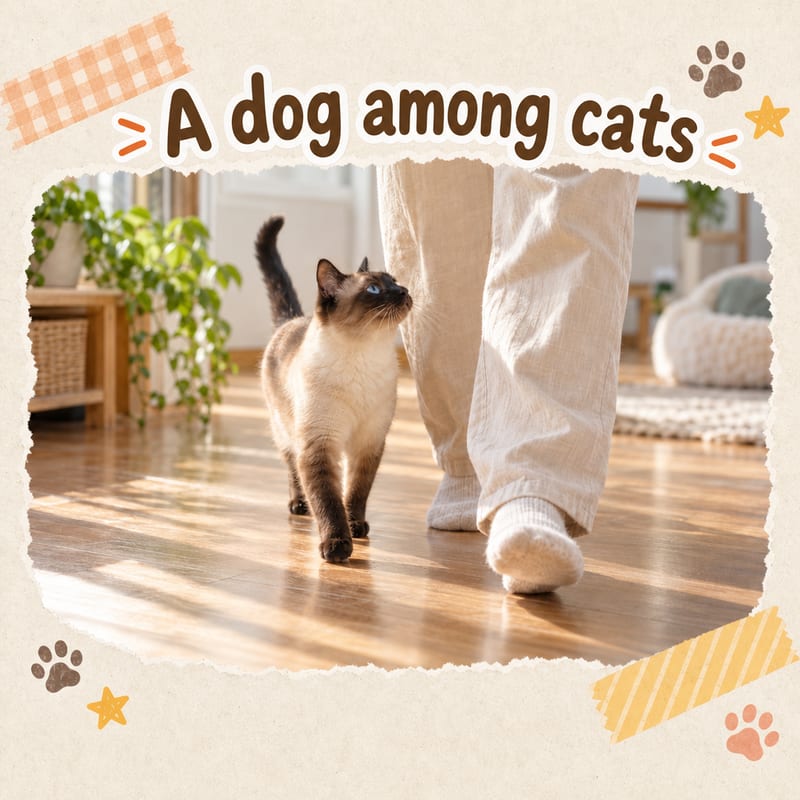
The Siamese originated in ancient Siam (now Thailand) and was once a royal companion cat. Its personality is unique among cats—owners say 'keeping a cat feels like keeping a dog', referring to the following:
- Extremely clingy—follows you everywhere, even guards the bathroom door
- Talkative—loud and varied meows, using different tones to express hunger, wanting to play, seeking attention
- Smart and trainable—can learn to shake hands, sit, even walk on a leash
- Highly social—friendly to people and cats; a companion reduces separation anxiety
- Emotionally sensitive—senses your mood and comforts you when you're sad
Comparing with Ragdoll and British Shorthair can help you quickly position them:
| Comparison | Siamese | Ragdoll | British Shorthair |
|---|---|---|---|
| Clinginess | ★★★★★ | ★★★★☆ | ★★★☆☆ |
| Activity level | ★★★★★ | ★★☆☆☆ | ★★☆☆☆ |
| Meowing frequency | ★★★★★ | ★★☆☆☆ | ★☆☆☆☆ |
| Ease of care | ★★★★☆ | ★★★☆☆ | ★★★★★ |
| Suitable for beginners | ★★★☆☆ | ★★★★★ | ★★★★★ |
How to Care for a Siamese? Diet, Grooming and Companionship
Diet: The Siamese is active and energetic; recommend high-quality cat food with protein content ≥ 36%, with appropriate wet food for hydration. Pay special attention: they tend to overeat out of boredom; regular portion control is safer than free feeding. Feed 2-3 meals a day, calculate total portions, and avoid obesity that strains joints and heart. For which food suits you, see the Complete Cat Food Guide.
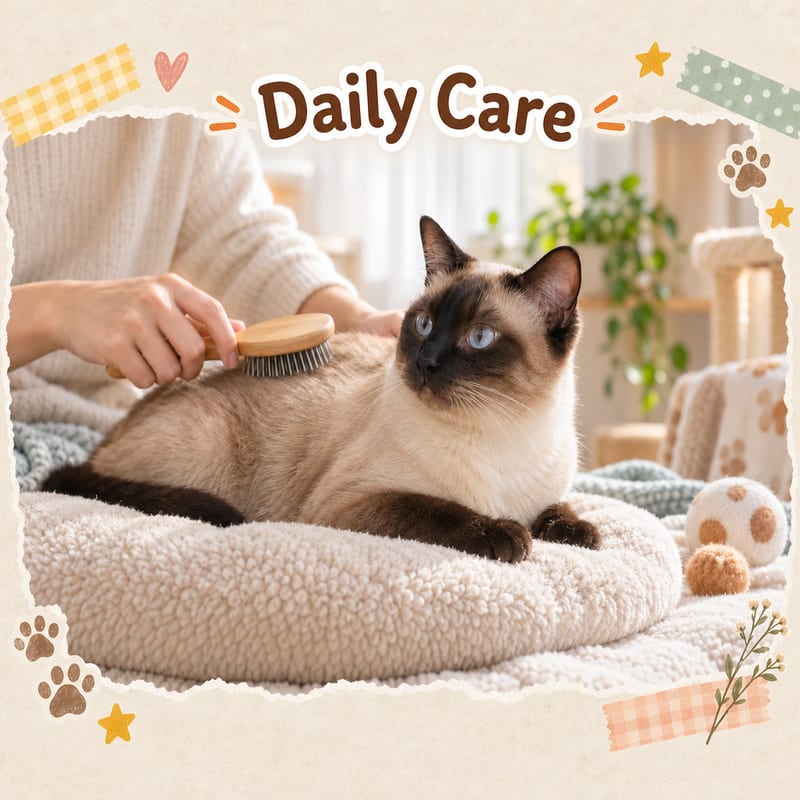
Coat: Short hair is easy to care for—brush 1-2 times a week, increase to almost daily during shedding seasons (spring and autumn); no need for frequent baths, once every 2-3 months or even less is fine. Brushing is also a chance to check for red swollen skin or hair loss, catching problems early saves money.
Companionship and activity: This is the core of Siamese care. Spend at least half an hour daily interacting: wand toys to simulate hunting, puzzle feeders for slow eating, even training to sit and shake hands. They learn quickly, and new skills are a great way to burn energy. If you leave early and return late, consider keeping two for company; separation anxiety will noticeably decrease.
Health Risks: Genetic Diseases and When to See a Vet
The Siamese is generally healthy, but a few things to watch:
- Hypertrophic cardiomyopathy (HCM)—some lines have genetic risk; check breeder health test reports before buying
- Respiratory—relatively flat facial structure, prone to snoring and loud breathing
- Dental problems—regular mouth checks, watch for red swollen gums
- Cross-eye—genetic trait, usually doesn't affect life, but if it suddenly worsens, get it checked
When to see a vet: Don't wait in these situations—rapid breathing or open-mouth breathing, gums turning purple after exercise (possible heart problem), sudden drastic loss of appetite and rapid weight loss, vomiting for more than a day, sudden stiffness when walking or not letting you touch the back (pain signal). Siamese feel the cold; in winter if you see them curled up and unwilling to move, and still like that after warming up, book a vet. An annual health check (including heart auscultation) is standard for a long-lived cat.
Hong Kong Living Environment: What to Note When Keeping a Siamese in a Small Flat
The Siamese is medium-sized and fits perfectly into Hong Kong indoor environments. A compact home is not a problem, but three things must be met—if any is missing, their high intelligence turns into destructive energy:
- Vertical space—a cat tree is more important than floor area; in small flats, go upwards
- Window viewing spot—they love looking out; remember to secure windows to prevent falls
- Cooling and warmth both needed—they enjoy air-conditioning in summer; in winter without heating, short hair feels the cold, so prepare a cat bed or a low-temperature safe heating pad
Think Carefully Before Getting One: Is a Siamese Right for You?
Quick self-check with a few questions:
| Your situation | Suitable for Siamese? |
|---|---|
| Can spend 1+ hour daily with the cat | ✅ Yes |
| Often travel, leave early and return late | ⚠️ Keep two or choose an independent breed |
| Prefer quiet | ❌ They love to 'chat' |
| Have children at home | ✅ Highly social, playful |
| Family member with allergies | ⚠️ Short hair still sheds; test interaction first |
The Siamese is not a cat that 'sits at home and sleeps on its own'. They want to be part of your life—following you into the kitchen when cooking, sleeping in the same room. If you can accept this, their loyalty and interactivity are unmatched by other cats.
Buying and Adoption: Where to Find?
Buying: Registered breeders $15,000-25,000 (with pedigree certificate); pet shops $8,000-18,000, be sure to confirm the source. Before buying, check the parents' health reports and ask to see the cat in person.
Adoption: SPCA, Hong Kong Animal Adoption Centre, and social media Siamese adoption groups all have opportunities; fees about $1,000-3,000. Adopted Siamese may already be neutered and vaccinated, saving money. For beginner steps, see the New Pet Owner Guide.
What You Can Do Starting Today
- Today, calculate how much time you can actually spend with the cat each day; if less than 1 hour, think carefully and rather not keep one
- Prepare a cat tree and window spot at home, check that windows are secured
- Check the protein content of your current cat food; if insufficient, switch according to the cat food guide
- If you intend to buy or adopt, prepare a list of questions in advance: parents' health reports, HCM screening, whether you can see the cat in person
To choose high-protein food and puzzle toys for your Siamese, PetChill has comprehensive Hong Kong pet food reviews and product guides to help you find the right things without buying wrong. For more breed comparisons, see the Cat Breed Guide and Ragdoll Guide. This article is for reference only; consult a registered veterinarian for any concerns.
📌 Key Summary
- ✅ Extremely clingy + high intelligence, at least half an hour of interaction daily
- ✅ Short hair easy to manage, brushing 1-2 times a week is enough
- ❌ Not suitable for long periods alone, otherwise prone to anxiety and destruction
- ❌ Loud meows; those who prefer quiet should stay away
- ✅ Small flats are enough; the key is vertical space and window views
 Fuji One full guide →





