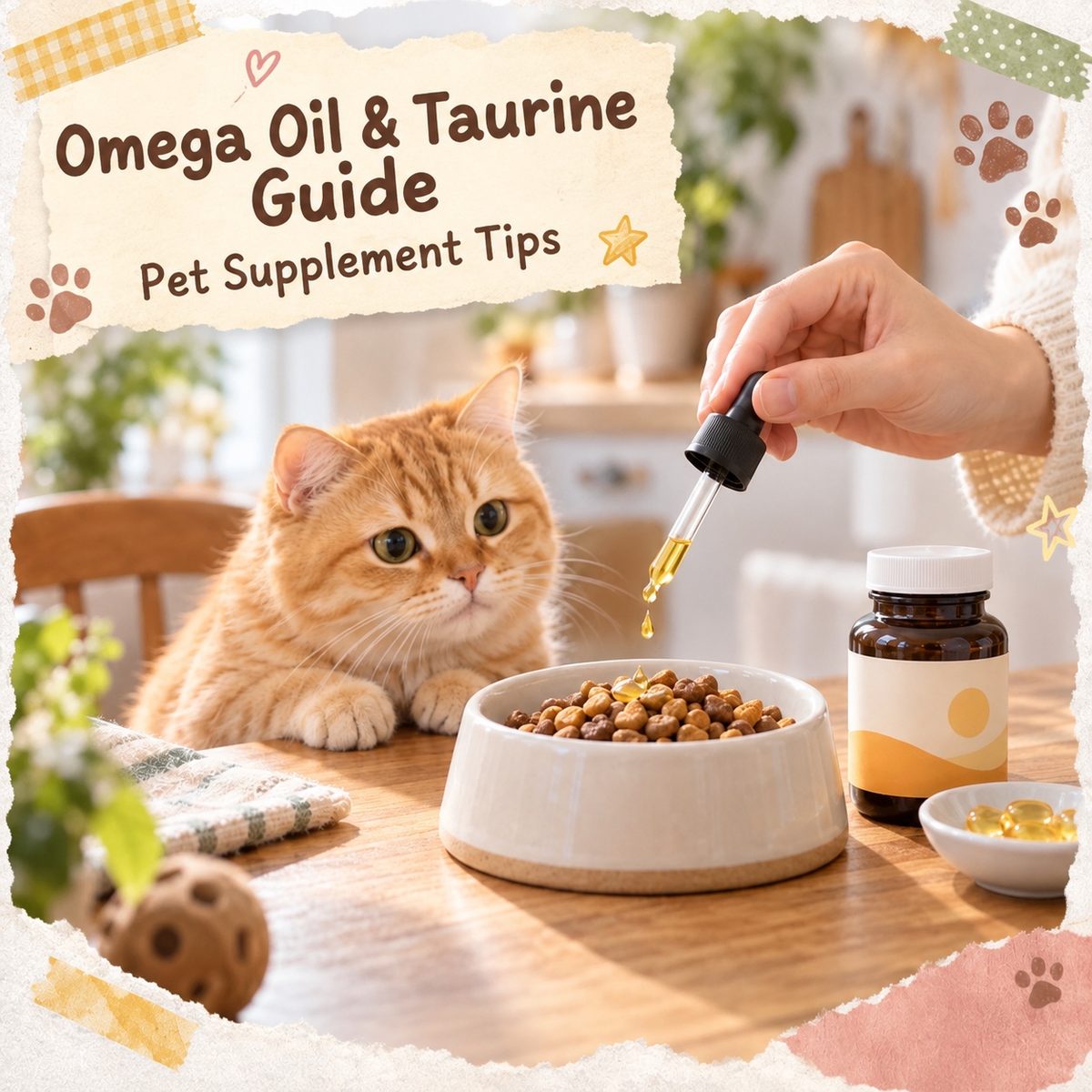
Quick answer: A compliant complete food already contains enough taurine, so cats do not need extra; fish oil Omega-3 only supports skin, joints and overall health, and must be started at a low dose based on body weight after ruling out disease.
In one sentence: taurine is an essential nutrient that cats "must get from food", while fish oil Omega-3 is a supportive supplement that "helps" skin, coat and joint comfort—neither is a medicine, and no therapeutic claims are made. This article explains clearly when supplementation is really needed, how to choose products, and how to feed safely.
Taurine: An Essential Nutrient for Cats
Taurine is an amino acid that humans can synthesise themselves, but cats have very limited ability to synthesise it and must obtain it regularly from their diet. It is directly related to the following functions:
- Vision—the retina needs taurine for normal function; long-term deficiency can cause retinal degeneration
- Heart—heart muscle function is related to taurine levels, and deficiency is one of the known risk factors for feline cardiomyopathy
- Reproduction and digestion—affects reproductive health and bile acid conjugation
Where is it found? It is naturally present in animal tissues such as chicken, turkey, duck and fish, with particularly high levels in heart and muscle; compliant cat complete foods produced according to regulations must have taurine added. So cats that eat dry food or complete wet food generally will not be deficient; what really needs attention are the following three high-risk situations.
⚠️ Three high-risk situations: (1) homemade fresh food without professional supplementation; (2) feeding cat food to cats—dog food has insufficient taurine, and cats fed it long-term will suffer; (3) long-term use of complementary fish cans as the main meal. These three are the real high-risk group for taurine deficiency.
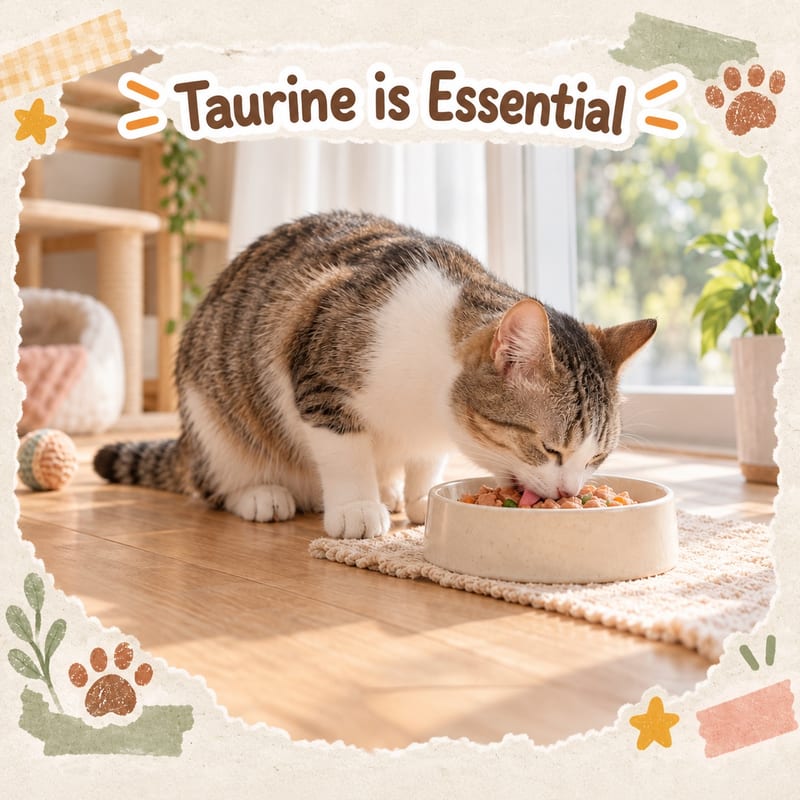
Fish Oil Omega-3: Correct Expectations for Supportive Care
Fish oil provides EPA and DHA, which are Omega-3 fatty acids; cats and dogs have low conversion efficiency, so they need to get them from food. Common health directions (note the wording: "helps", not "treats"):
| Direction | General understanding | Expectation management |
|---|---|---|
| Skin and coat | Helps reduce dryness and itching, and improves coat shine | Takes several weeks to see changes |
| Joints | Support for joint comfort in senior cats and dogs | Cannot replace veterinary treatment |
| Heart and brain | Antioxidant, supports overall health | Part of long-term diet quality |
Who should consider it most? Cats and dogs with sensitive skin, dry and brittle coats, or older pets that are slower on stairs are the scenarios where owners most often try fish oil. For animals undergoing treatment for disease, ask your veterinarian before adding any supplement.
How to Choose: Five Screening Criteria
- Check EPA/DHA content—the active ingredients are the total EPA+DHA, not "how many mg of fish oil"
- Heavy-metal verification—choose products with third-party testing or clear labelling of source fish species (small deep-sea fish are more reliable)
- Cat/dog-specific format—human capsules have doses and additives unsuitable for pets, and may contain flavourings
- Freshness—fish oil oxidises easily; choose small bottles, protect from light, store in the fridge, and discard if there is a rancid smell
- Dose design—has a feeding table by body weight, start low
Format comparison: pump bottles are easiest for measuring and can be mixed directly onto food; capsules need to be opened and squeezed out, which can easily make a mess; freeze-dried fish powder is convenient to carry but has lower EPA/DHA concentration. For cats that dislike fishy smells, start with fish powder or chicken-flavoured formulas to build the habit before considering increasing the dose.
Feeding Methods and Common Pitfalls
Correct expectations are the first step: fish oil is not something that "works in three days". For skin and coat, the hair renewal cycle is long, and it generally takes several weeks to assess changes; for joints, improvements in senior cats and dogs are also very slight, and it should not be expected to replace proper management.
- Start at half the recommended amount, and increase to the standard amount if there is no loose stool after 3 to 5 days
- Drip directly onto food and mix well, or use a fish oil pump into fresh food; do not heat, as high temperatures destroy Omega-3
- Feed at a consistent time each day to help observe reactions and remember whether it has been given
- The most common consequences of excess are diarrhoea and excessive calories—fish oil is ultimately fat, and obese cats and dogs need to count it in daily calories
- For animals on medication (especially drugs affecting clotting), fish oil may have additional effects; always consult your veterinarian before feeding
Tip: Supplements are only effective if "the main food is not a problem". If the complete food is nutritionally unbalanced, no amount of fish oil can make up for it. Look after the main meal first, then consider adding extras.

Five Common Myths
Myth 1: "If a cat is thin, give fish oil"—fish oil is fat; it provides calories but is not a protein source; thinness has complex causes, so rule out disease before considering supplementation.
Myth 2: "Give half of a human fish oil capsule to a cat"—human products have too large a dose, and some contain flavouring additives; the dose and safety are not suitable for direct sharing.
Myth 3: "The more taurine the better"—taurine is water-soluble and excess is excreted in urine, but supplement concentrations vary, excess has no extra benefit, and compliant complete food is already the most economical source.
Myth 4: "Fish oil can replace seeing a doctor"—joint swelling and pain, or skin ulceration, are disease signals; supplements are positioned as supportive and should never delay proper diagnosis.
Myth 5: "Natural on the label = safe"—natural fish oil can also oxidise and deteriorate, and may contain environmental pollutants; the key is third-party test reports and daily storage, not the word "natural". Before buying, ask: is there batch testing data to support it?
When Not to Supplement, and When to Ask Your Veterinarian First
Usually no supplement needed: cats and dogs on compliant cat complete food, growing normally, with smooth coats—nutrients are already sufficient, extra is wasted, and excess of some fat-soluble vitamins can be toxic.
Ask your veterinarian first: homemade fresh food (needs a professional recipe to fill gaps), pregnant and lactating cats, growing multi-cat litters, chronic kidney or liver disease, skin problems that continue to worsen (may not be a nutritional issue), sudden drop in joint mobility (needs diagnosis first).
When to See a Doctor Immediately
- Vomiting, diarrhoea lasting more than two days, or bloody stool while on supplements
- Suspected accidental ingestion of a large amount of human fish oil or products containing xylitol flavouring
- A cat with a sudden sharp drop in appetite and poor energy—do not rely on "tonics" to solve it; find the cause first
- Sudden joint swelling and pain, unwilling to land—acute problems cannot wait for supplements to take effect
What You Can Do Starting Today
- Turn over the main food packaging at home: confirm taurine is listed in the additive list
- Decide whether fish oil is needed: compare skin, joints and age against the criteria in this article
- For newly bought fish oil, feed at the lowest recommended amount for a week and record stool and coat changes
- For homemade fresh food families: bring the recipe to your next appointment and discuss supplementation with your veterinarian
- Write the date on fish oil after opening, store in the fridge, and replace when past the labelled time limit
- Keep a "supplement record" for your cat: which product, when started, any reactions, and show it directly to your veterinarian at appointments
Fish oil or vegetable oil? The conversion rate of plant-based Omega-3 in cats and dogs is extremely low, so fish oil remains the more direct choice. Want to compare market supplements? PetChill pet food reviews have breakdowns of fish oil and supplement ingredients; just screen using the five criteria in this article. If you are not sure whether your cat needs supplementation, you can do a nutritional assessment first.
Further reading:
- 2026 Hong Kong Cat Food Recommendation Complete Guide →
- Cat Vitamin Supplements →
- Pet Arthritis Care →
- Pet Nutrition Supplement Course →
This article is for reference only; supplements cannot replace proper treatment; consult a registered veterinarian if in doubt.
How Much Taurine Does a Cat Need Daily? Calculate from the Label
AAFCO cat food nutrient standards minimum requirements: dry food 0.10% on a dry matter basis (= 1,000 mg/kg feed), canned food 0.20% on a dry matter basis (= 2,000 mg/kg). The canned standard is double because high-temperature high-pressure sterilisation causes more taurine loss, and intestinal fermentation of wet food also increases taurine breakdown. The EU FEDIAF standard is also of the same order (dry food 0.13, canned 0.27 g/100 g dry matter).
How to calculate actual intake? Using an example: a 4 kg indoor adult cat needs about 250 kcal per day.
- All canned (assuming 1,000 kcal/kg, 20% dry matter): 250 g canned per day → about 50 g dry matter → taurine 0.20% × 50 g = about 100 mg/day
- All dry food (assuming 3,800 kcal/kg): about 66 g per day → taurine 0.10% × 66 g = about 66 mg/day
As long as the food meets AAFCO standards and the daily calories are actually consumed, a normal healthy adult cat does not need extra taurine. There are three main situations requiring supplementation: homemade fresh food (not supplemented according to a recipe), long-term feeding of dog food, or cats with specific diseases under veterinary instruction.
What Happens with Taurine Deficiency? The Sequence Generally Described in Veterinary Literature
| Stage | Effect | Clinical signs |
|---|---|---|
| Early | Plasma taurine concentration decreases | Usually no symptoms, only detectable by blood test |
| Middle | Retina (central retinal degeneration) | Night vision deteriorates; early supplementation is reversible, late is irreversible |
| Longer term | Heart muscle (dilated cardiomyopathy DCM) | Poor energy, shortness of breath, reduced exercise tolerance; serious |
| Special cases | Reproductive function | Miscarriage in queens, abnormal kitten development (highest demand during pregnancy and lactation) |
Key point: taurine deficiency is a chronic process, usually measured in months rather than days, so "occasionally missing taurine for a meal or two" will not cause immediate problems; but the risk of long-term feeding of diets that do not meet standards (e.g. homemade fresh food without additives, dog food) is real. If vision or heart symptoms appear, seek veterinary care immediately and do not rely on supplements to manage it yourself.
Fish Oil EPA/DHA: Dosage and Practice
The value of fish oil lies in EPA and DHA (long-chain Omega-3). Cats have extremely low efficiency in converting ALA (plant-based Omega-3, such as flaxseed oil) to EPA/DHA, so fish oil is a more direct source. NRC and international literature consistently state that EPA/DHA are conditionally essential—healthy cats on a balanced complete food generally have enough; for skin, joint, kidney and other conditions, veterinarians may recommend additional supplementation.
Dosage principles (don't guess):
- Follow the product label: the concentration of each fish oil varies greatly (the same 250 ml can range from 20% to 95% Omega-3), so you must check the EPA/DHA content and recommended feeding amount on the packaging.
- Start low: feed half the recommended amount first and observe stool for a week; reduce if loose stool occurs. The most common sign of excess fish oil is loose stool/diarrhoea.
- Convert by body weight: a 4 kg cat generally falls into the "small" category, and many products label 0.5-1 ml or half a sachet daily; do not copy the dosage of human fish oil capsules.
- Cats with clotting problems, preparing for surgery, or on medication: ask your veterinarian first.
Hong Kong Actual Prices: Fish Oil and Taurine Products (Checked 2026-10-02)
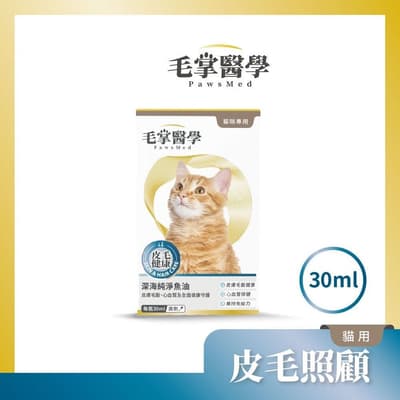
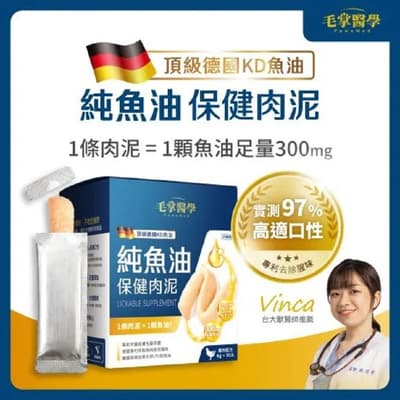
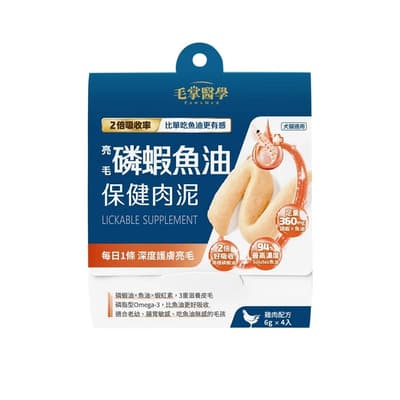
Daily cost example: for 0.5-1 ml liquid fish oil per day, Dr.Clauder's 250ml is about $0.24-0.48/day, and Mao Zhang Medical Drops 30ml is about $2.2-4.4/day. Meat paste sticks are a snack format, starting at $2.9-3.4 each.
Sources
- AAFCO cat food nutrient standards: taurine minimum 0.10% (dry food)/0.20% (canned) on a dry matter basis; FEDIAF 2025 cat amino acid recommendations: dry food 0.13, canned 0.27 g/100 g dry matter.
- NRC (National Research Council) 2006, Nutrient Requirements of Dogs and Cats: taurine is an essential amino acid for cats; EPA/DHA are conditionally essential fatty acids.
- NIH Office of Dietary Supplements (Omega-3 Fatty Acids Fact Sheet): ALA conversion to EPA/DHA is low (generally less than 15%), and direct intake of EPA/DHA is the most practical route.
- Product prices, volumes, labels: PetChill product pages (checked 2026-10-02).
This article is general nutritional information and does not constitute veterinary diagnosis or prescription; supplements cannot replace proper treatment.
Further Reading
- Which Hong Kong cat food is good? 2026 Top Ten Popular Cat Food Brands Guide →
- 12 Popular Cat Foods Recommended by Scenario (Hong Kong Actual Prices) →
- Canned Cat Food vs Dry Food: Moisture Content, Water Intake and Daily Cost →
- Carrageenan, Guar Gum and 6 Other Gums at a Glance →
- Taurine and Fish Oil: How Much Per Day? →
- Phosphorus and Kidneys: mg/100kcal Comparison and Prescription Food Choices →
- Freeze-Dried vs Air-Dried: Process, Rehydration and Daily Cost →
- The Truth About Grain-Free Cat Food: Grain-Free ≠ Low-Carb →
- Cat Probiotics: Strains, CFU Dosage and Antibiotic Spacing →
- Kitten Food Guide: Feeding Amount Curve and 14-Day Food Transition SOP →
- Senior Cat Food Guide: Protein, Phosphorus and Water After Age 7 →
📌 Key Summary
- ✅ Taurine is an essential amino acid for cats; compliant complete food is sufficient
- ❌ Feeding dog food to cats can lead to taurine deficiency
- ✅ Fish oil EPA+DHA helps skin, coat and joint comfort
- ❌ Human fish oil doses and additives are not suitable for cats and dogs
- ✅ Start at half the recommended amount and watch for loose stool before increasing
- ❌ Fish oil cannot replace veterinary treatment; see a doctor first for illness
⚠️ Some products mentioned in this article have been discontinued (marked "discontinued" in the text), and the prices are records before discontinuation; for other products, please refer to the current prices shown in the online store.
 Royal Canin full guide →
 K9 Natural full guide →
 Feline Natural full guide →