
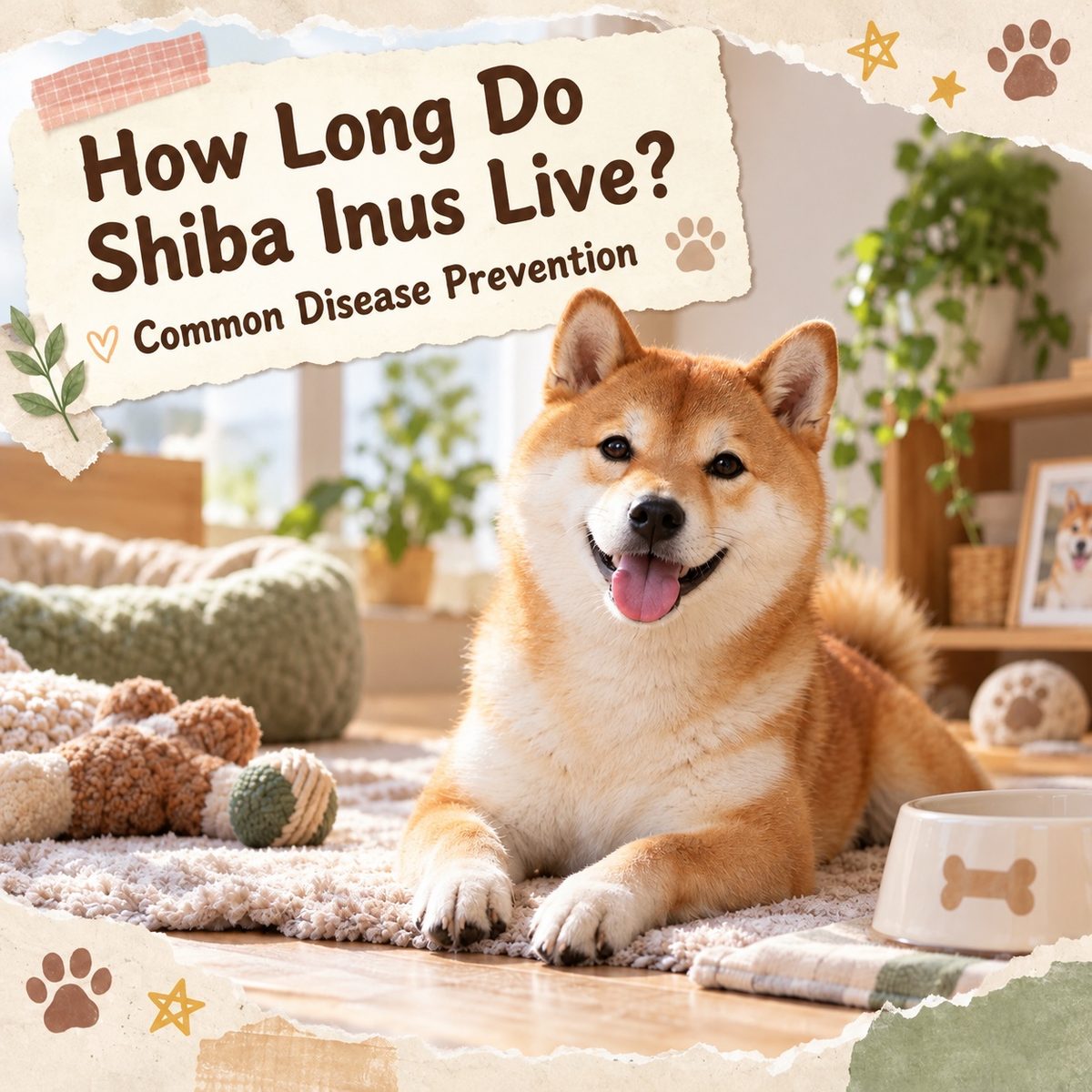
Quick answer: A Shiba Inu's lifespan is generally about 12–15 years (AKC breed information commonly cites 13–16 years), making it a long-lived representative among small-to-medium dogs. The top three controllable factors affecting length of life are weight management, regular health checks and dental care; don't use 'multiply by seven' for dog-age conversion — the first year alone equals about fifteen human years.
Want to know the Shiba Inu inside out? Start with the Shiba Inu breed profile and the Complete Shiba Inu Guide.
How long does a Shiba Inu live? Key points in 30 seconds
The Shiba Inu is a native Japanese small-to-medium breed with a relatively healthy gene pool, placing it in the long-lived tier of the dog world. Answer first: Shiba Inus kept by Hong Kong families generally live 12–15 years, and with good care, living past 15 is not uncommon. The table below is a quick overview:
| Item | Shiba Inu |
|---|---|
| Country of origin | Japan |
| Average lifespan | 12–15 years (AKC data commonly 13–16 years) |
| Weight | Male 8–11 kg / Female 6.8–9 kg |
| Coat | Double short coat, heavy shedding in shedding season |
| Temperament | Independent, clean, highly alert |
| Breed watch-list diseases | Patellar luxation, hereditary eye disease, skin allergies, thyroid |
| Price in Hong Kong | About HK$8,000–25,000 |
| Monthly basic expenses | About HK$800–1,500 |
Three fundamentals you must know:
- Weight is the number one variable — being overweight directly lowers a Shiba's lifespan and quality of life; the ideal body condition of 8–11 kg must be maintained daily.
- Teeth are a hidden killer — bacteria from periodontal disease can enter the heart and kidneys; brushing habits directly affect senior health.
- Genetics is not the whole lottery — diet, exercise and health checks, the three controllable factors, have a greater impact than pedigree itself.
Shiba Inu lifespan and monthly expenses (2026 Hong Kong market)
| Item | Range | Notes |
|---|---|---|
| Monthly food | HK$350–700 | High animal protein, portion control |
| Monthly treats/dental chews | HK$100–250 | Dental chews can be part of dental care |
| Monthly deworming (amortised) | HK$80–150 | Internal/external plus heartworm prevention |
| Medical reserve (recommended) | HK$300–600 | Senior expenses will rise |
| Monthly total | About HK$800–1,500 | Excludes major medical costs |
| First-year vaccinations | HK$900–1,500 | Boosters annually thereafter |
| Neutering | HK$2,000–5,000 | More expensive for females |
| Adoption fee | HK$0–2,000 | Most already neutered and vaccinated |
A long Shiba Inu lifespan means the real total cost is 'monthly expenses × 15 years'. At HK$1,000 per month, lifetime costs start at about HK$180,000 — this figure, not the purchase price, is the key to deciding whether to keep one.
Who is best suited to bring out a Shiba Inu's lifespan potential?
| Owner type | Suitability | Reason |
|---|---|---|
| Disciplined families | Very suitable | Set meals plus daily exercise — the three longevity essentials all present |
| First-time dog owners with time | Suitable | Shibas are self-sufficient but you must be willing to learn |
| Office workers out long hours | Needs assessment | Insufficient exercise leads to obesity, directly cutting lifespan |
| People wanting a 'clingy dog' | Not recommended | Shibas are independent, not the cuddly type |
| Multi-pet households | Needs assessment | High prey drive; be careful with small animals |
Reverse self-check (three questions):
- Do you have 45–60 minutes every day to let them burn energy?
- Are you willing to brush their teeth daily and weigh them weekly?
- Do you have a monthly medical reserve of HK$300–600 for their senior expenses after age 10?
If you can't answer 'yes' to two of the three, the Shiba's longevity potential is very likely not to be realised.
Shiba Inu lifespan compared with other breeds
| Breed | Average lifespan | Size | Common senior concerns |
|---|---|---|---|
| Shiba Inu | 12–15 years | Small-to-medium | Joints, eye disease, skin |
| Toy Poodle | 12–16 years | Small | Teeth, knees |
| Corgi | 12–14 years | Small-to-medium | Spine, weight |
| Golden Retriever | 10–12 years | Large | Cancer, joints |
| Pug | 11–13 years | Small | Respiratory, eyes |
In one sentence: the Shiba Inu stands out on 'lifespan × health stability' value — no short-lifespan issues of large breeds, and no respiratory burden of flat-faced breeds.
Shiba Inu lifespan extension: annual health check costs (HK$)
Extending life doesn't rely on supplements; it relies on early detection. Health check schedule under Hong Kong veterinary fees:
| Age | Recommended items | Approximate cost |
|---|---|---|
| 1–6 years | Annual health check + blood test + vaccination booster | HK$800–1,500/year |
| 7–9 years | Annual health check + blood test + urine test + eye exam | HK$1,200–2,500/year |
| 10+ years | Six-monthly health check + blood test + heart + thyroid | HK$1,500–3,000/visit |
| Any age | Dental scaling (requires anaesthesia, depending on tartar) | HK$3,000–6,000/visit |
| Senior years | Joint supplements | HK$200–500/month |
Three free lifespan-extending actions to do daily:
- Feel body condition: ribs should be felt but not seen; if you can't feel them, the dog is overweight.
- Weigh: once a month; a gain of more than 5% in a month means reduce portions.
- Check teeth: suddenly worse bad breath is a sign of periodontal disease; don't wait for teeth to fall out.
Three ways to keep a Shiba Inu over its lifespan: budget, standard, secure
| Item | Budget | Standard | Secure |
|---|---|---|---|
| Food | HK$350/month | HK$500/month | HK$700/month |
| Deworming amortised | HK$80/month | HK$100/month | HK$150/month |
| Medical reserve | HK$0 | HK$300/month | HK$600/month |
| Health checks | Only when symptoms appear | Once a year | Every six months after age 7 |
| Monthly total | About HK$450 | About HK$950 | About HK$1,500 |
Insurance vs savings: Hong Kong pet insurance annual premiums are about HK$1,800–4,500 (depending on age and coverage), with excess and caps. If you have more than HK$30,000 in liquid cash, saving yourself is usually more flexible; if not, insurance is a tool to spread sudden risk.
Shiba Inu lifespan and Hong Kong weather: seasonal care priorities
Hong Kong's hot and humid weather is a long-term challenge for double-coated Shibas; heatstroke is an acute, potentially fatal risk:
| Season | Risk | Action |
|---|---|---|
| Summer (Jun–Sep) | Heatstroke, burnt paw pads | Walk only early morning and evening; switch to indoor activities above 32°C |
| Autumn (Oct–Nov) | Itchy skin during shedding | Brush 3–4 times a week, watch for red spots |
| Winter (Dec–Feb) | Stiff joints | Add padding for senior dogs, warm up slowly before walks |
| Spring (Mar–May) | Damp-weather skin disease, mosquito season | Don't stop heartworm prevention; amortise HK$50–100 per month |
One heatstroke emergency in summer can cost HK$5,000–15,000 and may leave long-term organ damage — this is the most worthwhile preventive investment for Shiba owners in Hong Kong, directly affecting lifespan.
Three don'ts for summer: don't go out at midday, don't leave them in a room without a fan, don't assume 'dogs know how to avoid heat' — the Shiba's cold-tolerant genes don't help it in Hong Kong summer.
Four common misconceptions about Shiba Inu lifespan
| Misconception | Reality |
|---|---|
| Shibas are hardy and don't need health checks | Patellar luxation and hereditary eye disease have no early symptoms; annual checks from age 7 are the norm |
| One dog year equals seven human years | 'Multiply by seven' is inaccurate; the first year is about 15 human years, then about 4–5 years each year after |
| White Shibas are bound to be short-lived | No reliable evidence that white itself carries disease; risk comes from unregulated white-breeding practices |
| Senior dogs don't need exercise | After age 10 they still need daily walks; reduce but don't stop — stopping all exercise accelerates muscle loss and ageing |
1. How long does a Shiba Inu live: how to read the range
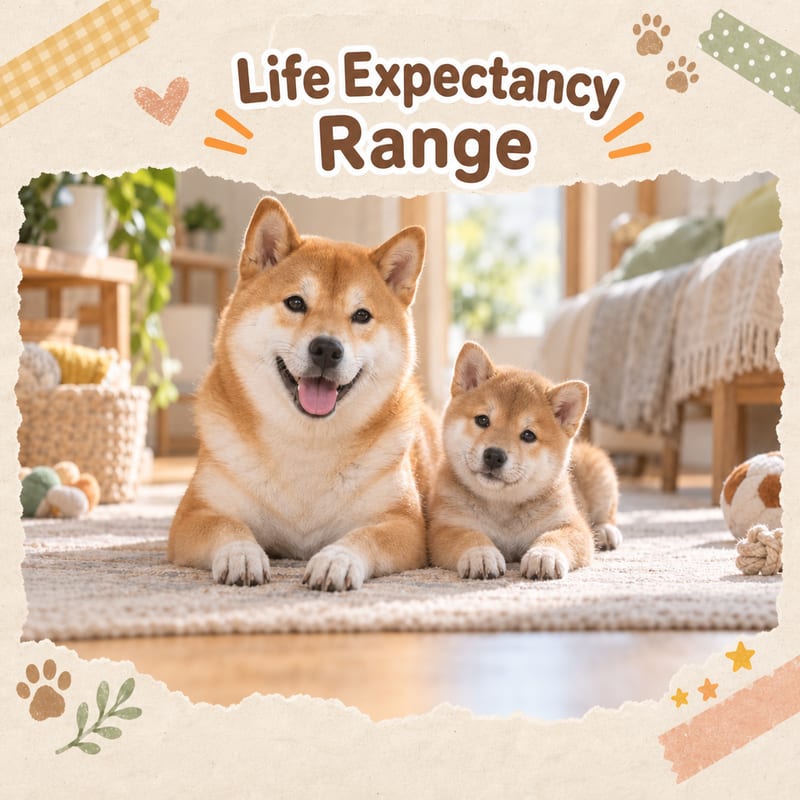
The Shiba Inu is a native Japanese small-to-medium breed with a sturdy frame and relatively healthy gene pool; longevity is one of the breed's labels. The American Kennel Club (AKC) breed information generally states the Shiba Inu lifespan as about 13–16 years; The Kennel Club (UK) and most veterinary literature focus on 12–15 years. The two ranges are not contradictory: the former is the ideal breed-standard figure, the latter closer to actual statistics for the overall population. Research shows that in households with good nutrition, medical care and neutering arrangements, Shibas living past fifteen is not uncommon; conversely, overweight individuals and those lacking health checks are clearly disadvantaged. Lifespan is not just a genetic lottery; it is the sum of the owner's choices.
2. Shiba Inu life-stage health table: what to worry about at each age
| Stage | Age | Care priorities | Health screening recommendations |
|---|---|---|---|
| Puppy | 0–12 months | Vaccination schedule, socialisation training, portioned feeding | Basic health check, preliminary patella assessment |
| Junior | 1–3 years | Establish exercise routine, consolidate training | Annual health check, watch skin and joint signals |
| Adult | 3–8 years | Weight control, dental care starts here | Annual health check including dental examination |
| Mature | 8–11 years | Adjust exercise intensity, switch to mature-adult diet (discuss with vet) | Annual health check plus blood and urine tests |
| Senior | 11+ years | Joint support, cognitive stimulation, non-slip setup | Six-monthly health check, eye and heart assessment |
3. Dog age to human age: why 'multiply by seven' is inaccurate
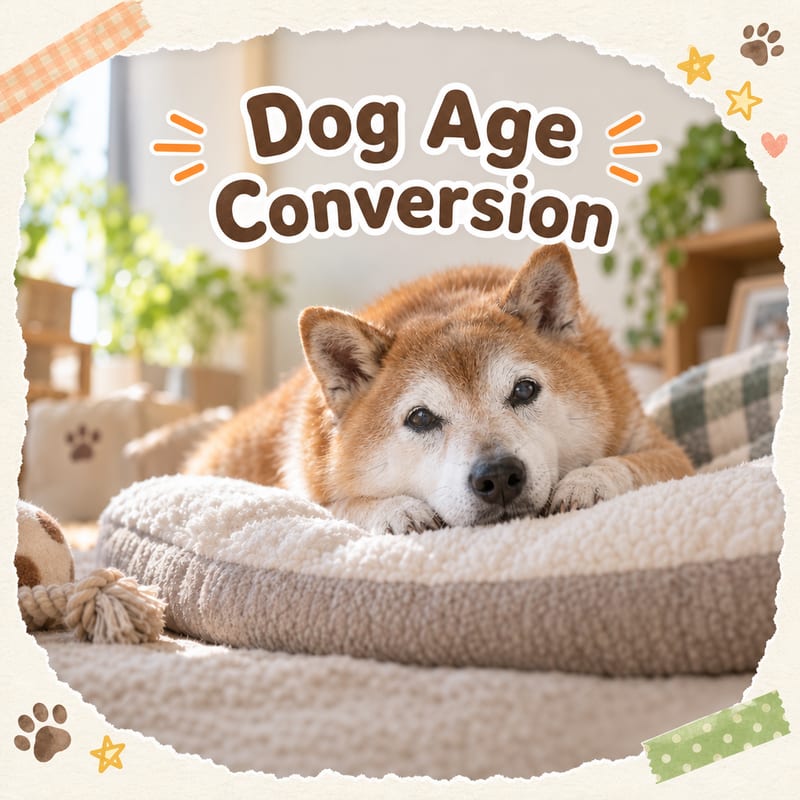
'Shiba Inu lifespan conversion' is a popular search because owners always want to know 'how many human years is my dog now'. The old 'one dog year equals seven human years' saying has long been abandoned by the veterinary profession — dogs age unevenly: a rough outline commonly used by vets is first year ≈ 15 human years, second year ≈ add 9 years, then about 4–5 years each year after, with larger weights ageing faster. Shibas are small-to-medium, so conversion is on the slower side: a five-year-old Shiba is roughly a human in their mid-thirties to forties, and at twelve it enters the human 65+ silver ranks. Understanding this rhythm means you won't treat it as an old dog while it's still a 'young Shiba', nor force it to run hills once it's already mature.
4. Five major factors affecting lifespan
- Weight: Research shows overweight dogs have significantly affected lifespan and quality of life; Shibas have small frames, so two extra kilograms does more damage than several extra kilograms on a large breed. Measured feeding is the number one preservative.
- Regular health checks: Many canine diseases have no early symptoms; blood, urine and blood pressure tests can catch problems when the dog 'looks perfectly healthy'. After maturity, every six months is recommended.
- Teeth: The link between periodontal disease and heart, liver and kidney burden has long been discussed in veterinary circles; getting into dental care from a young age is the highest value-for-money investment.
- Exercise and mental stimulation: Daily consistent energy burning plus sniffing and food puzzle games is generally believed to protect weight, joints and senior cognition.
- Genetic source: Whether the parents had eye and patella screening determines the starting point. You can't choose this card, but you can check clearly when adopting or buying.
5. Shiba Inu breed health watch-list
Shibas are generally hardy, but the following occur more frequently: patellar luxation (a common small-breed issue; be alert if the dog suddenly skips a few steps with a tucked leg); hereditary eye diseases such as progressive retinal atrophy (changes in night vision or bumping into things should be checked early); skin allergies and sensitivities (take extra care in humid Hong Kong; see the 'Shiba Inu Hong Kong care' article for details); hypothyroidism is occasionally seen in senior individuals. As for cancer and heart disease, these are the common number-one categories for all breeds in old age — the UC Davis School of Veterinary Medicine in California has long emphasised in its research on canine tumours and breed health that early detection is the most effective means. Medical content is for general reference only; for any abnormality, rely on a registered veterinarian's diagnosis.
6. White Shiba Inu genetic defects: why people ask
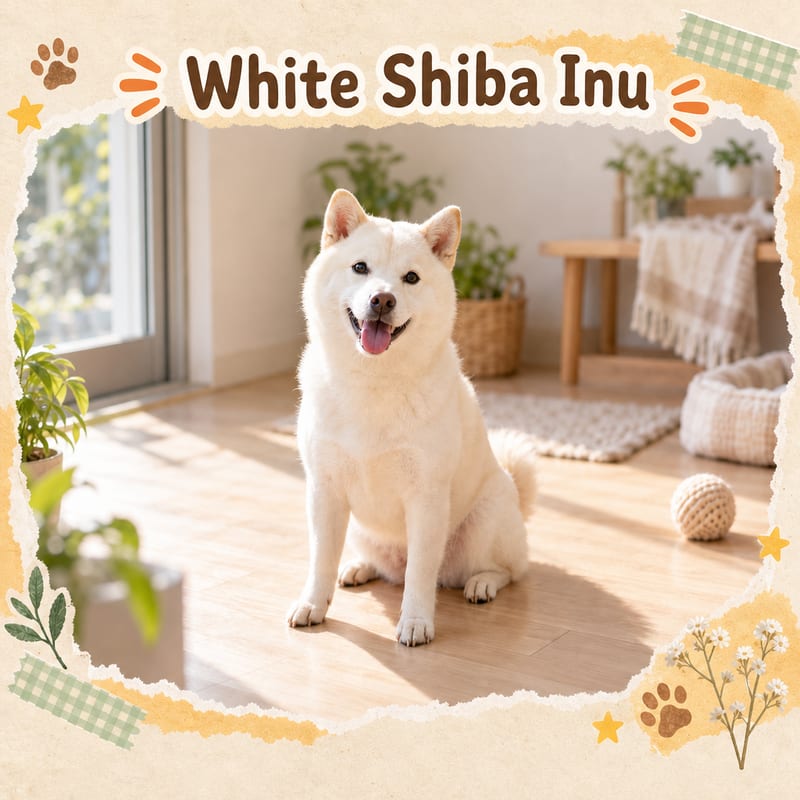
'White Shiba Inu genetic defects' gets a lot of searches, and the answer must be measured: at this stage there is no reliable evidence that white itself is directly linked to serious genetic disease in Shibas. The real controversy over white Shibas lies in show standards — the Nihon Ken Hozonkai and mainstream kennel clubs do not list white as a standard recognised colour (considering it disrupts the 'urajiro' markings), so responsible show-line breeding does not encourage it. The risk is never the colour, it's people: sources that force white breeding to meet a 'rare = expensive' market and skip parental screening are the real problem. Those who have a white Shiba need not worry at all; it needs the same health checks and care as any other colour Shiba.
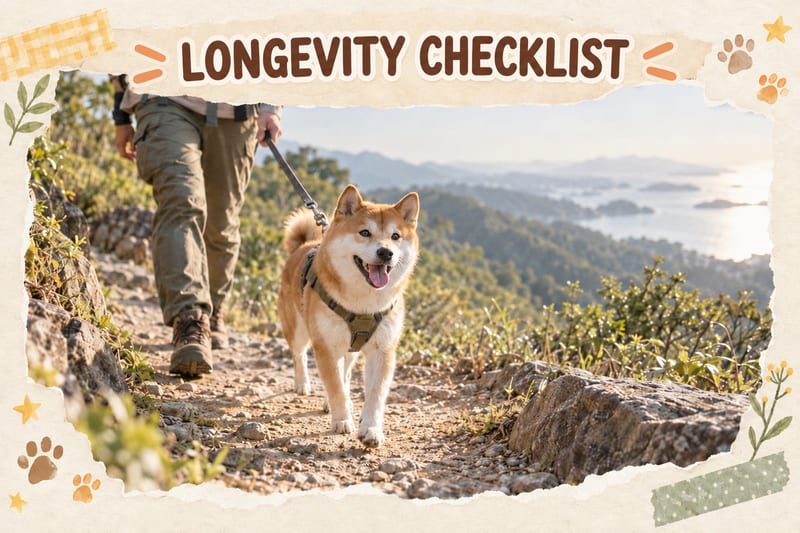
7. Lifespan extension checklist: start today
- Weigh at the same time each month; keep body condition score in the ideal range.
- Two measured meals a day at set times; treats no more than ten percent of calories.
- Start dental care young: gauze, dental chews or a dental care plan reviewed by our editorial team.
- At least one health check a year, increasing to every six months after age eight; eye checks annually.
- Burn energy in enclosed areas; a total of sixty to ninety minutes of activity daily (adjusted for age).
- Strictly prevent heatstroke in midsummer and skin disease in the humid spring — follow the Hong Kong environment checklist directly.
- Senior years: non-slip mats, ramps instead of stairs, night lights, and don't stop cognitive games.
- Discuss the timing of neutering and the trade-off with weight and tumour risk with your vet item by item; don't follow the crowd.
Frequently asked questions
Q: What is the average lifespan of a Shiba Inu? A: Most literature says 12–15 years, with AKC breed information commonly citing 13–16 years; Shibas with good diet and controlled weight not uncommonly live past fifteen.
Q: How many human years is one Shiba Inu year? A: Don't use multiply by seven. Rough conversion: first year ≈ 15 human years, second year adds 9, then about 4–5 each year after; Shibas are small-to-medium and age more slowly.
Q: What is the most important factor affecting a Shiba Inu's lifespan? A: Weight management ranks first, followed by regular health checks, dental care, exercise and genetic source; the first four are all controllable.
Q: What breed-specific diseases are Shibas prone to? A: Patellar luxation, hereditary eye disease, skin allergies and thyroid problems; in old age, cancer and heart disease are major categories as for all dogs.
Q: Do white Shiba Inus have genetic defects? A: There is no reliable evidence that white itself is linked to serious disease; the issues with white Shibas are mainly non-recognition in show standards and unscrupulous breeding — colour is not the cause.
Q: When should I start preparing for my Shiba's senior years? A: Around age eight is the time to shift to a mature-adult rhythm: more frequent health checks, lower-impact exercise, non-slip home setup — don't wait until ageing is obvious.
Key summary
- ✅ A Shiba Inu's lifespan is generally about 12–15 years (AKC data commonly 13–16 years), a long-lived small-to-medium breed.
- ✅ Use the rough '15 + 9 + 4–5 per year' method for dog-age conversion; stop multiplying by seven.
- ✅ Weight, health checks, teeth and exercise — four controllable things that determine the upper limit of your years together.
- ✅ Patella, eyes and skin are the three main breed watch-points; screening should intensify after age eight.
- ✅ There is no evidence that white Shibas carry genetic defects; beware of breeding practices that skip screening.
- ✅ The lifespan extension checklist starts with weighing today; small habits you can actually do are the real advantage.
Related reading
- Shiba Inu disadvantages: a direct look and how to cope
- Shiba Inu weight and growth curve
- Shiba Inu colours fully explained
- For measured feeding utensils for weight management, dental care products and senior joint support, visit PetChill pet supplies to equip yourself item by item and turn the lifespan extension checklist into real objects.
This article is general breed health information and cannot replace diagnosis; for any symptoms, medication or surgery decisions for your Shiba Inu, please consult a registered veterinarian.
 Fuji One full guide →





