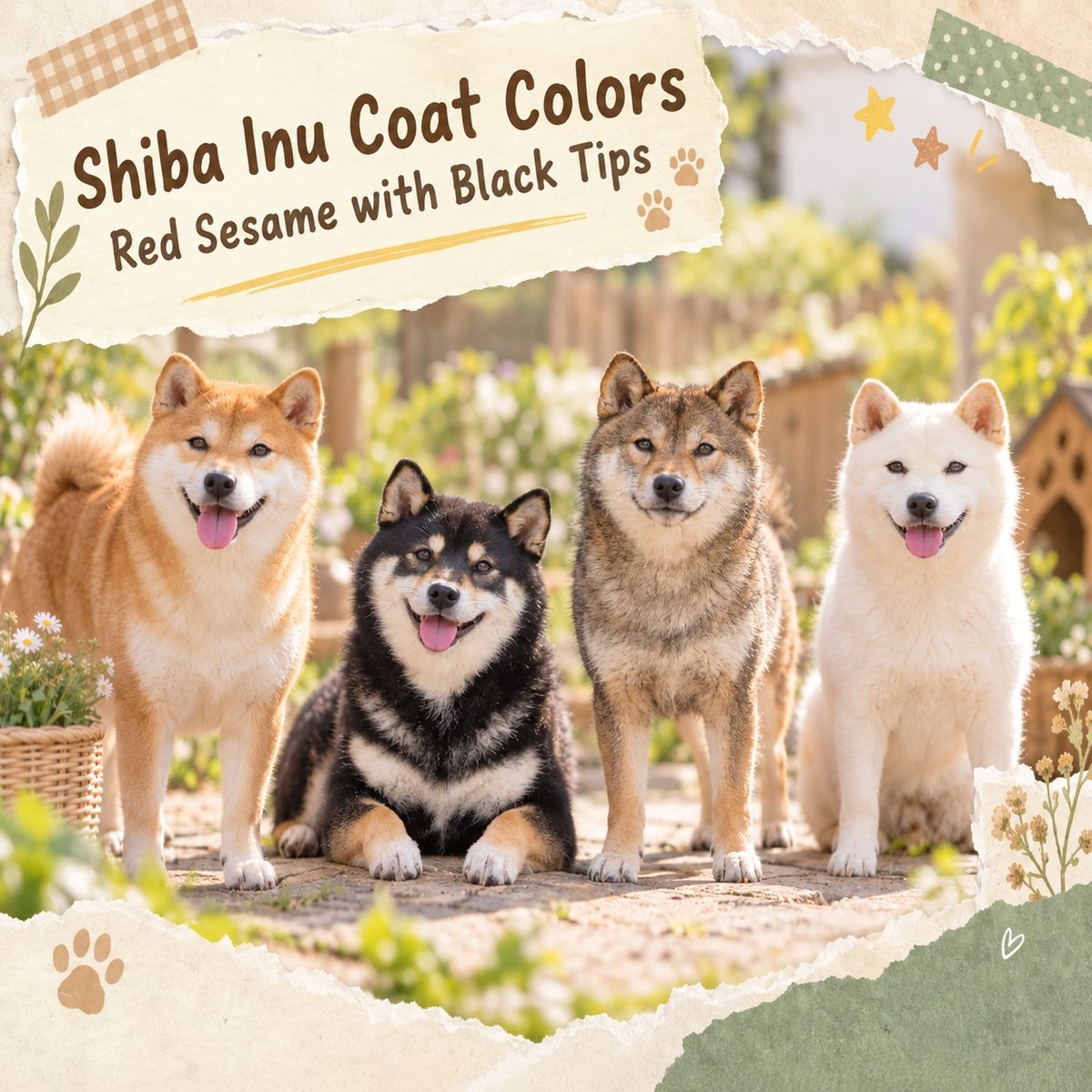
Quick answer: Shiba Inus come in four main colour families: red, black-and-tan (black Shiba), sesame and white, with red being the most common. The Nihon Ken Hozonkai and AKC show standards recognise red, black and sesame; white is not in the mainstream recognised list but is no different health-wise. Colour price differences are a supply-and-demand premium, and there is no fixed probability table for coat colour inheritance—choose a Shiba based on health screening, and don't pay extra for colour.
Want to know all about Shiba Inus? First see the Shiba Inu breed profile and the Complete Shiba Inu Guide.
What is a black Shiba? 30-second summary
Black Shiba (black-and-tan) is one of the four Shiba coat colours—the common name for black-and-tan, characterised by a black main coat with eyebrow spots, tan markings on the muzzle and legs, and creamy white urajiro. Its build and temperament are the same as the red Shiba; the differences are mainly in coat colour expression and market supply. The table below shows the specs Hong Kong owners most often look up.
| Item | Black Shiba |
|---|---|
| Breed | Shiba Inu |
| Coat colour | Black-and-tan (black main coat + tan eyebrow spots and leg markings) |
| Origin | Japan |
| Average lifespan | 12–15 years |
| Weight | Male 8–11 kg / Female 6.5–9 kg |
| Coat | Double short coat, thick undercoat, heavy shedding during shedding season |
| Temperament | Loyal, independent, alert, reserved with strangers |
| Recognition | Recognised by Nihon Ken Hozonkai and AKC show standards |
| Hong Kong price | About HK$15,000–35,000 (generally more expensive than red) |
| Monthly basic expenses | About HK$800–1,500 |
Three things you must know:
- Black is a lucky draw, not a guarantee — the same litter can produce red, black and sesame; colour is determined by the parents' gene combinations.
- The premium comes from supply and demand — black Shibas have lower production and higher demand; the price difference is a market premium and completely unrelated to health or temperament.
- Skin problems are easier to see — dandruff, red spots and abnormal hair loss under black fur are actually easier to notice by contrast.
Black Shiba price and monthly expenses (2026 Hong Kong market)
Price is only the entry fee. Black Shiba pricing mainly depends on pedigree papers and origin, and has little to do with coat shade. The table below shows the Hong Kong price range.
| Item | Range | Notes |
|---|---|---|
| Pet-grade (no pedigree) | HK$10,000–18,000 | Mostly local breeding |
| Pedigree-grade (with certificate) | HK$20,000–35,000 | Parents have kennel club records, with pedigree papers |
| Japanese imported bloodline | HK$30,000–50,000+ | With Nihon Ken Hozonkai or overseas recognised certificates |
| Vaccinations (first year, three shots) | HK$900–1,600 | Annual booster afterwards |
| Neutering | HK$1,800–4,500 | More expensive for females |
| Monthly food | HK$400–800 | Medium-sized dog, eats more than a cat |
| Monthly deworming (shared) | HK$100–180 | Internal and external |
| Monthly grooming (optional) | HK$200–600 | Can save by brushing yourself |
| Medical reserve (recommended) | HK$200–400 | Shibas prone to skin and joint problems |
| Monthly total | About HK$800–1,500 | Excluding major medical expenses |
Reminder: The black Shiba premium can be up to 1.5 times that of a red Shiba. If you just want a Shiba, red has more supply and the price is closest to the market median; the money saved is enough for two years of vaccinations and deworming.
Who is a black Shiba suitable for?
| Owner type | Suitability | Reason |
|---|---|---|
| Experienced dog owner | Very suitable | Understands Shiba independence, needs consistent training methods |
| Can walk twice daily | Suitable | Shibas have medium-high energy; without walks they may become destructive |
| Lives in a building with lift/near a park | Suitable | Easy to go out and burn energy |
| Beginner wanting a clingy dog | Not recommended | Shibas are independent, not as affectionate as Golden Retrievers |
| Multi-pet household | Needs assessment | Same-sex Shibas may have territorial conflicts; early socialisation required |
Reverse self-check (three questions):
- Can you spare 60 minutes a day to walk the dog twice?
- Can you accept fur all over the house during shedding season and daily brushing?
- Do you have a monthly medical reserve of HK$200–400?
If you cannot answer 'yes' to two of the three, a Shiba may not be the safest first dog.
Black Shiba vs other colours/similar breeds
| Choice | Monthly basic expenses | Hong Kong price | Shedding | Suitable for beginners |
|---|---|---|---|---|
| Black Shiba | HK$800–1,500 | HK$15,000–35,000 | High (very high during shedding) | Average |
| Red Shiba | HK$800–1,500 | HK$10,000–25,000 | High | Average |
| Sesame Shiba | HK$800–1,500 | HK$15,000–30,000 | High | Average |
| Akita | HK$1,200–2,000 | HK$25,000–50,000 | Very high | Harder (large size) |
| Poodle | HK$700–1,300 | HK$8,000–20,000 | Low (needs regular clipping) | Suitable |
In one sentence: for a Japanese dog look + black aesthetic, choose black Shiba; to save money and still love Shibas, red is the more practical choice.
Four common misconceptions about black Shibas
| Misconception | Reality |
|---|---|
| Black Shiba is a separate breed | Black Shiba is just a coat colour (black-and-tan) of the Shiba Inu, not another breed |
| Black means more purebred/better looking | Coat colour is unrelated to purity; the Nihon Ken Hozonkai recognises red, black and sesame |
| Black Shibas bark more | Coat colour does not affect temperament; Shibas are generally alert and bark at strangers |
| Black fur needs no care | Double black coat sheds heavily during shedding season; skin abnormalities are even more important to check actively under black fur |
Black Shiba care essentials (4 things a month)
| Item | Frequency | Monthly cost |
|---|---|---|
| Brushing | 3–4 times a week, daily during shedding season | HK$0 (own brush) |
| Bathing | Once every 4–6 weeks | HK$200–600 (professional) |
| Nail trimming | Once every 3–4 weeks | HK$50–120 |
| Skin check | Once a week, part the black fur to check underneath | HK$0 |
What to look for when choosing a black Shiba? 5-point checklist
| Item | Pass criteria |
|---|---|
| Urajiro | Creamy white on muzzle, chest, abdomen, underside of tail and inner legs |
| Eyebrow spots | Distinct tan round spots above the eyes (black Shiba hallmark) |
| Alertness | Clear eyes, responds to sounds, does not constantly tuck tail |
| Vaccination record | Clear number of shots and dates, issued by a veterinarian |
| Source | Can see parents, written health guarantee terms |
Black Shiba health check schedule
For black Shibas, the main concerns are skin (atopic dermatitis), knees (patellar luxation) and eyes. Regular checks are much cheaper than fixing problems after they occur.
| Age | Recommended items | Approximate cost |
|---|---|---|
| 2–4 months | First-year vaccinations (three shots) + deworming | HK$900–1,600 |
| 6 months | Pre-neutering blood test + neutering | HK$2,300–5,000 |
| 1 year | Annual check-up + vaccination booster | HK$500–900 |
| 2–6 years | Annual check-up; watch skin and joints | HK$600–1,200 |
| 7+ years | Every six months: blood test, joint and eye checks | HK$1,200–2,000 per visit |
Three daily observations (free but daily):
- Scratching frequency: scratching more than a few times a day, with hair loss or red spots, may be a skin problem.
- Walking posture: sudden skipping on hind legs, unwilling to jump on the sofa, may be a knee problem.
- Eye discharge: yellow-green discharge or frequent squinting—see a veterinarian.
Three ways to keep a black Shiba: monthly expense comparison
| Item | Budget | Standard | Secure |
|---|---|---|---|
| Food | HK$400/month | HK$600/month | HK$800/month |
| Grooming | Brush and trim nails yourself | HK$300/month | HK$600/month |
| Deworming | HK$100/month | HK$140/month | HK$180/month |
| Medical reserve | HK$0 (pay as you go) | HK$200/month | HK$400/month |
| Extras | — | Annual check-up | Six-monthly check-up + pet insurance |
| Monthly total | About HK$500 | About HK$1,240 | About HK$1,980 |
| Suitable for | Those with time to groom themselves | Most families | Those wanting to avoid sudden large expenses |
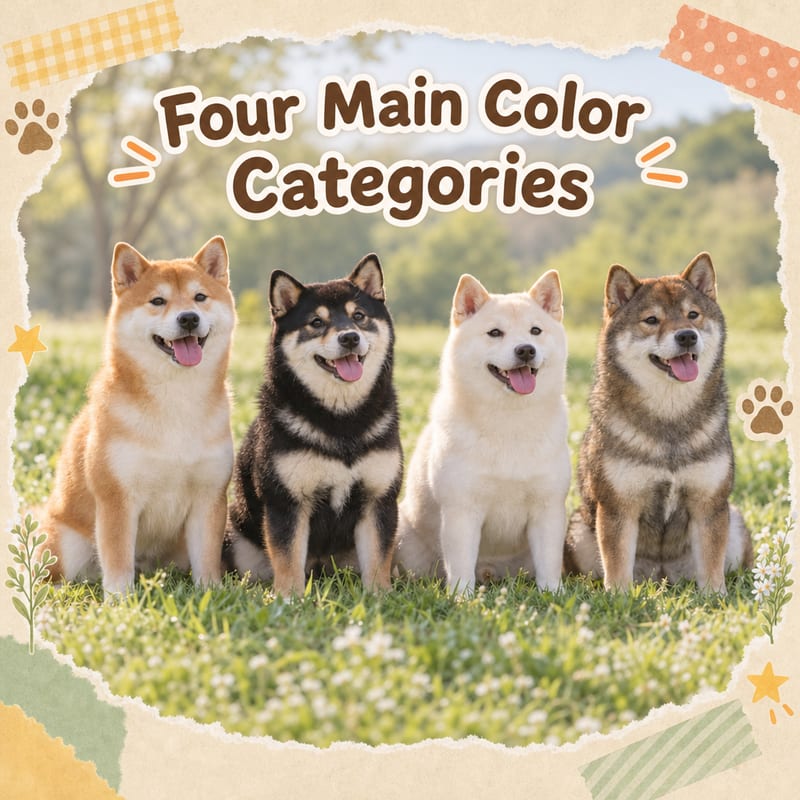
1. The four colour families at a glance
Shiba coat colour names are many and confusing ('red Shiba', 'black Shiba', 'sesame', 'white Shiba', 'cream'). First, let's lay out the features, commonness and care focus of the four families:
| Colour family | Features | Commonness | Show standard | Care focus |
|---|---|---|---|---|
| Red | Orange-red base with creamy white 'urajiro' | Most common, majority of Shibas on the market | Recognised | Shedding visually obvious, brush diligently during shedding season |
| Black-and-tan (black Shiba) | Black mask, eyebrow spots and tan leg markings | Medium-high, premium when in demand | Recognised | Skin problems easier to observe under black fur |
| Sesame | Red base mixed with black and white hairs, like sprinkled sesame | Less common | Recognised | Same as red; coat layering needs light to see |
| White | Creamy white all over, slightly beige | Polarising (some like, some dislike) | Not in mainstream show recognition | Undercoat shows stains, drool marks and tear stains easily |
All four recognised colours share one aesthetic requirement—urajiro: creamy white on the muzzle, sides of the face, chest, abdomen, underside of the tail and inner legs. This concept comes from Japanese dog aesthetics and is a 'structural colour' requirement beyond 'colour'; the reason white Shibas are not in the show standard is precisely because they are mostly white all over and lose the contrast between urajiro and the main colour—not because they are 'impure'.
2. Shiba coat colour genetics: roughly how it works
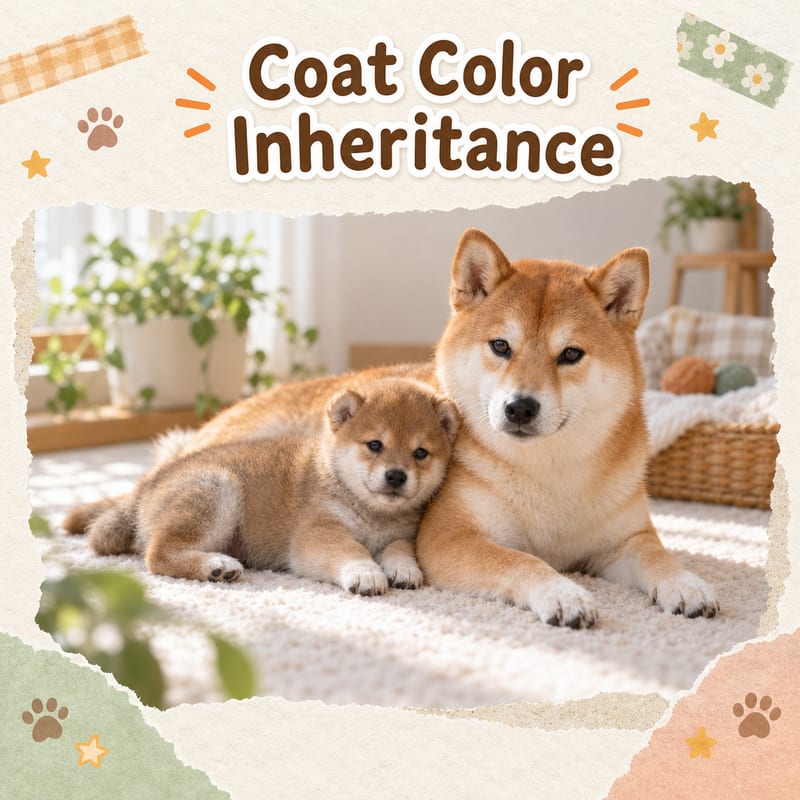
Shiba coat colour is determined by multiple genes together; it is not as simple as 'parents are this colour, puppies will be that colour'. Owners only need to grasp three facts:
- Red is the most common base colour expression, so red Shibas have the largest supply and prices closest to the market median.
- Black-and-tan and sesame each arise from different gene combinations; sesame can be understood as a red base with black and white hairs mixed in, so it is not surprising to see 'red-red-black' or 'red-sesame' combinations in the same litter.
- The same litter can produce multiple colours, so there is no universal 'Shiba colour probability' table—probability depends on the genes carried by both parents, not the breed average. Folk sayings like 'two reds produce white' are only for casual chat, not a genetics textbook.
Dog coat colour genetics is a specialised field; those who want to dig deeper can refer to kennel club breeding materials. But for those choosing a Shiba, the conclusion is simply: colour is a lucky draw, quality is what you raise.
3. Colour and temperament: debunking the biggest myth
For those searching 'black Shiba temperament' or 'white Shiba temperament', we must be clear: mainstream kennel club breed standards (AKC, Nihon Ken Hozonkai) do not link coat colour to temperament. The keywords of Shiba temperament—independent, stubborn, clean, slow to warm up—apply to all four colours. The legends of 'black Shibas are fiercer' or 'white Shibas are quieter' are mainly sampling bias: because black Shibas are expensive, owners have high expectations and care meticulously, accidents are fewer, which then becomes a reputation for 'good temperament'. Bloodline, socialisation and upbringing shape temperament; colour at most shapes what colour clothes you pick fur off.
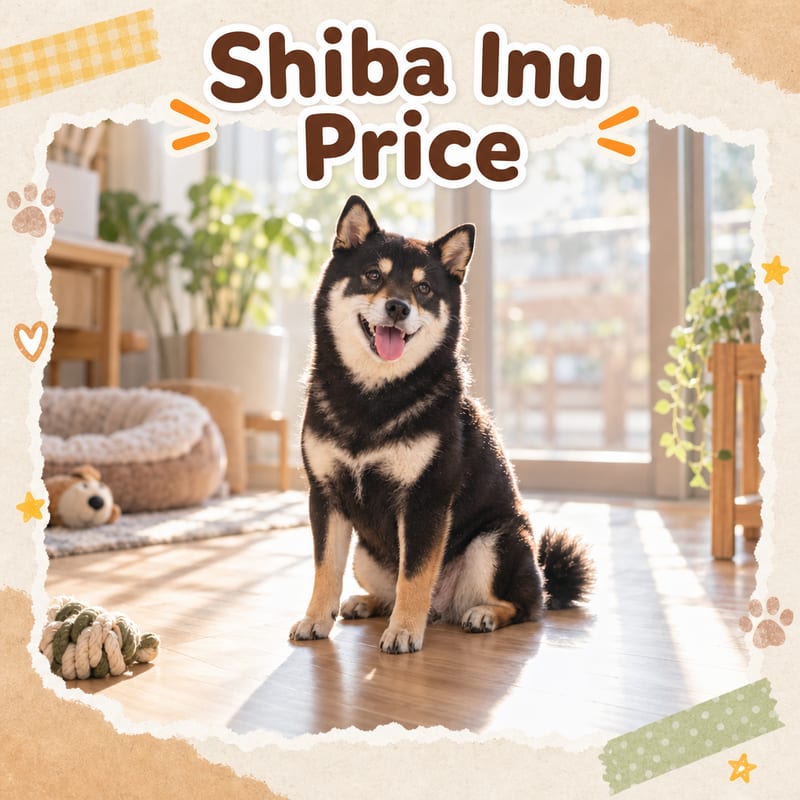
4. Black Shiba price and colour premium: what is worth paying
The 'black Shiba price' is generally higher than red; sesame fluctuates due to rarity, and white is polarising. These are all supply-and-demand premiums—lower production and higher market demand make them expensive; there is no health bonus. What is always worth paying for: parental eye and patella screening, complete vaccinations and microchip, and written after-sales terms (see the 'Shiba price and adoption' article for a verification checklist). It is best to put at least half of any colour premium into a medical reserve, so you don't put the cart before the horse.
5. Care common to all four colours: the double coat is the main event
No matter which colour you choose, the main event of Shiba care is always the double coat:
- Brush two to three times a week; during shedding season (generally two to three major cycles a year) switch to an undercoat rake daily.
- Dry the undercoat thoroughly after bathing; use a dehumidifier during the humid season to prevent eczema and fungal infections.
- Special tip for white Shibas: use a hanging water bottle to reduce drool marks, wipe paws after going out; light-coloured fur is not hard to keep, it just requires diligence.
- Special tip for black Shibas: dandruff and rashes are more visible on black fur, so you can detect and treat early—a hidden advantage.
- Tip for sesame and red: shedding is impossible to hide on dark furniture; upgrade vacuuming from weekly to daily.
6. Before choosing a colour, ask yourself three questions
- Can I afford the colour premium? If the price difference affects your medical reserve, choose red; the money saved can buy a timed feeder and still be practical.
- Can I accept that 'white Shibas are not recognised in the show standard'? If purely a companion dog, you can ignore it completely; if you plan to show, choose a recognised colour and show bloodline.
- Have I checked the source? White or black, a dog without parental screening records is a gamble no matter how beautiful the colour. Same on the adoption path: black Shiba adoption is the same as red Shiba adoption—an organisation that lets you verify is a good source.
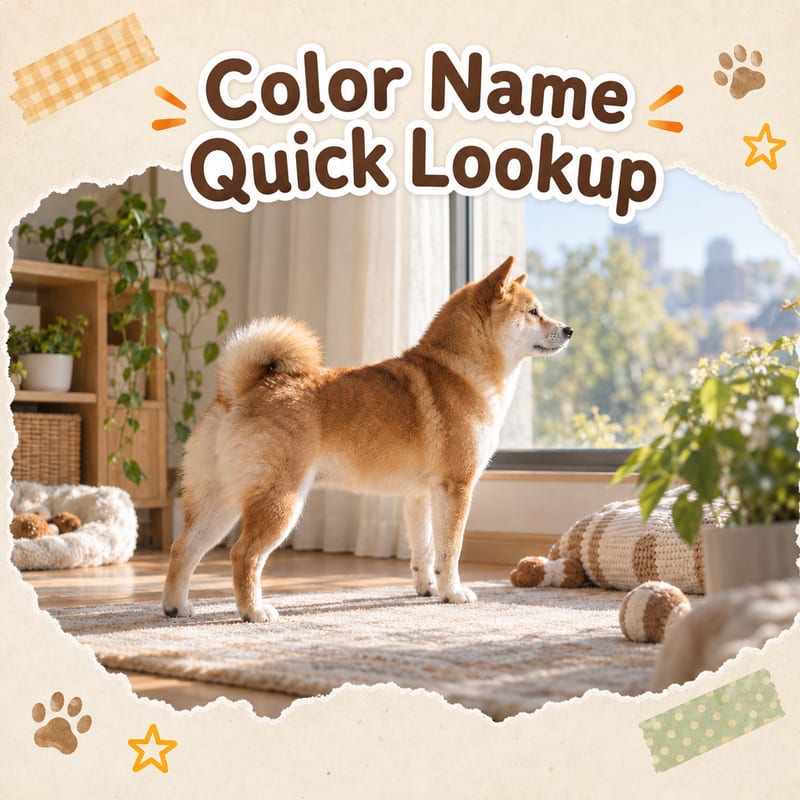
7. Colour name slang quick reference
The market also has 'cream Shiba', 'red Shiba', 'black iron' and other names: cream means a beige-white Shiba; 'red Shiba' mostly means a red Shiba with a darker coat; 'black iron' is a black Shiba with too much black and indistinct tan markings—it loses points in shows but is perfectly fine as a pet. Also watch for newly coined names like 'silver-white sesame'; most are just marketing packaging, not new colour families—if your wallet is thin, first recognise the four colour families before comparing prices.
Key takeaways
- ✅ Four Shiba colour families: red, black-and-tan, sesame and white; red is most common, and the show standard recognises red, black and sesame.
- ✅ 'Urajiro' is the core of Japanese dog aesthetics: the creamy white contrast on chest, abdomen and muzzle; white Shibas lack this contrast and are therefore not in the show standard.
- ✅ Coat colour is determined by multiple genes; the same litter can produce all four colours, and there is no universal probability table.
- ✅ Colour does not determine temperament; black Shibas are more expensive due to a supply-and-demand premium, not a health premium.
- ✅ There is no evidence that white Shibas carry genetic defects; what to be careful of is breeding practices without screening records.
- ✅ Don't agonise over colour; care is always the double-coat trio: brush diligently, dry thoroughly, dehumidify.
Related reading
- Shiba Inu temperament and intelligence analysis
- Shiba Inu lifespan and longevity guide
- Shiba Inu price and adoption guide
- Undercoat rakes, de-shedding combs and all-colour bathing and care products—find them at PetChill pet supplies by colour and season.
This article is general breed information; individual dogs vary greatly. For health and breeding issues, consult a registered veterinarian or a reputable breed club.