Quick answers
- The daily 30-second check is the highest-return step: look for burst seams, how many feathers are left, loose knots, and exposed bells or squeakers.
- Plush toys, kicker pillows and fish-shaped cushions: machine wash in a laundry bag every 1 to 2 weeks at 30 to 40 degrees, no fabric softener.
- Hard rubber and silicone toys: deep scrub once a month with 30 to 40 degree warm water and 1 drop of unscented dish soap, brushing the inner walls and grooves.
- Feather wand toys: do not soak; wipe with a wrung-out damp cloth in the direction of the feathers. Replace the wand head every 2 to 4 weeks on average; do not patch with tape.
- Sisal rope scratching posts: check the wrapping every 2 to 3 months; replace the wrapping if loose; replace the whole board if corrugated cardboard is dented into a pit.
- Catnip toys: no need to wash; refresh with 1 to 2 teaspoons of new catnip every 4 to 6 weeks, seal for 24 to 48 hours before use.
- Rotation system: keep only 3 to 5 toys out at a time, swap every 1 to 2 weeks; store the rest in a dry, ventilated place, not next to the litter box.
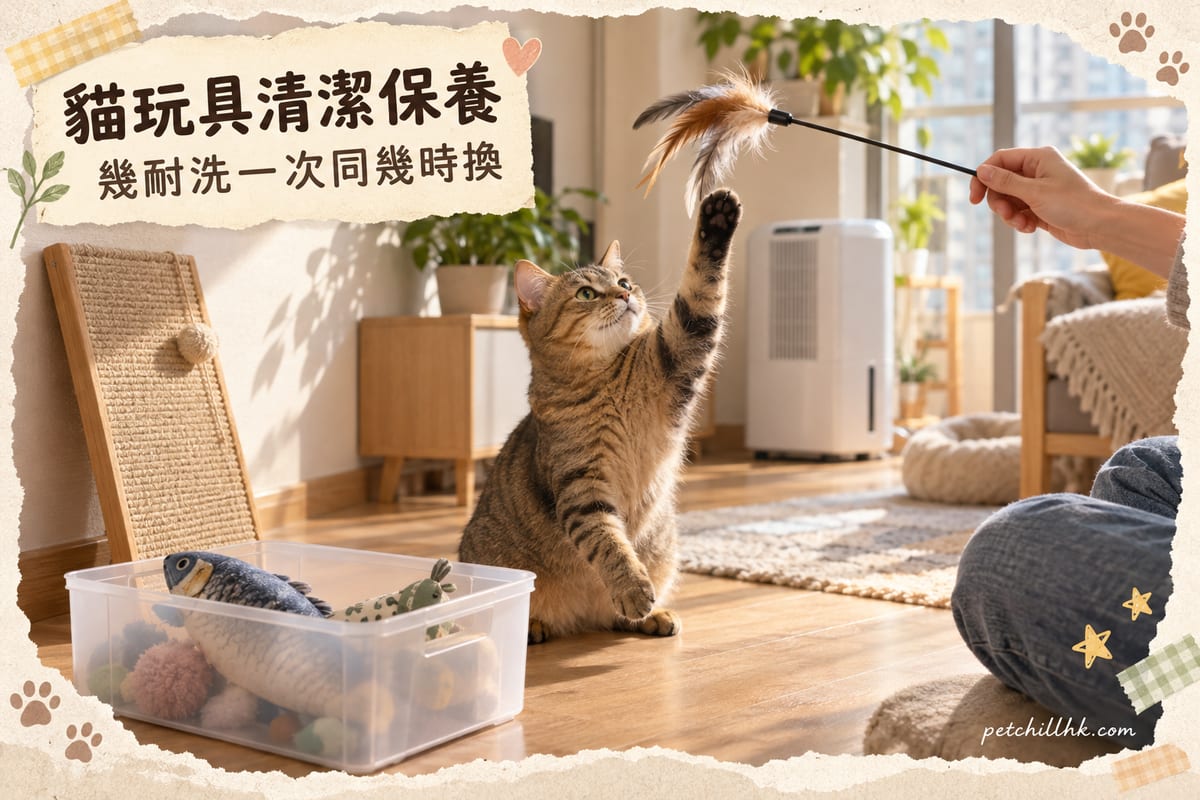
The answer to "What are some simple tips for cleaning and caring for cat toys?" comes down to three things: daily 30-second check, regular cleaning by material, timely replacement based on wear. The actual numbers: plush toys and kicker pillows machine-washed every 1 to 2 weeks; hard rubber and silicone toys deep-scrubbed once a month; feather wand toys must not be soaked, only wiped with a wrung-out damp cloth, and the wand head replaced every 2 to 4 weeks; check sisal rope on scratching posts every 2 to 3 months for looseness; refresh built-in catnip filling every 4 to 6 weeks. Keep only 3 to 5 toys out at a time and rotate them — that lasts longer than buying a big pile at once, and keeps cats more interested.
Cats play differently from dogs: cats mostly hook with claws, pounce, and bite-kick, so wear concentrates on feathers, rope strands, seams and attachment points — and once these loosen, there's a risk of swallowing threads and foreign objects. So cat toy care isn't just "wash when dirty"; it's three lines running together: check (daily), clean (by frequency), replace (by wear). Hong Kong homes are humid, so plush toys that aren't fully dry after washing develop a musty smell; litter dust and floor fur also stick to toy surfaces and scratching posts. This article covers the care schedule, a comparison of six toy types, material lifespan, special care for catnip and wand toys, and replacement indicators, with three tables. For the overall daily care rhythm, see Pet Daily Care Hub.
The three core principles of cat toy care: check, frequency, replace by wear
Let's separate the three things first so you won't confuse them later.
First, check. 30 seconds daily: look for burst seams, how many feathers are left, loose knots, exposed bells and squeakers, and loose plastic parts or stickers. This costs nothing but catches the most dangerous situation early: exposed threads. Cats are especially interested in string-like objects; a loose thread pulled out will often be bitten off along with fabric fragments.
Second, clean. Decide washing method and frequency by material. Cat toy dirt is mainly saliva film, floor fur and litter dust — not food residue trapped in puzzle feeders — so most cat toys don't need washing after every use. In fact, "washing too often" accelerates wear — feathers, plush and sisal rope all fray more with washing, and sisal rope should not be soaked at all.
Third, replace. Toys are consumables, not durables. A broken cotton string or a wand with only two feathers left is still a swallowing risk even if washed clean. Rather than figuring out how to patch it, replace based on signs: for wands with replaceable heads, just change the head; if the whole thing is loose, replace it entirely.
If you have kittens or senior cats over 7, increase check frequency. Kittens' bite strength grows fast and they're curious, so they're most likely to bite loose parts; senior cats have slower vision and reactions, so they miss the target and are more likely to bite the toy itself — both should be checked daily and cleaned every 2 to 3 days.
Daily, weekly, monthly: cat toy care schedule
The most effective care isn't a "big wash all at once" but spreading actions into daily life. The table below is a rhythm you can follow, with the last column listing what to check each time to build the habit.
| Frequency | What to do | Approximate time | Key check areas |
|---|---|---|---|
| After each play | Put back in toy box, wipe off saliva and fur | 30 seconds | Toy surface, surrounding floor |
| Daily | Visual check for loose threads, exposed parts, attachment points | 30 seconds | Seams, feather roots, knots, bells |
| Weekly | Wipe hard toys, check scratching post wrapping and base | 5 minutes | Grooves, sisal rope, base screws |
| Every 1 to 2 weeks | Machine wash plush and kicker pillows once, rotate 3 to 5 toys | 15 minutes | Cotton filling, seam areas |
| Monthly | Deep scrub hard toys, check electric toy battery compartments, refresh catnip | 15 to 20 minutes | Inner walls, battery compartment, filling opening |
| Every 2 to 3 months | Check sisal rope, elastic cords, velcro, decide whether to replace | 10 minutes | Wrapping, elasticity, stickiness |
"Put away immediately after each play" is the most easily skipped but highest-benefit step. Toys left on the floor overnight pick up fur dust, dust mites and floor cleaner residue, and are easily dragged around by cats at night, loosening seams. In multi-cat households, toys should especially be put away after play to reduce cross-contact from shared items.
Storage location also matters. The toy box should be in a dry, ventilated place — an open-lid cloth bag or hard plastic basket is recommended, not sealed long-term; and not next to the litter box to avoid dust and litter particles sticking to plush toys. In Hong Kong's humid season, put a desiccant pack in the toy box and replace it every 1 to 2 months.
Rotation is another free tip. Keep only 3 to 5 toys out at a time, store the rest, and swap every 1 to 2 weeks. Two benefits: cats regain interest when they see "new" toys, so they don't bite harder out of boredom; and each toy's actual hours of use decrease, slowing wear.
Clean and care by material: comparison table for six common cat toy types
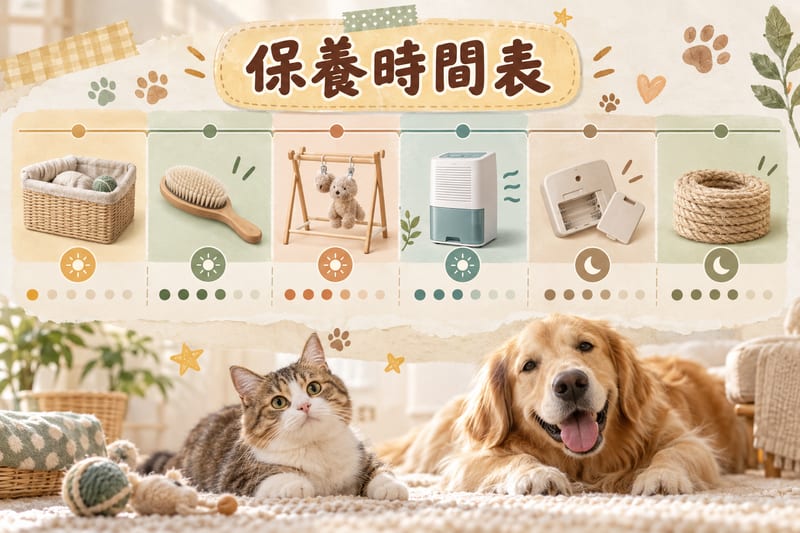
The same basin of water can't handle all cat toys. Feathers can't be soaked, sisal rope can't be soaked, electronic parts can't be soaked, while plush can be machine washed; use the wrong method and you'll ruin it in one go. The table below lists daily care, cleaning method and wear signs for six common cat toy types.
| Cat toy type | Daily care | Cleaning method | Wear signs |
|---|---|---|---|
| Feather wand toys and replaceable heads | Put back in box after play, don't leave on floor | Feathers not soaked; wipe with wrung-out damp cloth in direction of feathers; wand wiped with 30 to 40 degree warm water plus 1 drop unscented dish soap | Fewer than 3 feathers left, broken quill, loose attachment |
| Plush toys, kicker pillows, fish-shaped cushions | Shake off surface fur and litter daily | Laundry bag, 30 to 40 degree gentle cycle, no fabric softener, air dry 6 to 12 hours | Burst seams, exposed cotton filling, musty smell after washing |
| Scratching posts (sisal rope / corrugated cardboard) | Weekly vacuum or hand-brush away paper scraps and fur | Do not soak; only wipe surface and brush off debris | Loose sisal rope, corrugated cardboard dented into pit, wobbly base |
| Catnip toys, filled cloth toys | Put back in sealed bag after play to reduce scent loss | Mostly no need to wash; spot clean with damp cloth, fully dry before refreshing catnip | Scent fades, filling clumps and hardens |
| Electric toys, hanging door toys, laser pointers | Turn off and wipe outer surface after each play | Do not soak; wipe outer surface with wrung-out damp cloth, clean battery compartment and switch with cotton swab | Slower speed, louder motor, loose elastic, suction cup won't stick |
| Hard rubber and silicone (balls, puzzle feeders, elastic balls) | Rinse off saliva after each play, wipe dry | Deep scrub once a month with 30 to 40 degree warm water plus 1 drop unscented dish soap, brushing inner walls and grooves | Sticky surface, deep bite marks, cracks |
A few practical points for using this table. First, plush toys and kicker pillows must be completely dry after machine washing — no cool feeling to the touch, no moisture when pressing the cotton filling — before returning to the toy box; storing while damp in a sealed box is the easiest way to get musty smells and black spots. Second, sisal rope and corrugated cardboard should not be washed; wet fibres fray and cardboard warps, so daily care is really just brushing off debris and checking for looseness. Third, electric toys that have been in water must be retired, because internal rust is invisible and can later cause short circuits or electric leakage.
Also, you don't need a separate set of cleaning products for toys. Unscented mild dish soap, pet-specific cleaner and water handle daily dirt; scented disinfectant sprays and fabric softener should never be used on plush toys, because scent and chemical residue will be licked and bitten off by cats. Cloths should also be separate: cloths for toys, toy boxes and litter box surroundings should not be mixed.
Material wear: which cat toys break fastest and how to extend lifespan
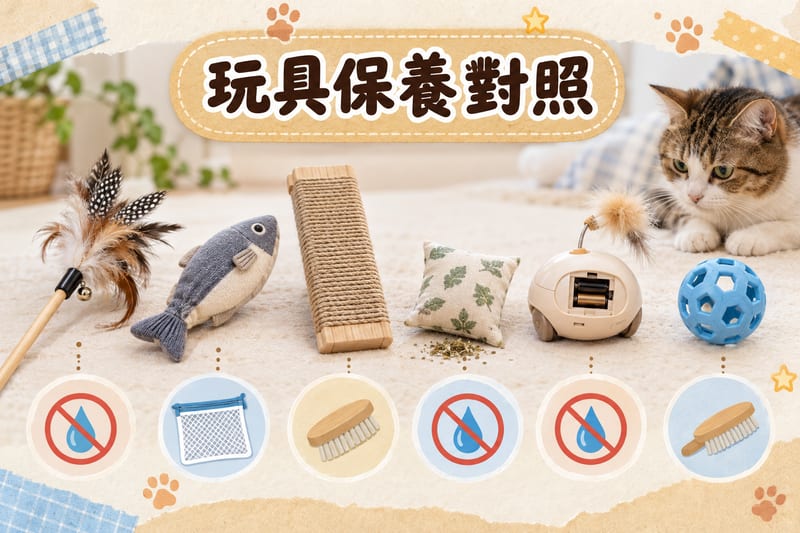
Many cat owners think toy breakage is "bad buying", but most is actually the material's inherent lifespan. Knowing roughly how long each material lasts lets you buy spares in advance, so you're not caught without a replacement when a toy breaks.
| Material | Typical lifespan | Wear signs | How to extend |
|---|---|---|---|
| Feathers | 2 to 4 weeks | Fewer than 3 feathers left, broken quill, feathers stuck together | Put back in box after play, don't let cat drag it around, keep 1 to 2 spare replaceable heads |
| Cotton/nylon rope | 3 to 6 months | Rope strands unravel, threads shed, loose thread gets longer | Don't cut loose threads or tape them to keep using; replace when frayed |
| Sisal rope wrapping | 2 to 6 months (depending on scratching frequency) | Rope loose, base exposed, rope segments falling off | Replace wrapping or use replaceable scratching pad covers; don't wait for it to scatter on the floor |
| Plush fabric | 3 to 12 months | Pilling, burst seams, thinning fabric | Machine wash in laundry bag, no fabric softener, rotate several pieces |
| Elastic cords, velcro | 3 to 6 months | Loss of elasticity, velcro won't stick, lint no longer adheres | Don't pull hard during play, don't wash in hot water |
| Plastic/hard casing | 1 to 2 years | Cracks, loose screws, broken buckles | Don't drop on hard floors, don't leave in direct sun long-term |
| Electric toy battery | 3 to 12 months | Shorter runtime, won't turn even after charging | Don't leave plugged in long-term, don't place in damp areas, turn off after play |
A few points deserve special explanation. Rope is the material that most needs proactive replacement: loose threads can't be "patched" with tape, nor should you cut them short and keep playing, because the broken end will keep fraying and cats can easily swallow the fibres. String-like foreign objects swallowed are a situation requiring veterinarian assessment, so better to replace early than risk it.
Feather wear mainly comes from biting and dragging. If the wand isn't put away after play, cats will hook and bite it themselves at night and can bite off several feathers in one night. To extend lifespan, keep 1 to 2 replaceable wand heads; change the head when loose, and the wand and handle can continue to be used.
Plush toy wear is directly linked to washing method. With a laundry bag, 30 to 40 degrees, gentle cycle and no fabric softener, the fabric can last several more months; conversely, hot water, wringing dry or fabric softener will make the fabric clump and harden, after which it no longer attracts cats. Rotating several plush toys halves each one's washing and chewing frequency, noticeably extending actual lifespan.
The biggest enemies of plastic and electronic parts are water and heat. Water in the battery compartment or long-term sun exposure by the window accelerates ageing; turning off after play, wiping dry and storing in a dry place is the simplest and most effective care.
Special care for catnip, wand strings, bells and electric toys
These are cat-toy-specific and most easily overlooked; here's how to handle each.
- Catnip filling. Open the toy's zipper or opening, pour out old filling, add 1 to 2 teaspoons of new catnip, seal and place in a sealed bag for 24 to 48 hours, and the scent will gradually return. Do this every 4 to 6 weeks; more frequent refreshing gives no extra benefit. About 30% of cats don't react noticeably to catnip — normal variation — so don't over-refresh or switch types just because your cat isn't excited.
- Wand strings and elastic cords. Check attachment points and cord length weekly. If the string is shorter than 10 cm, replace it to avoid playing close to the cat's face and neck. Loose attachments should not be fixed with tape or glue: glue edges will be bitten off and become a swallowing risk. For replaceable-head models, change the head; for non-replaceable, replace the whole thing.
- Bells and squeakers. Check bell ring clasps for looseness; if the bell can come off, there's a swallowing risk, and also check squeakers for bite-through exposing plastic film. If your cat is sound-sensitive or gets scared during play, remove the bell before playing.
- Hanging door toys. Check suction cup grip, elastic and cord clasp weekly. If the suction cup won't stick or the elastic is loose, replace the whole thing; installation height should match your cat's jumping range — don't install so high that the cat can only hang by pulling the elastic, because the hanging weight accelerates elastic fatigue.
- Electric toys. Turn off after each play, wipe outer surface, return to a dry place; don't leave plugged in long-term or on damp floors. Stop using if speed slows, motor noise increases or casing cracks; don't open the casing yourself.
- Laser pointers. Not a material wear issue, but two safety points: don't shine into the cat's eyes, and don't use only a laser pointer long-term, because cats can't catch the "prey" and feel frustrated. The usual approach is to warm up with the laser pointer, then finish with a physical toy (feather wand or plush toy) so the cat actually catches something once.
After these checks, wipe the storage area and around the scratching post. Fur dust and litter particles in these places are the main source of dirt on toy surfaces; handling them along the way makes cleaning much easier.
Which cat toys should not be kept: replacement indicators and related products
Toys shouldn't wait until they completely fall apart. If any of the following appears, replace immediately — don't spend time cleaning or repairing:
- Rope frayed, fibre ends exposed, or loose thread can be pulled out more than 10 cm.
- Fewer than 3 feathers left, broken quill, or loose wand head attachment.
- Burst seams, exposed cotton filling, or musty smell/black spots remain after washing.
- Bells, squeakers, wire or plastic parts can come off.
- Toy has fallen into the litter box or touched faeces and still has residue after cleaning.
- Sisal rope wrapping loose exposing the base, or corrugated cardboard dented into a pit that can trap claws.
- Electric toy casing cracked, abnormal motor noise, battery compartment rusted.
The following are products sold on PetChill's online store directly related to toy care:
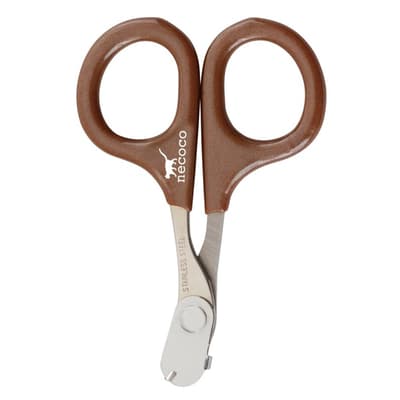
- Petio necoco Cat Nail Clipper with Safety Guard (91601544) — HK$132
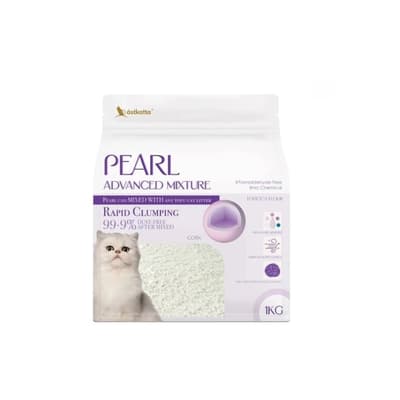
- Astkatta Cat Quick-Absorbing Dust-Free Mixed Pearl Cat Litter 1kg (P00179-1) — HK$28
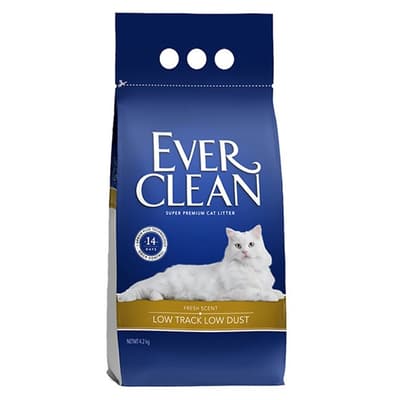
- Ever Clean USA Mineral Cat Litter Blue Diamond Gold Label Coarse Low Dust Mild Scent 4.2kg (LD4.2) (Bag) — HK$99 (available for pre-order)
Prices and stock are subject to the online store's current listed price.
The connection to toy care is direct. Claws are the most common "wear source" for toys: regular nail trimming reduces feathers being hooked off, plush fabric being pulled into frayed edges, and sisal rope being pulled loose. Trim carefully — don't cut too deep, stop when you see the pink blood vessel, and don't cut too much at once. As for litter, coarse-particle or low-dust/dust-free formulas reduce dust kick-up, so fewer litter particles land on toy surfaces and scratching posts; the litter box and toy storage should be kept separate, not next to each other.
For oral, eye and ear care rhythms, see Cat Teeth Cleaning Explained and Cat Eye Care Guide.
Further reading
- Pet Daily Care Hub | Grooming, Nails, Ears, Home Cleaning (2026)
- Cat Eye Care Guide | Hong Kong Tear Stain Cleaning, Conjunctivitis Prevention, 5 Daily Care Steps
- Cat Teeth Cleaning Explained | Hong Kong Price List + Anaesthesia Risk + Tooth Resorption: Safest Way to Handle Bad Breath and Tartar
- Dog Ear Cleaning Guide | Hong Kong Small Flats: Ear Hair, Earwax, Ear Mites in One Go
For emergencies, contact a veterinarian immediately; this article is for reference only and cannot replace veterinary diagnosis.
Information checked as of 2026-10-12 · Source: PetChill Editorial Team
 Astkatta full guide →
 Fuji One full guide →