Quick Answers
- Cat litter falls into 4 major types: clay, tofu, cassava mixed, and paper litter — each has trade-offs in particle size and clumping strength.
- For kittens under 1 kg use an electronic scale; for a single cat use a digital scale; for multiple cats use a smart weight station.
- Smart devices need 10 cm of heat-dissipation space and a deep clean once a month.
- For warranty, keep the receipt and serial number, apply through the original purchase channel, and the period is subject to the official terms.
- Expired food, supplements and cleaning agents carry risks of oxidation and reduced potency; the post-opening consumption period is counted separately.
The difference between plant-based cat litter and clay litter isn't about which is "better" — it's about 5 objective specifications: particle size, dust, clumping strength, flushability, and odour control. Clay litter (sodium bentonite) has heavier particles, clumps fast and firm, usually has more dust, and flushing is generally not recommended. Plant litter (tofu litter, cassava mixed litter) is lighter, has less dust, clumps are softer, and some products are labelled flushable but should be flushed in small amounts at a time. Which to choose depends on your home's litter box type, plumbing condition and your cat's acceptance.
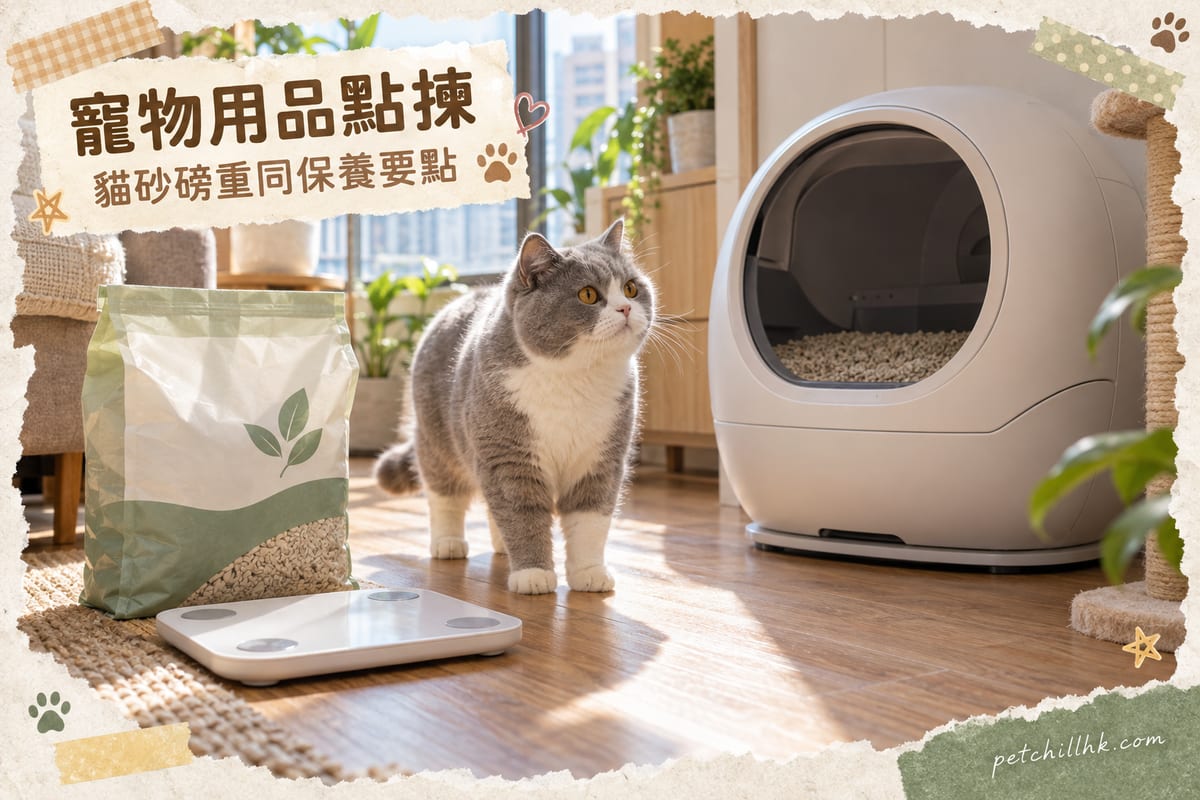
Besides "which one to choose", two things are easily overlooked when buying pet supplies: maintenance (consumables and cleaning cycles for smart devices) and expiry (shelf life and post-opening periods for food, treats, supplements and cleaning products). Below we break down cat litter type comparisons, weight-recording device comparisons, smart device maintenance and warranty claim process, expired product risks, and the differences between pet-specific cleaning products and ordinary laundry detergent.
Cat Litter Type Comparison: Particle Size, Dust, Clumping, Flushability, Odour Control
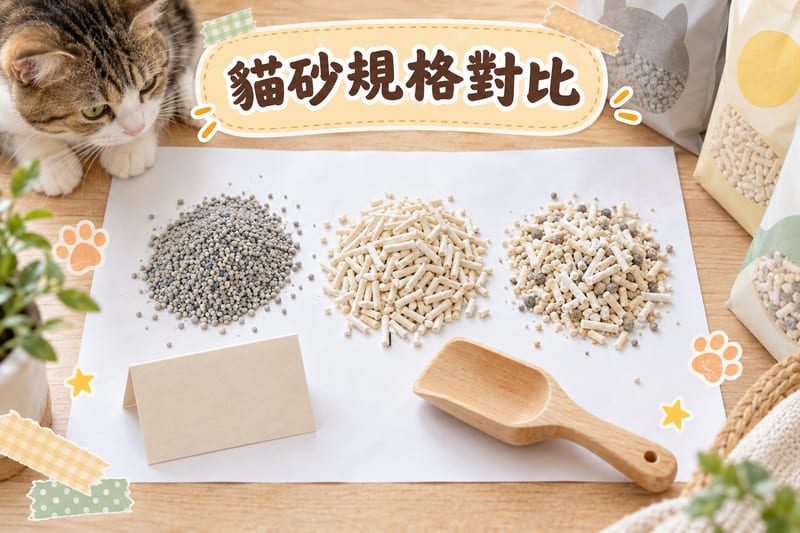
Cat litter in Hong Kong generally falls into 4 types: clay litter (sodium bentonite), plant litter (tofu litter, cassava mixed litter), paper litter, and wood litter. None is absolutely superior — only whether it suits your home's litter box, plumbing and your cat's habits. First, understand the 5 objective specifications:
- Particle size: Common labels range from about 0.5 mm to 2.5 mm. Fine particles feel softer underfoot but are easily tracked out of the box; larger particles are tracked out less but some cats refuse to use them.
- Dust: Clay litter dust varies with sieving process and is generally higher; plant litter is pressed from fibres and has relatively less dust. Dust affects cats' respiratory tracts and home air quality, especially in small flats.
- Clumping strength: Clay litter absorbs water and clumps quickly and firmly, making it easy to scoop out in one piece; plant litter clumps are generally softer, and cassava mixed litter clumps better than pure tofu litter thanks to added starch.
- Flushability: Most clay litter is not recommended for flushing — particles don't dissolve and will accumulate in pipes. Some plant litter products are labelled flushable, but in old Hong Kong buildings with narrow pipes and tight traps, even if labelled flushable you should flush small amounts at a time or simply bag and dispose.
- Odour control: Clay litter relies on the mineral's own adsorption; plant litter relies on plant fibres and starch binding. Either way, scooping at least 1–2 times daily and fully changing the litter every 2–4 weeks is the key to odour control.
| Type | Main raw material | Particle size (common labels) | Dust | Clumping strength | Flushable | Odour control |
|---|---|---|---|---|---|---|
| Clay litter (bentonite) | Natural minerals, sodium bentonite | About 0.5–2 mm, heavier particles | Higher, depends on sieving | Fast, firmer clumps | Generally not recommended | Mineral adsorption, some with added fragrance |
| Tofu litter | Okara, pea fibre | About 1.5–2.0 mm, strip-shaped | Lower | Medium, softer | Some products labelled flushable, flush small amounts | Fibre adsorption, some with activated carbon |
| Cassava mixed litter | Cassava starch, plant fibre, minerals | Mixed particle sizes | Medium | Stronger (starch binding) | Depends on product label | Better odour locking |
| Paper/wood litter | Recycled pulp, pine | Larger particles | Low | Weaker, some only absorb without clumping | Depends on product label | Pulp or wood fibre odour absorption |
When is each suitable?
- Kittens, just learning to use the box: Particles too coarse or fragrance too strong may put them off; fine or strip-shaped litter with low dust and no or light fragrance is easier to start with.
- Senior cats, poor joints: The box entrance should be low; litter that is too hard or sharp may deter them from entering — rounder particles are more comfortable.
- Multi-cat households: Use litter with stronger clumping so you can scoop quickly and change often, making odour and hygiene easier to control.
- Renting, don't want plumbing risk: Prioritise the non-flushing approach; even with plant litter labelled flushable, bag and dispose.
Litter transition checklist:
- Start mixing new and old litter at 7:3, adjust the ratio every 2–3 days, complete the transition in 1–2 weeks.
- Wash and dry the box before adding new litter; litter depth about 3–5 cm.
- Never pour old litter into the toilet — bag and dispose; deep clean the box every 2–4 weeks.
Product examples for reference:
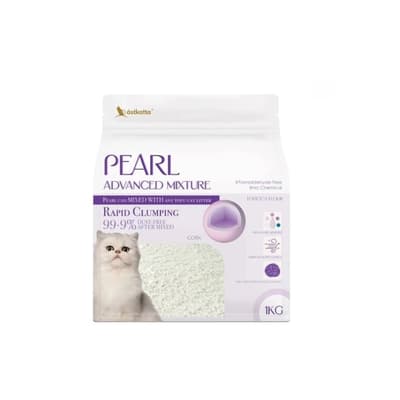
- Astkatta Cat Quick-Absorb Dust-Free Mixed Pearl Cat Litter 1kg (P00179-1) — HK$28
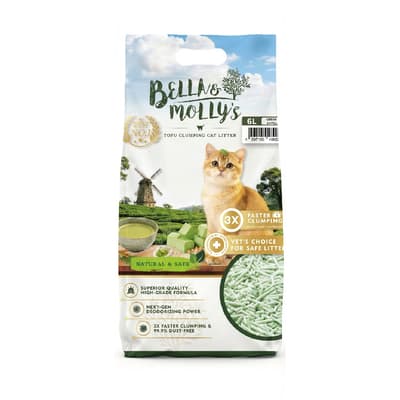
- Bella & Molly's 2.0mm Tofu Cat Litter Natural Ultra-Clumping Green Tea Scent 6L — HK$24
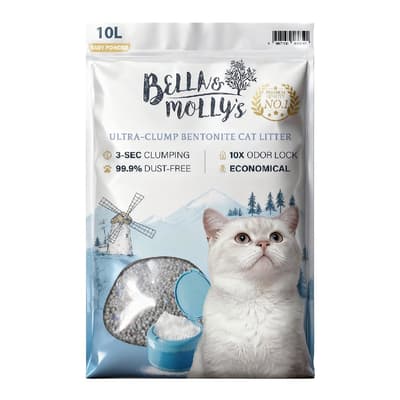
- Bella & Molly's Rapid Ultra-Clumping Premium Clay Cat Litter Baby Powder Scent 10L — HK$35
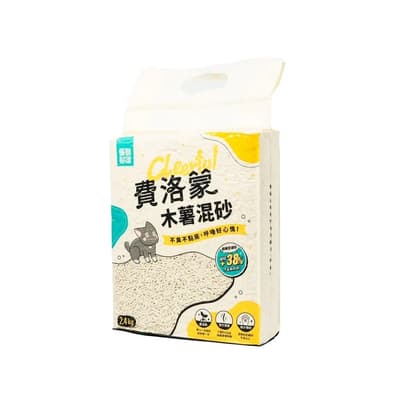
- Monster Tribe Pheromone Cat Litter Tofu Cassava Mixed 2.4kg — HK$59
Prices and stock are subject to the online store's live pricing.
Choosing a Weight-Recording Device: Digital Scale, Electronic Scale, Smart Weight Station Compared
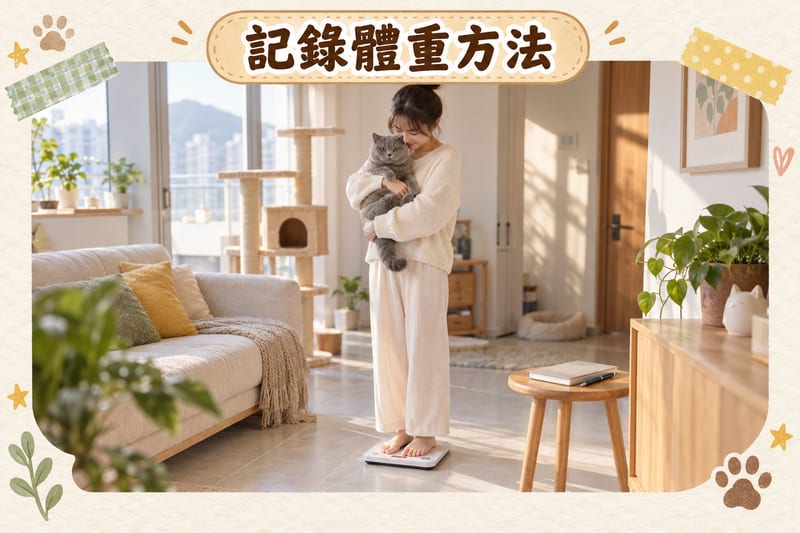
Weight is the easiest health indicator to measure and one of the most informative. Changes in a cat's weight often appear earlier than symptoms — a 5% drop within a month is worth asking a veterinarian about. Common recording tools fall into 4 types, each suited to different situations:
| Device | Reading characteristics | Suitable for | Notes |
|---|---|---|---|
| Baby electronic scale / pet electronic scale | In grams, fine readings | Kittens, under 1 kg, tracking weekly growth | Place on a hard flat surface, zero before the cat enters |
| Digital scale (human) | Coarser increments | Daily monitoring of a single adult cat | Weigh holding the cat then subtract your weight; larger error, look at trends |
| Smart weight station (built into litter box or feeder) | Automatic recording each time, trend graphs in app | Multi-cat households, seniors aged 7+, long-term weight management | Single-cat identification depends on model and environment; needs stable power and Wi-Fi |
| Kitchen electronic scale | Finest readings | Kittens, also monitoring daily food intake | Small platform, not suitable for large cats |
Measurement discipline:
- Fixed time: before meals, when conditions are similar, e.g. before morning feeding.
- Fixed method: same scale, same surface, same position.
- Fixed frequency: kittens once a week, adults once every 2 weeks, seniors or those with chronic illness once a week.
- Look at trends, not single numbers: 3 consecutive downward readings are worth noting.
- If weight drops more than 5% within a month, or appetite clearly worsens for 2–3 days, contact a veterinarian.
If using a smart weight station, remember to calibrate regularly: weigh once on a digital scale the same day, then compare with the app reading; if there is a clear discrepancy, first check the placement surface and whether sensors have dirt.
Smart Pet Devices: Installation Space, Power, Consumables and Daily Maintenance
Taking an automatic litter box as an example (e.g. PETKIT PUROBOT MAX PRO Smart Automatic Litter Box), note the following before purchase and after installation:
- Space: Place the unit on a flat hard floor, not on carpet; leave space behind and on both sides for heat dissipation and opening the lid (generally 10 cm or more recommended). Keep the old litter box during the initial transition so the cat can adapt gradually — don't put it away all at once.
- Power: Use the original adapter, plug into an independent socket, avoid sharing a power strip with high-wattage appliances; some models only support 2.4GHz Wi-Fi and cannot connect to 5GHz.
- Consumables: Waste bags, deodorising sheets or filters, and cleaning brushes are regular consumables; keep 1–2 months' supply to avoid running out.
- Weight capacity and size: Different models have weight ranges; kittens too light or large cats too heavy may trigger sensor errors — check specifications before ordering.
Maintenance cycle (checklist):
- Daily: remove clumps, check litter level, wipe the entrance once.
- Weekly: wipe sensors and camera, check drum or passage for stuck litter, empty waste bag.
- Monthly: power off and deep clean, disassemble per manual, dry completely before reassembly.
- Quarterly: check cords for damage, listen for abnormal operating sounds.
- Troubleshooting order: power off for 30 seconds and restart, clean sensors, check litter level and type, check Wi-Fi; if unresolved, report through purchase channel.
Product examples:
- PETKIT PUROBOT MAX PRO AI Smart Automatic Litter Box White (pkt5a) — HK$3,153
- PETKIT Pet LED Nail Clipper White (pkdt1a) — HK$59
Prices and stock are subject to the online store's live pricing.
Warranty and Repair: How to Apply? Keep Receipts, Use Purchase Channel, Don't Dismantle Yourself
Smart devices are expensive, so it's worth understanding the warranty process before buying. General practice:
- Photograph the receipt immediately after purchase: Photograph physical receipts, e-invoices, order screenshots, and store the serial number and model from the packaging in your phone album and cloud.
- Troubleshoot before reporting: Go through the troubleshooting order above once, record "what was done and what changed"; a clear report speeds things up.
- Apply through original purchase channel: Online store purchases handled by online customer service; physical store purchases return to the original store. Do not dismantle the machine yourself or take it to a third-party repair — this may affect warranty.
- Prepare information: Purchase date, order number, product serial number, fault description; a 10–30 second video clearly showing the problem is recommended.
- Follow up and keep records: Keep conversation records and repair slips. Warranty period, coverage (e.g. whether consumables and human damage are included) and process are subject to the brand's official and purchase channel's final reply.
PetChill's Reminder: This article does not list any specific warranty periods or hotline numbers, as these depend on model, batch and sales channel. Confirm directly with your purchase channel before reporting — that's the most accurate information.
Expired Product Risks: Food, Treats, Supplements, Cleaning Products
"Best before" and "expiry date" are two different things: the former refers to quality (fragrance, taste, nutrition), the latter to safety, especially for medicines. Either way, the following risks may arise after expiry:
- Dry food, treats: Fats oxidise producing rancid odours; mould toxin risk rises if packaging is damaged or damp; vitamins and other nutrients gradually degrade.
- Wet food, canned food: If the can is bulging, dented, leaking, or smells odd when opened, do not feed.
- Supplements, medicines: Potency decreases and ingredients may change. Do not increase the dose or feed double for expired medicine — ask a veterinarian.
- Cleaning agents, disinfectants: Ingredients may break down, irritation may increase, and risk rises when used in areas pets contact.
- Cat litter: Generally rarely labelled with expiry, but after dampness the absorption and clumping performance drop noticeably, and dust may increase.
| Product category | Date labelling | Main risks | Handling principle |
|---|---|---|---|
| Dry food | Best before, usually printed on bag bottom or side | Fat oxidation, mould toxins, vitamin loss | Discard when expired; finish within the post-opening period stated on packaging; store sealed away from light |
| Wet food/canned | Best before or expiry date | Can deformation, bacterial growth | Discard if bulging, dented or leaking |
| Supplements/medicines | Expiry date | Reduced potency, ingredient changes | Stop use when expired; do not increase dose; have veterinarian assess |
| Cleaning agents/disinfectants | Expiry date or post-opening period | Ingredient breakdown, increased irritation | Do not use past expiry in areas pets contact |
| Cat litter | Mostly unlabelled | Reduced absorption and clumping after dampness | Store sealed and moisture-proof; replace if damp, clumpy or odorous |
3 storage principles: Away from light, cool and dry, sealed. Do not store food near the stove, in the bathroom or on a sunlit windowsill; after opening transfer to a sealed container and write the opening date for easy checking later.
What's the Difference Between Pet-Specific Cleaning Products and Ordinary Laundry Detergent?
There are 4 main differences:
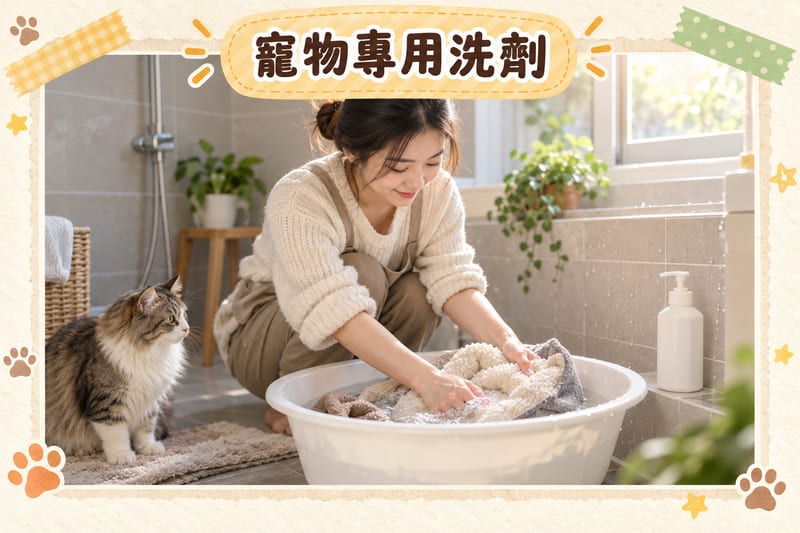
- Residue: Ordinary detergents often contain fragrances, brighteners and softeners that remain on fabrics, towels, pet clothes and fur after washing. Cats and dogs groom daily, so residues are ingested orally.
- pH and irritation: Pets' skin barrier is thinner than humans'; formulas that are too strong or too alkaline can easily cause itching, redness and hair loss.
- Fragrance: Cats' sense of smell is far more sensitive than humans'; bedding and towels washed with strongly scented detergent can be a source of stress for some cats.
- Purpose design: Pet-specific formulas are generally designed for the "will be licked" scenario, with reduced fragrance ingredients and easier rinsing.
| Checkpoint | Ordinary cleaning agents | Pet-specific formulas |
|---|---|---|
| Fragrance | Mostly present, stronger scent | Mostly fragrance-free or lightly scented |
| Rinse cycles | Per normal laundry programme | Recommend one extra rinse |
| Fabric softener | Commonly used | Recommend not using, to avoid residue |
| After floor cleaning | Generally wipe dry | Wipe again with clean water, ventilate until dry before letting cats in |
| Suitable range | Human clothing, household hard surfaces | Pet bedding, towels, litter boxes, cages |
Practical tips:
- Wash pet items and towels with fragrance-free or pet-specific detergent, and add an extra clean water rinse after the cycle.
- Do not mix with human clothing, especially work clothes and floor mats.
- After washing litter boxes and cages, dry completely before returning to use.
- Specific chemical ratios and homemade formulas are outside the scope of this article and not recommended to mix yourself. Reading the label and usage instructions when buying is sufficient.
7-Step Buying and Maintenance Checklist
- First measure the placement area: litter box or weight station dimensions plus clearance.
- Check specifications: particle size, capacity, weight capacity, power requirements.
- Read labels: expiry date, post-opening period, usage instructions.
- Photograph receipt and product serial number, store in the cloud.
- Confirm consumable supply before ordering, e.g. waste bags, filters, litter type.
- Inspect appearance and function on delivery day; report any issues through the purchase channel immediately.
- Set up a maintenance calendar: scoop daily, wipe sensors weekly, deep clean monthly.
Further Reading
- Complete Guide to Daily Cat & Dog Care | Cat Litter, Cleaning, Grooming, Nail Care (2026)
- Complete Guide to Cat Hairball Problems
- Cat Constipation Treatment and Daily Prevention
- Complete Guide to Pet Skin Health
Veterinary warning: In emergencies, contact a veterinarian immediately; this article is for reference only and cannot replace veterinary diagnosis.
Information checked as of 2026-10-12 · Source: PetChill Editorial Team
 K9 Natural full guide →
 Feline Natural full guide →
 Bella & Molly's full guide →