Quick Answer
- Household edible white vinegar is typically 4% to 6% acetic acid at pH around 2.4 to 3; after wiping and drying, most acetic acid evaporates and the residue is usually not enough to poison a cat.
- Risk level depends on 3 things: acetic acid concentration, amount of exposure, and route of exposure (inhaling vapour, skin contact, oral ingestion).
- Cleaning vinegar is typically 6% to 10% and vinegar essence 20% to 30%, with acetic acid concentrations 1.5 to 6 times that of edible white vinegar; they should not be used like ordinary white vinegar in a home with cats.
- The most practical safe combination: 1 part white vinegar to 4 parts water (about 1% acetic acid), wait 1 to 2 minutes after wiping, then wipe a second time with another damp cloth rinsed in clean water.
- After wiping, open windows and an exhaust fan for at least 30 minutes, and only let the cat out once the surface is completely dry and no vinegar smell can be detected; in humid weather, 1 hour is recommended.
- Never mix these 3 combinations: white vinegar with bleach (releases chlorine gas), white vinegar with ammonia, white vinegar with hydrogen peroxide—all are immediately dangerous.
- If you see any of the 5 signs such as drooling, vomiting, oral redness, coughing, or rapid breathing, take the product and go to a veterinarian immediately; do not induce vomiting yourself.
There is no single "toxic/non-toxic" answer to "Is white vinegar residue toxic to cats after cleaning?" because the outcome depends entirely on concentration and state. Acetic acid is a weak acid, and animals produce trace amounts of acetic acid in their bodies, so a floor that has been wiped clean and fully dried generally will not poison a cat; the real problem scenarios are letting the cat out before the floor dries, using cleaning vinegar or vinegar essence at several times the concentration, and not wiping a second time with clean water. All 3 scenarios can be avoided in advance, and doing so requires no special tools.
This article first breaks down the concentration gap between different vinegar products, then explains the 3 routes by which cats contact vinegar residue and the corresponding symptoms, followed by a 6-step home cleaning process (focusing on the second water wipe and ventilation time), and finally lists cleaning agents that must not be mixed, 3 common misconceptions, and 5 signs that you should not wait to seek veterinary care for. The overall perspective is home cleaning safety; for the daily rhythm of grooming, nail trimming, and ear and eye cleaning, you can also refer to Complete Guide to Daily Pet Care | Grooming, Nails, Ears, Home Cleaning (2026).
Concentration Is the First Risk: How Far Apart Are White Vinegar, Cleaning Vinegar, and Vinegar Essence?
Many owners think "vinegar is vinegar", but the concentration of products called "vinegar" on the market can differ by more than 6 times. The pH values in the table below are estimated from concentration; actual figures will vary by formula and brand, so refer to the packaging label.
| Product Type | Typical Acetic Acid Concentration | pH (approx.) | Risk in a Home with Cats | Recommendation |
|---|---|---|---|---|
| Edible white vinegar, rice vinegar | 4% to 6% | pH 2.4 to 3 | Low risk when diluted; irritating before drying | Can be used diluted; a second water wipe is essential |
| Cleaning vinegar | 6% to 10% | pH 2 to 2.5 | Medium risk; vapour irritates the respiratory tract | Not recommended in homes with cats, or at least dilute 1:9 |
| Vinegar essence, acetic acid essence | 20% to 30% | pH below 2 | High risk; corrosive liquid | Not recommended in environments with pets |
| Bathroom cleaners containing vinegar | Depends on formula; also contains surfactants and fragrances | Varies | Risk comes from the whole formula, not just acetic acid | Follow the product label; rinse thoroughly after cleaning |
Why is concentration key? Acetic acid is volatile and continues to release gas after wiping. A cat's sense of smell is far more sensitive than a human's; a vinegar smell that a person considers "very faint" may already be quite pungent to a cat and can cause sneezing, a runny nose, and frequent blinking. Second, acetic acid contact with skin can affect the surface barrier: a cat's skin surface pH is closer to neutral and higher than human skin, so long-term or high-concentration contact may cause local redness, hair loss, and itching. Third is the residue problem—vinegar seeps into vinyl floor grooves, wood grain, tile grout, and the bottom of litter boxes, dries slowly, and the smell dissipates slowly; when a cat steps on it and then licks its paws, it ingests the residue. Fourth, doubling the concentration does not double the cleaning power, but it clearly increases residue time and odour intensity, so "use a stronger solution to clean better" is a high-cost, low-return approach.
3 Routes of Cat Exposure to Vinegar Residue and Symptoms
Cats do not "drink vinegar" because you mop the floor; their exposure to residue is usually very indirect. The table below summarises symptoms and immediate handling by route, so you can refer to it when something happens.
| Exposure Route | Common Scenario | Possible Signs | Immediate Handling |
|---|---|---|---|
| Inhaling vapour | Letting the cat out immediately after wiping; closing windows and turning on air-conditioning; wiping a covered litter box area | Sneezing, runny nose, frequent blinking, watery eyes, coughing, rapid breathing | Immediately take the cat to another ventilated room, open windows and an exhaust fan, and observe for 30 minutes |
| Skin contact | Stepping on a wet floor; lying on a wiped table or sofa | Red paw pads, local hair loss, constant paw licking, itching | Rinse off residue with lukewarm water, dry, and use a cone if necessary to prevent licking |
| Oral and digestive tract | Licking paws, licking the floor, drinking mop water, biting a vinegar bottle | Drooling, vomiting, red or white patches on oral mucosa, refusal to eat | Rinse the mouth gently with water, do not induce vomiting, and immediately take the product label to a veterinarian |
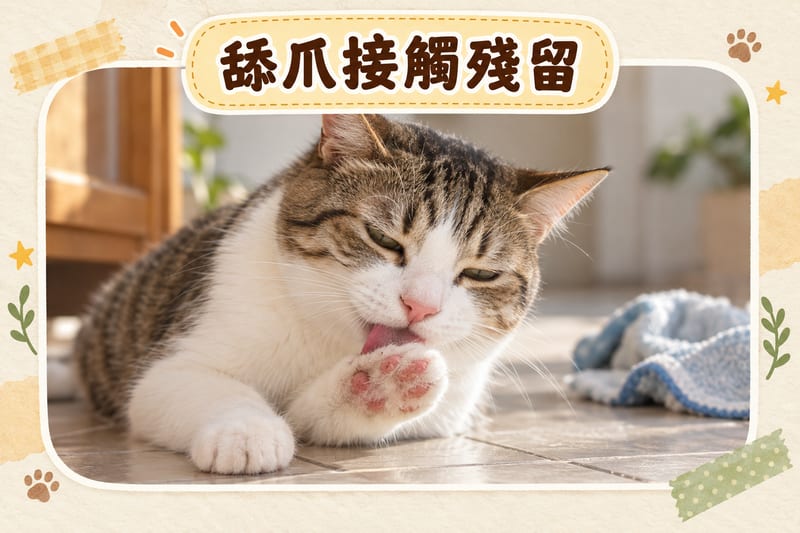
Severity is proportional to concentration. For example, with 4% to 6% edible white vinegar, even if a cat licks a small amount of diluted residue, it will mostly just drool briefly or lick its lips; but with 20% to 30% vinegar essence, even a single lick can cause chemical burns to the mouth and oesophagus, which is an emergency and you cannot wait to see if it resolves on its own. Also note the weight difference: an adult cat usually weighs only 3 to 5 kg, so for the same amount of acetic acid, the relative exposure for a cat is several times higher than for an adult human, so "the human was fine" does not mean the cat is fine. The eyes are the most easily overlooked area; acetic acid vapour or splashed liquid can cause conjunctivitis and corneal irritation. If your cat blinks frequently, rubs its eyes with its paws, or has increased eye discharge after cleaning, you can refer to Complete Guide to Cat Eye Care | Watery Eyes, Eye Discharge, Conjunctivitis Treatment and Cleaning Methods for a basic assessment, but if it persists for more than a day, see a veterinarian.
6-Step Safe Home Cleaning Process (Focus on the Second Water Wipe)
The following process is designed to "reduce exposure" and applies to floors, tabletops, skirting boards, and the area around the litter box. No special tools are needed throughout, but the order cannot be reversed, especially step 5.
Step 1: Isolate beforehand. At least 15 minutes before cleaning, move the cat, litter box, water bowls, and cat bed together to another room and close the door. If you skip this step, the subsequent dilution and ventilation are wasted. In multi-cat households, confirm the location of each cat; do not rely on "it usually doesn't come out".
Step 2: Choose the concentration and dilute. Use only 4% to 6% edible white vinegar, diluted at 1 part white vinegar to 4 parts water to give about 1% acetic acid; for 1000 ml of water, that means adding 200 ml of white vinegar. If you want to use cleaning vinegar with an acetic acid concentration above 10%, dilute it further to 1:9 or more; vinegar essence is not recommended.
Step 3: Spot test. First wipe a small inconspicuous corner, wait 10 to 15 minutes, and check for discolouration, cloudiness, or a roughened surface. Natural stone, unglazed tiles, wood floors, and some vinyl floors are not acid-resistant; if the test fails, switch directly to water or a neutral detergent.
Step 4: Wipe. Wring the cloth until it is semi-dry and not dripping, and wipe from the innermost part of the room towards the door to avoid stepping back and forth on wet areas. After wiping, wait 1 to 2 minutes to let the acetic acid break down grease and limescale.
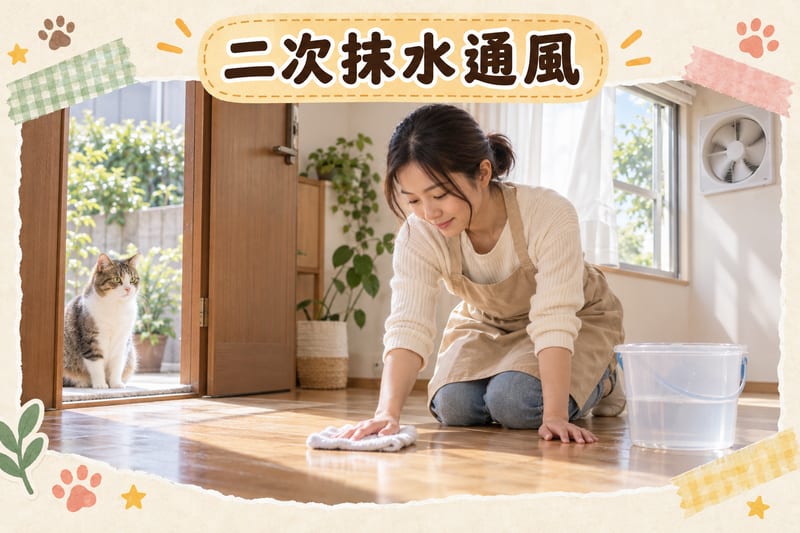
Step 5: Second water wipe. Use another clean cloth dipped in clean water and wipe the same area at least once; for the litter box area, kitchen countertops, and places where the cat often lies, wipe twice, rinsing and wringing the cloth after each pass. This is the most critical step in the whole process: acetic acid is water-soluble, and one wipe with clean water can remove most of the residue, directly turning "residue risk" into "close to zero".
Step 6: Ventilate and release. Open windows, an exhaust fan, or a fan to create airflow for at least 30 minutes; in Hong Kong's humid season floors dry slowly, so extend to 1 hour. The criterion is not "dry to the touch" but "no vinegar smell when sniffed up close". Only let the cat back out once this is met, and watch for sneezing, paw licking, or drooling during the first 24 hours.
Where White Vinegar Can Be Used and Where It Should Not
Within the same home, the risk varies greatly by material and location. The table below is organised by common Hong Kong home scenarios; isolation times are based on 1:4 diluted white vinegar.
| Scenario | Recommended Practice | Number of Second Water Wipes | Cat Isolation Time |
|---|---|---|---|
| Ceramic floor tiles, wall tiles | Can be used diluted; wipe with clean water immediately after | 1 time | 30 to 60 minutes |
| Vinyl flooring, wood-grain flooring | Spot stain removal only; do not wipe large areas | 2 times | 60 minutes or more |
| Wooden furniture, cabinet surfaces | Not recommended; use a slightly damp cloth with neutral detergent instead | — | Depends on drying time |
| Marble, natural stone countertops | Must not be used (acid erodes the surface) | — | — |
| Fabric sofas, carpets, curtains | Not recommended to spray vinegar; use steam or enzyme cleaners instead | — | Until completely dry |
| Inside the litter box | Not recommended to use vinegar; use water with neutral detergent instead | 2 times | Completely dry before adding litter |
| Cat toys, food bowls, water bowls | Not recommended to soak in vinegar; use hot water with neutral detergent | Rinse until odourless | Use once dry |
| Glass windows, mirrors | Can be used diluted; ensure adequate ventilation | 1 time | 30 minutes |
| Covered litter boxes, storage rooms, small bathrooms | Not recommended; odour accumulates in enclosed spaces | — | Ventilate until odourless |
The most common pitfalls are small-unit bathrooms and covered litter boxes: small space, poor ventilation, and acetic acid odour accumulates, so the concentration inhaled by a cat when using the litter box is significantly higher than in open spaces. Another often overlooked spot is the litter box itself—plastic and silicone surfaces absorb odour, and even after wiping, they may continue to release it for days, so the safest way to deodorise a litter box is daily scooping plus regular cleaning with water, not vinegar.
Cleaning Agents That Must Never Be Mixed and 3 Common Misconceptions
Mixing is the most dangerous step in home cleaning because problems happen faster than in any other step. Be sure to avoid these 4 combinations: first, white vinegar with bleach (sodium hypochlorite) releases chlorine gas, which can cause severe respiratory damage; second, white vinegar with ammonia or ammonia-containing glass cleaner produces irritating gas; third, white vinegar with hydrogen peroxide (oxygen bleach) produces peracetic acid, which is more irritating than acetic acid alone; fourth, white vinegar with baking soda is safe but the two neutralise each other, reducing cleaning power—an "ineffective but not dangerous" combination.
Misconception 1: thinking vinegar can treat skin problems. Acetic acid is not a medicine, and there is not enough evidence to support its use for fungus, ear mites, fleas, or wounds; wiping vinegar on affected areas may instead irritate the skin and make the cat itchier and want to lick more. These situations must follow veterinary instructions. Misconception 2: thinking the stronger the vinegar smell, the cleaner. The higher the concentration, the longer the residue time and the more pungent the odour, which is unfriendly to a cat's respiratory tract and skin; the improvement in cleaning power is far outweighed by the risk. Misconception 3: thinking dilution equals safety. Dilution only reduces the concentration of a single exposure; without isolating the cat, a second water wipe, and adequate ventilation, residue will still accumulate on floors and in crevices.
When to Seek Immediate Veterinary Care, and Safer Alternatives
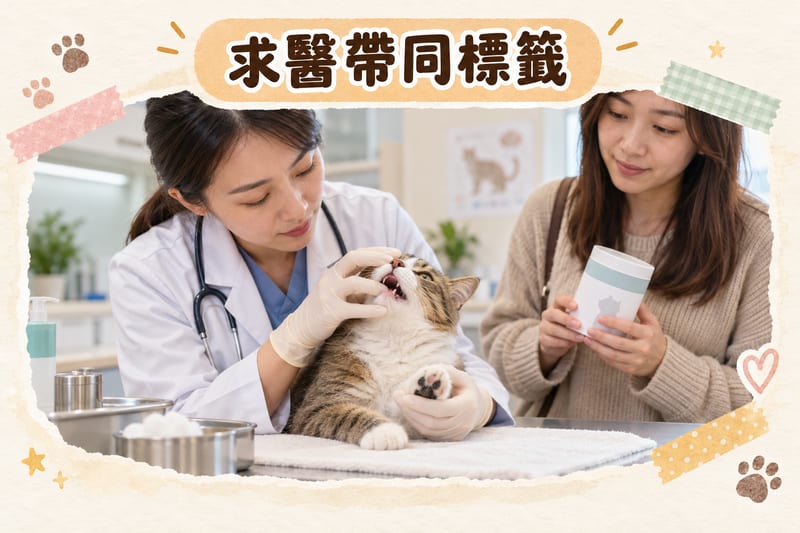
In the following 5 situations you should not continue to observe; take the cat to a veterinarian immediately, and bring the cleaning product label or ingredient list: first, persistent drooling, pawing at the mouth, or obvious refusal to eat; second, vomiting, especially wanting to lick the floor after vomiting; third, redness, white patches, or ulcers on the mouth or tongue; fourth, coughing, rapid breathing, or open-mouth breathing; fifth, tightly closed eyes, cloudiness over the cornea, or increased discharge. Before seeing the veterinarian, do not induce vomiting, do not try to "neutralise" by giving water or milk, and do not give any medication on your own.
Everyday alternatives are actually easier: plain water or a neutral detergent is sufficient for general dusting and daily cleaning; for grease, use hot water with a small amount of neutral detergent; for litter box urine odour, use an enzyme cleaner that targets proteins and uric acid, which works better than using acid to mask the smell. To reduce cleaning pressure in the litter box area at the source, choose a low-dust, well-clumping cat litter and set a regular cleaning schedule; this is far more practical than deodorising with vinegar afterwards. For a complete comparison of cat litter choices and cleaning frequency, see N1 Corn Tofu Cat Litter Review | Hong Kong User Test of Clumping, Dust, and Deodorising Performance. Here are two everyday options available at PetChill's online store:
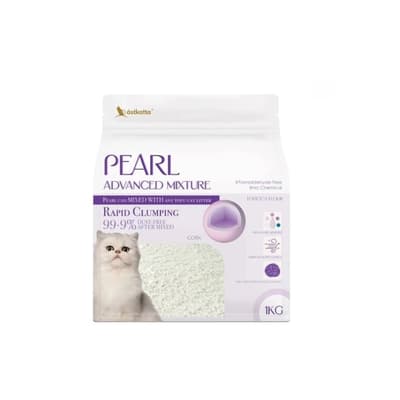
- Astkatta Cat Instant Absorb Dust-Free Mixed Pearl Cat Litter 1kg (P00179-1) — HK$28
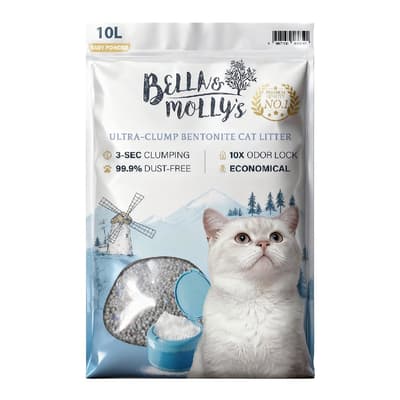
- Bella & Molly's Ultra Fast Clumping Premium Clay Cat Litter Baby Powder Scent 10L — HK$35
Prices and stock are subject to the online store's current listed price.
As for materials such as wood litter or paper litter that may be more suitable for cats sensitive to odours or with shorter nasal passages, you can also refer to Is Pine Cat Litter Good? Pros and Cons in Hong Kong's Humid Weather, Dust, and Switching Methods before deciding.
Further Reading
- Complete Guide to Daily Pet Care | Grooming, Nails, Ears, Home Cleaning (2026)
- N1 Corn Tofu Cat Litter Review | Hong Kong User Test of Clumping, Dust, and Deodorising Performance
- Complete Guide to Cat Eye Care | Watery Eyes, Eye Discharge, Conjunctivitis Treatment and Cleaning Methods
- Is Pine Cat Litter Good? Pros and Cons in Hong Kong's Humid Weather, Dust, and Switching Methods
In an emergency, contact a veterinarian immediately; this article is for reference only and cannot replace veterinary diagnosis.
Information checked as of 2026-10-12Source: PetChill Editorial Team
 K9 Natural full guide →
 Feline Natural full guide →
 Astkatta full guide →