Quick answers
- Iodine tincture and povidone-iodine are two different things: iodine tincture = iodine dissolved in alcohol (commonly about 2% in retail products); povidone-iodine = an aqueous povidone-iodine solution (commonly labelled about 10% w/v, i.e. about 1% available iodine). Both are external antiseptics, not cleaners.
- Only 3 genuinely suitable uses: care of very small superficial wounds under veterinary instruction, local skin disinfection before and after surgery, and washing or medicated bathing for specific skin conditions. Uses outside these 3 do not need iodine at all.
- Household cleaning needs 0 iodine: floors, litter boxes, beds, food bowls and toys are adequately cleaned with water or pet-friendly cleaners, and iodine should not be used to wipe the ear canal or around the eyes.
- Cats need to be more conservative: a 4 kg cat and a 30 kg dog, with the same drop of solution on the same area, differ by about 7.5 times in exposure per unit body weight; plus cats lick their fur and ingest it, so it can only be used in small areas for short periods.
- Dilution ratios are for reference only: povidone-iodine stock solution is generally labelled about 10% (i.e. about 1% available iodine), and before use on skin it usually needs dilution, but the dilution factor, how many times a day, and how many days to use it all follow veterinary instructions and the product label — do not guess.
- Six places where it must never be applied: the eyeball and around the eyes, deep in the ear canal, mucous membranes such as the mouth and nostrils, purulent or necrotic tissue, deep puncture wounds, and large areas of skin; iodine tincture especially should not be applied to open wounds.
- Red lines for same-day veterinary care: if the wound is still exuding after 3 days, has pus or odour, the area expands by more than 1 cm within 24 hours, or the animal refuses food or has a temperature above 39.4°C, see a veterinarian immediately.
The situations where iodine tincture and povidone-iodine are suitable in pet cleaning are actually very narrow: apart from local disinfection under veterinary instruction, general household cleaning can avoid them entirely. Iodine tincture is iodine dissolved in alcohol; povidone-iodine is an aqueous solution of povidone-iodine. Both work by "killing microorganisms on the skin surface", not by "washing away dirt". There are only three situations where they are genuinely useful on pets — care of very small superficial wounds under veterinary instruction, local skin disinfection before and after surgery, and washing or medicated bathing for specific skin conditions. Apart from these, wiping the ear canal, wiping around the eyes, wiping floors, washing litter boxes and washing beds never need iodine; water or pet-friendly cleaners are enough.
Hong Kong's living environment makes this particularly easy to get wrong: small units, limited ventilation, animals living close to the floor, and the habit of licking fur and paw pads. The same concentration that is fine for a person may already be excessive exposure for a 4 kg cat. Iodine also has two practical problems: first, it stains light-coloured fur and fabrics yellow; second, iodine itself is a raw material for thyroid hormones, cats are more sensitive to iodine intake, and external products being licked and swallowed is a very real risk. The following sections explain the differences in ingredients and concentrations, the three genuinely suitable situations, six situations where you should not use it on your own, differences between cats and dogs, household cleaning without iodine, and the red lines for when you must see a veterinarian. To first grasp the overall framework of daily care, you can start with the Complete Guide to Daily Pet Care.
What are iodine tincture and povidone-iodine? Comparison of ingredients, concentrations and irritation
Iodine tincture (commonly called iodine alcohol) is iodine plus potassium iodide dissolved in an alcohol solution. Human iodine tincture commonly available in retail is labelled about 2% concentration; the alcohol makes it evaporate quickly and leaves the disinfected surface dry, but it brings two problems: applying it to wounded skin stings noticeably, and alcohol itself irritates inflamed tissue, slowing recovery. So veterinarians generally do not recommend owners use iodine tincture on pets' open wounds themselves.
Povidone-iodine is an aqueous solution formed by combining iodine with polyvinylpyrrolidone. This carrier slowly releases free iodine, so it is much less irritating than iodine tincture and does not have the stinging of alcohol; it is the type veterinarians more commonly use. Note that concentration labels come in two forms: one says "povidone-iodine 10% w/v", another says "available iodine 1%"; these two numbers are two ways of expressing the same product and must not be taken as "10% must be ten times stronger than 1%". Also, iodine preparations on the market come in different forms — solutions, ointments, pre-surgical scrubs containing surfactants — with different ingredients and uses; the disinfectant scrub used in veterinary clinics is not the same as household povidone-iodine and should not be copied.
| Item | Iodine tincture (iodine alcohol) | Povidone-iodine (aqueous solution) |
|---|---|---|
| Main ingredients | Iodine, potassium iodide, alcohol | Povidone-iodine, water |
| Common retail label | About 2% iodine | About 10% w/v (about 1% available iodine) |
| Irritation | Higher; stings on open wounds | Lower; more commonly used by veterinarians |
| Staining | Dark brown; easily stains fur and fabric | Pale yellow-brown; still stains light-coloured fur |
| Dilution before use | Generally not used undiluted on pet skin | Usually needs dilution as instructed |
| Main limitation | Alcohol irritates inflamed tissue; not recommended for open wounds on your own | Large-area, long-term use carries risk of skin absorption and ingestion by licking |
| Common situations | Disinfection of intact skin surface; not for daily cleaning | Local disinfection, washing or medicated bathing under veterinary instruction |
The concentrations in this table are only common retail labels; different brands, origins and forms can vary, so check the label on the product you have and your veterinarian's instructions. Also remember one principle: disinfection is not cleaning. If the wound surface has debris, scabs or pus, the antiseptic cannot reach the skin and its effect is greatly reduced, so the correct order is always "first clean away debris as instructed by the veterinarian, then disinfect", not pouring iodine directly on.
Three situations where iodine preparations are genuinely useful in pet cleaning
All three situations share the same premise: the veterinarian has diagnosed first; iodine is only a tool after diagnosis. Using iodine on your own without a diagnosis skips the most important step.
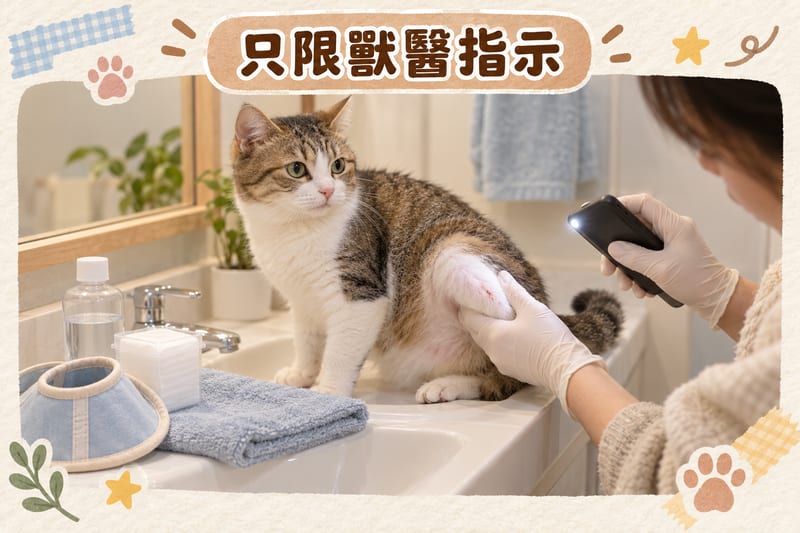
- Care of very small superficial wounds under veterinary instruction: suitable conditions are usually superficial abrasions that are clean, have no exudate, no odour, and are smaller than a HK$1 coin. The veterinarian will specify which form to use, how much to dilute, how many times a day to wipe, and when to stop. What the owner can do is ensure the animal cannot lick it (put on a soft Elizabethan collar) and take photos daily to record changes, not increase the frequency or concentration on their own.
- Local skin disinfection before and after surgery: pre-surgical shaving and disinfection are done by the veterinary team; wound care after returning home follows discharge instructions. With sutures, drains or bandages, when they can be removed, when washing is allowed, and whether an antiseptic is needed are all decided by the veterinarian; adding iodine preparations on your own midway is a common source of adverse effects.
- Washing or medicated bathing for specific skin conditions: for example, certain fungal or bacterial skin problems, the veterinarian may prescribe a specific concentration of iodine preparation for local washing or even whole-body medicated bathing. The concentration and soaking time are calculated according to body weight and skin condition; the wrong dilution irritates the skin, and too strong a concentration burns. This type of treatment cannot be self-prescribed, nor can you "follow the ratio on the package" yourself.
Beyond these three situations, there is a very common misconception: thinking that "the more frequently a wound is disinfected, the better". The opposite is true: overuse of disinfectants destroys the skin's normal flora and new tissue, making the wound harder to heal. So even if the veterinarian does tell you to use povidone-iodine, follow the frequency and duration of treatment exactly; do not "wipe a few more times to be safe".
Six situations where you should not use iodine on your own
Iodine preparations are external antiseptics, not helps manage-alls. In the following six situations, owners should not use them on their own, because not only do they not help, they also mask the real condition.
| Situation | Why not | Correct approach |
|---|---|---|
| Using iodine tincture directly on an open wound | Alcohol stings and irritates inflamed tissue, slowing recovery | Follow veterinary instructions; do not choose an antiseptic yourself |
| Deep or puncture wounds (e.g. cat bites) | Two small holes on the surface, bacteria are already sealed under the skin; wiping the surface is useless | See a veterinarian within 24 hours to assess whether drainage or antibiotics are needed |
| Eyeball, around the eyes, deep ear canal, mouth and nostrils | Mucous membranes absorb quickly and are highly irritated; deep ear canal washing may damage the eardrum | Use veterinarian-specified eye/ear cleaning products; for ear problems see the ear cleaning guide |
| Wounds that are purulent, necrotic or smelly | Pus and necrotic tissue prevent the antiseptic from reaching the skin, and also indicate the infection has spread | See a veterinarian the same day; do not squeeze or cut away tissue yourself |
| Large areas of skin or long-term use | The total amount absorbed through the skin and ingested by licking rises greatly; cats are especially sensitive | Let the veterinarian decide the area, concentration and duration of treatment |
| Oral use, adding to drinking water, or mixing into ointments yourself | Doses are guessed and easily excessive; ingredients in human ointments may not be suitable for animals to lick | Only oral iodine or ointments prescribed by a veterinarian may be used |
If the animal licks or swallows an iodine preparation, immediately wipe off residue on the skin with water, keep the packaging (the ingredients and concentration need to be shown to the veterinarian), then call the veterinarian. Do not induce vomiting yourself, and do not wait to "see if anything happens" — cats grooming is a daily behaviour, and exposure can be higher than owners imagine.
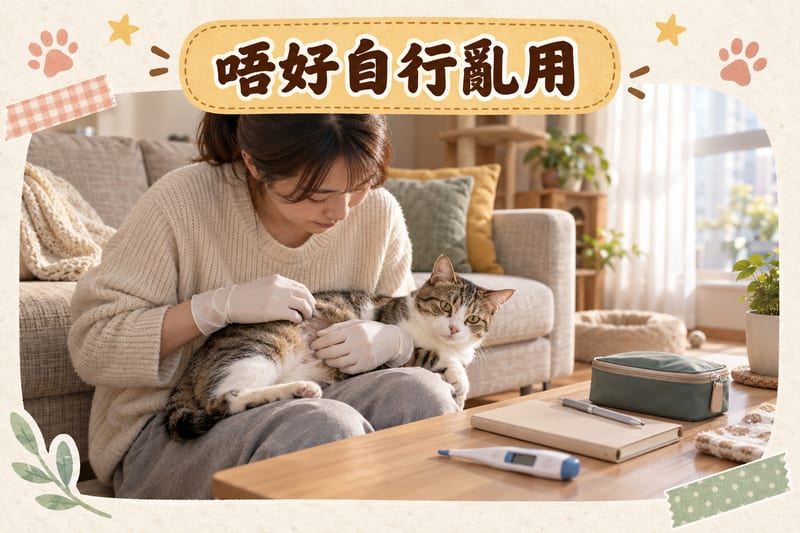
Differences between cats and dogs: why cats need to be more conservative
The same practice that is acceptable for a dog needs to be narrowed for a cat, for five reasons:
- Grooming frequency: cats spend a lot of time each day grooming, especially areas that have been applied with something; ingestion of external products is the norm rather than the exception. Dogs mainly lick their paw pads and affected areas, so exposure is relatively concentrated.
- Skin structure: cat skin and stratum corneum are thinner than dogs', so irritants and iodine penetrate more easily.
- Weight difference: a 4 kg cat and a 30 kg dog, with the same drop of solution on the same area, differ by about 7.5 times in exposure per unit body weight.
- Thyroid: iodine is a raw material for synthesising thyroid hormones. Veterinary information warns that excessive iodine exposure (including through skin and mouth) is associated with thyroid dysfunction, so cats especially should avoid large-area, long-term and frequent use, and avoid areas they can lick.
- Metabolism and medical history: kittens and puppies have immature skin barriers and weaker detoxification and metabolic capacity; animals with thyroid problems, kidney disease or known iodine sensitivity must be assessed by a veterinarian before use.
In practice: if the veterinarian does prescribe an iodine preparation for a cat, ensure the cat cannot lick it after application, usually by wearing an Elizabethan collar until the skin surface is completely dry and the veterinarian says it can be removed. Do not use a hairdryer on hot air to "dry it faster", and do not immediately let the cat go to groom — these are the two most common owner mistakes.
Household cleaning without iodine: things you can do today
Most scenarios where people "want to use iodine" can actually be handled with physical cleaning. The following practices involve no medication and any household can start immediately:
- Wipe away debris first: use a slightly damp pet-specific wet wipe or clean soft cloth, wiping from the outside of the soiled area towards the centre, to avoid spreading debris to surrounding skin.
- Then rinse once with water: residues of cleaners or wet wipes are an extra burden for animals that groom; after wiping, gently wipe once more with a clean water cloth.
- Dry and keep ventilated: Hong Kong is humid, and skin that stays wet for long periods is prone to problems; dry especially between the toes, neck folds and groin.
- Wash fabrics regularly: beds, blankets and car mats should be washed once a week and dried completely to reduce bacteria and dust mites; for mattress types and washing methods see the pet bed buying guide.
- No iodine in the ear canal: daily cleaning should only wipe the visible part of the outer ear flap; do not poke deep. If there is a lot of earwax, odour, or the animal shakes its head frequently, see a veterinarian.
- No iodine in the mouth: iodine must not be put in the mouth. Oral care relies on brushing and veterinarian-approved oral products; for prices and anaesthetic risks see Cat Teeth Cleaning Costs and Risks.
- Wash tools immediately after use: nail clippers, combs and haemostats should be washed with water, dried and air-dried after use; there is no need to soak them in iodine.
- Three-fold wound record: take photos at the same time and under the same lighting every day, note the area, exudate, and the animal's spirit and appetite, and show them directly to the veterinarian at follow-up.
Examples of related products currently sold by PetChill:
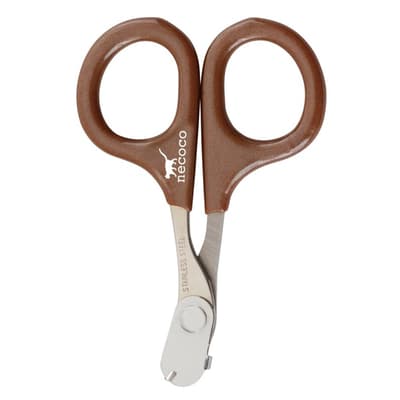
- Petio necoco Cat Nail Clipper with Safety Guard (91601544) — HK$132
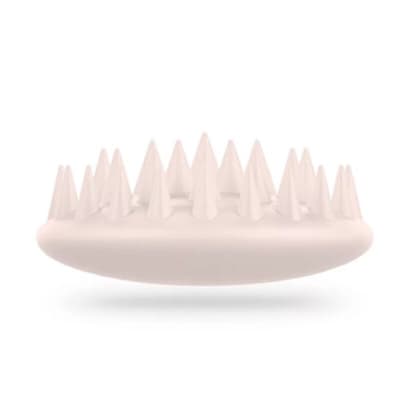
- PETKIT EverClean De-shedding Massage Comb (random colour) (pkx1b) — HK$35 (available for pre-order)
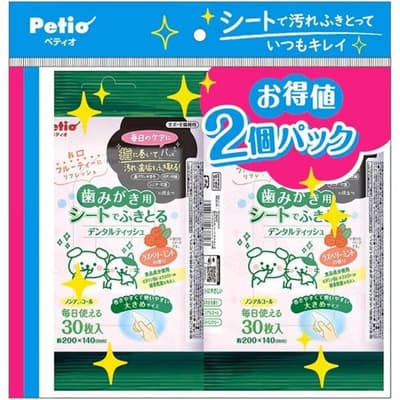
- Petio Cat and Dog Pet Wet Wipes Teeth Cleaning Raspberry Mint 30 sheets x 2 packs (W27940) — HK$46
Prices and stock are subject to the live price on the online store. Regular nail trimming reduces the chance of scratches, grooming helps detect skin abnormalities early, and wet wipes are the physical cleaning tool for step 1 above; none of the three involves medicinal ingredients, and usage should follow the package label.
When you must see a veterinarian: red line list
If any of the following occurs, do not continue observing or self-medicating; book a veterinarian directly:
- Bleeding does not stop after pressing for 5 to 10 minutes, or blood is spurting or soaking through multiple layers of gauze.
- The wound area expands by more than 1 cm within 24 hours, or redness and swelling spread outward from the wound edge.
- Still exuding after day 3, with yellow-green pus, foul odour, or obviously hot to the touch.
- The animal's temperature exceeds 39.4°C (normal cat rectal temperature is about 38.0 to 39.2°C), refuses food for more than 24 hours, is lethargic or hides in a corner.
- Foreign objects, subcutaneous tissue, or black or grey tissue visible in the wound, or the animal keeps crying in pain or refuses to walk.
- Suspected licking or swallowing of an iodine preparation: drooling, vomiting, red and swollen mouth, or deteriorating spirit — contact a veterinarian immediately and bring the product packaging.
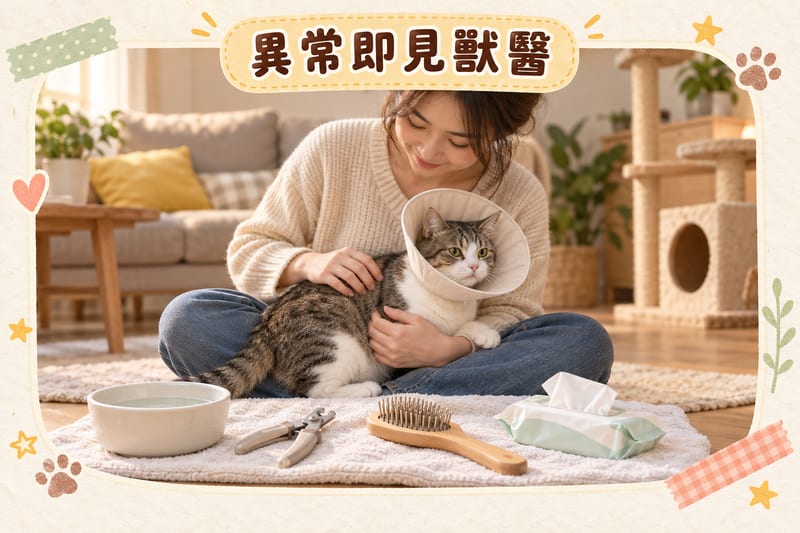
Note one point: animals are naturally good at hiding pain, and by the time the owner sees "not eating", the infection may have been ongoing for several days. Rather than agonising over which antiseptic to buy, do the two most valuable things first — put on an Elizabethan collar to prevent licking and biting, and record changes daily.
Further reading
- Complete Guide to Daily Pet Care | Grooming, Bathing, Nail Trimming, Ear and Eye Cleaning Schedule (2026)
- Complete Guide to Dog Ear Cleaning | Hong Kong Small Flats: Ear Hair, Earwax and Ear Mites in One Go
- Cat Teeth Cleaning Explained | Hong Kong Price Table + Anaesthetic Risks + Tooth Resorption: The Safest Way to Handle Bad Breath and Tartar
- How to Choose a Pet Bed? Hong Kong Cat and Dog Mattress Types, Sizes and Cleaning Guide
For emergencies, contact a veterinarian immediately; this article is for reference only and cannot replace veterinary diagnosis.
Information checked as of 2026-10-12Source: PetChill editorial team
 Petio full guide →
 Fuji One full guide →