Cats and dogs do not necessarily need frequent baths: healthy cats keep themselves clean enough through self-grooming, while dogs need their bath frequency decided by coat type, activity level and skin condition. What really affects whether the skin stays healthy is water temperature, product choice and whether drying is done thoroughly enough.
Quick answers
- Healthy cats generally do not need baths. International Cat Care, an international feline care organisation, states clearly that if a cat is healthy there is no reason to bathe it, and most cats do not tolerate it well; forcing a bath only increases stress and conflict between cat and owner.
- There is no universal answer for how often to bathe a dog. It should be decided by coat type, activity level, skin condition and veterinary advice—you cannot apply 'once a month' to every dog.
- Water temperature should feel warm to the touch, not hot. Test the temperature with your own wrist before running the water, and do not keep adding hot water while rinsing.
- Cats and dogs should use pet-specific products formulated for their own species. Do not substitute human shampoo or bathroom soap, and rinse until there is absolutely no lather left.
- Drying is more important than bathing. Putting a pet into an air-conditioned room or onto the bed before the coat is fully dry is a common starting point for summer skin problems in Hong Kong.
- Shaving is not the same as cooling. Cats and dogs mainly cool down by panting and through their paw pads; shaving down to the skin actually increases the risk of sunburn and skin infection.
Key points
- For cats, daily care is mainly brushing, with bathing as a supplement; long-haired cats should be brushed daily, short-haired cats at least once a week.
- The number of baths a dog needs should be adjusted to coat type and lifestyle: indoor short-haired dogs can go several weeks between baths, while long-haired dogs, those that spend a lot of time outdoors, or those with skin problems may need more frequent baths as advised by a veterinarian.
- Brush the coat thoroughly before bathing; after bathing, absorb excess water before drying, start on a low heat setting, and keep the nozzle moving throughout.
- Choose products on the principle of 'mild, easy to rinse out, clearly labelled'—there is no need to chase strong fragrance or lots of lather.
- In Hong Kong's humid weather, pay special attention to keeping the ear canals, between the toes and skin folds dry, and check each area after bathing.
- If you see redness, swelling, hair loss, odour, persistent scratching or wounds, stop all care products and have a veterinarian deal with it.
What water temperature should be used when bathing?
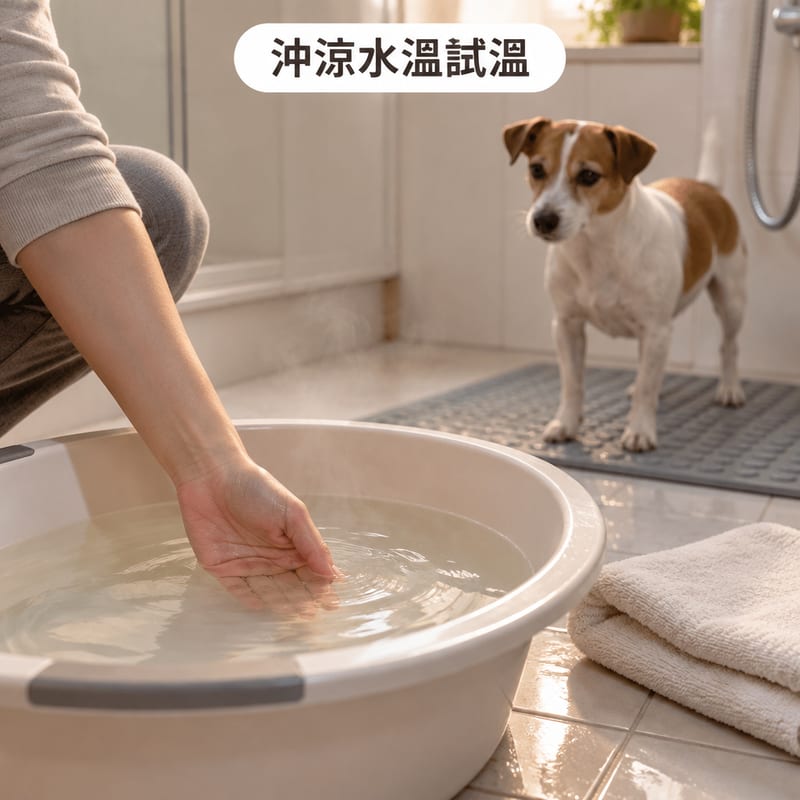
The answer is simple: warm to the touch, not hot is correct—you do not need to aim for an exact number. The method is to run the water first, test it with the inside of your wrist, and if it feels comfortable to you, it is right; if even you find it hot, it is already too hot for your pet's skin.
Water that is too hot strips the oils from the skin surface, making the skin drier and itchier, and long-haired breeds also risk burns; water that is too cold makes pets shiver, resist and catch a chill, and puppies, kittens, senior dogs and senior cats need particular care. Many Hong Kong homes have bathrooms without heating, so in winter close the windows and prepare a large towel and warm air before bathing to reduce resistance caused by your pet getting cold.
There are a few more things to watch during the bath:
- Do not rinse the face directly with water; wipe the head with a damp towel to avoid water getting into the ears and eyes or up the nose.
- Brush before washing; knots are harder to loosen once wet and can trap dirt.
- Rinse for long enough until the coat no longer feels slippery to the touch and the water runs clear—leftover shampoo is a common cause of itchy skin.
- Do not just let your pet shake dry; press with a towel to absorb water, then dry.
| Step | Correct approach | Common mistake |
|---|---|---|
| Before bathing | Brush the coat through, trim long hair around the nails, prepare towels and drying equipment | Rinsing before brushing, which makes knots tighter |
| Rinsing | Test temperature with your wrist, start from the back and hind legs, avoid the face, ears and eyes | Running the water at its hottest by feel and rinsing the head directly |
| Applying product | Dilute with water first, lather in your hands before applying, leave on for the time stated on the label | Pouring concentrated shampoo straight onto the skin and leaving it on too long |
| Rinsing off | Rinse repeatedly until there is no lather and the coat is not slippery | Not rinsing enough, leaving residue in the undercoat |
| Drying | Press with a towel to absorb water, start on a low heat setting, keep the nozzle moving | Holding high heat in one spot, blowing into the ear canal, or letting your pet run around half-dry |
How do cat shampoo and dog shampoo differ? Can you share one bottle?
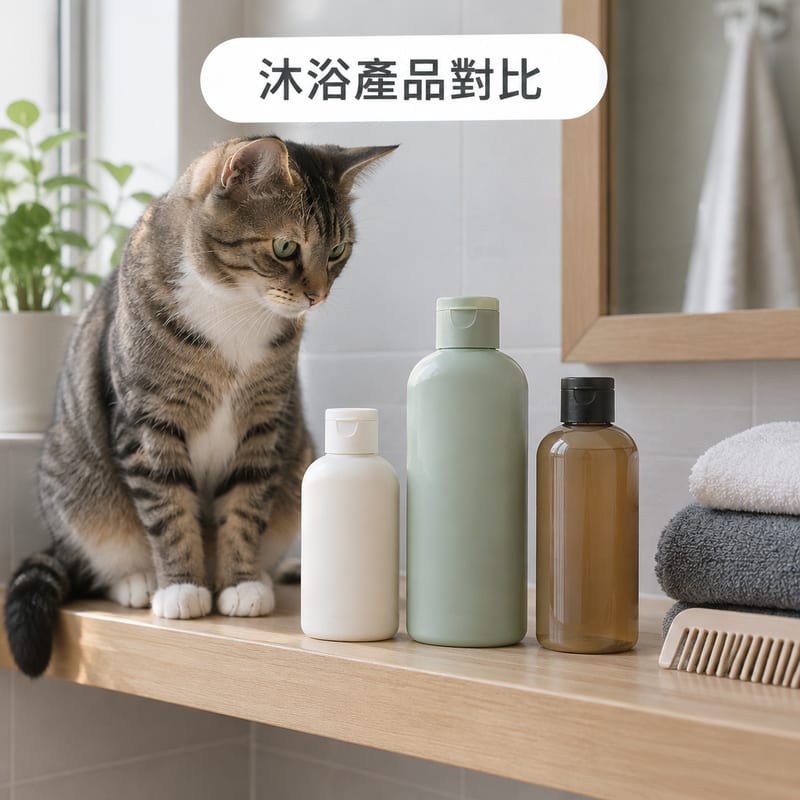
The biggest difference is that the formulas target different skin and coat types. Dog formulas generally clean more strongly and target oil production, body odour and outdoor dirt; cat formulas are usually milder and focus on moisturising, because cats constantly groom and any residue on the skin will eventually be swallowed, so 'easy to rinse out, few additives' is especially important for cats.
As for whether they can be shared, check the label: some products clearly state 'for cats and dogs', and these are designed to balance the needs of both animals, so they can be used—but you still need to rinse until there is absolutely no lather. Conversely, products labelled 'dog formula' are not recommended for cats, especially those containing essential oils, high-concentration tea tree oil formulas, or products marketed as 'strong deodorising'.
There are three more things to note:
- Do not substitute human shampoo, body wash or bathroom soap. The cleaning power, fragrance and pH of human products are not designed for pet skin, and frequent use will weaken the skin barrier.
- Do not judge cleaning power by how strong the fragrance is. A strong scent does not mean clean—it may simply mean more additives.
- Do not randomly switch products when there is a skin problem. A veterinarian needs to determine the cause (parasites, fungi, bacteria, allergies or endocrine issues), and switching products while observing will only drag things out.
PetChill stocks several bathing products commonly seen in Hong Kong; prices are the live prices on the day of checking (2026-10-14), and you should check the product page again before ordering:
| Product | Suitable for and positioning | Live price | Product page |
|---|---|---|---|
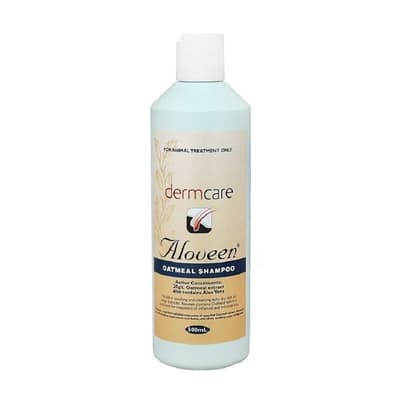
| Dermcare Aloveen Oatmeal Shampoo 500ml | For cats and dogs, oatmeal formula, suitable for dry skin or gentle cleansing | HK$238 | https://product.petchillhk.com/p/39183 |
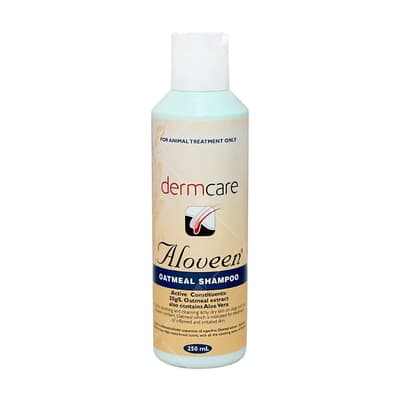
| Dermcare Aloveen Oatmeal Shampoo 250ml | Same as above, smaller size, suitable for trying out or for small short-haired pets | HK$138 | https://product.petchillhk.com/p/39182 |
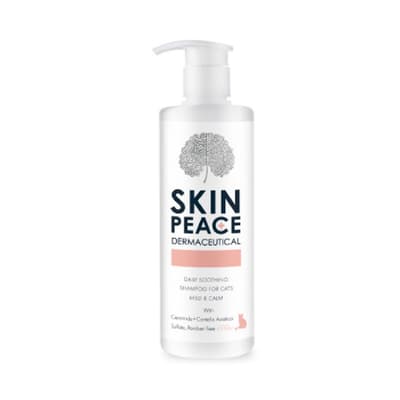
| Skin Peace Cat Formula Shampoo N°20 Cat Soothing 310ml | Cat formula, for daily soothing and gentle cleansing | HK$118 | https://product.petchillhk.com/p/38757 |
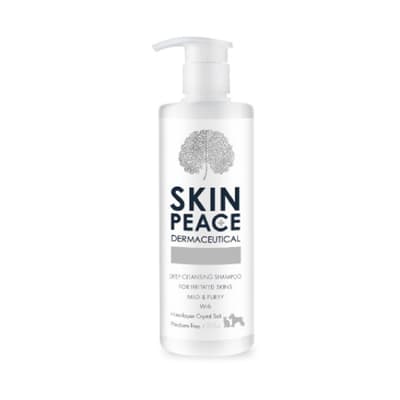
| Skin Peace Cat & Dog Formula Shampoo N°01 Deep Cleansing 310ml | For cats and dogs, stronger cleaning power, suitable after outdoor activity | HK$118 | https://product.petchillhk.com/p/38753 |
| Germagic Cat & Dog 28-Day Antibacterial Shampoo (Baby Powder Scent) 500ml | For cats and dogs, focused on antibacterial action and long-lasting freshness, suitable for humid seasons | HK$226 | https://product.petchillhk.com/p/45426 |
| DR.pet Oatmeal & Tea Tree Oil Cleansing Shampoo 250ml (for cats and dogs) | For cats and dogs, oatmeal plus tea tree oil, suitable for pets prone to body odour | HK$133 | https://product.petchillhk.com/p/45674 |
| Animology Dog Shampoo Oatmeal Scent 250ml | Dog formula, oatmeal scent, entry-level price | HK$60 | https://product.petchillhk.com/p/38917 |
If you still have not decided which one to use, you can first read Common myths about bathing cats and The complete guide to bathing cats, which have more detailed scenario analysis.
How often should cats and dogs be bathed? Should they be washed more often in Hong Kong's humid weather?
Cats: Healthy cats do not need regular baths. International Cat Care's advice is that if a cat is healthy there is no reason to bathe it, because most cats do not tolerate it well; daily care should focus on brushing—long-haired cats daily, short-haired cats at least once a week. If a bath is really necessary, it is usually for special circumstances, such as getting covered in dirt or grease, a medicated bath prescribed by a veterinarian, or part of a treatment plan for a skin condition.
Dogs: There is no one-size-fits-all formula. Factors to consider include coat type (long coats, double coats and curly coats are more demanding), activity level (hiking often, going to the dog park, walking in the rain means more frequent baths), skin condition (for dogs with atopic dermatitis or frequent itching, the frequency should be decided by a veterinarian), and your home environment (carpets, other pets). Generally speaking, indoor short-haired dogs can be bathed every few weeks, while long-haired dogs, those that spend a lot of time outdoors, or those with veterinary requirements should be bathed more often as instructed.
Hong Kong summers are humid and muggy, and many people want to bathe their dog as soon as they notice a smell, but be aware that over-cleaning can actually make skin problems worse: washing too often, shampoo residue and an undried coat—these three factors together are a common combination that damages the skin barrier. To really deal with body odour, first check the mouth, ear canals, anal glands and skin folds, rather than simply increasing the number of baths.
If it is just routine cleaning and you do not want a full bath, you can use pet-specific dry shampoo powder or wipes for local cleaning, for example:
- Natural Pet Cat 6-in-1 Dry Shampoo Powder 250g, live price HK$165: https://product.petchillhk.com/p/41062
- After local cleaning, brush out the powder to avoid it staying on the skin long-term.
How should I choose the right comb type for a long-haired cat (e.g. slicker brush, comb or de-shedding tool)?
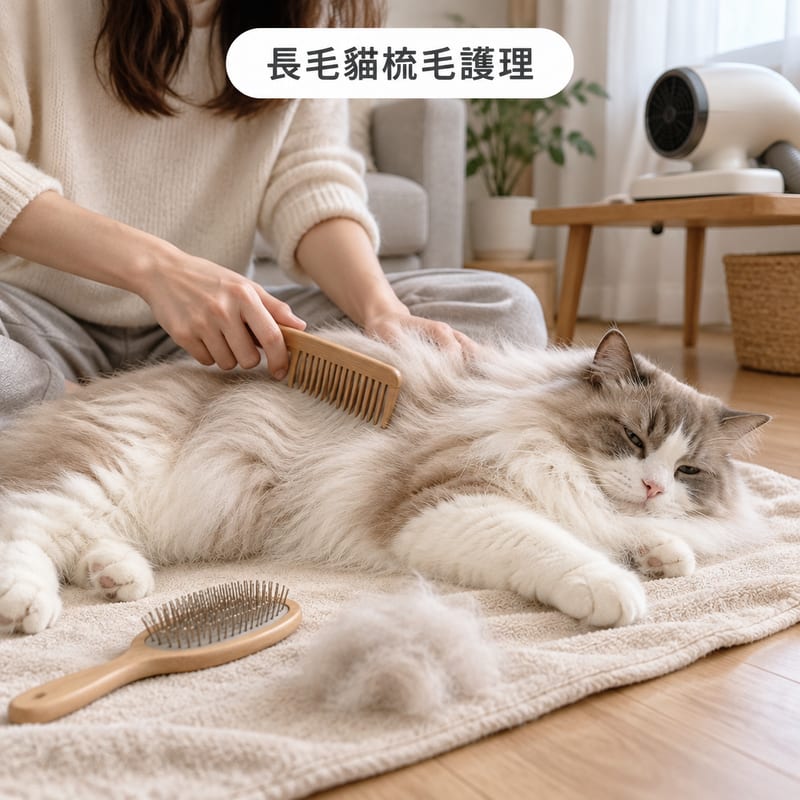
The core principle for brushing a long-haired cat is detangle first, then remove dead hair, then smooth the coat, so it is not about choosing one 'all-purpose comb' but about putting together a set of tools used in order:
| Tool | Main use | When to use and cautions |
|---|---|---|
| Wide-toothed comb | Loosen knots, check for tangles in the undercoat | Daily use; start from the tips and work upwards section by section, do not pull straight through |
| Slicker brush (rounded pins) | Tidy the top layer, fluff the coat, remove loose hair | Stop using if the skin is red, swollen or wounded to avoid scratching |
| De-shedding / grooming comb | Remove loose undercoat during shedding season | At most once or twice a week; using it too much will scrape away too much undercoat |
| Rubber massage glove | Final smoothing, massage the skin, remove surface loose hair | Well tolerated by cats, suitable for finishing and building a positive association |
International Cat Care reminds owners that the areas most prone to matting in long-haired cats are the armpits, inner thighs and between the toes, so check each area when brushing; for a tight knot, use your fingers to slowly work it apart from the base towards the tip—do not use scissors, because with severe matting you simply cannot see where the skin is and it is very easy to cut the cat. If the coat has already matted into solid clumps stuck to the skin, do not force it apart yourself; have a veterinarian or professional groomer deal with it, and severe cases usually need to be shaved off under sedation.
Hong Kong owners who want to buy the full set of tools can consider these two:
- Cat & Dog King Medium/Large Long-Haired Pet Slicker Brush, live price HK$138: https://product.petchillhk.com/p/46219
- Cat & Dog King Small Long-Haired Pet Slicker Brush, live price HK$138: https://product.petchillhk.com/p/46218
What temperature range is suitable when using a pet dryer?
The key is not to memorise a number but to use 'warm air, not hot to the touch, constantly moving'. Every dryer has different airflow, distance and output temperature, so the safe approach is to start on the lowest heat setting, feel the temperature on your pet's skin with the back of your hand as you dry, and if it feels warm that is fine—if it feels hot, turn it down or move it further away immediately.
Practical suggestions:
- Keep the nozzle at a distance from the skin and keep it moving—never hold it in one spot, especially along the spine and on one side of the body.
- Do not blow into the ear canal, eyes or nose. For the ears, only deal with the outer ear flap and the back of the ear; do not put the nozzle into the ear.
- Dry in sections: first dry the belly, armpits, inner thighs and between the toes—the hardest areas to dry—then the back and tail.
- Let your pet rest midway. If they pant, shiver, try to escape, their skin turns red or they keep licking their paws, stop the dryer to cool down and switch to towel drying plus a room-temperature fan to finish slowly.
- Do not use the high heat setting to save time. Keeping the hottest air on to rush is the main reason for skin burns and for pets becoming afraid of the dryer from then on.
If your pet is extremely afraid of the dryer, you can first wrap them in a towel to absorb water and dry in several sessions, or consider a pet-specific low-noise drying box, but with any machine a person must stay and watch—never leave your pet alone inside the box.
What are the key points for skin, ear and nail care after bathing?
Bathing is only half of the care; the checks and maintenance afterwards are what determine whether the skin will have problems:
- Skin: Part the coat and check every area for redness, swelling, dandruff, crusting, hair loss or flea dirt. Hong Kong is humid, so skin folds (under the neck, armpits, groin) should be kept dry and ventilated.
- Ears: Only clean the outer ear flap and the entrance to the ear canal, using pet-specific ear cleaner and cotton balls—do not insert cotton buds deep into the ear canal. If you notice odour, dark brown discharge, or your cat or dog keeps shaking its head or scratching its ears, this is beyond what home cleaning can handle.
- Nails and between the toes: After bathing, dry between the toes especially well; when trimming nails, avoid the blood vessel (the pink part)—if unsure, have a groomer or veterinarian do it.
- Anal glands: Do not squeeze them yourself; most dogs express them naturally when defecating. If you see scooting, licking the rear end or odour, have a veterinarian check.
- Brushing: After drying, brush the coat through again to remove loose hair and check the skin, and to restore smoothness to the coat. During shedding season you can follow the shedding season grooming routine and the cat coat care guide.
The government's one-stop portal also reminds owners that basic responsibilities for caring for a pet include regularly cleaning the pet's body and grooming its coat, keeping the living environment clean, and having a registered veterinarian give vaccinations and treat illness or injury early (source: GovHK Tips for Taking Care of Your Pet). The World Small Animal Veterinary Association (WSAVA) global guidelines also list skin care and parasite control within the scope of veterinary team recommendations, and home care should not replace professional assessment (source: WSAVA Global Guidelines).
When to see a veterinarian immediately
In the following situations you should stop switching shampoos or observing on your own and see a veterinarian as soon as possible:
- Red, swollen, oozing or crusted skin, or a noticeable odour, especially if it worsens after medication or a product change.
- Persistent scratching, licking or biting to the point of hair loss or bleeding, which means the itching is already affecting quality of life and a veterinarian needs to determine the cause.
- Odour from the ear canal, dark brown discharge, constant head shaking or head tilting, which may be an ear infection or parasites.
- Lumps, wounds or swelling under the skin found while brushing or bathing—do not handle or puncture them yourself.
- Lethargy, loss of appetite, fever or rapid breathing—these are not grooming issues but medical ones.
- Difficulty breathing, excessive drooling or unsteady walking after bathing or drying—seek veterinary help immediately.
This article was reviewed by the PetChill Veterinary Editorial Team. The content is for reference only and cannot replace veterinary diagnosis, prescription or treatment.
Further reading
- Hong Kong pet daily care, behaviour observation and seasonal products overview
- The complete guide to bathing cats: when to bathe and when not to
- Debunking common myths about bathing cats
- Cat brushing guide: tool selection and correct technique
- The complete guide to bathing dogs
In an emergency, contact a veterinarian immediately; this article is for reference only and cannot replace veterinary diagnosis. Information checked as of 2026-10-14Source: PetChill Editorial Team
 K9 Natural full guide →
 Feline Natural full guide →