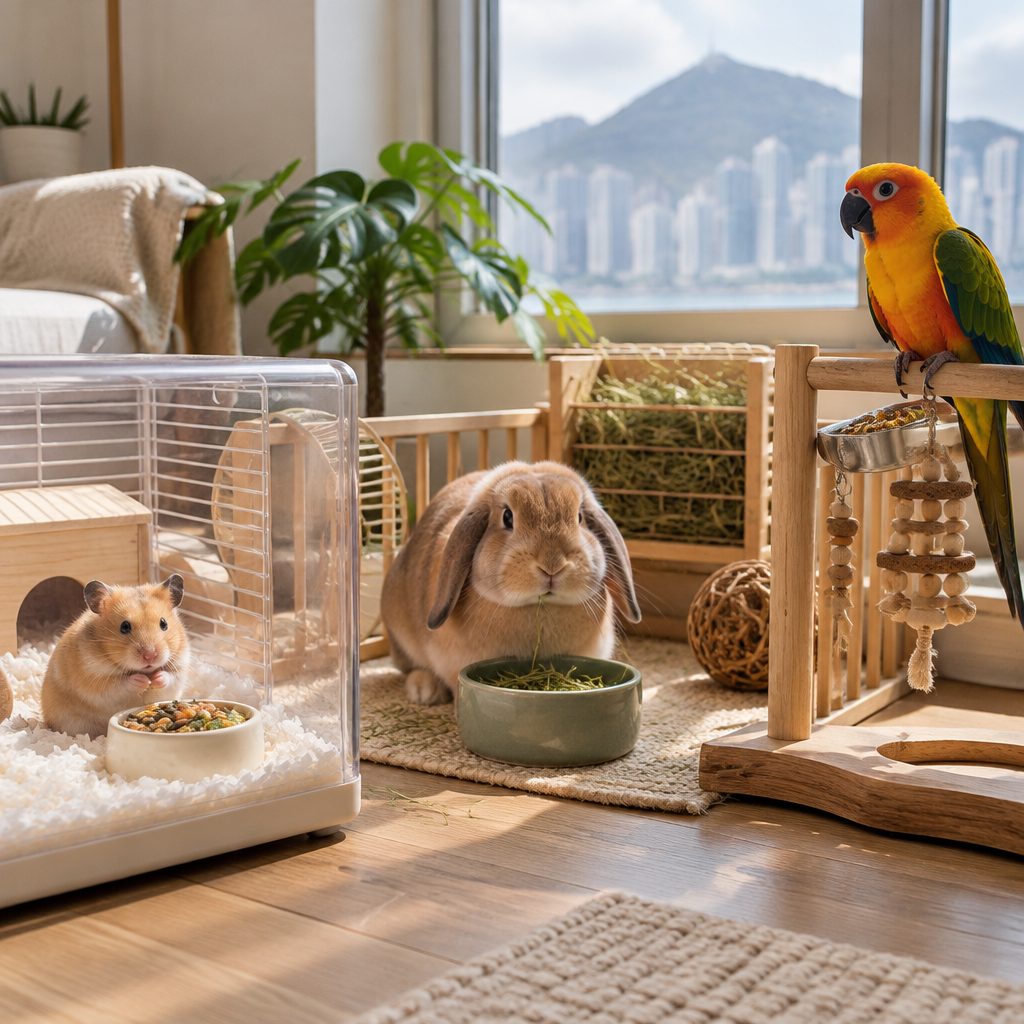
Hamsters, rabbits and parrots have completely different dietary priorities: hamsters and rabbits rely on plant-based staple foods, while parrots need formulated food, vegetables and a small amount of fruit. None of the three species may be fed chocolate, alcohol, avocado or onions and garlic, and fruit can only be an occasional treat.
For the full version on hay proportions, warning signs of gut stasis and summer heat protection, see the Rabbit Breed Guide.
Small pets in Hong Kong usually have limited space, and food and treats are often kept in the same kitchen or living room as human food, so the risk of accidental eating is higher than people imagine. On top of that, Hong Kong's humid weather makes food and bedding prone to damp, mould and insects, which brings digestive problems with it. Below we first set out the meal allocation principles for the three species, then break down how to feed fruit, nuts and seeds item by item, and finally cover food selection, reading droppings, cage setup and storage methods for humid weather.
Quick answers
- Know your staples: hamsters rely on mixed food (pellets plus a small amount of seeds), rabbits rely on unlimited hay, and parrots rely on parrot-formulated food plus vegetables. None of the three can rely on fruit as a staple.
- Apple, pear and blueberry can all be fed in small amounts, but must be washed, peeled, deseeded and cut into small pieces, 1 to 2 pieces at a time, and not every day.
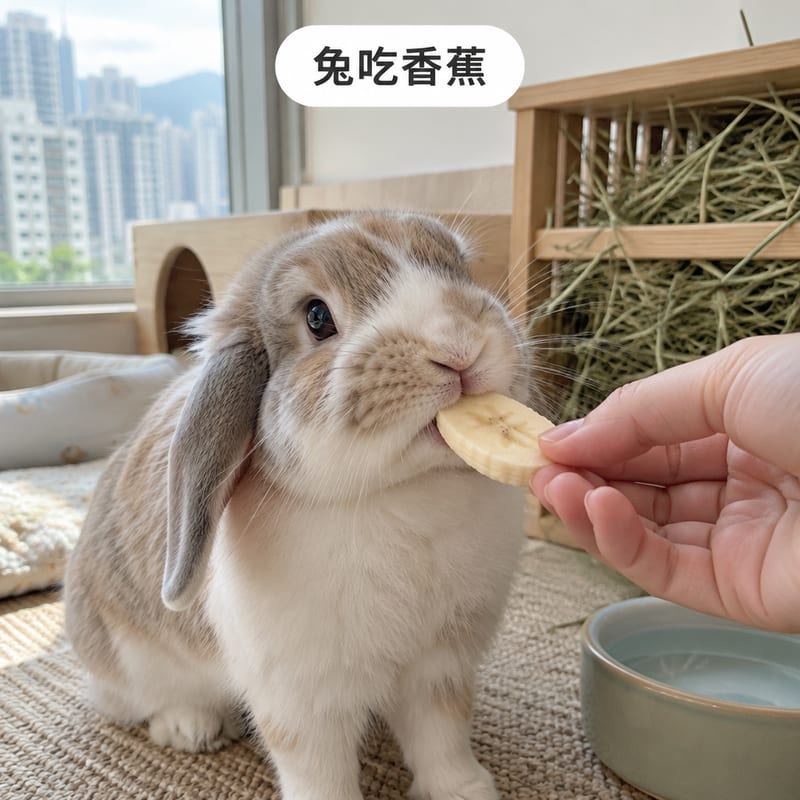
- Banana is a high-sugar food for all three species; hamsters and rabbits can only have it as a very small occasional treat, and parrots should not be fed it daily either.
- The risk with seeds and nuts is not "toxicity" but too much fat; mixed food already contains seeds, so adding extra easily exceeds requirements.
- A rabbit that eats too much banana can develop soft droppings and bloating, and in severe cases reduced gut motility — this is an emergency and requires immediate veterinary attention.
- In Hong Kong's humid weather, food should be sealed, with desiccant added, and not poured out in large amounts at once; bedding must be changed as soon as it is wet.
Key points
- For rabbits, hay is the core — not pellets or fruit. Hay provides fibre and helps wear down teeth, and makes up the vast majority of daily intake; fruit can only be a very small part.
- Hamsters need sugar and fat controlled. Dwarf hamsters are generally considered more prone to diabetes, so high-sugar fruit and large amounts of sunflower seeds and seeds should be restricted.
- Parrots need variety. Formulated food, vegetables and a small amount of fruit should all be present; feeding any single food in large amounts long-term is not ideal.
- Common no-go areas for all three species: chocolate, caffeine, alcohol, avocado, onions, garlic and chives, grapes and raisins, mouldy food, high-salt processed food and sweets containing sweeteners (xylitol).
- If unsure, ask your veterinarian. Small animals are light, so the same portion places a much greater burden on them than on cats and dogs; online portion advice cannot be copied directly.
- Watching droppings is the most practical daily indicator. Changes in colour, shape, number and smell often reflect problems earlier than appetite does.
How should daily meals be allocated for hamsters, rabbits and parrots?
The digestive tract structures of the three species differ greatly, so the definition of "eating well" is completely different. Rabbits are hindgut fermenters and need large amounts of fibre to maintain gut motility; hamsters are omnivorous food-storing animals and need mixed food plus a small amount of fresh food; parrots are birds with a high metabolic rate and need formulated food as a base plus a variety of ingredients.
| Species | Daily staple core | Daily essentials | Occasional only | Absolutely avoid |
|---|---|---|---|---|
| Hamster | Hamster-specific mixed food (mainly pellets, with a small amount of seeds) | A small amount of fresh vegetables, clean drinking water, appropriate chew items | Apple, pear, blueberry, banana, plain seeds | Chocolate, alcohol, avocado, onion and garlic, grapes and raisins, sugar-coated or salty snacks |
| Rabbit | Unlimited hay or grass | Dark green vegetables, clean drinking water, a small amount of rabbit food | Apple, pear, blueberry, banana (very small amounts) | Chocolate, alcohol, avocado, onion and garlic, grapes and raisins, bread and biscuits |
| Parrot | Parrot-formulated food | Dark vegetables, a small amount of fruit, clean drinking water | Banana, apple, blueberry, plain seeds and nuts | Chocolate, caffeine, alcohol, avocado, onion and garlic, salty snacks, sweets containing sweeteners |
Two concepts to note: First, risk is related to body weight. The sugar burden of the same grape is far more serious for a rabbit than for a large dog. Second, "natural" does not mean "safe". Avocado, onion and garlic are toxic to many animals, and chocolate and alcohol should not be tried no matter how small the amount.
For an overall classification of human foods for pets, see the Human Food Safety Three-Category Table; for item-by-item analysis of fruit and vegetables, see the Cat and Dog Fruit and Vegetable Feeding Safety Guide.
Below is a comparison of how safe the same food is for the three species:
| Food | Hamster | Rabbit | Parrot | Common points |
|---|---|---|---|---|
| Apple, pear | Yes, 1 to 2 small pieces | Yes, 1 small slice | Yes, 1 to 2 small slices | Peel, deseed and core, room temperature, wash well |
| Blueberry | Yes, 1 to 2 berries | Yes, 1 to 2 berries | Yes, 1 to 2 berries | Fresh, unsweetened, unprocessed |
| Banana | Very small amounts, occasional | Very small amounts, occasional | 1 to 2 small slices, not daily | High sugar, sticky texture, easily causes fussy eating |
| Plain seeds, nuts | 1 to 2 pieces, occasional | Not recommended as a treat | Small amounts, as a reward | High fat; mixed food already contains them |
| Hay, grass | Not applicable | Staple, must be unlimited | Not applicable | The rabbit's fibre source |
| Chocolate, alcohol, avocado, onion and garlic | Prohibited | Prohibited | Prohibited | Toxic risk; must not be tried |
| Grapes, raisins | Not recommended | Not recommended | Not recommended | Clear risk for cats and dogs; best not tried for small animals at all |
Can hamsters eat apple and pear? How should banana, blueberry and nuts and seeds be fed?
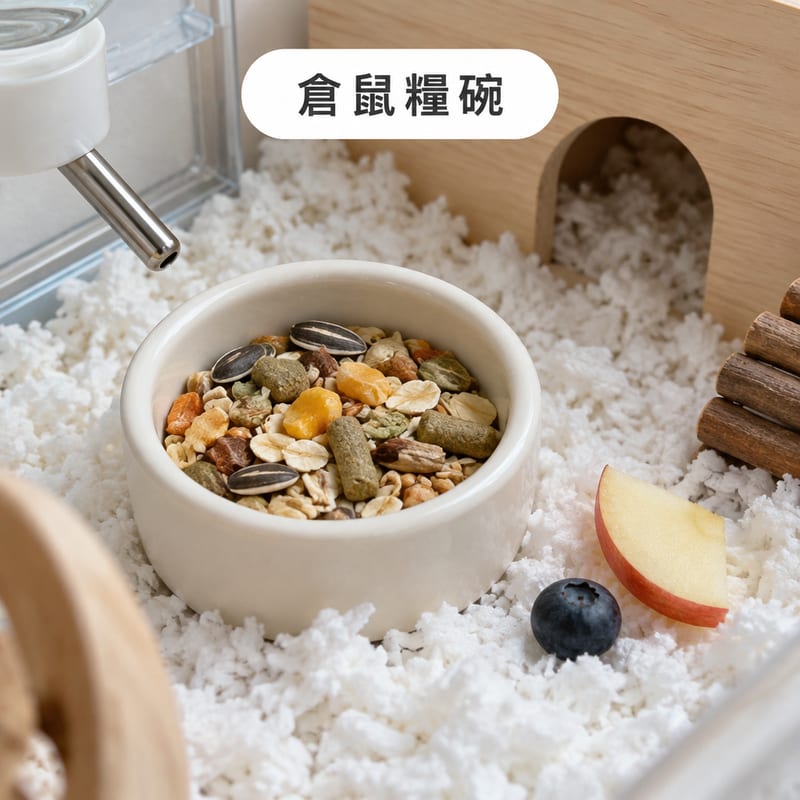
Apple and pear can be fed, but preparation matters more than portion. First wash the skin, peel (pesticide and wax residues are mainly on the skin), then remove seeds and core. Apple seeds and pear seeds must not be fed, and the core must be removed too, because the natural compounds in them are not safe for small animals. Cut into pieces the size of a mung bean to a soya bean, serve at room temperature, and let refrigerated pieces come back to room temperature first. 1 to 2 pieces at a time is enough, with 2 to 3 times a week as the upper limit.
Hamsters are food-storing animals and will stuff food into their cheek pouches to carry back to the nest, so food that is too sticky, too large or has sharp edges can easily block the cheek pouch and cause inflammation or even ulcers. Banana is exactly high-risk: high in sugar and soft and sticky, it is very hard to clean out once stuffed into the cheek pouch.
The nutritional benefits of blueberries lie mainly in vitamins, dietary fibre and antioxidant compounds such as anthocyanins; for hamsters it is a fruit that can be fed in small amounts. But blueberries still contain sugar, so 1 to 2 berries at a time is enough, and they cannot be used to "supplement nutrition". Dried blueberries, blueberry jam and sweetened blueberry drinks must not be fed at all.
Can hamsters eat banana? Yes, but only in very small amounts and occasionally. Hamsters come from dry environments and have a limited ability to metabolise sugar; dwarf hamsters are generally considered more prone to diabetes. The main problems with banana for hamsters are three highs: high sugar, high calories and high stickiness. It is suggested to feed at most 1 to 2 times a week, each time a small slice thinner than a grain of rice; if there is a history of diabetes or obesity, simply do not feed it.
Can hamsters eat nuts and seeds? Yes, but the risk is not "toxicity" but extremely high fat and calorie density. Sunflower seeds, peanuts, cashews, walnuts and pumpkin seeds are all foods hamsters would naturally eat; the problem is that commercial mixed food usually already contains an appropriate amount of seeds, and owners who think "natural treats are harmless" and feed extra will long-term cause obesity, greasy skin, oily fur and metabolic burden. Anything already seasoned must not be fed, including salted, sugar-coated, honey-coated, buttered, roasted and garlic-powder versions. Almonds and any food containing sweeteners (xylitol) should not be fed.
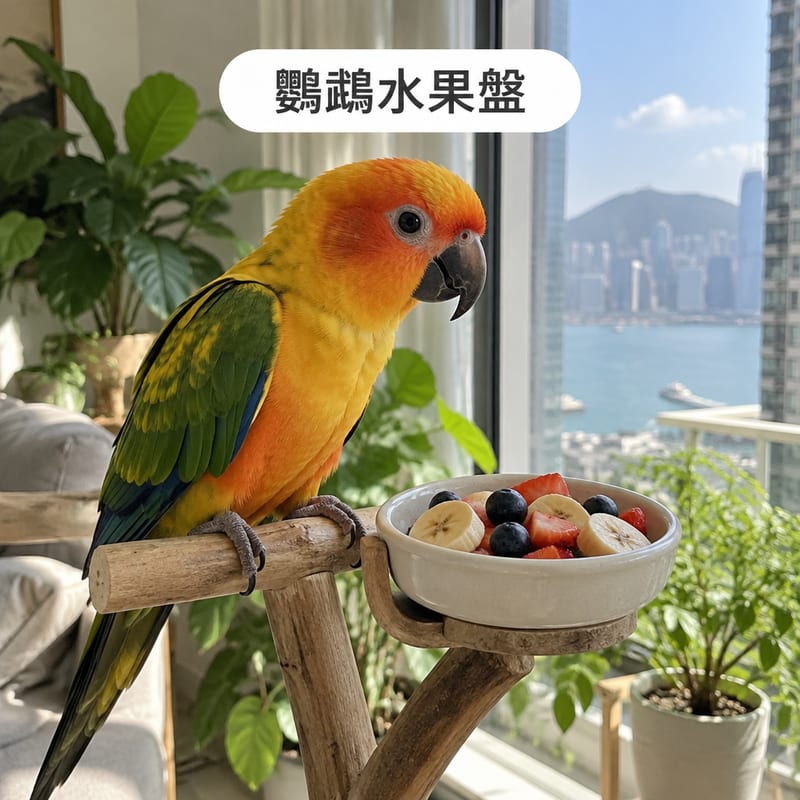
How much banana can a parrot eat each day safely? Daily feeding is not recommended. A parrot's daily staple should be parrot-formulated food with dark vegetables, and fruit is only a garnish; 1 to 2 small slices at a time, as a reward 1 to 2 times a week, is safer. Once a parrot gets used to sweet tastes, it easily refuses formulated food and vegetables, and correcting that later is even harder.
| Food | Suggested preparation | Portion guidance (three species) | Watch out for |
|---|---|---|---|
| Apple | Wash, peel, deseed and core, cut into small pieces, room temperature | Hamster 1 to 2 small pieces; rabbit 1 small slice; parrot 1 to 2 small slices | Seeds and core must not be fed |
| Pear | Wash, peel, deseed and core, cut into small pieces, room temperature | As above, portion slightly less than apple | Higher sweetness; stop if soft droppings |
| Banana | Peel, cut into thin slices, room temperature | Hamster at most 1 to 2 times a week; rabbit 1 small slice; parrot 1 to 2 small slices, not daily | High sugar, high stickiness, easily blocks cheek pouch |
| Blueberry | Wash, remove stalk, cut open | 1 to 2 berries at a time | Dried blueberries and jam contain sugar and must not be fed |
| Plain seeds, nuts | Unseasoned, unsalted, unsweetened | Hamster 1 to 2 pieces, 2 to 3 times a week; parrot small amounts | Mixed food already contains them; easily exceeds requirements |
If a rabbit eats too much banana, what digestive problems might it cause?
A rabbit's digestive tract is designed for large amounts of fibre: hay and grass maintain gut motility and also help wear down teeth. Once high-sugar, low-fibre foods such as banana make up too high a proportion, problems usually start with the gut flora.
- Soft droppings and diarrhoea: a sudden increase in sugar upsets the gut flora, producing unformed droppings and a stronger smell.
- Bloating and gas: rabbits cannot vomit, so once gas builds up in the gut the abdomen feels hard and distended and the rabbit will not let you touch it.
- Reduced gut motility (gastrointestinal stasis): this is an emergency. Signs include suddenly refusing food, droppings becoming smaller and fewer or stopping completely, lethargy, huddling in a corner and teeth grinding.
- Dental and weight problems: fruit is too soft to help wear down teeth; long-term high sugar also causes weight gain.
The principle is simple: as soon as you notice a rabbit has eaten too much banana, remove all fruit immediately, make sure hay and water are available without limit, and watch the droppings. If any of the stasis signs above appear, do not wait — go to the veterinarian immediately. A rabbit's gut problems worsen very quickly, and waiting one night may already be too late.
The same principle applies to hamsters and parrots: fruit is only a garnish, and the rabbit's fibre source, the hamster's mixed food and the parrot's formulated food cannot be replaced by fruit.
Which Bunny Nature hamster foods are particularly recommended? And what is the normal colour range for droppings?
First, one thing must be made clear: the Bunny Nature range currently listed at PetChill is mainly rabbit food, including herbal young rabbit food, herbal adult rabbit food, herbal senior rabbit food and transition herbal rabbit food, priced from HK$77 to HK$175; hamster-specific Bunny Nature food is not listed at present. So if an owner is looking for food for a hamster, the more practical approach is: first look at the hamster-specific mixed foods that are listed, then compare using the brand's ingredient labels.
Three principles for choosing hamster food:
- Make pellets/sticks the main body. A purely seed-based mix easily lets hamsters pick out the high-fat sunflower seeds and leave the pellets, causing nutritional imbalance.
- Look at sugar and fat. Formulas labelled with honey, syrup, dried fruit or large amounts of sunflower seeds are not ideal for dwarf hamsters with a tendency to diabetes.
- Do not change food frequently. When a change is needed, mix gradually over 7 to 10 days; if soft droppings appear midway, pause and ask your veterinarian.
Reading dropping colour is the most practical daily indicator. Normal hamster droppings are dark brown to blackish-brown, formed, dry and small, and colour varies slightly with food. Below are situations to watch for:
| What is observed | What it may mean | What to do |
|---|---|---|
| Dark brown to blackish-brown, formed, dry | Normal range; shade affected by food | Continue daily observation and record changes |
| Softer colour, watery, smelly | Diet changed too quickly, too much high-sugar high-moisture food | Remove fruit and wet food, observe for 1 to 2 days, seek veterinary care if no improvement |
| Green with mucus, greyish-white | May be related to gut or liver and gallbladder problems | Do not give medication yourself; take to a veterinarian as soon as possible |
| Bright red, blood-streaked, black tarry | A warning sign, possibly related to bleeding | Treat as an emergency and contact a veterinarian immediately |
| White worms beside the droppings | Possibly parasites | Photograph for the record and bring a sample to the veterinarian for testing |
The same applies to rabbits and parrots: changes in the shape and number of droppings often reflect problems earlier than appetite does. Rabbit droppings becoming smaller, fewer or stopping altogether are signals requiring immediate action. For a deeper understanding of digestive problem management, see the Complete Guide to Pet Digestive Health.
How should a hamster cage be set up so they feel comfortable and safe? How should food be stored in Hong Kong's humid weather?
Five key points for cage setup:
- Floor area comes first. Hamsters are horizontally active animals, so floor area matters more than levels. Multi-level designs need anti-fall edges to prevent injuries from falls.
- Choose bedding correctly. Use paper cotton or dust-free wood shavings; avoid loose cotton (fibres can wrap around limbs and teeth) and avoid scented or dyed bedding. Bedding should be deep enough for digging and nest-building.
- The wheel should be solid. Choose a solid-surface wheel to avoid wire-mesh wheels trapping toes; the diameter should be large enough for the hamster's back to stay straight while running.
- Provide hiding places and drinking equipment. A ceramic or wooden house provides a sense of security; a water bottle is better than a bowl because it does not wet the bedding. A sand bath helps keep the coat clean, and the sand must be kept dry.
- Keep chew items available at all times. A chew stone or natural wood chew can reduce the risk of overgrown teeth.
Storage methods for Hong Kong's humid weather:
- Seal food. After opening, transfer to an airtight container, add food-grade desiccant, and keep in a cool, dry place away from the stove or windows.
- Do not pour out too much at once. Put only one day's portion in the food bowl at a time, and remove leftover wet food and fruit the same day.
- Change bedding as soon as it is wet. During Hong Kong's returning dampness and rainy season, bedding quickly becomes damp; when wet it smells musty and easily causes skin and respiratory problems.
- Keep sand bath sand dry. Once the sand becomes damp and clumps it loses its cleaning function and may harbour bacteria, so the whole batch should be replaced.
- Throw away mouldy, clumped or insect-infested food immediately. Do not take the attitude of "just scoop off the surface"; mould and toxins can penetrate the whole batch of food.
- Clean the cage with pet-specific cleaner. Residues of ordinary household bleach and disinfectants irritate small animals' respiratory tracts, so always use a pet-safe formula, rinse thoroughly and dry completely before putting the animal back. For cleaning and disinfection procedures, see Pet Supplies Cleaning, Equipment Maintenance and Daily Care.
Below are actual products listed at PetChill that fit this article's theme; prices and stock are subject to the online shop's current listed prices:
- MARUKAN Japanese Hamster Food Five-Grain Sunflower Seed and Vegetable Formula 360g (discontinued) — HK$35.
- Bunny Nature Herbal Adult Rabbit Food 1.5kg (discontinued) — HK$174.
- PetChill Hamster Rabbit Chinchilla Dust-Free Paper Cotton Bedding Pure Paper Cotton 1lb (discontinued) — HK$15.
- Bunny Nature Cage Cleaner 500ml (discontinued) — HK$142.
When choosing food, also consider age stage and body weight; young, adult and senior small animals have different nutritional proportions. You can refer to the assessment framework in the Complete Guide to Cat and Dog Nutrition and then adjust by species. If you are keeping a small animal for the first time, the Beginner Owner's Guide has a basic checklist to compare against.
When to see a veterinarian immediately
Small animals are light and fast-metabolising, and their condition deteriorates faster than cats and dogs. Treat all of the following as emergencies and do not wait:
- Completely refusing food or no droppings for more than a day, especially a rabbit whose droppings become smaller, fewer or stop completely.
- Hard, distended abdomen, not allowing touch, huddling in a corner, teeth grinding — typical signs of gastrointestinal stasis.
- Abnormal droppings: bright red or blood-streaked, black tarry, green with mucus, watery and not stopping.
- Rapid breathing, open-mouth breathing, nasal or eye discharge, especially a parrot whose tail bobs up and down with breathing.
- Sudden lethargy, cold body, weak limbs or convulsions.
- Accidental eating of prohibited foods or foreign objects: chocolate, alcohol, avocado, onion and garlic, grapes and raisins, plastic or cotton, etc. — contact a veterinarian even if the animal seems fine at the time.
- Cheek pouch swelling, odour or fluid discharge (hamster) — possibly a blocked or inflamed cheek pouch.
This article was reviewed by the PetChill Veterinary Editorial Team. The content is for reference only and cannot replace veterinary diagnosis, prescription or treatment.
Further reading
- Complete Guide to Daily Cat and Dog Care
- Human Food Safety Three-Category Table
- Cat and Dog Fruit and Vegetable Feeding Safety Guide
- Complete Guide to Pet Digestive Health
- Pet Supplies Cleaning, Equipment Maintenance and Daily Care
- Beginner Owner's Guide
Authoritative references:
- World Small Animal Veterinary Association (WSAVA) Global Nutrition Guidelines: https://wsava.org/global-guidelines/global-nutrition-guidelines/
- Royal Society for the Prevention of Cruelty to Animals (RSPCA) rabbit diet advice: https://www.rspca.org.uk/adviceandwelfare/pets/rabbits/diet
- Rabbit Welfare Association & Fund (RWAF) care guidelines: https://rabbitwelfare.co.uk/
- Hong Kong Agriculture, Fisheries and Conservation Department (AFCD) pet information: https://www.afcd.gov.hk/tc_chi/quarantine/qua_pet/qua_pet.html
In an emergency, contact a veterinarian immediately; this article is for reference only and cannot replace veterinary diagnosis. Information checked as of 2026-10-14 · Source: PetChill Editorial Team
⚠️ Some products mentioned in this article have been discontinued (marked "discontinued" in the text), and the prices shown are records from before discontinuation; for other products, please refer to the current prices displayed in the online shop.
 Almo Nature full guide →
 Royal Canin full guide →