Hong Kong's humid weather and small homes mean pet supplies and equipment can quickly develop odour and mould if not cleaned often enough, directly affecting cats' and dogs' health. Below we cover supplies, equipment, food storage and when to see a vet, with methods and frequency for each.
Quick answers
- Scoop the litter box at least twice daily; with clumping litter, do a full clean every 2 to 4 weeks, and with non-clumping litter, once a week.
- The difference between pet laundry products and regular detergent lies in ingredient concentration, fragrance and fabric residue; add an extra rinse after washing pet bedding.
- Use lukewarm water for bathing—warm to the touch but not hot; drying air should be warm, not hot, and the nozzle should keep moving.
- Automatic litter boxes, water fountains and feeders are equipment: besides cleaning, replace filters, clean sensors and manage power according to the manual.
- White vinegar can be used for cleaning, but always rinse thoroughly with water and air-dry completely afterwards, and never mix it with bleach.
- If cat food shows insects, off-odour, clumping or mould, discard the whole bag—do not just remove the surface and keep feeding.
Key points
- Cleaning frequency has objective standards: scooping twice daily and a full wash of clumping litter every 2 to 4 weeks are recommendations from an international feline organisation, not guesswork.
- Look at ingredients, not fragrance: some disinfecting ingredients (such as chloroxylenols) are toxic to cats; strongly scented dish soap and scent beads should also be avoided.
- Equipment care must include consumables: filters, deodorising blocks and feeder chutes are all breeding grounds for bacteria and mould.
- Food storage is mainly about moisture control: in Hong Kong's humidity, portioning, sealing and keeping food away from the stove and windows matters more than simply putting it in a cupboard.
- Distinguish observable issues from emergencies: skin and digestive reactions can be monitored, but ingesting cleaning products, difficulty urinating and abnormal breathing are emergencies.
What are the main differences between pet laundry products and regular detergent?
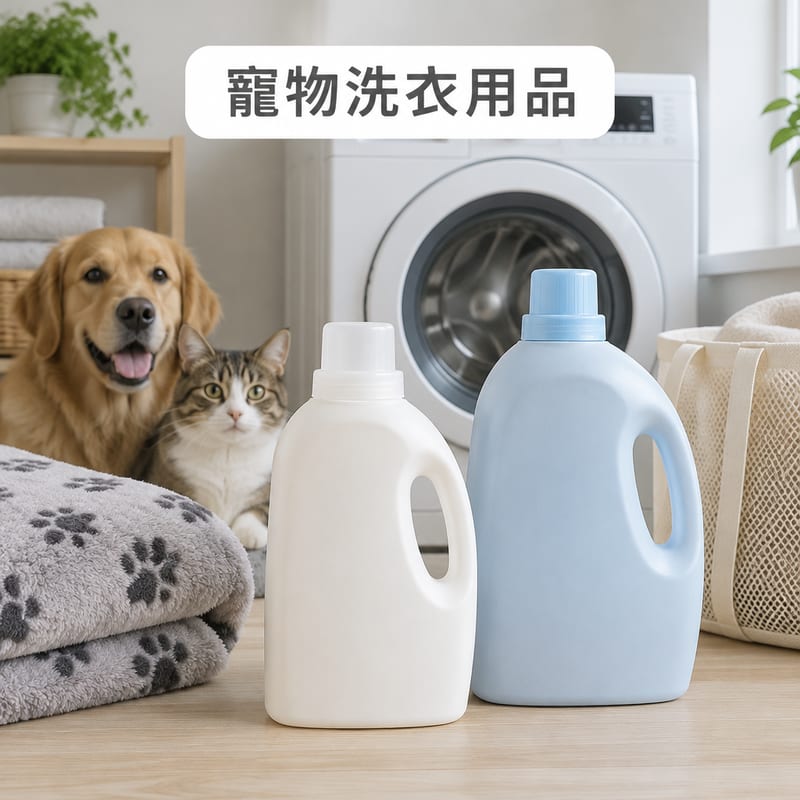
Pet bedding, blankets and fabric toys mostly contact skin directly, and cats and dogs groom themselves, so detergent residue is the biggest risk. Regular detergents often add optical brighteners, strong fragrances, softening ingredients and higher concentrations of surfactants to make clothes "look clean"; after washing, an invisible film remains on the fabric, which pets ingest when lying on it, grooming or chewing bedding, potentially causing stomach upset, itchy skin or sneezing.
Pet-specific laundry products are designed differently: shorter ingredient lists, lighter or no fragrance, easier to rinse away, and some are labelled biodegradable. But the key is not which product you buy but how you use it—reduce the dose, add an extra rinse, skip fabric softener and scent beads, and dry thoroughly in the sun or dryer, otherwise moisture trapped in the fabric causes mould, and mould spores can also affect pets' skin and respiratory tract.
Also pay attention to the washing machine itself. The rubber seal, detergent drawer and filter are hotspots for mould and grime; if not cleaned regularly, mould and residue transfer to pet bedding, undoing the wash. Run a hot-water cycle with a little mild dish soap periodically, and leave the door open to air afterwards. Here is a comparison of common items:
| Item | Regular detergent | Pet laundry products | Recommended practice |
|---|---|---|---|
| Fragrance | Usually strong, long-lasting | Light or unscented | Choose unscented formulas, avoid scent beads |
| Brighteners | Often contain optical brighteners | Generally none | Read the ingredient list, not the colour |
| Residue | More, noticeable film | Less, rinses easily | Add an extra rinse |
| Fabric softener | Commonly used | Not recommended | Use dryer or line drying instead |
| Scope | Human clothing | Pet beds, blankets, fabric toys | Wash separately from human clothes |
If your pet has a history of skin problems, or itching recurs during Hong Kong's humid season, see Skin Care for Breeds in Humid Weather, or refer directly to the Cat and Dog Bathing and Skin Cleaning Guide.
What water temperature should be used for bathing? What should I watch out for when drying and using a dryer?
For water temperature, lukewarm water is correct—warm to the touch but not hot. Veterinary teaching hospital bathing advice is to use lukewarm water with pet-specific shampoo and avoid the eyes, ears and nose (Virginia Tech Veterinary Teaching Hospital: Bathing Tips). Water that is too hot irritates the skin's stratum corneum and can even scald; too cold makes pets shiver and resist, and young kittens and puppies and senior cats and dogs are even more sensitive.
The Hong Kong Agriculture, Fisheries and Conservation Department's care guidelines add two practical points: bathe dogs no more than once a week; bathing too often damages the coat and dries out the skin, causing skin disease; and always use pet-specific shampoo, not human shampoo, because its cleansing power is too strong (AFCD: Caring for Your Dog).
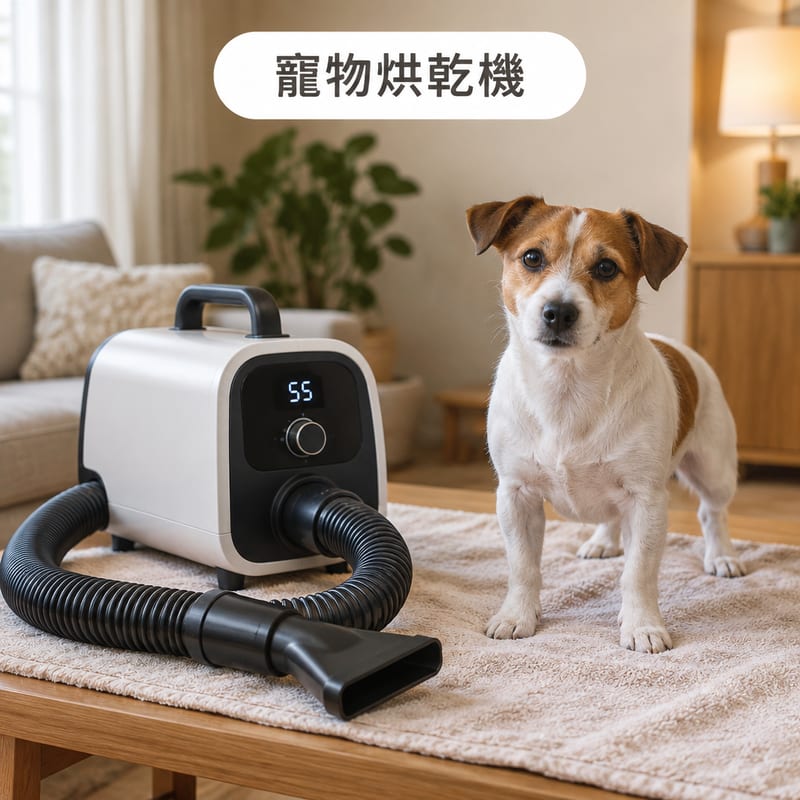
Drying is also about temperature. AFCD explicitly states that when using a hairdryer to dry a dog's coat, the air should be warm, not hot. In practice, follow these principles:
- Towel-dry from head to tail first to remove excess water and reduce drying time.
- Keep the nozzle at a distance from the skin and keep it moving; do not focus on one spot for long.
- The face, ears, belly, paws and armpits have thinner skin; use lower temperature and shorter time.
- Ensure dryers are ventilated; do not trap the pet in a sealed box. Stop immediately if the pet pants, scratches at the door or tries to escape.
- For long-haired, flat-faced breeds, senior cats and dogs, and pets with heart or respiratory problems, use short, low-temperature sessions with someone watching throughout.
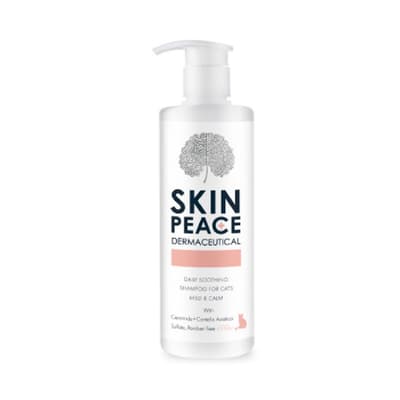
For bathing products, cats and dogs have different skin pH and should not share the same shampoo. Choose formulas by breed and skin condition, for example Skin Peace Cat Formula Shampoo N°20 Cat Soothing 310ml (HK$118). Prices and stock are subject to the online store's live prices.
What summer cooling products are there? Do pheromone diffusers work for every cat?
Summer cooling products fall into three categories: contact cooling (cooling mats, gel water mats, aluminium or marble slabs), air circulation (circulating fans, exhaust fans, breathable mesh beds) and supplementary items (towel-wrapped ice packs, cooling neck bands). Note a few points: gel mats leak if bitten through, so choose bite-resistant materials or supervise; do not apply ice packs directly to skin for long periods; long-haired breeds can be trimmed short but should not be shaved completely, as the coat insulates and protects from sun. The most common problem in small Hong Kong flats is closed doors and windows with air-conditioning on, reducing airflow and leaving pets in stuffy spots, so besides cooling products, always provide a shaded corner and water in multiple locations.
For pheromone diffusers, the answer is not every cat responds the same way. Feline behaviour literature notes inconsistent research results for synthetic pheromone products: some studies found improvements in stress indicators in most cats, but others showed no response in some cats, with large individual differences (Journal of Feline Medicine and Surgery: Review of Pheromone Therapeutic Tools). A practical approach is to treat diffusers as a supplementary tool while improving the environment: more hiding spots and high resting places, resources set at "one per cat plus one", and reduced conflict in multi-cat homes. If a cat has asthma or a history of respiratory disease, consult a veterinarian before use; stop if coughing, watery eyes or worsened breathing occur.
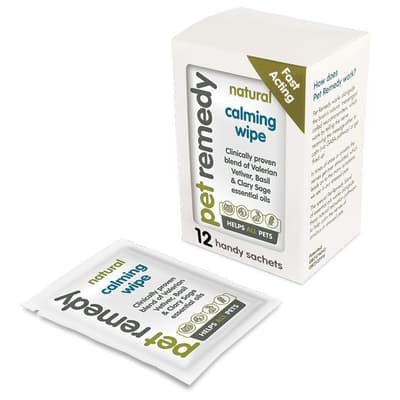
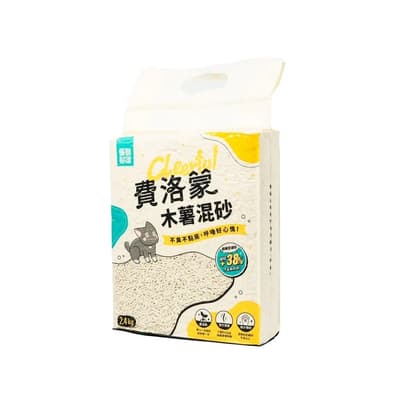
To calm a frightened or stressed cat, order matters: first reduce stimuli (isolate noise, visitors and other pets), provide a space where it can hide completely, then slowly rebuild a sense of safety with treats and play; do not force cuddles or corner it. See Cat Anxiety and Stress Management and the Summer Cat Heatstroke Prevention Guide. If you need a product for immediate use, Pet Remedy Calming Wipes 12-pack (HK$99) is a portable option; when choosing litter, you can also consider pheromone-containing formulas such as Monster Tribe Pheromone Cat Litter Tofu Cassava Mixed 2.4kg (HK$59). Prices and stock are subject to the online store's live prices.
How often should litter boxes, water fountains and feeders be cleaned?
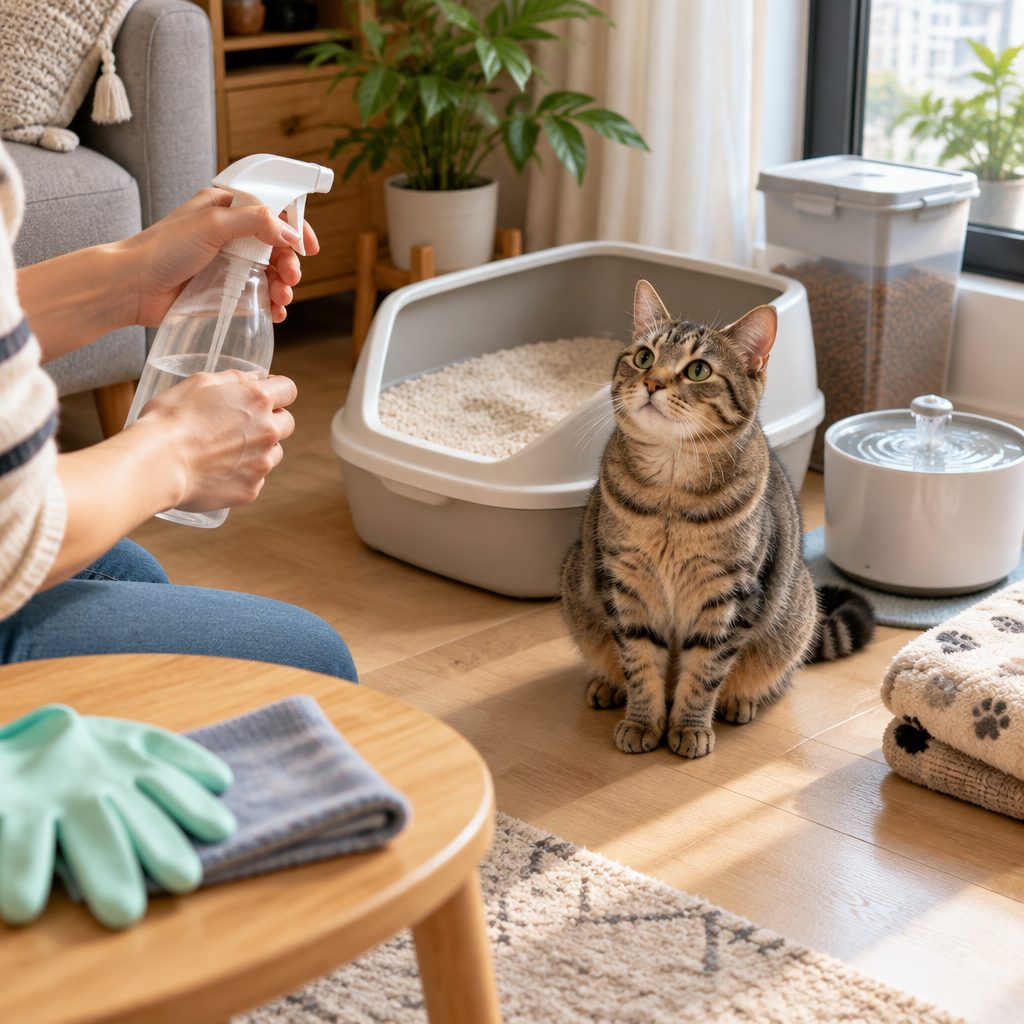
The litter box is the core of the whole cleaning routine. International Cat Care recommends: scoop at least twice daily to remove clumps and solid waste; with clumping litter, completely empty, clean and replace the litter every 2 to 4 weeks; with non-clumping litter, once a week (International Cat Care: Choosing a Litter Tray for Your Cat). The same guidance notes that cats prefer a litter depth of about 3cm, the box length should be about 1.5 times the cat's body length (nose to base of tail), and strongly scented dish soap or disinfectants containing chloroxylenol should not be used for cleaning—these ingredients are toxic to cats; use hot water with mild dish soap, rinse thoroughly and wipe dry before adding litter.
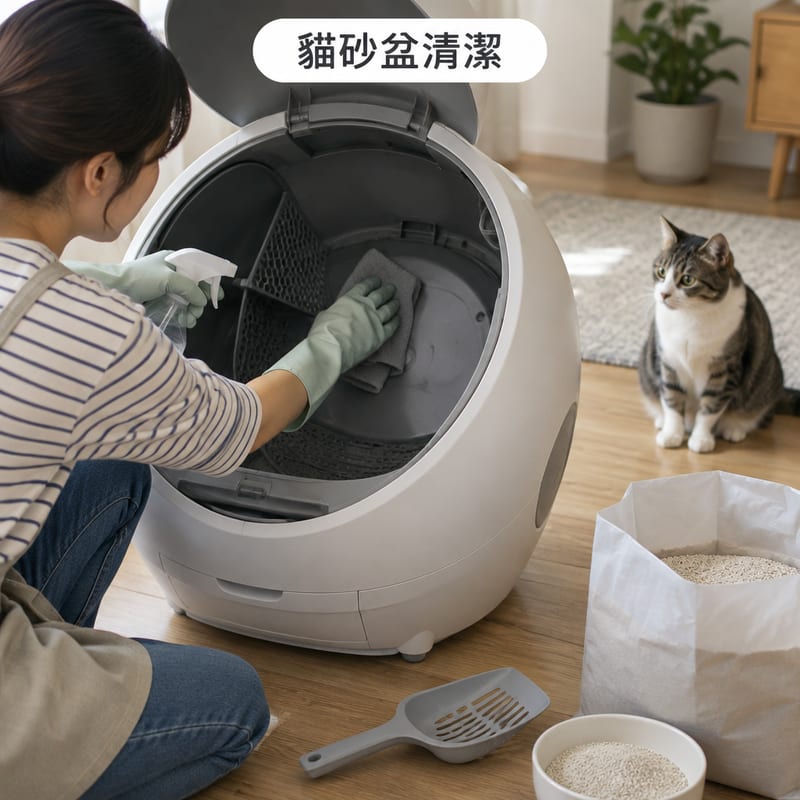
Automatic litter boxes (such as the PETKIT series) need extra attention to three things. First, the machine only handles waste; it does not replace manual cleaning: the drum, sieve, sensors and bottom seams accumulate litter dust and urine odour, and without regular disassembly and washing they emit odour, grow mould, and clumps can jam the machine. Second, cats are sensitive to smell and noise; if not cleaned for a long time, they may refuse to use it and eliminate elsewhere, or even develop urinary problems from holding urine. Third, consumables must be replaced on time, including deodorising blocks and litter—do not just top up litter without changing it.
| Equipment | Daily | Weekly | Monthly or per manual | Consumables |
|---|---|---|---|---|
| Regular litter box | Scoop 2+ times | Full change and wash for non-clumping litter | Full wash every 2 to 4 weeks for clumping litter | Litter, scoop |
| Automatic litter box | Empty waste drawer, wipe sensors | Remove drum and sieve to wash, wipe base | Check motor and sensors, update app | Deodorising blocks, litter |
| Water fountain | Top up water, visually check pump | Change water, remove pump and impeller to clean | Replace filter per manual | Filter, filter cotton |
| Feeder | Wipe chute, check battery | Remove and wash hopper and chute | Check seals, back up settings | Desiccant, batteries |
| Bowls | Wash after each meal or at least daily | Deep clean with hot water and dish soap | Replace cracked bowls | — |
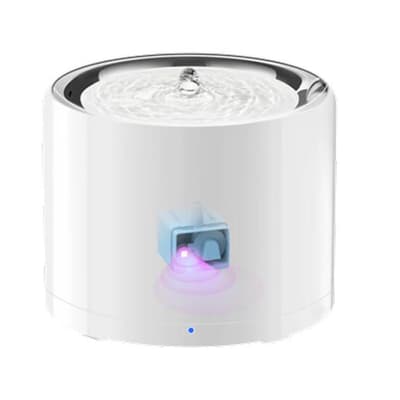
The water fountain is the most underestimated item. The water tray and pump impeller form biofilm; a slippery feel means bacteria and mould have built up, and topping up water without disassembling and cleaning is not enough. Correct practice is to disassemble and clean the pump and impeller at least once a week, replace the filter per the manual; if water flow drops noticeably, the impeller or filter cotton is usually blocked. When choosing a machine, consider capacity, noise, filter cost and whether it has UVC sterilisation, for example PETKIT Eversweet 3 Pro UVC Sterilising Wireless Pump Smart Water Fountain 1.8L (HK$679); for further reading see the Pet Water Fountain Buying Guide.
Feeder power management depends on use: timed, portion-controlled automatic feeders should be left powered on, with batteries or a power bank backup to avoid missed meals during outages; supplementary feeders can be switched on as needed. The hopper must be sealed against moisture; oil residue in the chute oxidises and smells, which may cause cats to refuse food. For settings and troubleshooting, see PETKIT Feeder Power Management.
Automatic litter boxes are higher-priced equipment, so purchase and maintenance should be considered together. Take the PETKIT Pura Max 2 Smart Automatic Litter Box (HK$2,599) as an example; official consumables include PETKIT Pura Max Dedicated 2.0 N50 Deodorising Blocks (box of three) (HK$65), and you can also use Litter Box Non-Stick Spray (HK$45) to reduce clumps sticking. Device repair and warranty are usually applied for through the purchase channel, with order record, serial number and fault video; for details see the Automatic Litter Box User Guide and Safe Choices of Litter Box Cleaners. Prices and stock are subject to the online store's live prices.
How to deep clean and disinfect cat toys, dog beds, rabbit cages and enclosures?
Cat and dog toys should be handled by material. Plush toys can go in a laundry bag, washed on a gentle cycle with mild detergent and cold water, with an extra rinse, then dried thoroughly in a dryer or sun; rubber, silicone and water-safe chew toys (such as hollow designs) can be soaked in hot water with a little mild dish soap, scrubbed inside with a brush, then air-dried completely. Chlorine bleach or strongly scented disinfectants are not recommended, as residue irritates the mouth and stomach. It is important to distinguish "wash" from "replace": if there are cracks, bite punctures, stickiness, blackening inside, or odour remains after washing, replace it—cracks and interiors cannot be cleaned and bacteria persist. Rope, feather and yarn toys cannot be thoroughly cleaned and should be replaced regularly. For detailed steps, see Pet Toy Cleaning and Bacteria Prevention and Cat Toy Cleaning and Care Tips.
Dog beds and cat beds: the key is to distinguish washable from non-washable. Removable covers can be machine washed following the pet laundry principles above; foam or memory foam cores cannot be machine washed—spot clean, use baking soda to absorb odour, and air-dry in a ventilated place. AFCD care guidelines also remind that dog beds should be covered with clean, washable blankets and washed frequently. In humid Hong Kong, once bedding absorbs moisture it is hard to dry and prone to mould, so drying after washing is more critical than washing itself. Replace beds that are deformed, collapsed or smell mouldy; for buying tips see the Dog Bed and Cat Bed Buying Guide.
Rabbit cages and small animal enclosures are handled differently from cats and dogs. AFCD recommends solid floors, avoiding wire mesh, which discomforts rabbits and can injure their feet; if mesh must be used, cover with newspaper, corrugated cardboard or a thick layer of bedding, and change bedding daily. For litter trays, remove used bedding daily and wash once with mild detergent before adding fresh bedding. Move the rabbit to a safe pen during cleaning to avoid stress; do not use strong-smelling disinfectants or heavily scented cleaners, as rabbits' respiratory tracts are very sensitive to odours (AFCD: Caring for Your Rabbit). Rabbits do not need bathing; clean areas they cannot reach with mild soapy water and a towel, and use alcohol-free baby wipes on paws.
As for the difference between cleaning foam and disinfectant, think of them as "cleaning" and "disinfecting": most products called cleaning foam are cleaning foams for removing dirt, breaking down grease and stains, suitable for surfaces, utensils and fabrics; most products called disinfectant are disinfecting or antibacterial liquids for bacteria and odour, not for removing dirt. Follow label instructions: clean first, then disinfect; after disinfecting, decide per instructions whether to wipe with water; do not mix the two, and never mix with bleach. Before using on pets or where pets can lick, confirm the label states it is safe for pets.
| Cleaning product | Main use | Suitable areas | Cautions |
|---|---|---|---|
| Pet cleaning foam (cleaning foam type) | Remove dirt, break down grease | Utensils, hard surfaces, fabric | Wipe away foam and residue with water |
| Pet disinfectant (disinfectant type) | Antibacterial, deodorising | Hard surfaces, around litter box | Not for removing dirt; clean first, then disinfect |
| White vinegar | Remove limescale, some odours | Hard surfaces, containers | Never mix with bleach; rinse after use |
| Hot water with mild dish soap | Daily cleaning | Bowls, litter box, fountain parts | Rinse and dry litter box thoroughly |
| Chlorine bleach, strongly scented disinfectants | Not recommended for pet supplies | — | Residue irritates; some ingredients toxic to cats |
How to handle surfaces after white vinegar cleaning? What to look for in wet wipe ingredients?
White vinegar is a common household cleaning material; acetic acid removes limescale and some odours. But one reader's question is very apt: how long does white vinegar take to fully evaporate? The answer is there is no fixed timetable—high concentrations, poorly ventilated rooms and absorbent materials all need longer. So do not rely on "waiting for it to evaporate" for safety; use a process instead: immediately rinse containers thoroughly with water two to three times, then air-dry completely in a ventilated place until no vinegar smell remains before refilling with food or water. If containers are cracked, smell of plastic or have unreachable corners, replace them. Two more points: white vinegar must not be mixed with bleach, as the mixture releases harmful gases; and cleaning products should be kept out of pets' reach.
For wet wipes, look at ingredients more than packaging. Watch for alcohol (frequent use dries and irritates skin), fragrance (cats are sensitive to smells and it may cause contact dermatitis), preservatives (some with higher sensitisation risk), and chloroxylenol-type disinfectants (toxic to cats). Daily practice: choose alcohol-free, fragrance-free, simple formulas; use only on intact skin and specified areas; do not use as an all-over daily cleaning tool, especially for cats, as they ingest residue when grooming; do not use wet wipes on wounds, redness, swelling or hair loss. For face or ears, use products specific to those areas, not one wipe for everything.
For utensil cleaning, the American Veterinary Medical Association recommends washing food bowls, water bowls, scoops and feeding mats frequently with hot water and dish soap, and not using unwashed bowls as scoops (AVMA: Safe Handling of Pet Food and Pet Treats). Bowls and floors are where grease and bacteria most easily remain; for daily use, a pet-specific utensil cleaning foam such as Cat Dog King Pet Utensil Cleaning Foam Mousse 120ml (HK$78); for wet wipes, Water Magic Pet Deodorising Antibacterial Wet Wipes 30 sheets (HK$22); for floors, use a pet-specific formula such as Germagic Cat and Dog Pet Floor Cleaner 1.25L (HK$207). Prices and stock are subject to the online store's live prices.
How to store cat litter, cans and opened cat food? How to tell if it has spoiled?
Opened cans must be handled immediately. AVMA recommends sealing and refrigerating uneaten wet food immediately (fridge set at about 4°C or below), otherwise discard, and use up as soon as possible per label instructions; dry food should be stored in a cool, dry place (about 27°C or below), ideally keeping the original bag inside a clean sealed container for batch and expiry reference (AVMA: Safe Handling of Pet Food and Pet Treats). In practice: if opening the can reveals sourness, foaming or a bulging can, do not feed; do not store food in metal cans long-term, as opened cans oxidise and absorb odours—transfer to glass or ceramic sealed containers; take out only the portion for the meal and refrigerate the rest immediately; warm only to lukewarm (not boiling), test with a finger, and avoid hot spots.
Dry food spoilage signs to recognise: insects (especially in Hong Kong's humid season), rancid or sour smell, clumping and hardening, dull colour, mould spots—any one means discard the whole bag. Food that "looks fine" but is suddenly refused may also indicate fat oxidation. For storage, after opening, portion into 1–2 week amounts, seal, add desiccant, keep away from the stove and windows, and do not leave the bag on the floor. For details see the Pet Food Storage Guide.
Cat litter dates are usually "manufacture date plus shelf life", not a single expiry date, so check both numbers. Unopened litter should be kept cool and dry; once opened, tofu litter and cassava litter soften, clump hard and lose deodorising power when damp, and may grow mould, so use a sealed container. Do not use if: litter forms hard clumps, smells mouldy or sour, or dust suddenly increases. By the way, litter type directly affects cat acceptance; for comparisons of tofu litter, cassava litter and mixed litter, see the Complete Tofu Cat Litter Guide and Hong Kong Cat Litter Buying Guide. To stock up in one go, consider Water Magic Ultra-Fine 1.5mm Strip Probiotic Tofu Litter 7L (HK$68), Bella & Molly's 3.0mm Tofu Cat Litter Natural Ultra-Clumping Original 18L (HK$58) and Nikoro Pet Pee Pads Thickened M Size 40 sheets (HK$71). Prices and stock are subject to the online store's live prices.
| Item | Ideal storage | Spoilage signs | Action |
|---|---|---|---|
| Opened cans | Sealed and refrigerated at about 4°C or below, use up per label | Sour smell, foaming, bulging can | Discard immediately, do not test-feed |
| Dry food | Cool and dry, below 27°C, original bag in sealed container | Insects, rancid smell, clumping, mould spots | Discard whole bag, clean hopper |
| Cat litter | Unopened in cool dry place; sealed and moisture-proof after opening | Hard clumps, mouldy smell, sudden dust | Discard and replace, clean litter box |
| Pee pads | Keep packaging sealed, avoid moisture | Mould, reduced absorbency | Discard, check storage location |
| Cleaning products | Away from pets, avoid direct sunlight | Separation, discolouration, odour | Dispose per label, do not pour into food containers |
When to see a veterinarian immediately?
In the following situations, do not observe—contact a veterinarian or go to an emergency clinic immediately:
- Ingestion or contact with cleaning products: drooling, vomiting, redness or ulcers in the mouth or tongue, lethargy, seizures—may be chemical burns and poisoning from cleaning products or bleach. Do not induce vomiting yourself; bring the product packaging to the clinic.
- Abnormal urination: frequent litter box visits with no urine, only a few drops, blood, crying or arched back—especially in male cats, may be urethral obstruction, a time-critical emergency.
- Abnormal breathing: open-mouth breathing, panting, rapid or laboured breathing; flat-faced and long-haired breeds are at higher risk; in summer also consider heatstroke.
- Worsening skin or wounds: spreading redness, oozing, pus, odour, large areas of hair loss, or constant scratching or biting—may be infection or chemical irritation.
- Persistent not eating or abnormal drinking: complete anorexia for more than a day, sudden large increase or decrease in water intake, obvious weight loss.
- Rabbits and small animals: complete anorexia, no droppings (possible gastrointestinal stasis), drooling, foot ulcers or noisy breathing—seek veterinary care promptly.
Further reading
- Hong Kong Pet Daily Care Overview: Seasonal Products, Behaviour Observation and Home Environment
- Automatic Litter Box Use and Maintenance Guide
- Safe Choices of Litter Box Cleaners
- Safety Considerations of White Vinegar Residue for Cats
- Pet Food and Medicine Storage Temperature Guide
This article was reviewed by the PetChill Veterinary Editorial Team. The content is for reference only and cannot replace veterinary diagnosis, prescription or treatment.
In an emergency, contact a veterinarian immediately; this article is for reference only and cannot replace veterinary diagnosis. Information checked as of 2026-10-14 · Source: PetChill Editorial Team
 Feline Natural full guide →
 K9 Natural full guide →
 Bella & Molly's full guide →