Quick answers
- Hard rubber and silicone chews: wash at least once a week with 30 to 40°C warm water plus 1 to 2 drops of unscented dish soap, scrub for 30 seconds, then rinse 2 to 3 times with clean water.
- Plush toys and snuffle mats: machine wash every 1 to 2 weeks in a laundry bag at 30 to 40°C without fabric softener; air dry in a ventilated spot for at least 6 to 12 hours.
- Rope toys: wash 1 to 2 times a week; after washing, separate the strands and hang to dry completely, because water collects most between the strands and causes mould.
- Toys with built-in squeakers or batteries: do not soak; wipe the outside with a wrung-out damp cloth after each play, and give a deeper wipe every 2 weeks.
- Cleaning agents: choose only unscented mild soap, pet-specific cleaner, or white vinegar mixed 1:1 with water; disinfectants containing phenols are not recommended in homes with cats.
- Always dry completely before putting toys back in the toy basket; wipe and wash the toy basket itself every 2 weeks, and do not store it in the same compartment as food bowls or the litter box.
- Replace toys when bite marks are deep enough to trap dirt, fibres are loose, or there is a musty smell; if a toy still has black spots after 2 to 3 washes, keeping it will only let mould keep growing.
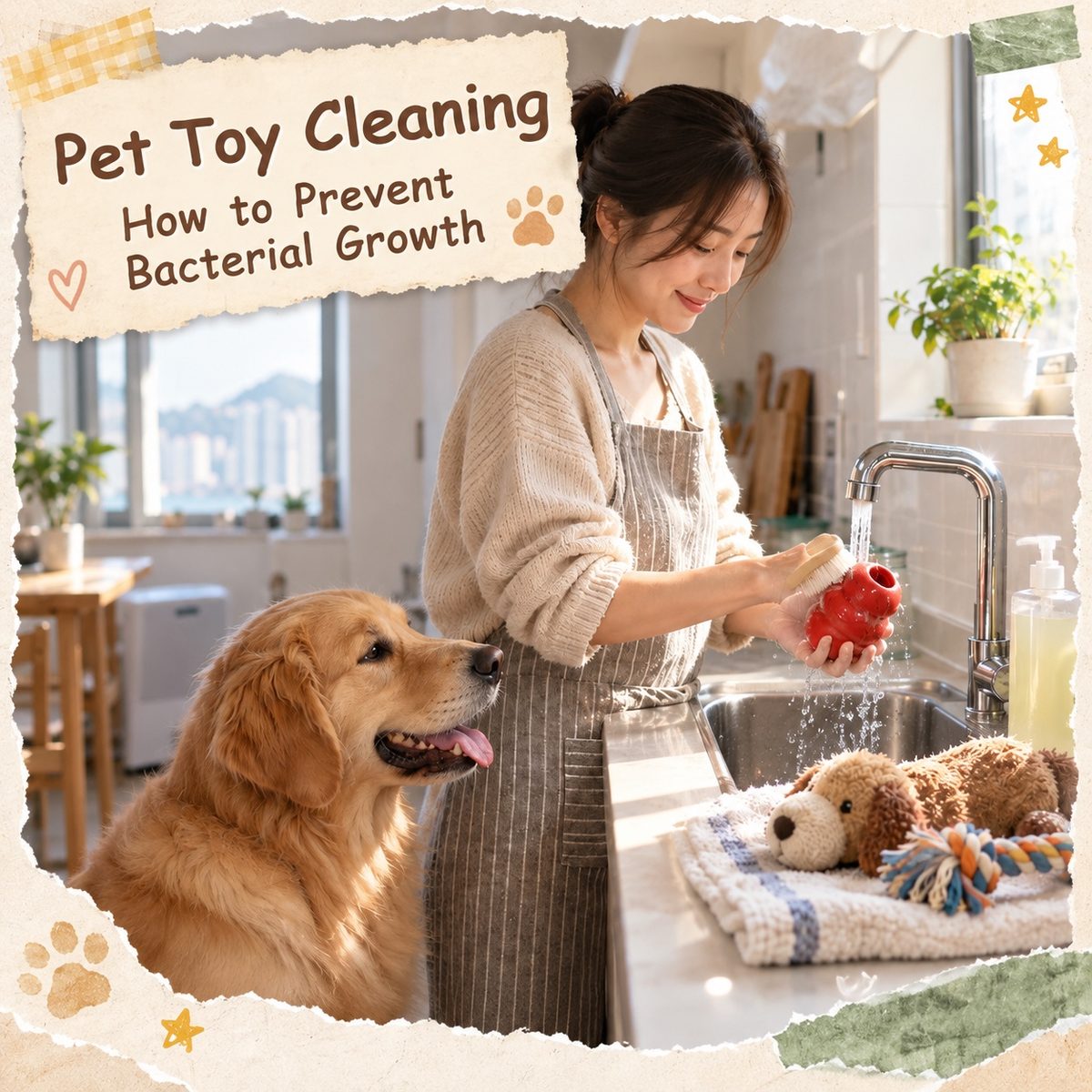
The question "How do I clean pet toys properly to prevent bacteria growth?" should not be answered with "just rinse them." The practical approach combines three things: choose the washing method by material, use the right cleaning agent, and dry completely. In general, hard rubber and silicone toys should be washed at least once a week, plush toys machine-washed every 1 to 2 weeks, and rope toys washed 1 to 2 times a week; toys with built-in squeakers or batteries must not be soaked and can only be wiped on the outside with a damp cloth. If multiple pets share the same toy, if you have kittens/puppies or pets over 7 years old, or if a pet has skin or immune-related issues, increase washing frequency to once every 2 to 3 days.
Bacteria build-up on toys is not just about being "dirty"; it happens when moisture, nutrients and warmth are present together—saliva film, food residue, floor dust and cracks from bite marks provide exactly these three. Hong Kong homes are humid, and putting toys back into a sealed toy basket before they are dry creates a breeding ground for mould, so "dry or not" is as important as "clean or not." This article goes through four sources of bacteria, washing methods for five material types, a washing frequency timetable, a cleaning product safety table, a five-step process, drying and replacement criteria, with three comparison tables. All pet health judgements in this article follow veterinary advice; for an overall daily care timetable, see Complete Guide to Daily Cat and Dog Care.
Four sources of bacteria on toys: more than just saliva
First understand where the dirt is, so the washing method and frequency have a basis. Dirt on pet toys mainly comes from four places, and their cleaning difficulty varies greatly.
First, saliva and the salivary film. Every time a pet bites a toy, it leaves a film of saliva. Saliva contains protein and some food residue; when it dries it forms a thin sticky film that feels slightly tacky. This film usually cannot be rinsed off with water alone—it needs scrubbing or machine washing—and the area under the film is exactly where bacteria are most likely to stay.
Second, food residue. Treat balls, treat pockets, snuffle mats and slow feeders are the worst offenders because they are designed to hold food. Dry food crumbs, freeze-dried pieces and meat paste get stuck in inner walls, grooves and fibres; when wet they soften and become a nutrient source. The rule for these toys is "wash after every use," not waiting for a weekly wash.
Third, environmental dirt. Toys dropped on the floor, under the sofa or under the bed pick up dust, hair, dust mites and floor cleaner residue; frisbees and balls taken outside pick up soil and other animals' saliva. Outdoor toys should ideally be wiped with a damp cloth the same day they come home, not put straight into the toy box with other toys.
Fourth, bite marks, seams and cracks. This is the most easily overlooked area. Once a rubber toy has deep bite marks, the inside of the cracks cannot be rinsed or scrubbed; even if the surface looks clean after washing, the inside of the cracks remains a moist, warm, nutrient-rich environment. So "bite marks deep enough for a fingernail to catch" is a practical replacement indicator, not something that "washing more times will fix."
Also pay attention to storage. If the toy basket is a sealed plastic box, toys that are wet after washing (or wet from a pet chewing them) put back inside will not let moisture escape, and mould will appear on plush surfaces and inside rope toys—characterised by black spots or a musty smell even after washing. So the toy basket itself should be wiped and washed every 2 weeks; ideally choose a machine-washable fabric bag or an open-top hard plastic basket, and keep it separate from food bowls and the litter box to avoid cross-contamination. For an overall timetable including brushing, nail clipping, and ear and eye cleaning, see Complete Guide to Daily Cat and Dog Care.
Choose the washing method by material: comparison table for five types of pet toys
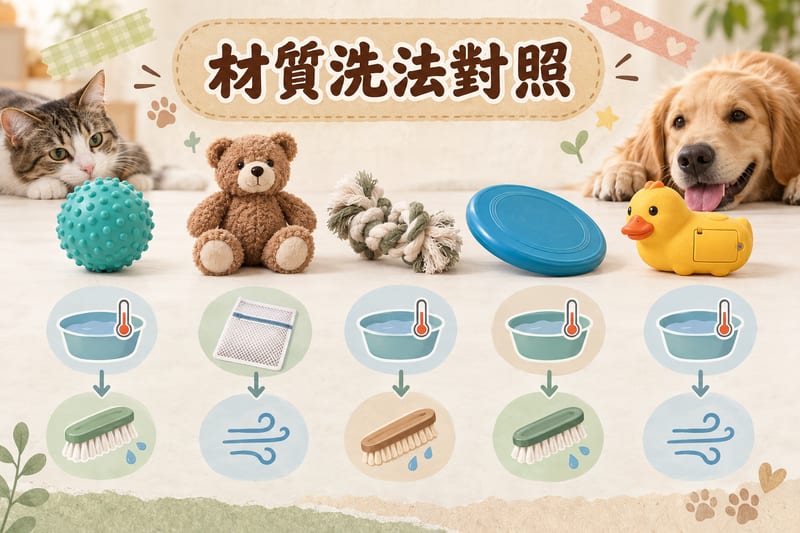
The same basin of water cannot wash all toys. Hard rubber can be scrubbed and soaked; plush can be machine washed; rope toys need strands separated and hung to dry; electronic squeaky toys cannot go in water; wood and leather should not be soaked at all. The table below shows practical methods by material; the last column is the drying requirement, because poor drying undoes all the previous work.
| Toy type | Where dirt mainly hides | Recommended washing method | Drying method and notes |
|---|---|---|---|
| Hard rubber/silicone chews (treat balls, treat pockets) | Inner walls, grooves, air holes | 30 to 40°C warm water with 1 to 2 drops of unscented dish soap, use a brush to scrub inner walls for 30 seconds, rinse 2 to 3 times with clean water | Drain upside down; check grooves for trapped water; shake out toys with air holes several times |
| Plush toys, furry toys, snuffle mats | Between fibres, seams, inner stuffing | Laundry bag, 30 to 40°C, gentle cycle, no fabric softener; shake out crumbs from snuffle mats after each use | Hang in a ventilated spot for 6 to 12 hours; use a dehumidifier on humid days; avoid direct sunlight as fibres harden |
| Cotton/nylon rope toys | Between strands (hardest to dry) | Machine wash 1 to 2 times a week in a laundry bag; if hand washing, separate strands with fingers and rinse | Must separate strands and hang to dry completely; replace if musty or fibres loose |
| Hard plastic, nylon (frisbees, pull rings, teaser wand handles) | Surface texture, seams | Wipe and scrub; feather or fabric parts of teaser wands should not be soaked, only wiped | Wipe dry then air dry; wipe seams thoroughly |
| Toys with built-in squeakers or batteries | Outer fabric, switch gaps | Do not soak. Wipe outside with a wrung-out damp cloth; use a cotton bud for switch areas | Air dry after wiping; battery compartment must not get wet—stop using if water gets in |
| Wood, leather, wool products | Surface pores, cracks | Wipe with a slightly damp cloth, do not soak; wipe leather again with a dry cloth | Air dry in a cool place, not in sunlight, and do not use a hot air blower |
Some practical reminders for using this table. First, the scrubbing tool is more critical than the cleaning agent: a soft toothbrush can reach grooves and seams and is far more effective than rubbing with hands. Second, toys of different materials should not be washed in the same basin, especially outdoor toys and bedside toys—keep them separate to avoid bringing soil and other animals' saliva to the bedside. Third, check for wear while washing; doing inspection and cleaning together saves time compared with checking each toy later. Fourth, although chews can help satisfy a pet's chewing needs, they cannot replace tooth brushing; if a pet has bad breath, obvious tartar or red swollen gums, arrange a veterinary check-up. For costs and risks, see Complete Guide to Cat Teeth Cleaning.
Washing frequency timetable: based on use and pet habits
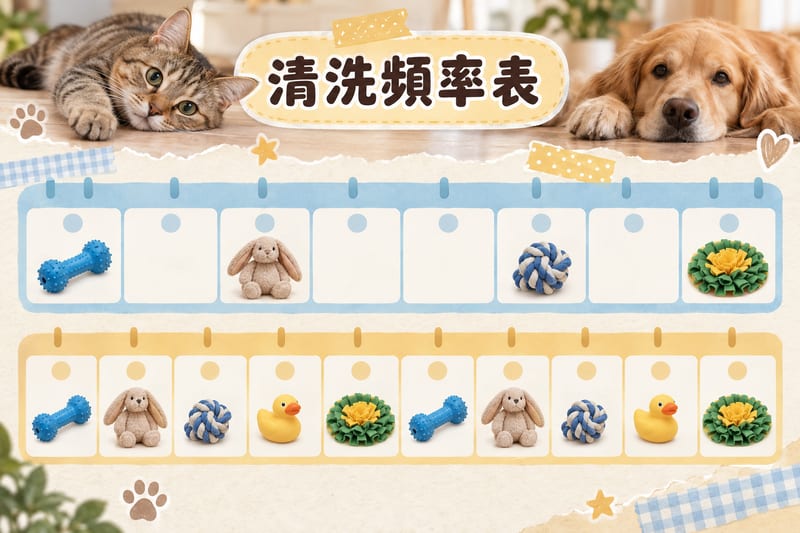
"How often to wash" has no single answer because the risk of the same toy varies greatly in different situations. The table below has two columns: "general situation" and "high-risk situation." High risk means: multiple pets sharing the same toy, kittens/puppies or pets over 7 years old at home, pets with skin or immune-related issues, toys that go on the bed, or pets currently on medication or recovering from illness.
| Toy type | General situation | High-risk situation |
|---|---|---|
| Hard rubber/silicone chews | Once a week | Once every 2 to 3 days |
| Plush toys, furry toys | Once every 1 to 2 weeks | Once a week |
| Rope toys | 1 to 2 times a week | Once every 2 to 3 days |
| Toys with built-in squeakers or batteries | Wipe outside after each play, deeper wipe every 2 weeks | Wipe once daily |
| Snuffle mats, treat-dispensing toys | Wash after each use, usually daily | Wash after each use, plus daily hot water rinse |
| Outdoor toys (frisbees, balls, tug ropes) | Wipe once the same day they come home, deep wash once a week | Deep wash once every 2 to 3 days |
Multi-pet households should pay special attention to shared toys. Toys are one of the most direct routes of cross-contact between pets; saliva remains on the same toy. So if one pet has skin issues, digestive upset or is on medication, the safest approach is to separate toys temporarily and wash daily. This is the same principle as separate food bowls and enough litter boxes: fewer shared objects means fewer chances of transmission.
Outdoor toys also have a seasonal factor. Wipe them clean with a damp cloth when you get home, then air dry; also pay attention to parasite prevention during mosquito season, because more outdoor activity means more contact with mosquitoes and other parasites. For a monthly calendar and check-up schedule, see Dog Heartworm Prevention. As for the home cleaning rhythm, you do not need a separate set of disinfectants for toys; using the same safe cleaning agents according to material is enough.
Cleaning product safety table: what you can and cannot use
Choosing the wrong cleaning agent can be more troublesome than not washing at all: chemical residue will be licked and swallowed by pets. The principle is to prioritise "rinseable after washing," do not increase concentration on your own, and never add fragrance or fabric softener. The table below classifies by whether a product can be used.
| Cleaning product | Can it be used on toys? | Correct method and notes |
|---|---|---|
| Unscented mild dish soap | Yes, for hard and plush toys | Add 1 to 2 drops to a basin of water, scrub for 30 seconds, rinse 2 to 3 times until no foam or slippery feel remains |
| Pet-specific cleaner | Yes | Follow the label dilution ratio; do not increase concentration; rinse and wipe dry afterwards |
| White vinegar mixed 1:1 with water | Yes, mainly for odour removal | Wipe or soak for 5 to 10 minutes, then wipe again with clean water; do not use together with bleach |
| Household bleach diluted 1:32 | Limited, only hard non-porous toys, not recommended for daily use | Soak for 10 minutes, then rinse more than 3 times with clean water, air dry completely before letting pets contact; avoid in cat households |
| 75% alcohol | Yes, only hard surfaces | Wipe and let evaporate completely, about 1 minute; only let pets play when dry, do not leave wet |
| Disinfectants containing phenols (label says phenol, cresol, etc.) | Not recommended | Cats metabolise phenols slowly, high residue risk; if you have cats, switch to pet-specific cleaner |
| Fabric softener, scent beads, scented disinfectant sprays | No | Fragrance and chemical residue will be licked and swallowed; never use on plush toys |
| Soaking soft rubber or electronic toys in water over 60°C | No | Causes deformation, glue failure, affects squeakers; 30 to 40°C warm water is enough for hard toys |
A few points need clarification. Bleach is not a daily option: if you really must use it, the dilution ratio must be accurate (1:32), soaking time should not exceed 10 minutes, then rinse more than 3 times with clean water and wait until completely odour-free and dry before giving back to pets; bleach must not be mixed with white vinegar or citric acid cleaners—mixing produces irritating gas, so keep the area ventilated while rinsing. Cat households are advised to skip bleach entirely; pet-specific cleaner plus scrubbing is enough for daily dirt.
Also, iodine tincture and povidone-iodine are wound-care products, not toy disinfectants; using them on toys is wasteful and requires extra rinsing, so they should not be used as substitutes. For the correct uses of iodine tincture and povidone-iodine, see Where Can Iodine Tincture and Povidone-Iodine Be Used on Pets?. As for steam cleaners, they are only suitable for hard heat-resistant toys; plush and electronic toys are not suitable, and steam cannot replace scrubbing and rinsing.
Five-step washing process: from disassembly to drying
Once you know what to wash with, the actual process can be fixed and followed each time.
- Disassemble and inspect. Take apart all removable parts: fabric covers, rope, squeaker shell, plugs. At the same time check for deep bite marks, loose threads, exposed springs or cracks; if present, put on the replacement list and do not spend time washing.
- Rinse off surface dirt first. Rinse with clean water for 10 to 20 seconds; do not apply soap first, to avoid dirt being sealed in by foam and to reduce the amount of cleaning agent needed later.
- Scrub key areas. A basin of 30 to 40°C warm water with 1 to 2 drops of unscented dish soap; use a soft toothbrush on grooves, inner walls, seams and air holes, scrubbing each area for at least 30 seconds; for plush and rope toys, put them in a laundry bag and let the washing machine handle it.
- Rinse thoroughly. Rinse hard toys 2 to 3 times with clean water until no foam or slippery feel remains; give machine-washed plush and rope toys an extra rinse to ensure no cleaning agent remains.
- Dry in position. Hard toys upside down, plush hung up, rope toys with strands separated and hung, in a ventilated place; on humid days use a dehumidifier or fan to speed up, and only put back in the toy basket when completely dry.
In the same process, five things not to do:
- Do not add fabric softener, scent beads or scented disinfectant sprays; fragrance residue will be licked and swallowed.
- Do not put toys back into a sealed toy basket before they are dry; moisture plus warmth is the ideal environment for mould.
- Do not use a microwave, oven or heat gun for "quick disinfection"; it causes deformation and glue failure, and temperature cannot be controlled.
- Do not soak toys with built-in squeakers or batteries; stop using if water gets in, because internal rust is invisible.
- Do not use bleach and acidic cleaners at the same time; it produces irritating gas, so keep the area ventilated while rinsing.
Drying, storage and when to replace: finishing touches for toy cleaning
Washing clean but not drying thoroughly is wasted effort. Hong Kong summers and humid days are very humid, so drying needs active acceleration: put toys in a room with a fan or dehumidifier; at room temperature below 25°C, plush and rope toys generally need 6 to 12 hours; hard rubber upside down usually dries in 2 to 4 hours. The test is simple: no cool feeling when touched, no moisture when pressing rope and stuffing, no musty smell—then it is dry.
Sunlight should be handled by material: hard plastic and rubber can be sunned briefly to help drying; plush and rope toys should not be directly sunned as fibres harden and colours fade. Low-temperature tumble drying is only for plush toys without electronic parts or leather; any with squeakers or battery compartments must not go in the dryer.
Storage is another key. Wipe and wash the toy basket itself every 2 weeks; ideally use a machine-washable fabric bag or an open-top hard plastic basket, not a long-term sealed container; keep the toy basket separate from food bowls and the litter box to avoid bringing litter particles and faecal-related dirt to toys. You do not need many toys; rotation (wash one batch, use another) is more practical than buying a lot.
Finally, replacement criteria. If any of the following appear, replace rather than wash again:
- Bite marks deep enough for a fingernail to catch, or obvious cracks.
- Rope fibres loose and fraying, with a risk of being bitten off and swallowed.
- Squeaker exposed, sound muffled, or cracks in the shell.
- Still musty after washing, or black spots on plush surface that cannot be washed off.
- Rubber surface sticky, white powdery substance, or rust in the battery compartment of electronic toys.
- Toy clearly deformed and no longer suitable for chewing (especially small pieces, which pose a swallowing risk).
For daily removal of surface hair from plush toys and household hair and dust, here are related products available at PetChill's online store:
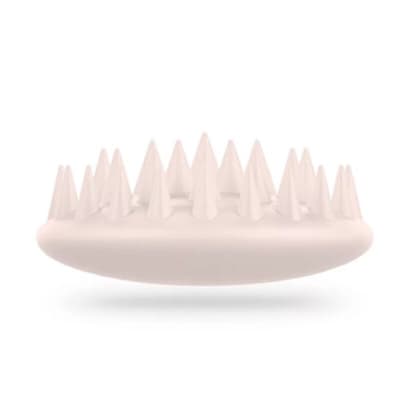
- PETKIT EverClean De-shedding Massage Comb (colour random) (pkx1b) — HK$35 (available for pre-order)
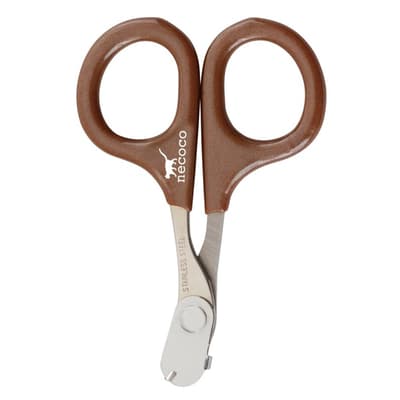
- Petio necoco Cat Round-Hole Nail Clippers with Safety Guard (91601544) — HK$132
Prices and stock are subject to the online store's current listed price. A de-shedding comb can first remove surface hair and dust from plush toys, reducing fluff in the wash; regular nail trimming (do not cut too deep—stop when you see the pink blood vessel) can reduce toys being snagged and frayed, and once frayed, those areas trap dirt. For nail care details, refer to the timetable in the Complete Guide to Daily Care.

Further reading
- Complete Guide to Daily Cat and Dog Care: Brushing, Nails, Ears, Home Cleaning (2026)
- Where Can Iodine Tincture and Povidone-Iodine Be Used on Pets? Suitable Situations and Methods
- Dog Heartworm Prevention: Essential for Hong Kong Dog Owners—Mosquito Season Calendar, Prevention Types and Check-up Schedule
- Complete Guide to Cat Teeth Cleaning: Hong Kong Price Table + Anaesthesia Risk + Tooth Resorption: Safest Way to Handle Bad Breath and Tartar
In an emergency, contact a veterinarian immediately; this article is for reference only and cannot replace veterinary diagnosis.
Information checked as of 2026-10-12 · Source: PetChill editorial team