
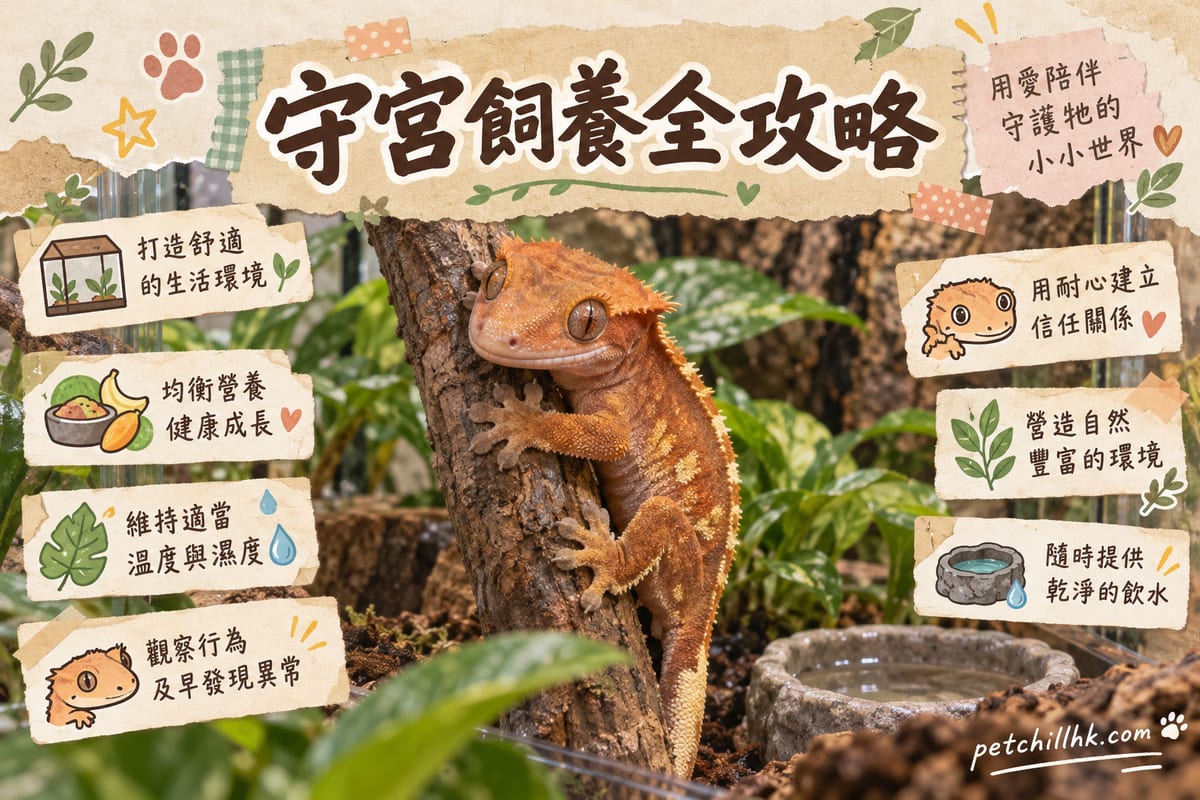
Quick answer: The key to stable gecko keeping is creating a temperature gradient in the tank (hot spot generally around 30 to 32°C, cool end around 24 to 26°C), belly heat with a thermostat, a humid hide to help shedding, and correct supplementation with calcium powder containing D3; diurnal geckos need UVB, while nocturnal ones can rely mainly on calcium powder. Hong Kong is humid, so ventilation and a hygrometer are essential—if in doubt, ask a vet.
Gecko basics and common species in the Hong Kong market
Geckos are lizards, and their native habitats range from deserts to tropical rainforests, so there is no universal answer to "how hot and how humid." The species commonly seen in Hong Kong fall roughly into two groups: nocturnal or crepuscular ground-dwelling types (most commonly the leopard gecko), and diurnal arboreal types (usually labelled as diurnal geckos in the market).
Chinese common names in the market are not very standardised; names like "diurnal gecko" and "golden gecko" can refer to different species in different shops, so it's best to confirm the scientific name and native climate before buying, because desert and tropical types have very different humidity requirements. Adults generally range from a dozen or so centimetres to around 30 cm, and keeping them is a long-term commitment; ground-dwelling types are mostly solitary and should not be housed together.
Housing: tank size, temperature gradient and substrate
For ground-dwelling geckos, floor area matters more than tank height. The industry generally recommends a minimum floor area of about 60 cm by 40 cm for adults; a tank that is too small makes it impossible to create a temperature gradient.
The temperature gradient is the core of a gecko tank: place heating equipment at one end (ground-dwelling types mostly use a heat mat to provide belly heat), and keep the other end cooler. The hot spot is generally recommended at about 30 to 32°C, and the cool end at about 24 to 26°C. A heat mat must be used with a thermostat; otherwise, if left stuck at the hot spot long-term, it can burn the belly.
For desert-type tanks, humidity is generally recommended to be kept in the lower range, but a humid hide is essential, such as a hiding box with damp sphagnum moss. For substrate, the safest for beginners is paper towels, reptile carpet or tiles; fine sand is easily ingested during feeding and can cause intestinal blockage.
How UVB and calcium powder with D3 work together
UVB depends on the species' habits. Most care information suggests diurnal geckos almost certainly need UVB; for nocturnal geckos the mainstream approach is no UVB, using calcium powder with D3 instead.
If you install a UVB tube, pay attention to distance and tube ageing: most information suggests replacing the tube regularly even if it still lights up, generally every 6 to 12 months depending on the model.
Calcium powder with D3 is the main supplement source for nocturnal geckos; the usual method is to dust the calcium powder onto live feeders and shake gently before feeding. Most recommendations are to supplement juveniles at every feeding, and adults typically once or twice a week. Ask your vet about dosage questions.
Diet: types of live food, feeding frequency and nutritional supplements
Geckos are insectivorous, and feeders should be appropriately sized and varied: crickets and Dubia cockroaches can form the staple, while mealworms and superworms are higher in fat and should not be the sole staple. Feeders should not be larger than the width of the gecko's head; too large can cause choking.
The nutritional value of the feeders depends on the keeper: live food should be gut-loaded for a few days with vegetables, oats or special feeder powder; feeding directly from the pet shop without gut-loading gives lower nutritional value. Feeding frequency is arranged by age; juveniles are generally recommended to be fed daily or every other day, while adults typically do fine with one feeding every two to three days.
Do not feed wild insects you catch yourself (they may carry pesticides and parasites). Remove leftover live food immediately, otherwise it may bite the gecko.
Daily care and cleaning
Every day, check the temperature and humidity readings, remove leftover feeders, clean up faeces and check the water dish. A gecko tank should not accumulate faeces long-term, because in a humid environment faeces are a breeding ground for bacteria and mould.
Every week, change the water, clean the water dish, and check the toes, tail tip and vent area for retained old skin. If you find a skin ring on a toe, soak it in shallow warm water early to soften it and help; do not pull hard. Cleaning products must be reptile-safe formulas, thoroughly rinsed and air-dried before putting the gecko back in the tank. Regarding handling, geckos do not need frequent handling; when moving them, support the body and belly, and do not pinch the tail.
Handling refusal to eat and health warning signs
Refusal to eat is the most common problem gecko keepers encounter, but the causes vary greatly. The most common is incorrect temperature: an inadequate hot spot slows or even stops digestion, so the gecko naturally does not want to eat. Next is stress from over-handling.
The principle is to rule out environmental factors first, not to give medication first: check temperature and humidity, confirm heating equipment is working, weigh and record body weight, and reduce disturbance. For adults, a short refusal to eat can generally be monitored, but juveniles are at much higher risk from fasting and cannot be held to adult standards. If you see the following, do not wait any longer:
| What you observe | What it may mean | What to do |
|---|---|---|
| Skin rings on toes or tail tip | Incomplete shed, constricting blood circulation | Soak to soften and help; do not pull hard |
| Trembling limbs, unsteady stance, soft jaw | Possibly metabolic bone disease | Review lighting and calcium powder; see a vet promptly |
| Skin ulcers, odour or mould spots | Bacterial or fungal infection | Isolate, improve ventilation, take to vet |
| Open-mouth breathing, nasal discharge | Respiratory problem | Adjust temperature, avoid direct air-conditioning |
| Faeces becoming thin, less frequent or absent | Intestinal blockage or digestive stasis | Stop feeding, record and see a vet promptly |
Metabolic bone disease is the most typical nutritional problem in reptiles, usually caused by errors in the combination of calcium, D3 and UVB. Signs include soft limbs, unsteady walking and a soft jaw; once bones deform it is generally irreversible. Any medical decision must be made by a vet experienced with reptiles.
Hong Kong weather, winter heating and common beginner mistakes
Hong Kong's high humidity all year is the biggest environmental variable in gecko keeping. Desert-type geckos come from dry native environments; long-term humidity above 70% raises the risk of skin problems, abnormal shedding and respiratory infections. The practical approach is to monitor with a hygrometer, improve ventilation, and keep the substrate dry.
Winter is the second key point: Hong Kong winter room temperatures can drop below 15°C, which is already low for a gecko that needs a hot spot. Heating equipment should be used with a thermostat, and a power-outage plan prepared, such as using heat packs or hot water bottles placed against the outside wall of the tank (never in direct contact with the animal); air-conditioning should also not blow directly on the tank.
Common beginner mistakes: judging temperature by touch, heating equipment without a thermostat, no humid hide, a long-term single type of feeder, daily handling causing stress, housing two males together, and using fine sand as substrate. Also, before renting or moving, check the tenancy agreement and building deed of mutual covenant for rules on keeping animals; there are not many vets in Hong Kong who see exotic pets, so it's advisable to call ahead to confirm, and ideally find a backup clinic before you even get the gecko.
Key points
- ✅ Create a temperature gradient in the tank: hot spot generally around 30 to 32°C, cool end around 24 to 26°C; heating equipment must have a thermostat.
- ✅ Nocturnal geckos rely mainly on calcium powder with D3; diurnal geckos almost certainly need UVB.
- ✅ Failed shedding most easily causes toe necrosis; retained skin should be soaked to soften and then helped, not pulled hard.
- ✅ Feeders should be varied and gut-loaded first; if refusing to eat, check the environment first, not medication.
- ✅ Hong Kong's humidity and cold winters are the two big variables; find an exotic vet early.
Related reading
- Six major pet care guides: cats, dogs, small animals, aquatics, reptiles, birds
- Horned frog care: setting up a ground-dwelling amphibian environment
- Corn snake care: hot and cold ends and escape-proof design
- For equipment, feeders and calcium powder, see PetChill pet supplies.
This article is for reference only and cannot replace veterinary diagnosis; in emergencies contact a vet immediately. There are not many vets in Hong Kong who see exotic pets, so it's advisable to call ahead to confirm.