
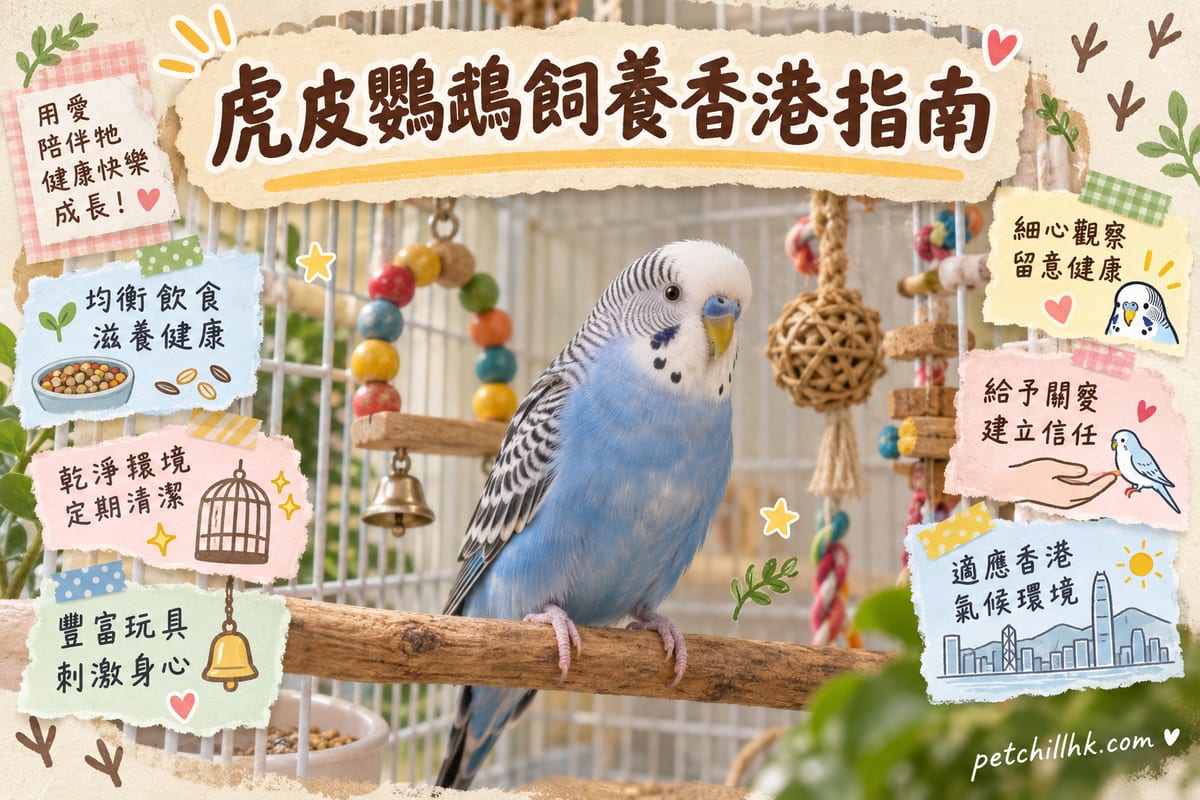
Quick answer: Three key points for budgies: 1) the cage needs enough horizontal flying space and natural perches; 2) the diet should be based on formulated food with seeds as a supplement — a long-term seed-only diet will cause problems; 3) they are flock birds and need daily interaction and 10 to 12 hours of dark sleep. Kitchen foods such as avocado, chocolate, onion and garlic should never be fed.
Budgie basics: colour varieties, lifespan and personality
Budgies originate from the inland grasslands of Australia, where they live in flocks and are highly dependent on their companions. The original colour is green body with a yellow face, and artificial selection has produced many colour varieties: sky blue, violet, opaline, lutino, albino and greywing, among others.
For a complete rundown of cages, diet and the toxic food list, see the budgie breed guide.
| Item | General reference |
|---|---|
| Average lifespan | About 5 to 10 years; longer with good care |
| Cage priority | Horizontal flying space matters more than height |
One thing beginners often misunderstand: budgies are small, but their activity level and social needs are not low. Being confined long-term in a tiny cage that is only big enough to stand in will worsen muscle and feather condition and easily lead to behavioural problems such as feather plucking.
Cage and perches: horizontal flying space is most important
The first requirement when buying a cage is width, not height. Birds fly horizontally, so a wide, low cage is more practical than a tall tower-style one. Bar spacing should not be too wide, and make sure the coating is not peeling or rusty, because lead and zinc coatings on old cages are toxic to birds.
Perches should not all be the same type. Natural branches of varying thickness are ideal, as they load different parts of the foot; but make sure they have not been treated with pesticide or paint. Sandpaper perches can damage the soles of the feet and are not recommended for long-term use.
The bottom grille should not be a long-term standing surface; use paper lining and change it daily. Rotate toys, and a mirror is not recommended long-term, as a single bird can become overly dependent on its reflection. Keep the cage away from the kitchen, direct sunlight by the window and air-conditioning vents.
Diet: formulated food is the base, seeds are only a supplement
Using formulated food as the staple is the more mainstream recommendation today. However, birds easily pick out the high-fat seeds and leave the rest, causing nutritional imbalance, obesity and fatty liver in the long run; keep only a small amount of seeds as training treats.
Add a small amount of dark vegetables daily, such as choi sum leaves, broccoli, carrot and bell pepper; fruit should only be given very occasionally in tiny amounts. Vegetables should be washed, chopped small and fed at room temperature, and leftovers removed the same day. For calcium, place a cuttlebone or mineral block for the bird to peck at freely.
Switch foods by mixing gradually over seven days or more; if the bird refuses food partway, go back to the previous ratio. Change drinking water daily, and a bird drinker is better than an open water bowl.
Flocking needs and daily interaction
Budgies are flock birds, and in the wild they maintain relationships through group activity and mutual preening. Two of the same sex or a pair of companions generally causes less stress than keeping one alone; if you keep only one, you must schedule fixed daily interaction, such as out-of-cage activity (the room must have windows closed, fans off and be away from the kitchen), hand-feeding treats and talking to it.
Before adding a new bird, quarantine and observe it first to avoid introducing disease; ask your veterinarian about quarantine arrangements. Stress responses in birds are often subtle and owners easily underestimate them; if no one is home for long periods, consider keeping two for company.
Daily care and cleaning
- Daily: change water, change the bottom paper, remove leftover vegetables and fruit.
- Weekly: wash food bowls and drinkers, check perches for wear or mould.
- Bathing: most budgies enjoy a shallow water dish or misting; if yours is not used to a water dish, try misting or a shallow dish and let it adapt slowly. Avoid direct cold draughts after bathing.
- Moulting: needs adequate nutrition; watch for abnormal feather loss or bleeding pin feathers.
- Beak and claws: if overgrown, have them handled by a veterinarian or an experienced professional; do not cut them yourself, as claws contain blood vessels.
- Cleaning products: use pet-safe formulas, rinse thoroughly and air-dry before putting the bird back in the cage.
Toxic foods and household hazards: more than just feeding
| Item | Risk | Notes |
|---|---|---|
| Avocado | Toxic to birds | Flesh, skin and leaves must not be accessible |
| Chocolate, caffeine | Contain theobromine and caffeine | No amount should be tried |
| Onion, garlic, leeks | Affect red blood cells | Cooked is equally unsafe |
| Sweeteners such as xylitol | Can cause hypoglycaemia | Keep chewing gum and sugar-free sweets out of reach |
| Fruit seeds, stones | Some contain natural toxic compounds | Always remove before feeding fruit |
| Kitchen fumes, overheated non-stick coating gases | Highly toxic to the respiratory tract | Keep birds away from the kitchen |
| What you observe | Possibly related to | What to do |
|---|---|---|
| Fluffed feathers, sitting at the bottom of the cage for long periods | Poor condition, common in illness | Keep warm and seek veterinary care as soon as possible |
| Tail bobbing up and down with breathing | Difficulty breathing | Treat as an emergency and seek veterinary care immediately |
| Discharge from nostrils or eyes | Respiratory infection | Seek veterinary care within the day |
| Weight loss, prominent breastbone | Chronic problem or inadequate nutrition | Weigh weekly and seek veterinary care as soon as possible |
The wing-clipping debate, sleep and noise management
Wing clipping is a controversial topic. Those in favour mainly consider safety: reducing the risk of window collisions, escapes and accidental injury. Those against argue that flight is natural behaviour for birds and that clipping affects muscle development and confidence. Most advice is to start with environmental safety — close doors and windows, fit screens; if you still consider clipping, it should be done by a veterinarian or an experienced professional.
On sleep, around 10 to 12 hours of dark, quiet time per day is generally recommended, and a cage cover is a common way to achieve this; sleep-deprived birds easily become irritable, pluck feathers and call for long periods.
Noise is a real issue in Hong Kong's small flats. Budgies are loudest at dawn and dusk. Practical steps include: not placing the cage against the bedroom or a shared wall, using a cage cover to reduce morning light stimulation, providing enough toys and interaction, and communicating with neighbours early. Public housing tenancy agreements generally restrict keeping animals, and private buildings should be checked against the deed of mutual covenant.
Hong Kong-specific notes and beginner mistakes
Humidity: during the wet season and rainy months, formulated food and seeds easily absorb moisture and go mouldy; mycotoxins cannot be dealt with by 'scraping off the surface', so seal the food, add food-grade desiccant and buy in small quantities. Power cuts and summer: a sealed room without a fan during a power cut can heat up quickly. Veterinary resources: few veterinarians in Hong Kong see birds, so it is worth finding one after you move and noting the night emergency arrangements.
The mistakes beginners make most often:
- Feeding only seeds long-term. Birds pick out the high-fat seeds, causing nutritional imbalance and fatty liver risk.
- Using a tiny cage only big enough to stand in, with no flying space.
- Casually sharing human food with the bird. Avocado, chocolate, onion and garlic are high risk.
- Ignoring sleep time. Keeping lights on late into the night leaves the bird chronically tired, and both mood and behaviour suffer.
- Clipping wings or claws yourself. High risk; leave it to a veterinarian or an experienced professional.
Key points
- ✅ The cage should be wide, not tall; horizontal flying space matters more than the number of levels, and perches should vary in thickness.
- ✅ Base the diet on formulated food with seeds as a supplement; a long-term seed-only diet causes nutritional imbalance and fatty liver risk.
- ✅ Avocado, chocolate, caffeine, alcohol, onion and garlic, and sweeteners must never be fed.
- ✅ They are flock birds; two companions or fixed daily interaction is key to reducing stress.
- ✅ Around 10 to 12 hours of dark sleep per day; a cage cover can help.
- ✅ Wing clipping is controversial; start with environmental safety, and if you must do it, leave it to a veterinarian or professional.
 K9 Natural full guide →
 Feline Natural full guide →
 Fuji One full guide →

