
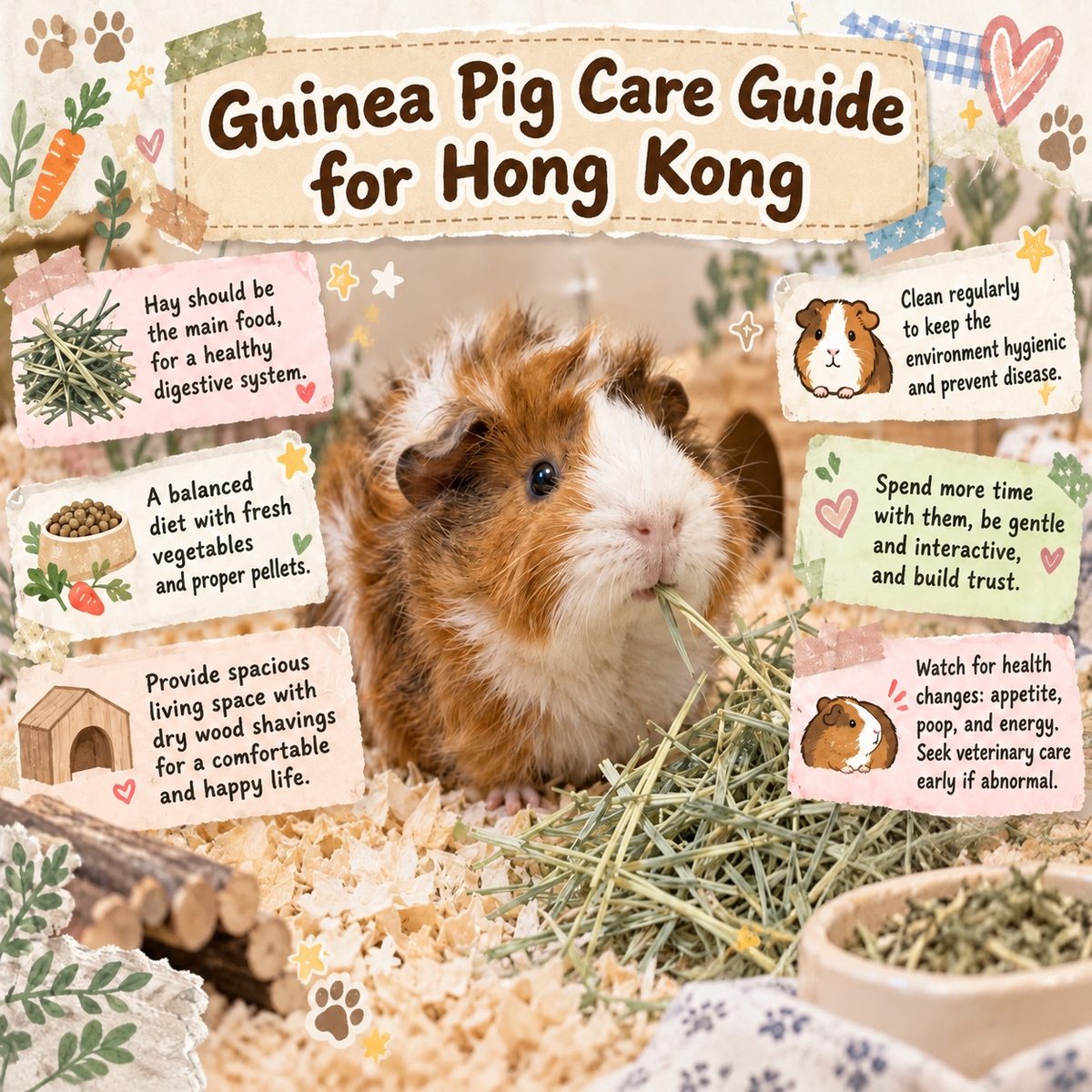
Quick answer: Three key points for guinea pigs: first, unlimited hay; second, vitamin C must be supplemented because their bodies cannot make it; third, they are social animals and ideally should have a companion. Bedding should be dry and soft, long-haired types need daily brushing, and any hair loss, dental or toileting problems mean a trip to the veterinarian.
Guinea pig basics: coat types, weight and lifespan
Guinea pigs, also called cavies, originated in the Andes of South America and are social herbivores. Common coat types include American shorthair, Abyssinian (rosetted), Peruvian (long-haired) and Teddy (curly).
| Item | General reference |
|---|---|
| Average lifespan | About 5 to 7 years |
| Adult weight | About 0.7 to 1.2 kg, depending on sex and build |
| Daily staple | Unlimited hay or grass |
| Essential nutrient | Vitamin C (body cannot synthesise it) |
| Suitable environment | Generally recommended room temperature about 18 to 24°C, avoid high humidity and direct air-conditioning drafts |
| Social needs | Social animal, ideally with a companion or daily interaction |
| Common coat types | American shorthair, Abyssinian, Peruvian, Teddy |
Note: Guinea pigs should not be housed with rabbits. Their nutritional needs differ, and certain bacteria common in rabbits can cause respiratory problems in guinea pigs.
Housing: enclosure, bedding and temperature/humidity
Space should be flat, not multi-level. For a single guinea pig, generally recommend at least about 0.7 square metres of floor space; two need more. In small Hong Kong flats, you can use an enclosure to section off an area on the floor, because guinea pigs are not good climbers and shelves increase the risk of falls.
Bedding should be dry. Paper pellets, unscented wood shavings and washable fleece liners are all fine; avoid wire mesh floors (which cause pressure, hair loss and even ulcers on the soles), scented or dyed shavings, and loose cotton. Room temperature is generally recommended at about 18 to 24°C, avoid direct air-conditioning drafts, and include a hideout, tunnel, food bowl and clean drinking water equipment in the enclosure.
Diet: hay, vitamin C and daily vegetables
Hay is the staple, with adult guinea pigs mainly on timothy hay and orchard grass, unlimited; young guinea pigs can have alfalfa hay. Vitamin C must be supplemented: like humans, guinea pigs cannot synthesise it, and deficiency affects teeth, joints and wound healing.
Common advice from literature and veterinarians is about 25 to 50 mg per day, but the actual amount should be confirmed by a veterinarian based on weight and health status. You can use a species-specific formula (check the production date, as vitamin C degrades over time), fresh vegetables such as bell pepper and coriander, and specialised supplement tablets; relying only on water drops is not recommended because vitamin C degrades in water.
Rotate a small amount of vegetables daily; fruit only in extremely small amounts. Never feed avocado, chocolate, onions, garlic, leeks or human processed foods; use guinea pig-specific formula, not rabbit food, and transition foods slowly.
Companionship: the psychological needs of a social animal
Guinea pigs live in groups in the wild, and solitary housing can lead to stress and behavioural abnormalities. Same-sex pairs or a neutered pair are generally recommended; keeping two together also allows them to warm each other and stay alert together.
Do not simply put two unfamiliar guinea pigs into the same enclosure: the first meeting should take place in a neutral, open area with someone supervising throughout. Pairing arrangements and neutering timing should be discussed with a veterinarian. If keeping only one, provide fixed daily interaction and offer foraging toys and hiding spots to reduce loneliness.
Coat care: brushing, trimming and cleaning
- American shorthair: brush two or three times a week, daily during shedding periods.
- Abyssinian: rosetted coat tangles easily; brush gently in the direction of the coat and do not cut off the rosettes.
- Peruvian and other long-haired types: part the coat and brush down to the skin daily to prevent tangles underneath; the hair around the rump and belly can be trimmed to about two to three centimetres to reduce urine and faecal staining, keeping scissors away from the skin.
Routine cleaning: full-body bathing is not recommended as guinea pigs chill easily and become stressed; clean local stains with wet wipes, then dry and keep warm. Check nails every four to six weeks; males can accumulate secretions around the anus, so check if there is odour or clumping, and consult a veterinarian if unsure.
Health warning signs: common diseases and symptoms
| Observation | Possible related condition | What to do |
|---|---|---|
| Localised hair loss, flakes, frequent scratching | Skin mites, fungal infection | Isolate and seek veterinary care promptly; do not self-medicate |
| Drooling, eating slowly, dropping food | Overgrown teeth or malocclusion | Veterinary examination, may require anaesthesia |
| Swollen joints, reluctance to move, loss of appetite | Possibly related to vitamin C deficiency | Review diet and supplementation, ask a veterinarian |
| Nasal or eye discharge, noisy breathing | Respiratory infection | Seek veterinary care within the day, keep environment warm and well ventilated |
| Hair loss, redness, wounds on soles | Footpad ulcers, related to damp or hard bedding | Change to dry, soft bedding and seek veterinary care promptly |
Guinea pigs are small and deteriorate quickly. Weigh them weekly; weight loss often reflects problems earlier than appetite changes; if they stop eating completely for more than half a day, treat as an emergency.
Hong Kong specifics: humidity, summer and veterinary resources
Humidity is the biggest variable. During the humid spring and rainy season, bedding and fleece liners absorb moisture easily, leading to more skin fungal and footpad problems; remove wet bedding daily, wash fleece liners daily or every other day, and use a dehumidifier, but do not keep the enclosure in a constant cold draft.
Prevent heatstroke in summer: keep air circulating, place tiles or frozen water bottles for them to lie on, avoid west-facing windows or rooms without air-conditioning, and have backup arrangements for power cuts. In small flats, guinea pigs' wheeking for food can be louder than expected; thick floor mats can reduce the impact.
Public housing tenancy agreements generally restrict pet keeping, and private buildings should be checked against the deed of mutual covenant; veterinarians in Hong Kong who see guinea pigs are few, so it is advisable to find one after moving and note the after-hours emergency arrangements.
Five mistakes beginners make most often
- Treating guinea pigs like rabbits. Both eat hay as a staple, but guinea pigs need extra vitamin C, and food and environment are not interchangeable.
- Thinking vegetables provide enough vitamin C. Amounts and content are inconsistent; a species-specific formula or supplement tablets should form the base.
- Relying only on water drops. Vitamin C degrades in water, and you don't know how much each one drank.
- Using wire mesh floors or small cages. Footpad ulcers and stress problems mostly stem from this.
- Not brushing long-haired types, or waiting until something is obviously wrong before seeing a vet. Guinea pigs hide pain until the last moment; weight records are the most practical early warning sign.
Key summary
- ✅ Hay must be unlimited; it is the staple and the source of tooth wear for guinea pigs.
- ✅ Vitamin C must be supplemented; their bodies cannot make it, and water drops alone are not enough.
- ✅ Guinea pigs are social animals; ideally keep a same-sex companion, and if kept alone, interact daily.
- ✅ Bedding should be dry and soft; wire mesh floors cause foot problems.
- ✅ Long-haired types like Peruvians need daily brushing; the hair around the rump and belly can be trimmed short.
- ✅ Weekly weighing is the most practical early warning sign; seek veterinary care if weight continues to drop.