Quick answer: The key to safe homemade fresh food is doing all five things: avoid toxins, cook thoroughly, maintain hygiene, refrigerate, and follow a recipe. Any slip-up turns love into risk.
Bottom line first: homemade fresh food can be made safe, but only if you do all four things — avoid toxic ingredients, cook and handle cleanly, store with discipline in the fridge, and use a nutritionally balanced recipe with a basis. Miss any one, and the intention of "loving your pet" can easily turn into poisoning, gastroenteritis or long-term malnutrition. Below we break it down item by item, from the toxin list to storage rules.
Is homemade fresh food safe? The five bottom lines
The answer is yes, it is safe, but you must do it thoroughly. The risk of fresh food does not come from the act of "cooking it yourself", but from the details before and after cooking. Five basic safety principles:
- Fresh ingredients — using expired, spoiled or smelly meat means the bacterial load is off the charts from the kitchen start.
- Cook first — unless under professional guidance, heat all ingredients thoroughly to sterilise; don't chase "raw is more nutritious".
- Hygienic handling — keep chopping boards and knives used for raw meat separate from those for human food; wash hands and disinfect after handling; wash utensils daily.
- Nutritional balance — you cannot just cook a pot of meat; calcium-phosphorus ratio and trace elements must be meaningfully managed.
- Follow an approved recipe — the safest approach is to execute a recipe prescribed by a registered veterinarian or animal nutritionist; don't improvise.
Tip: Among the five bottom lines, the easiest to fail are numbers 4 and 5. Many owners think "no additives, real human food" equals healthy, but cats and dogs are not miniature humans — their nutritional requirement tables have their own columns, and an improvised menu can easily lack calcium, taurine or have single-source protein.
Which ingredients must never go into the pot?
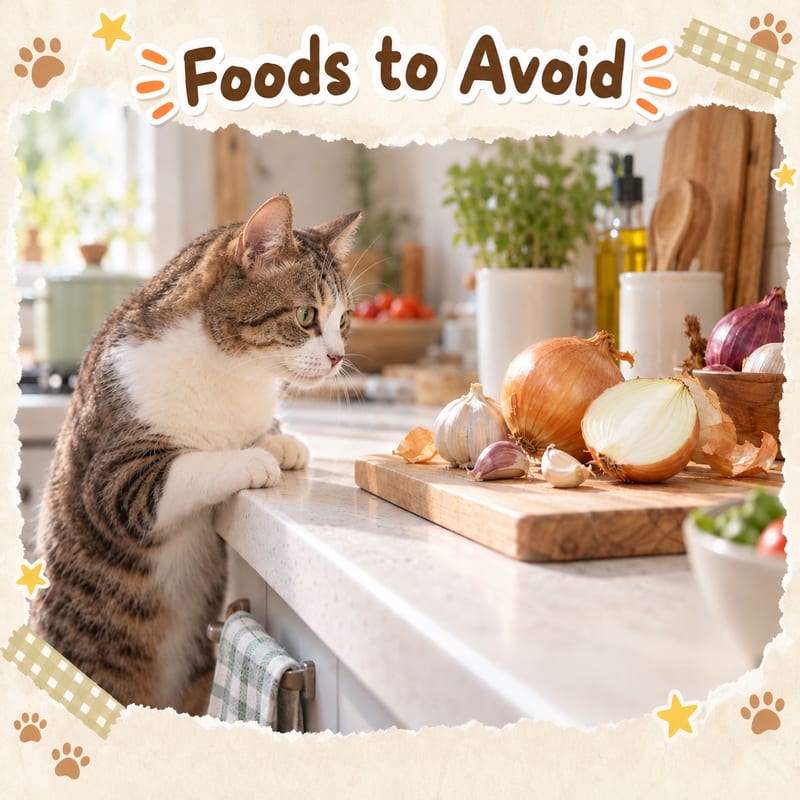
Stick this list on the fridge:
| Ingredient | Risk |
|---|---|
| Onions, garlic family (spring onions, chives and relatives) | Destroy red blood cells, can cause haemolysis |
| Chocolate | Theobromine poisoning, affects heart and nerves |
| Grapes / raisins | Can cause kidney failure |
| Avocado | Flesh contains toxic components |
| Xylitol (sugar-free foods) | Blood sugar crashes, can be life-threatening |
| Raw bones | Splinter and choke, pierce intestines |
| Seasoning (salt, oil, spices) | Harmful in excess, completely unnecessary |
| Cooked bones | Also splinter and become sharp, do not feed |
⚠️ Important: Onions, garlic, chocolate, grapes, avocado and xylitol are toxic to cats and dogs. If any fresh food recipe contains these words, exit immediately. Raw bones can choke and even pierce the intestines; if you want to give bone, it must be professionally processed (ground), otherwise leave it out. The seasoning principle in one sentence: no salt, no oil, no spices — original flavour is the highest standard.
How to store fresh food so it doesn't become a bacteria culture?
Fresh food has no preservatives and no vacuum packaging, so bacteria grow much faster than in dry food. Storage discipline is half of safety:
- Cook and serve immediately — ideally cook and finish; make only one to two days' worth at a time.
- Two-hour rule — leftovers should not sit at room temperature for more than two hours; if not finished, refrigerate.
- Refrigerate 2–3 days — keep in the fridge compartment, sealed in a container, do not mix with raw meat.
- Freeze in portions — portion per meal and freeze at -18°C; thaw only what you need, do not refreeze the whole block repeatedly.
- Thawing discipline — thaw in the fridge in advance, not overnight at room temperature; consume the same day after thawing, do not refreeze leftovers.
- Watch high-risk bacteria — Listeria and Salmonella can still multiply in cold conditions; clean the fridge regularly and throw out immediately if you smell anything off.
Tip: A simple test: if you wouldn't dare eat it yourself, or it's been sitting all day and you're not sure it's fresh, don't give it to your cat or dog. The shelf-life standard for fresh food should match your own kitchen, not dry food.
Feeding only fresh food: how to ensure nutritional balance?
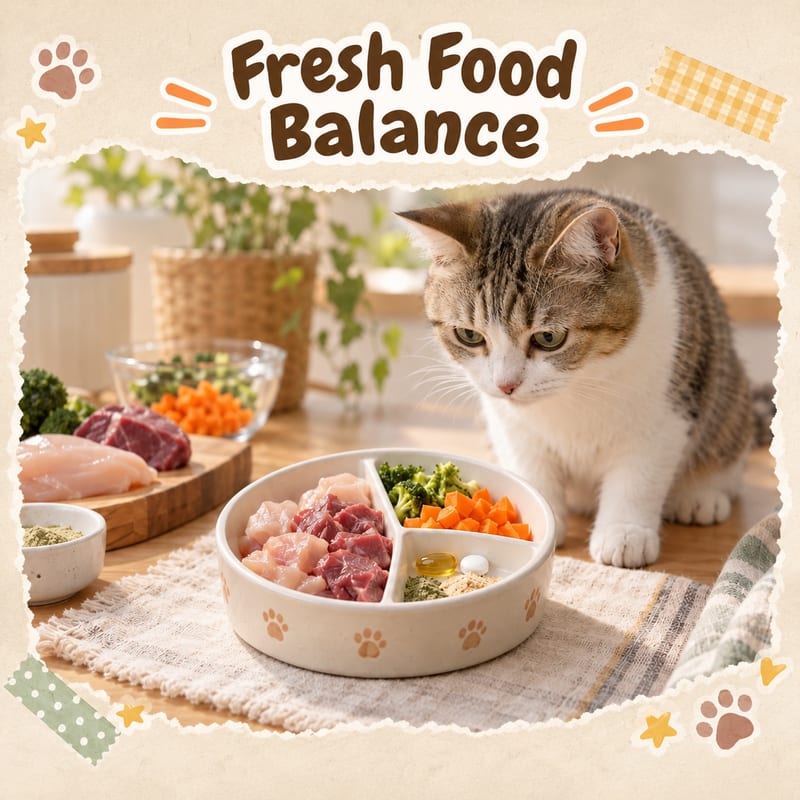
This is the biggest hidden pitfall of homemade fresh food. Clean cooking does not equal complete feeding:
- Pure meat diet inverts calcium and phosphorus — meat is high in phosphorus and low in calcium; long-term meat-only feeding disrupts bone metabolism; you need recipe design (e.g. bone meal, calcium supplements) to restore balance.
- Cats need taurine — deficiency is linked to heart muscle and retinal problems; cooking destroys it, so you must supplement via the recipe.
- No shortcuts for micronutrients — vitamin and mineral doses are hard to gauge in a home kitchen; a little off, and a year later it's a big problem.
So there are two standard approaches: either use a fresh food recipe approved by a veterinarian or animal nutritionist (with supplements and dosages specified), or make fresh food only part of the diet — for example, less than half of daily calories, with the rest from complete balanced commercial food, which gives much higher error tolerance.
When should you not feed fresh food on your own?
For the following cats and dogs, risk tolerance is low; any dietary change must first consult a registered veterinarian and follow instructions:
- Kittens and puppies — growth stages are most sensitive to nutrient ratios.
- Pregnant and nursing mothers — high and special demands; home recipes easily fall short.
- Chronic diseases such as kidney, urinary, pancreatic — diet is part of treatment; self-formulated meals can set them back.
- Weak immunity, frail elderly — even a small bacterial load is a big deal for them.
- Underweight or overweight — calorie calculation errors are magnified at both ends.
When to see a vet immediately?
During fresh food feeding, do not wait and observe for the following symptoms; seek medical help as soon as possible:
- Ingestion of any item on the toxin list (chocolate, grapes, xylitol, large amounts of onions/garlic) — call the vet immediately, bring packaging or recipe.
- Vomiting, diarrhoea with blood, lethargy, refusal to eat for more than a day
- Vomiting, constipation, abdominal pain, bloody stool after eating raw bones — possible obstruction, an emergency.
- Sudden seizures, abnormal heartbeat, rapid breathing — signs of poisoning; take to the vet immediately, do not induce vomiting yourself.
What you can do starting today
- Stick the toxin list on the fridge and have everyone in the house (including helpers who feed) check it once.
- Start with small trial batches: no salt, no oil, original flavour, meat and vegetable ratios per an approved recipe.
- Buy sealed containers and portion bags; establish the discipline of "into the fridge within two hours, eat within three days refrigerated".
- In the early stage, replace only some meals with fresh food, monitor stool and weight, then slowly adjust proportions.
- Planning long-term full fresh food? First book a registered veterinarian or animal nutritionist to discuss recipes and supplements, and follow instructions.
Want a more complete fresh food plan? PetChill's pet fresh food guide and raw vs cooked comparison include nutritional ratio breakdowns; executing alongside this safety checklist will be much safer.
Further reading:
This article is for reference only; consult a registered veterinarian for any concerns.
Hong Kong Small Kitchen Practical Checklist: A Safe Fresh Meal in 30 Minutes
Hong Kong living is cramped, kitchens often have only two burners, but by following these steps you can still cook safe fresh food within 30 minutes:
1. Prepare tools (buy once)
- Two small chopping boards: one for raw meat, one for cooked food, marked with coloured stickers, never mix.
- One small pot: dedicated to fresh food, wash immediately after use, not shared with human cooking pots.
- Mini electronic scale (0.1g precision): measure supplements per recipe without being too generous or too stingy.
- Silicone portion boxes 100ml: one meal per box, saves space in the fridge.
2. Shopping route (works for Hong Kong Island / Kowloon / New Territories)
- Wet market: buy local chilled chicken breast, local choy sum / carrots before 8am, fresh and cheap.
- Japan Home / ParknShop: buy frozen salmon mince (skinless and boneless) to reduce prep time.
- Pharmacy / iHerb: buy vet-recommended bone meal, taurine powder; small packs won't expire before use.
3. 30-minute schedule
| Time | Step | Notes |
|---|---|---|
| 0–5 min | Wash and chop vegetables, weigh meat | Chop vegetables small for quick cooking |
| 5–20 min | Put all ingredients in the small pot, cook over medium heat | Meat changes colour, vegetables soften |
| 20–25 min | Turn off heat, cool, add supplements | Add powder when lukewarm, not while boiling |
| 25–30 min | Portion into boxes, label date | Put into fridge compartment immediately, don't leave on the counter |
4. Storage for small flats
- Reserve one shelf in the fridge for fresh food, label "pet only", do not stack with human food.
- Label each box with the date; throw away if not eaten within three days, don't be soft-hearted.
- If cooking five days' worth, immediately freeze the last three days' portions; thaw in the fridge the night before, not at room temperature.
5. When to see a vet immediately (Hong Kong version)
- Ingestion of toxins: call a 24-hour emergency vet immediately (e.g. CityU Veterinary Medical Centre 3442-8888), bring the recipe or packaging.
- Vomiting, constipation after eating raw bones: Hong Kong Island go to VEC, Kowloon to AMAH, New Territories to NPV, all have emergency services.
- Sudden seizures, rapid breathing: drive or take a taxi to the nearest emergency vet, don't wait.
Remember: Hong Kong transport is convenient, but not every emergency vet is 24-hour; save the nearest emergency numbers in your phone in advance so you don't have to search when something happens.
Related product recommendations
When choosing food, the most important things are your pet's age, digestion and taste response. Here are products related to this article, available at PetChill:
- Fuji One Freeze-Dried Cat & Dog Food Raw Meat Complete Diet Duck Recipe 500g (Fuji One) — freeze-drying locks in nutrients
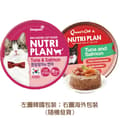
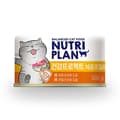
- Nutriplan Cat Canned Food Nutrition Project Daily Nutrition Can Adult Cat Immunity & Joint Formula 85g (64656) (Nutriplan Nutrition Project) — joint health formula
See more: Fuji One Brand Guide
Product prices and latest offers are subject to the product page; this article is for reference only.
📌 Key takeaways
- ✅ Stick the toxin list on the fridge; never put onions, garlic, chocolate, grapes or xylitol in the pot
- ✅ Keep raw meat boards and knives separate; refrigerate within two hours of cooking; eat within three days refrigerated
- ✅ Follow a vet- or nutritionist-approved recipe; don't improvise
- ❌ Pure meat diets cause calcium-phosphorus imbalance, long-term calcium and taurine deficiency
- ❌ Kittens, puppies, pregnant/nursing, chronic disease, weak immunity — do not switch to fresh food on your own
 Fuji One full guide →


 Fuji Cat full guide →

 Nutriplan full guide →