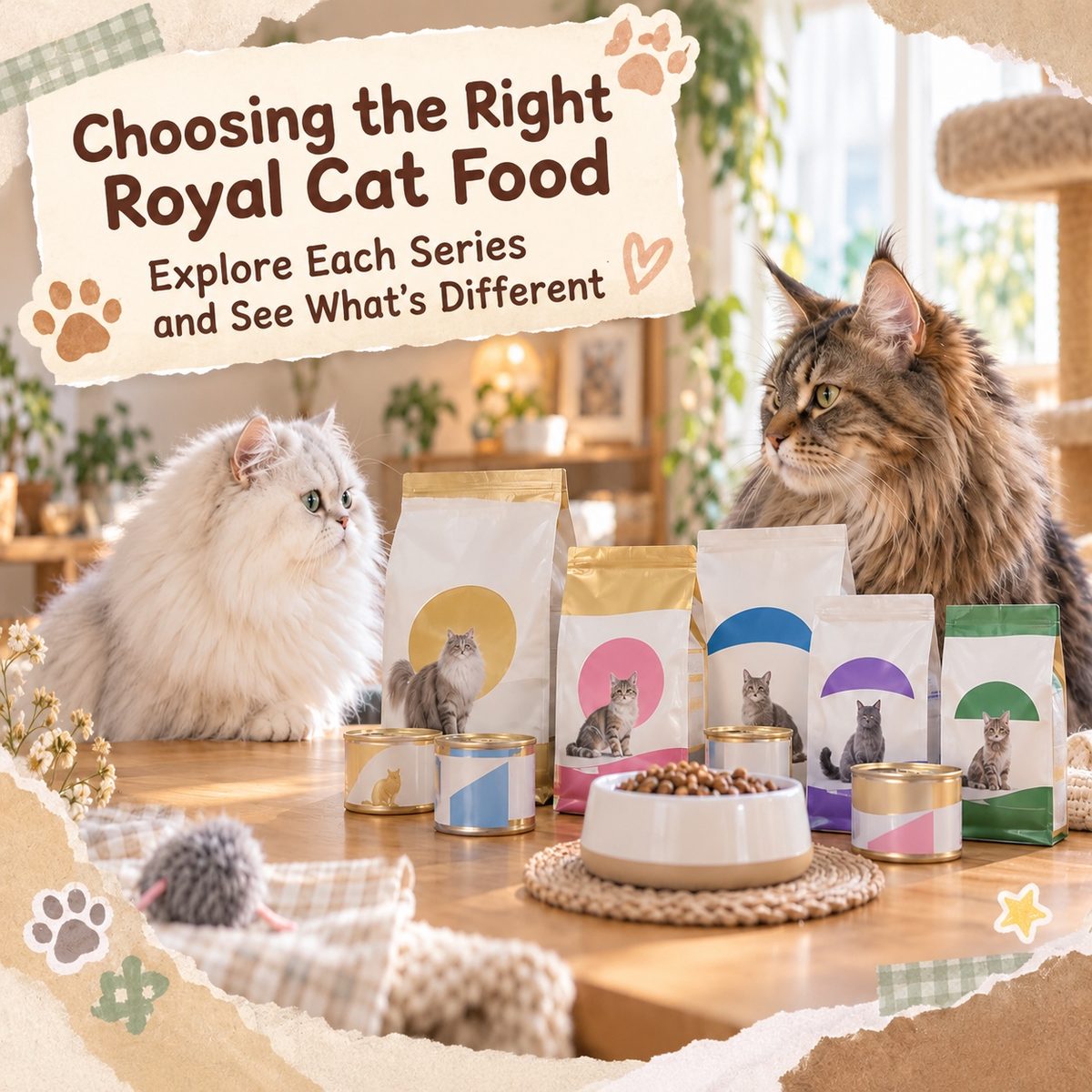
Quick answer: The essence of Royal Canin is not "one strongest formula" but "precise matching": first confirm your cat's health status → breed → age → observe reaction, and choosing the right exclusive formula is the correct way to use it.
In one sentence: Royal Canin is a brand on the "precision nutrition" path—different breeds, different ages, different health conditions all have corresponding formulas, from Maine Coon food and Persian food to kidney and urinary prescription food, it is one of the most common international brands in Hong Kong. But it is not a "one strongest" brand; choosing the right formula is the correct way to use it. Below we break down its philosophy, product lines and decision logic.
What is Royal Canin's background? What is "precision nutrition"?
Royal Canin originates from France, and its brand belief is: no single food can feed all cats and dogs. Different breeds' body sizes, digestive tract structures, coat lengths, different ages' metabolic needs, and different health conditions' dietary restrictions should correspond to different formulas. So Royal Canin's products are not "one food for everything" but are split into dozens of targeted lines.
Core features:
- Breed-specific—Maine Coon, Persian, French Bulldog etc. each have exclusive formulas
- Life stages—kitten, adult, senior segmented design
- Prescription food—targeting diseases (kidney, urinary, skin, digestive)
- Scientific—developed by nutritionists and veterinarian teams, high quality and batch stability
The correct entry point to understanding Royal Canin is "which slot do you need": first locate which breed, which stage, and whether there are health issues for your cat, then match the corresponding product in the library—the entire system of this brand is designed for this "lookup and match" action. For a brand with such fine segmentation, asking "is Royal Canin good" is actually the wrong question; you should ask "which slot suits my cat".
Three major product lines: breed food, stage food, prescription food
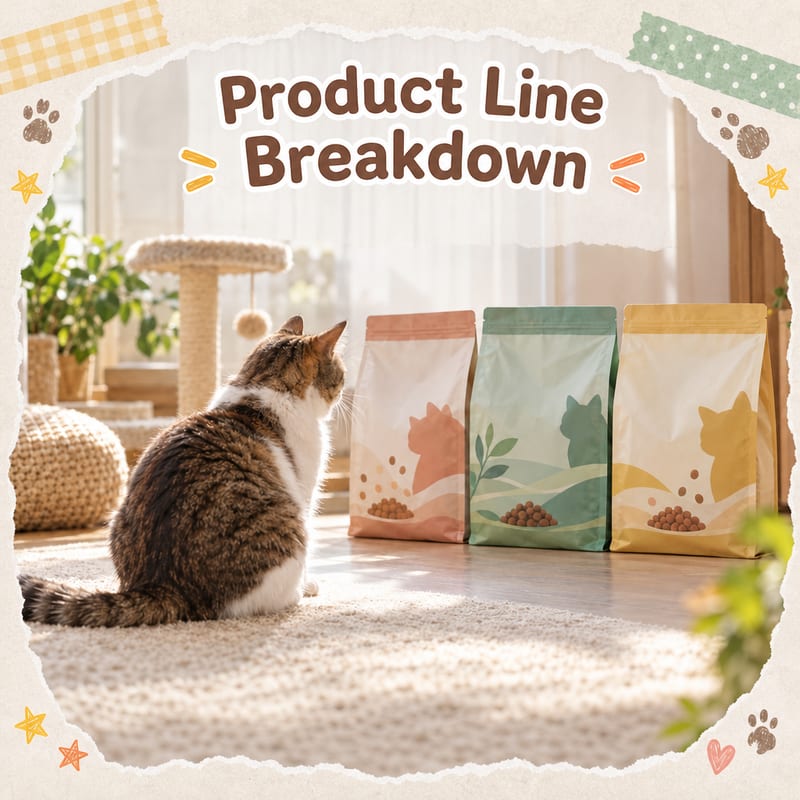
1. Breed-specific food—adjusted for body size and physiological characteristics. For example, Maine Coon food caters to large cats' body size and joint needs; French Bulldog food matches short-nosed breeds' chewing and breathing characteristics; Persian food targets long-haired breeds' hairball problems and digestive needs. Besides nutritional ratios, kibble shape, size and hardness are adjusted to the breed's jaw structure—this is the most concrete and easily overlooked aspect of Royal Canin's segmentation.
2. Life-stage food—
- Kitten/Puppy—high protein and high calories to support growth
- Adult cat/dog—maintain weight and body condition
- Senior cats and dogs—easy-to-digest formula with joint care
3. Prescription food—dietary solutions for diseases, prescribed by veterinarians based on diagnosis, not for free-choice daily feeding:
| Direction | Formula approach |
|---|---|
| Kidney | Low phosphorus, controlled protein and amount |
| Urinary | Controlled mineral content |
| Skin | Sensitive skin support |
| Digestive | Easy to digest, low residue |
Prescription food is part of treatment; please be sure to follow your veterinarian's instructions on formula, portion control, and timely follow-up checks; do not treat it as "premium food" for long-term self-feeding, and do not stop or switch on your own.
How to choose the right Royal Canin formula? Four-step positioning method
Royal Canin has many products, and the most common mistake is to "randomly pick a can of Royal Canin" and consider the task done. The correct procedure is to position step by step:
- First ask about health—any diagnosed disease or dietary restrictions mentioned by the veterinarian? If yes, go directly to the prescription food process and follow the vet's plan; no need to choose yourself.
- Then ask about breed—is it a breed with distinct characteristics like Maine Coon, Persian, Scottish Fold? If there is a corresponding breed food, you can prioritize it; ordinary mixed breeds have no exclusive line, so general stage food is fine.
- Match age—under one year choose kitten food, over seven years consider senior formula, in between use adult cat food; pregnancy and lactation are high-demand stages, ask your vet if unsure.
- Finally observe reaction—after settling on a formula, observe for four to six weeks: formed stools, stable appetite, glossy coat—only then is it truly suitable.
This order cannot be reversed: health factors always come first. A normal mixed-breed cat without disease does not need to force breed food; conversely, a cat with urinary problems, even if purebred, should first address medical diet, with breed food secondary.
After positioning the formula, there are two practical habits: first, keep purchase records, note the formula name and suitable stage on the can, and refer back when restocking to avoid buying the wrong line of the same brand; second, when opening new food, first do an observation trial, watch stools, vomiting and appetite within a week, and make a decision immediately if anything abnormal—do not force-feed just because "you bought a big can". These two tips are not specific to Royal Canin but apply to any brand with targeted segmentation—the finer the segmentation, the more concrete the cost of buying wrong.
Royal Canin or high-protein brands?
Common comparison. Royal Canin's strength is not competing on protein numbers but "symptom-specific segmentation"; brands like Orijen and ACANA use high meat and high protein as selling points. Compare by need:
| Your pet's situation | More suitable direction |
|---|---|
| Specific purebred with distinct characteristics | Royal Canin breed food |
| Disease requiring dietary management | Royal Canin / Hills prescription food (follow vet's advice) |
| Healthy, wants high meat and high protein | Natural foods like Orijen, ACANA |
| Needs precise feeding by kitten/adult/senior stages | Royal Canin stage food |
Note: Some Royal Canin formulas have animal protein ratios that are not top-tier, and the ingredient list has more grain components than high-meat brands. If you mind, check each ingredient list and expected analysis before deciding; the word "Royal Canin" itself is not an exemption from inspection gold medal—choosing the wrong formula is still a waste.
By the way, let's clear up a common misconception: "Many people think Royal Canin is prescription food." In fact, prescription food is only part of Royal Canin's product library; the most easily available in the market are daily main foods. So "I only feed Royal Canin" does not equal "my cat is on medical-grade diet", and vice versa—be clear about which line you are buying before discussing nutritional value.
When should you see a vet immediately?
No food can replace diagnosis and treatment. Seek medical attention as soon as possible if the following symptoms appear:
- Frequent visits to the litter box with no urine, blood in urine, inappropriate urination—urethral obstruction in male cats is an emergency and must be treated immediately
- Vomiting and diarrhea lasting more than a day, complete refusal to eat
- Sudden surge in water intake and urine output, significant weight loss
- Repeated skin itching and hair loss, long-term unresolved ear inflammation—suspected food allergy should be confirmed by a veterinarian with an elimination diet test; do not guess allergens and switch food randomly, delaying treatment
What you can do starting today
- Use the four steps "health, breed, age, reaction" to locate your pet's slot in the Royal Canin product library
- Turn over the current can of Royal Canin you are feeding and check if the first five ingredients include named protein sources
- If you have prescription food on hand, note the follow-up date and follow the vet's instructions on formula and portion
- Allow seven to ten days for a gradual food transition, recording stool shape and appetite changes daily
- If you are considering Royal Canin or high-protein food for a healthy cat or dog, list your budget first and compare ingredient lists one by one
Still hesitating between two or three options? PetChill's cat food recommendation guide has ingredient lists and price breakdowns for common Hong Kong brands; bring this article's four-step positioning method and compare slot by slot—you'll choose much faster and more accurately.
Further reading:
- 2026 Hong Kong Cat Food Recommendation Complete Guide →
- Orijen Brand Guide →
- Hills Science Diet Guide →
- Persian Cat Care Guide →
This article is for reference only; consult a registered veterinarian for any questions.
Related product recommendations
The most important thing in choosing food is to look at your cat's age, digestion and taste reaction. Below are products related to this article available at PetChill:
- Nutriplan Cat Food Nutrition Project All-Effect Healthy Nutrition Formula 5kg (64352) - Limited Time Offer (Nutriplan Nutrition Project) — available at PetChill
- Bella & Molly's Dutch Bella Royal Selection Cat Food AAFCO Anti-Aging Grain-Free Series Single Protein Salmon Formula 50g (Limited Trial) (Bella & Molly's Bella) — grain-free formula, also suitable for cats with sensitive digestion
Want to see more: Nutriplan Nutrition Project Brand Guide
Product prices and latest offers are subject to the product page; this article is for reference only.
📌 Key summary
- ✅ Royal Canin focuses on "precision nutrition", divided into three major lines: breed, stage, prescription
- ✅ Four steps to choose food: health → breed → age → observe reaction
- ❌ Do not feed prescription food as daily food long-term
- ❌ Do not ask "is Royal Canin good", ask "which slot suits my cat"
- ✅ High-protein brands and Royal Canin have different positioning; choose by need
 Royal Canin full guide →
 Orijen full guide →
 Nutriplan full guide →