
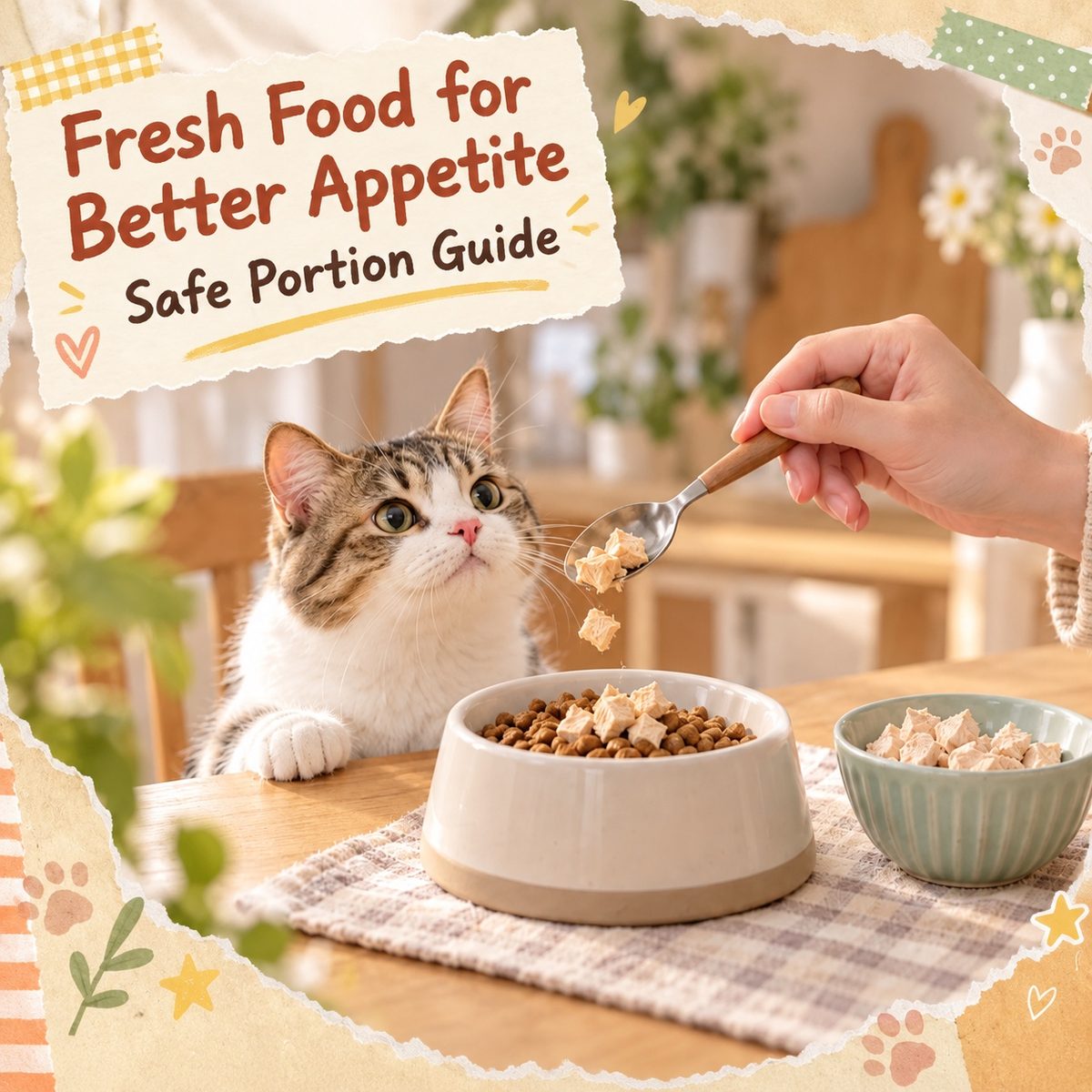
Quick answer: A topper is an "extra topping" added on top of the main food, using freeze-dried meat pieces, meat paste, fruit and veg puree or nutritional powder to boost appetite, but it should only make up about 10% of daily calories. It must never replace the main food, and toxic ingredients like onion and chocolate must be avoided.
A topper is an "extra topping" added on top of the main food—freeze-dried meat pieces, meat paste, fresh fruit and veg puree, nutritional powder—used to boost appetite, help with food transitions and add a moderate amount of nutrition. But it is a supporting player, not the star: it cannot replace the main food, and the portion should be kept to about 10% of daily total calories. This article explains which toppers to use and how, and which ingredients are landmines.
What is a fresh food topper?
A topper is a topping sprinkled on main food. There are four common types:
- Meat paste / meat juice—blended fresh meat or additive-free meat paste, with the strongest aroma
- Fresh fruit and veg—steamed pumpkin puree, okra, adding fibre and changing texture
- Freeze-dried meat—freeze-dried chicken pieces, fish pieces, strong aroma and easy to store
- Nutritional powder—vitamin/taurine powder used as needed
The function is clear: boost appetite + add a small amount of nutrition + make the main meal more appealing. It is especially suitable for fussy eaters, during food transitions, after illness when appetite is poor, or when you want to give senior pets "a little extra". Note: of the four types, only nutritional powder targets nutritional gaps; the other three mainly support appetite—trying to supplement nutrition by sprinkling meat pieces is the wrong approach from the start.
Toppers cannot replace main food
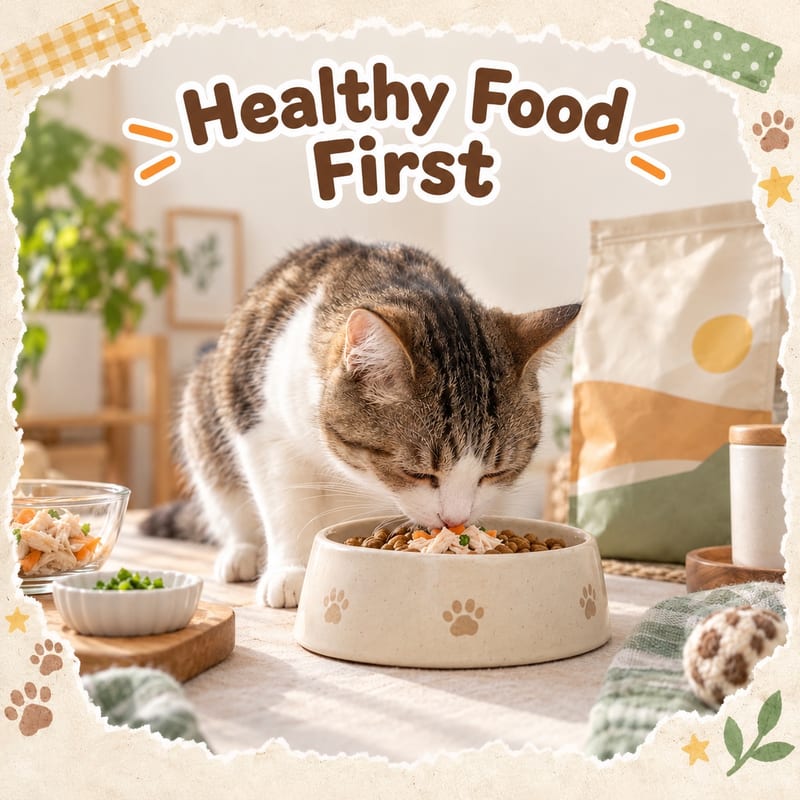
This is the one sentence to remember from the whole article:
- Main food is the nutritional foundation—a qualified complete wet food, dry food or approved fresh food recipe provides complete and balanced protein, vitamins and minerals
- Toppers are only supplementary—plain cooked meat has an imbalanced calcium-phosphorus ratio, and meat juice lacks trace element design; feeding it as a meal long-term will cause problems
- Too much has the opposite effect—toppers steal appetite, so cats and dogs eat less main food; calories can easily exceed requirements, and weight gain defeats the purpose
⚠️ Principle: Toppers should not exceed about 10% of daily total calories. If added, reduce the main food proportionally, just as people count rice when adding dishes. For an adult cat, assuming about 200 kcal per day, the topper limit is about 20 kcal—that is one level teaspoon of meat paste or a dozen or so freeze-dried chicken pieces, not "a big scoop as you please".
Practical scenarios: when are toppers best used?
1. Appetite boost for fussy cats and dogs—sprinkle half a teaspoon of freeze-dried meat crumbs or add one teaspoon of meat paste as a "cover" on the surface of the main food, using aroma to draw them in. Note: only cover half the surface, forcing them to encounter the main food while "foraging".
2. Bridge during food transition—new food not accepted? Sprinkle their favourite topper on the new food to build positive association, then use a 7 to 10 day mixing transition. The topper is a bridge, not a permanent destination; phase it out gradually after two to three weeks.
3. Post-illness / senior appetite recovery—when appetite is low, use a small amount of meat juice steamed with chicken paste to entice eating, but remember: if they don't eat for a long time, see a veterinarian; don't rely on toppers to force it. The premise for post-illness enticement is that the veterinarian has addressed the cause.
4. Increase water intake—add additive-free meat juice or broth (no salt, no onion) to the food to help dry-food-only pets get more water, which is especially meaningful for urinary health.
| Scenario | Suggested topper use | Notes |
|---|---|---|
| Fussy appetite | Half teaspoon freeze-dried crumbs covering half the surface | Force contact with main food |
| Food transition | Sprinkle favourite flavour on new food | Phase out gradually after 2-3 weeks |
| Post-illness enticement | Salt-free meat juice steamed chicken paste | Use only after cause addressed |
| Hydration | Salt-free meat juice/broth | Avoid onion and garlic |
Four key points when choosing a topper
- Natural first—freeze-dried meat and steamed fresh fruit and veg are safest homemade; steam half a pumpkin at a time for puree, portion into ice cube trays and store for two weeks
- No additives—avoid salt, sugar, seasonings, artificial flavours; the ingredient list should be short enough to count on one hand
- Watch allergens—if sensitive to chicken, try freeze-dried fish; introduce only one new ingredient at a time so you can trace the source
- Count as calories—toppers have calories, they are not "free extras"; include them in daily portions
These ingredients should not be used as toppers
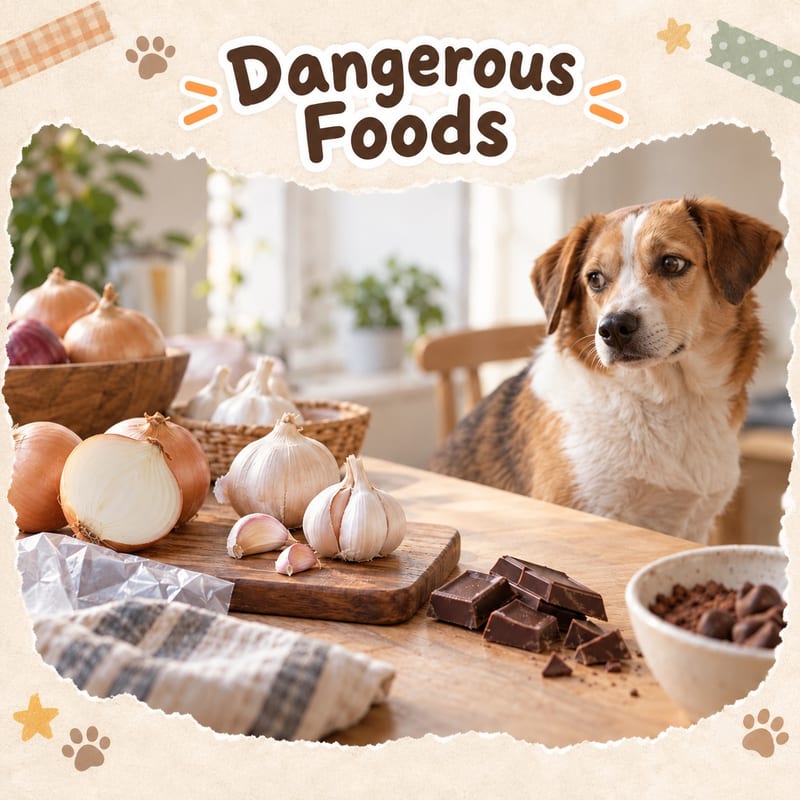
Good things from the human kitchen can be toxic to cats and dogs:
- Onion, garlic, chives—damage red blood cells, in any form (raw, cooked, powder, onion oil) are not allowed
- Chocolate / cocoa—risk of theobromine poisoning
- Grapes, raisins—can cause acute kidney injury
- Xylitol (sugar-free foods)—blood sugar crash and liver burden
- Pickled, fried, high-salt human foods—tasty but harmful
- Ripe avocado, raw dough—each has risks of toxicity and bloating
Safe fruit and veg options: steamed pumpkin, a small amount of okra, blueberries (dogs), carrot puree. For any questionable ingredient, verify first or ask your veterinarian before putting it in the bowl. Remember a simple principle: the methods people use to make food "tasty" (oil, salt, onion, garlic) are all the opposite for cats and dogs.
When not to handle it yourself and see a veterinarian?
- Sudden complete refusal to eat for more than 24 hours (especially fat cats; long-term not eating risks fatty liver)
- Poor appetite along with vomiting, diarrhoea, weight loss
- Drooling when eating, difficulty chewing—may be oral pain, not fussiness
- Still won't eat even with toppers, lasting several days—ask a veterinarian to investigate
Potential illness
- Itching, ear scratching, soft stool after adding toppers—suspect food sensitivity, stop the new ingredient immediately
Fussiness and poor appetite can be hard to distinguish; if there is no improvement after one or two weeks of observation, hand it to a professional.
What you can do starting today
- Choose a simple-ingredient topper for your pet (e.g. single-protein freeze-dried), as a "transition lure backup"
- Start with one teaspoon of topper per meal, count it in total calories and reduce main food accordingly
- Make a small box of steamed pumpkin puree ice cubes, add gradually to the bowl, without relying on processed sauces
- Record your cat's appetite for seven consecutive days to distinguish true fussiness from a body signal
- Weigh your pet every two months; even with topper extras, control calorie intake
Looking for clean-ingredient topping options? PetChill's pet food reviews and natural treats guide break down toppers and freeze-dried toppings available in Hong Kong one by one.
Further reading:
This article is for reference only; consult a registered veterinarian for any concerns.
Hong Kong small-unit practicalities: homemade and bought topper cheat sheet
Living in 300 sq ft doesn't mean no space for fresh food. Here is a Hong Kong-specific list, all available at ParknShop, Yata, and pet shops.
Homemade pumpkin puree (two-week portion)
- Buy half a Japanese pumpkin (about $18), peel and steam for 15 minutes, mash and portion into 14 cubes using a silicone ice cube tray (Wellcome $25/2-pack), each cube about 1 teaspoon. Once frozen, transfer to a zip-lock bag to save space and avoid odour transfer.
Freeze-dried meat piece purchase
- Single-protein freeze-dried chicken pieces (local brand 50g about $48), after opening small packs store in an airtight container in the fridge door shelf. A dozen or so pieces per time is enough; no need for large boxes.
Meat juice broth
- Buy two fresh chicken breasts for $30, add 600ml water and simmer for 20 minutes, strain and cool, portion into ice cube trays the same way. Remember not to add any seasoning.
Calorie calculation quick reference
- For an adult cat at 200 kcal/day, topper limit is 20 kcal. Commercial freeze-dried chicken pieces are about 1 kcal each, so 20 pieces max; meat paste cans state about 5 kcal per teaspoon, so at most 4 teaspoons.
When to see a veterinarian
- If they won't eat for two days even with toppers, or vomit immediately after eating, go to a 24-hour veterinary clinic the same day (CityU Veterinary Medical Centre, NPV, etc.).
- If ear scratching or diarrhoea appears after adding toppings, stop the new ingredient immediately; if it persists the next day, see a veterinarian.
Storage tips
- Store freeze-dried and nutritional powder in the fridge door shelf, moisture-proof and easy to reach; use reusable zip-lock bags for homemade puree, stick them on the inside of the fridge door to save space and avoid being crushed by other food.
Remember: Hong Kong's humid weather means any opened topper should be used within seven days; don't take risks to save money.
Related product recommendations
The most important thing when choosing food is your pet's age, digestion and taste response. Here are products related to this article, available at PetChill:
- Fuji One Freeze-Dried Cat & Dog Food Raw Meat Complete Food Duck Recipe 500g (Fuji One)—freeze-drying locks in nutrition
- Nutriplan Cat Meat Paste Nutrition Project Korean Meat Paste Meal Pack Salmon & Tuna 14g 100 packs (64796) (FK CIAO) - Limited Offer (Nutriplan Nutrition Project)—available at PetChill
Want to see more: Fuji One brand guide
Product prices and latest offers are subject to the product page; this article is for reference only.
📌 Key summary
- ✅ Four common topper types: meat paste, fresh fruit and veg, freeze-dried meat, nutritional powder
- ✅ Daily calorie limit about 10%; when adding, reduce main food
- ❌ Freeze-dried meat as a long-term meal causes calcium-phosphorus imbalance
- ❌ Human seasonings, onion, chocolate are all not allowed
- ✅ Sudden refusal to eat for more than 24 hours requires immediate veterinary attention
 Fuji One full guide →


 Fuji Cat full guide →
 K9 Natural full guide →



