
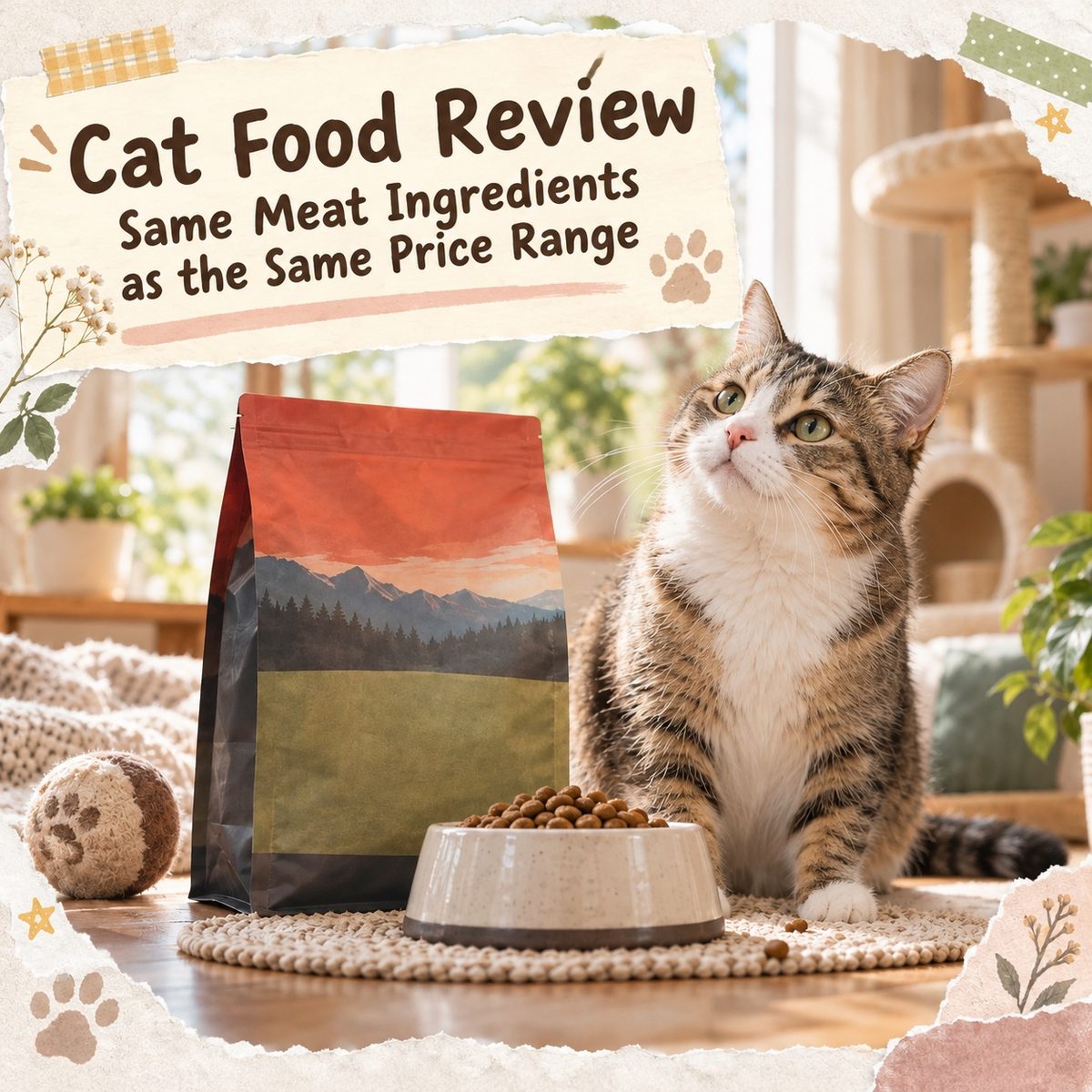
Quick answer: Orijen cat food has up to 40% protein, with the first five ingredients all fresh meat. It suits healthy adult cats but costs about $400-600 per month; cats with kidney disease, sensitive stomachs, or families on a tight budget should choose carefully.
Orijen is one of the highest-protein cat foods on the market: 40% crude protein, first five ingredients all fresh meat, grain-free formula, with a monthly cost in Hong Kong of about $400-600. It suits healthy adult cats seeking natural nutrition, but cats with kidney disease, limited budgets, or sensitive stomachs need caution. Below we break down the ingredients, price, pros and cons.
What brand is Orijen?
Orijen is a premium pet food brand under Canada's Champion Petfoods, sister brand to ACANA. Its core philosophy is "biologically appropriate"—mirroring a cat's natural prey diet in the wild. A few background points about the brand:
- Founded in 1985, headquartered in Alberta, Canada
- Produced in its own facilities, not outsourced, giving full control of the quality chain
- Recommended multiple times by the WDJ (Whole Dog Journal)
This background explains why it commands a high price: fresh meat ratios, own production lines, and quality control are all part of the cost structure. Compared to brands that outsource manufacturing, "own factory, own ingredients, own testing" is their main selling point.
Ingredient analysis: what exactly goes into the food?
Protein sources: first five all fresh meat
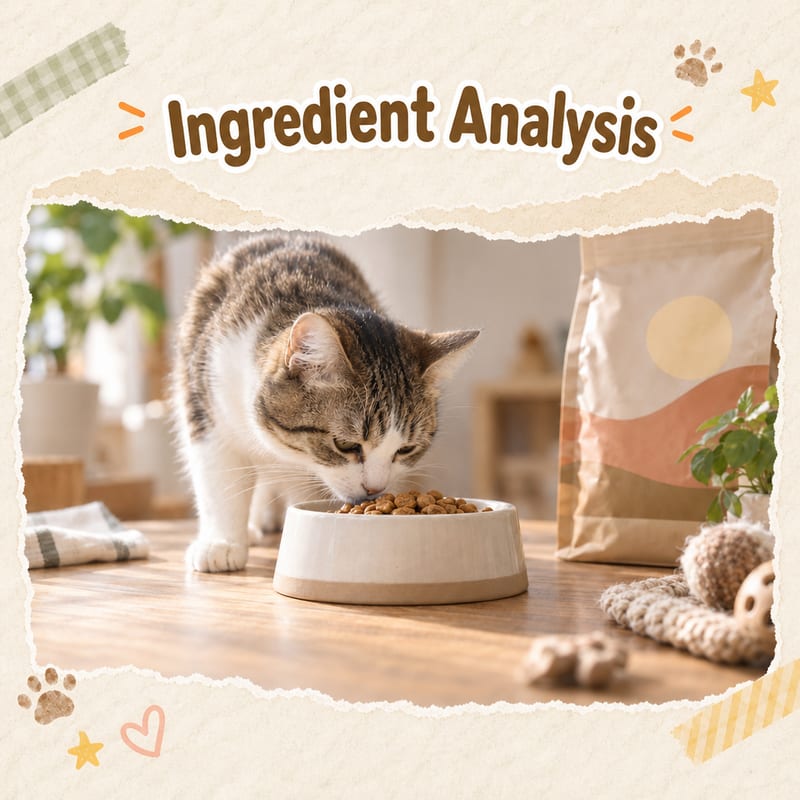
Taking the flagship formula as an example, Orijen's ingredient list starts with five named fresh meats, not "meat meal" or grains:
- Fresh chicken
- Fresh turkey
- Fresh chicken liver
- Fresh herring
- Fresh chicken heart
Organs (liver, heart) appear near the top, reflecting its WholePrey concept: liver provides vitamin A, heart naturally contains taurine—not just muscle meat. For cats, taurine is an essential amino acid; deficiency can affect the heart and vision, so "presence of named organs" is a column worth checking on a cat food label.
expected analysis (using Original Cat as an example)
| Component | Amount |
|---|---|
| Crude protein | 40% |
| Crude fat | 20% |
| Crude fibre | 3% |
| Moisture | 10% |
| Ash | 8% |
40% crude protein is at the top tier of the dry food market; 20% fat provides high energy, so actual feeding amounts can be less than regular food; more is not better—control by total calories and body condition.
What replaces grains?
Orijen does not use corn, wheat, or soy; instead it uses low-glycaemic ingredients like lentils and chickpeas to help form kibble and provide fibre. To clarify: grain-free does not mean zero carbs, only that the carb source and ratio differ.
Hong Kong prices and monthly cost reference
| Size | Price range | Daily cost* |
|---|---|---|
| 1.8kg | $350-420 | $12-15 |
| 5.4kg | $850-980 | $10-12 |
*Based on a 4kg adult cat eating about 60g per day; adjust actual amount according to the packaging feeding guide and the cat's body condition.
Larger bags cost less per unit, but Hong Kong is humid, so after opening remember to seal and store in a cool, dry place; families with slow eaters risk buying too large a bag.
Pros and cons: at a glance
Pros:
- Protein up to 40%—among the highest on the market, maintains muscle mass
- Fresh meat as first ingredients—not padded with meat meal
- Grain-free, no artificial additives
- Generally excellent palatability—many cats get hooked immediately
- Brand reputation and consistent quality
Cons:
- High price—about $400-600 per month; long-term cost must be budgeted
- High protein not suitable for kidney disease cats—they need low-protein prescription food
- Kibble on the large side—kittens or older cats with poor teeth may struggle to chew
- Soft stool common when switching—high meat and fat require an adaptation period
What to look for after opening? Kibble, oil, and smell
Many owners want to know "how to tell if this bag is right for my cat when I open it". A few practical observations:
- Kibble size—Orijen kibble is larger; kittens and older cats with poor teeth may need it softened or a different formula
- Surface oil—premium foods often have more oil sprayed on; a little on your hand is normal; if there's a rancid smell, check storage
- Smell—high fresh meat ratio gives a distinct meaty aroma; no smell at all or a pungent smell are warning signs
- Eating reaction—whether they eat the first meal is the most important indicator, but give it 3-5 days of observation before concluding
After buying, use an airtight storage container, keep in a cool place, and avoid direct sunlight to slow oil oxidation; in Hong Kong's hot summers, a large bag is best finished within one to two months of opening.
Which cats is it suitable for? When is it not recommended?
Recommended for:
- Healthy adult cats, families seeking optimal nutrition
- Active cats with high muscle turnover
- Cats sensitive to grains
Not recommended for:
- Cats with kidney or urinary tract disease—need low-protein prescription food; consult a veterinarian first
- Owners on a limited budget—sister brand ACANA is a more affordable alternative
- Senior cats with poor teeth—large kibble; consider softening or switching to wet food
Summary: Orijen represents top-tier cat food, with 40% high protein and an all-fresh-meat formula for solid nutrition. It suits families prioritising quality with sufficient budget; but "more expensive" doesn't mean "better for every cat"—kidney disease cats and sensitive stomachs need extra care. Rating ⭐⭐⭐⭐⭐ (5/5).

Practical feeding and transition tips
- Transition over 10-14 days: 25% → 50% → 75% → full switch, monitoring stool at each step
- Start with the feeding guide then adjust: high energy density means you can feed slightly less than the old food
- Ensure adequate water intake: dry-fed cats are prone to insufficient water; add wet food and multiple water bowls
- Still soft stool after two weeks: consider the formula doesn't suit; reduce amount back to old food ratio and consult a veterinarian
- Regular weight and body condition checks: high protein and fat mean overfeeding still causes obesity
- Observe each cat in multi-cat homes: one cat may adapt well while another gets soft stool; don't apply one bag to all
What you can do today
- Check your cat's health: if kidney function is impaired, rule out high-protein immediately
- Use the packaging feeding guide to calculate actual monthly food cost and assess affordability
- If switching, allow two weeks for a slow transition; don't rush
- Buy from authorised channels and check expiry date and packaging integrity
For more cat food nutrition data comparisons, see PetChill's cat food review guide for ingredient breakdowns of various brands.
Further reading
- Complete Cat Food Guide →
- CANAGAN Cat Food Review →
- Orijen Brand Guide →
- Kitten Food Recommendations →
This article is for reference only; consult a registered veterinarian for any concerns. PetChill Pet Nutrition Team
- Fresh Food Nutrition for Cats and Dogs →
- The Truth About Grain-Free Dog Food →
- Cat Canned Food Brand Comparison →
Practical checklist for small Hong Kong flats: storing Orijen after opening, feeding, and when to see a vet
1. 30-second check after opening
- Look: kibble intact without crumbs, even oil sheen, no white spots or mould.
- Smell: meaty aroma without rancidity; if you smell "stale oil", stop feeding immediately.
- Touch: ideally no oil when pressed lightly; too oily means high oxidation risk.
2. Humid Hong Kong storage tips
- Airtight container + desiccant: after opening, pour into a stainless steel airtight container, add two food-grade desiccant packs, place in a cool spot at the bottom of a wardrobe, away from sunlight.
- Portion into small bags: for a 5.4kg bag, divide into 6-8 vacuum-sealed small bags, open one at a time to reduce air exposure.
- Mark expiry date: stick a memo on the lid with "opening date + two-month deadline" to remind yourself to finish in time.
3. Daily feeding in practice
- Use a measuring scoop, not guesswork: use the scoop included, one level scoop is about 15g; start with 4 scoops per day for a 4kg adult cat, adjust after two weeks based on body condition.
- Mix with wet food: in hot Hong Kong weather, add 1/4 can of complete wet food or 30ml warm water to the kibble daily to increase water intake and reduce kidney stone risk.
- Separate feeding for multiple cats: use automatic feeders placed apart to prevent competition leading to overeating or picky eating.
4. Observation traffic lights
- Green: formed stool, normal appetite, stable weight—continue current ratio.
- Amber: slight soft stool but good energy—reduce feeding by 10% and extend transition to 3 weeks.
- Red: persistent watery stool, vomiting, appetite loss over 24 hours—stop feeding immediately and take the remaining food to the vet to rule out protein intolerance or abnormal kidney values.
5. When to switch food or see a vet
- Kidney disease cats: if your vet recommends low protein, switch directly to prescription food; don't force Orijen.
- Senior cats with poor teeth: if they still refuse food after softening kibble, consider the same brand's freeze-dried or wet food range.
- Long-term soft stool: if reducing amount and adding probiotics don't help, consider switching to ACANA single-protein or a vet-recommended hydrolysed protein food.
Remember: Hong Kong spaces are small and the weather humid; storage and observation are more important than choosing the food. If a bag can't be finished within two months of opening, buy a smaller bag rather than saving money and letting your cat eat spoiled food.
📌 Key summary
- ✅ 40% high protein + first five fresh meats, among the top dry foods on the market
- ✅ Grain-free, no artificial additives, generally excellent palatability
- ❌ Monthly food cost $400-600; long-term expense must be calculated
- ❌ High protein not suitable for kidney disease cats; soft stool common when switching
- ❌ Kibble on the large side; difficult for kittens or older cats with poor teeth to chew
 Orijen full guide →
 ACANA full guide →
 CANAGAN full guide →



