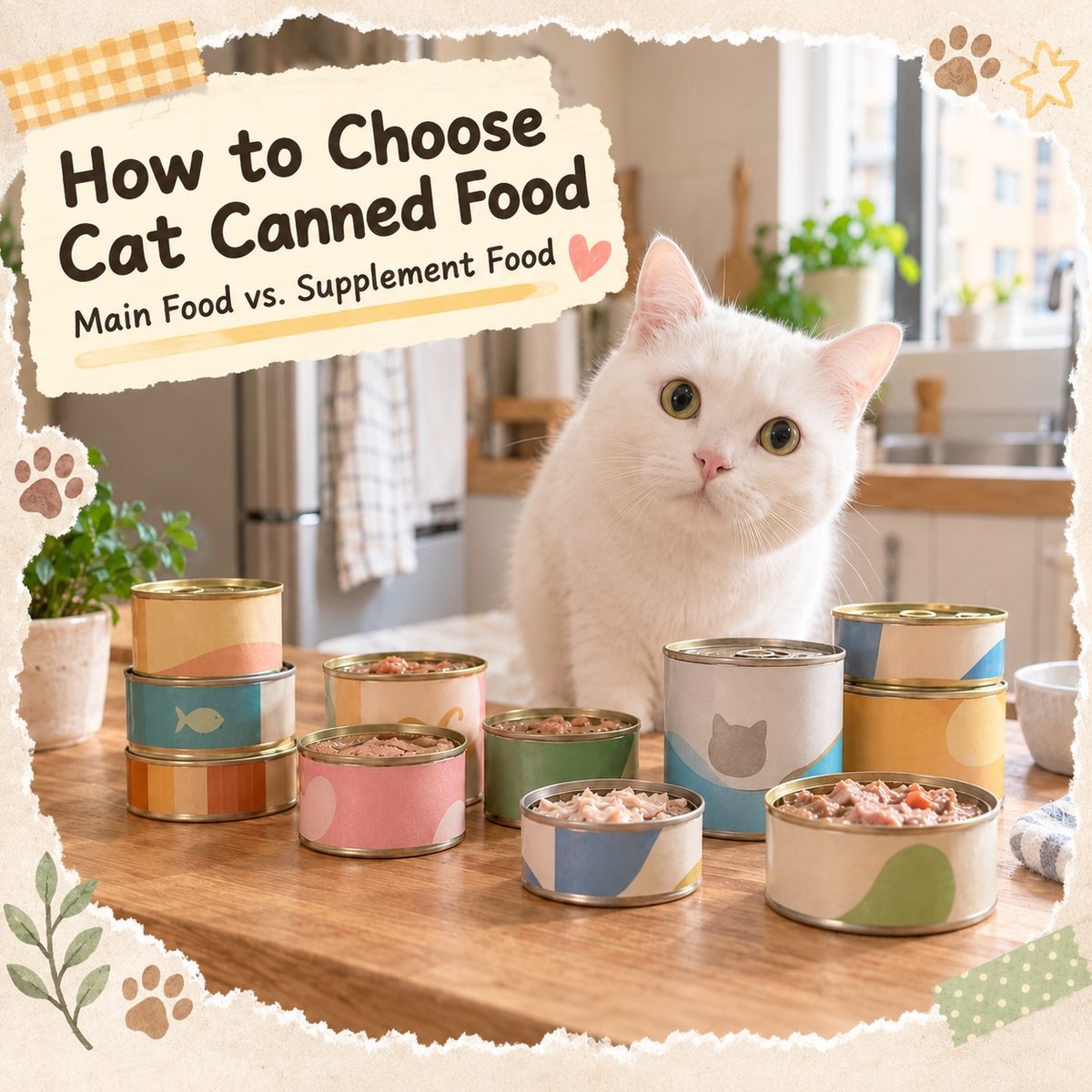
Quick answer: There is no absolute "best" cat canned food brand in Hong Kong. The key is to first distinguish between complete wet food and complementary wet food, then screen using three steps: "complete food label + ingredient list + cat's reaction." Any brand that meets high protein, low carbohydrate, contains taurine, and has clear meat sources can be safely rotated.
Core conclusion for choosing cat canned food: first distinguish complete wet food from complementary wet food, then look at ingredients, and finally rank brands. Hong Kong has one of the highest numbers of canned food brands in the world, but no single brand has all its product lines as complete food—the same brand may produce both, and even the same series may have complete and complementary varieties. This article teaches you to screen brands by standards rather than copying others' recommendations; once you learn the method, you can evaluate any new brand yourself in the future.
Lesson 1: Complete Wet Food vs Complementary Wet Food
Before comparing brands, you must first know the two types of canned food, because this classification cuts across all brands:
- Complete wet food: Contains complete nutrition—protein, fat, vitamins, minerals, and taurine—labeled "Complete & Balanced" (AAFCO standard), and can be fed as a main meal long-term.
- Complementary wet food: Nutritionally incomplete, may be pure fish meat or meat cooked in gravy, labeled "side dish/snack/complementary feed," and should only be given occasionally as a topping.
⚠️ The most common trap: Feeding complementary wet food long-term may make cats seem happy, but in reality they may lack calcium, taurine, and vitamins over time, potentially affecting vision and heart health. Don't judge by "expensive" or "brand name"; always turn the can around and read the label.
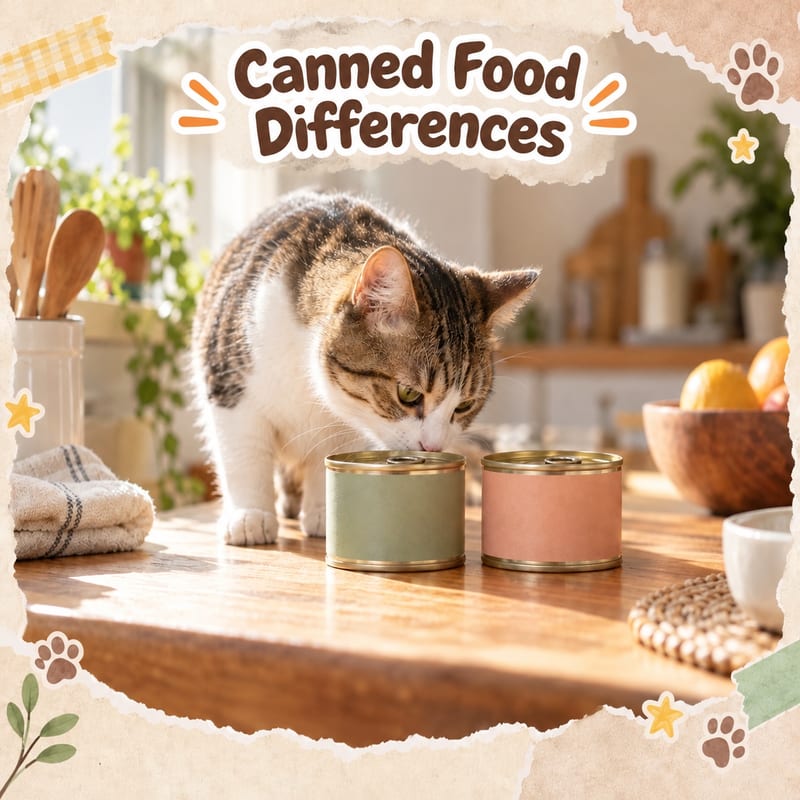
How to Evaluate Popular Canned Food Brands in Hong Kong?
International brands:
| Brand | Positioning | Features |
|---|---|---|
| Royal Canin | Scientific formulas | Full range of prescription diets, commonly used by vets |
| Hill's | Veterinary brand | Prescription/preventive lines, strong research background |
| Orijen | High protein | High animal ingredient ratio (85%+ meat source approach) |
| ACANA | Orijen's sister brand | High protein but more affordable |
| Orijen (Orijen) | High protein | Same as Orijen line, high meat content |
Local/Asian brands:
- Wang Miao Xing Qiu—Focuses on human-grade ingredients, offers both fresh food and canned lines.
- Guai Shou Bu Luo—Human-grade approach, wide selection of dry food and canned food.
To be clear: The above are the overall brand positioning, not every can is complete food. Royal Canin has complete main meal cans but also many complementary snack lines; Hill's prescription lines require veterinary guidance; Orijen and ACANA are high-end high-protein, and cats with sensitive stomachs should transition slowly; Wang Miao Xing Qiu and Guai Shou Bu Luo focus on human-grade fresh food, so check whether products have a complete and balanced label. Fish-based canned food, no matter who makes it, should be checked can by can.
Also, new brands frequently enter the Hong Kong market, and influencer promotion videos are countless. You can judge new brands by three bottom lines: whether there is a legitimate importer and Chinese label, whether the ingredient list is complete, and whether the brand discloses the origin and factory. If any one is missing, even with good reviews, it's advisable to wait and see.
Five-Step Ingredient Screening Method
For any can of any brand, you can use these five steps:
- Complete food label—If it doesn't say "Complete & Balanced" or "complete food," treat it as a snack.
- First ingredient is a named meat—Chicken, salmon clearly stated, not "meat by-products."
- High protein—Wet basis protein ≥10%, the higher the better.
- Low carbohydrate—Dry basis ≤5%, the less rice, noodles, and gums the better.
- Contains taurine—An essential nutrient for cats; complete wet food must have it.
Tip: Words like "natural," "premium," or "no additives" on the front of the package don't count—that's marketing talk; the ingredient list and nutritional analysis are what the R&D team says. Remember to turn the can around when buying.
Multi-Brand Rotation or Stick to One Can?
Rotation is recommended. Three reasons:
- Different brands have different protein and fat sources; rotation provides more balanced nutrition and compensates for shortcomings in individual formulas.
- Avoid cumulative sensitivity to a single meat source, e.g., long-term exclusive tuna feeding is a common suspect for skin allergies.
- Cats' tastes change quickly; rotating several flavors reduces the risk of sudden refusal to eat and all the cans at home becoming decorations.
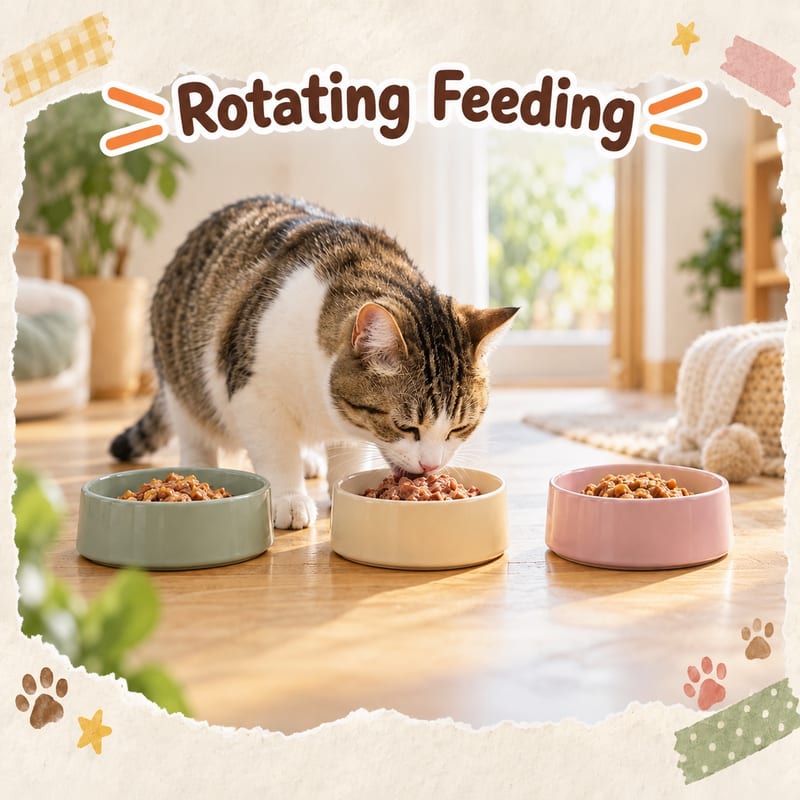
How to do it: Choose 2–3 trusted complete wet food brands and 3–4 meat sources (chicken, fish, beef, etc.), and rotate on a weekly basis. Buy small cans to test each new flavor first, observe stool and whether there is vomiting after eating, and only stock up on larger sizes once stable.
Three steps for testing new canned food: On the first night, mix half a teaspoon into the old food and see if there is resistance; from the second to fourth day, gradually increase the amount while recording stool consistency; if there are no abnormalities from the fourth day to the second week, then consider this canned food as a qualified staple. If vomiting, soft stool, or itching occurs at any step, stop immediately and return to the original flavor, let the stomach rest for a few days, and then re-evaluate. Records during the test period are very useful: a simple log of what was eaten on which day, stool consistency, and appetite level can save you half the time when talking to your vet.
How to Allocate Budget?
Canned food is a major daily expense. A few principles:
- Wet-dry mix is safest: If budget is limited, you don't have to force all-wet feeding; one complete wet meal a day plus dry food for the rest already helps with hydration while keeping nutrition complete.
- Canned food is just one slot: When budgeting, include dry food, snacks, and litter together; don't skimp on other expenses to buy expensive canned food.
- Buying large sizes has its wisdom: Only buy large sizes or bulk deals after confirming your cat accepts the food; otherwise, the fridge becomes a canned food graveyard.
- Expensive ≠ right: Mid-priced brands that meet the five-step method are also good choices; compare ingredient lists, not price tags.
- Watch the source: Buy through legitimate pet shops or official channels; parallel-imported canned food may lack Chinese labels, and if you can't read the label, don't buy.
- Don't stock too much: Canned food has a shelf life; flavors that can't be finished during the rotation period become waste. Confirm your cat really likes it before considering bulk deals or large sizes.
- Mix to control budget: Use expensive complete wet food as a weekend treat, and mid-priced qualified complete wet food on weekdays; on average, the budget remains controllable and nutrition is not compromised.
When to See a Vet?
- Complete refusal to eat for two consecutive days, or even pushing away their favorite canned food.
- Persistent soft stool for more than two weeks after switching canned food, or frequent vomiting.
- Itching, hair loss, or increased ear scratching after eating a certain canned food—possible meat source allergy.
- Significant weight loss within a month.
- Male cat frequent urination, inability to urinate, crying in the litter box—don't wait, go to emergency immediately.
Mild appetite fluctuations during food transition are normal, but when you can't distinguish "illness" from "picky eating," it's better to book a vet check early than to try switching canned food by trial and error. For cats with chronic kidney disease or urinary tract disease, dietary arrangements should follow veterinary instructions; do not switch to "functional" canned food on your own.
What You Can Do Starting Today
- Inventory your canned food at home: label each can as "complete" or "complementary," and put all complementary ones in the snack cabinet.
- Use the five-step method to pick two new complete wet foods on the market and start rotating with small cans.
- Create a weekly flavor chart for your cat: rotate chicken, fish, and meat.
- Set a monthly canned food budget and decide between all-wet or wet-dry mix.
- Record stool and appetite for two weeks after switching cans, and use the data to choose the main flavors.
- Take a photo of the ingredient list each time you buy a new canned food, so you can compare or ask your vet later.
Final reminder: Brand rankings can never keep up with new products, but the judgment method of "complete food label + ingredient list + cat's reaction" works anywhere, so you don't need to read every article. Want to double-check ingredients after choosing a brand? PetChill's pet food reviews break down the nutritional labels of Hong Kong canned foods one by one; use them with the standards in this article for more reliable results than copying any ranking list.
Further reading:
- 2026 Hong Kong Cat Food Recommendations Complete Guide →
- Cat Complete Wet Food Recommendations →
- Wet Food vs Dry Food →
- Pet Nutrition Course →
This article is for reference only; consult a registered veterinarian for any issues.
Related Product Recommendations
The most important thing when choosing food is your cat's age, digestion, and taste preferences. Here are products related to this article available at PetChill:
- Fuji One Cat Canned Food Complete Nutrition AAFCO+NRC Standard Chicken & Chicken Liver Mousse 40g - Limited Trial Price (Fuji One) — available at PetChill
- Nutriplan Cat Wet Food Nutrition Project Moisture Tuna 80g (64301) (White) - Limited Offer (Best Before 2026.10.22) (Nutriplan Nutrition Project) — available at PetChill
Want to see more: Fuji One Brand Guide
Product prices and latest offers are subject to the product page; this article is for reference only.
 Fuji One full guide →


 Orijen full guide →
 Royal Canin full guide →