🤖 AI summary
Cat gastroenteritis means the stomach and intestines are inflamed at the same time, typically with vomiting and diarrhoea together. Common causes: switching food too fast, eating something wrong, parasites, viral infection, stress. Most mild cases improve in 2 to 3 days, but persistent vomiting, bloody diarrhoea and poor demeanour are red lines for a vet visit.
• Probiotic evidence: research supports shortening the course of acute diarrhoea and helping with antibiotic-associated diarrhoea; Enterococcus faecium SF68 is the most studied strain in cats
• New thinking on fasting: cats should not fast for long periods; fasting too long actually carries a fatty liver risk
Quick answer: Cat gastroenteritis is inflammation of both stomach and intestines, with vomiting, diarrhoea and poor demeanour. Mild cases can be managed at home: small frequent drinks, bland food (boiled chicken), vet-prescribed gastrointestinal diet. The probiotic evidence is for specific strains such as Enterococcus faecium SF68 — but this cannot replace treatment. Red lines: vomiting lasting 24 hours, bloody or black stool, extreme lethargy, dehydration — see a vet immediately.
Contents
-
What is cat gastroenteritis?
-
The 6 common causes
-
Symptom grading: mild vs red line
-
Timeline: the first 72 hours
-
Three steps of home care
-
Probiotic evidence: which ones really have research support?
-
When to see a vet + prevention
-
FAQ
What is cat gastroenteritis?
Cat gastroenteritis means the stomach and intestines are inflamed at the same time — stomach trouble alone mainly causes vomiting, intestinal trouble alone mainly causes soft stool and diarrhoea; both together is classic gastroenteritis.
In veterinary practice, acute gastroenteritis is one of the most common reasons cats are brought in. The good news: most acute cases are mild and improve within 2 to 3 days with proper care. The bad news: behind vomiting and diarrhoea there can be serious problems such as feline panleukopenia, foreign body obstruction or kidney disease — so "how to tell mild from serious" is the core of this article.
The 6 common causes
-
Sudden diet change — switching food too quickly (should transition over 7 to 10 days), eating too fast or too much
-
Eating something wrong — spoiled food, kitchen scraps, toxic plants, chemicals, human medication
-
Parasites — roundworm, tapeworm, Giardia, Tritrichomonas (especially common in kittens)
-
Viral/bacterial infection — feline panleukopenia, Salmonella and others
-
Swallowed foreign body/hairball — thread, rubber bands, toy fragments blocking the intestine
-
Stress and constitution — environmental change triggering gut upset; long-term repeated episodes need investigation for IBD (inflammatory bowel disease) and food allergy
Hong Kong note: in the humid spring, food spoils easily and opened dry food can absorb moisture and grow mould — storage is part of your gut defence.
Symptom grading: mild vs red line
Common symptoms: vomiting, soft stool/diarrhoea, reduced appetite, slightly low demeanour, gurgling gut sounds.
Mild features (can observe at home):
- Vomits 1 to 2 times then stops, still wants to play and eat
- Diarrhoea but no blood in stool, cat's demeanour OK
- Drinking normally, no signs of dehydration
Red-line symptoms (see a vet immediately):
- 🚩 Vomiting continuously for 24 hours without stopping
- 🚩 Bloody stool, black stool (tarry), watery projectile diarrhoea
- 🚩 Extreme lethargy, hiding, unresponsive to calling
- 🚩 Dehydration signs: skin tenting on the neck/back that is slow to spring back, dry gums, sunken eyes
- 🚩 Kittens/senior cats/cats with chronic illness showing any gut symptoms — go straight to the vet, do not observe
- 🚩 Suspected ingestion of thread, toys or toxic substances
Timeline: the first 72 hours
| Time | What to do |
|---|---|
| 0 to 6 hours | Remove food to rest the gut; keep water available (small amounts often); watch demeanour |
| 6 to 12 hours | No more vomiting → try small amounts of water/electrolyte support; still vomiting → vet |
| 12 to 24 hours | No vomiting → start bland food (see below); vomiting/diarrhoea worsening → vet |
| 24 to 48 hours | Mild cases should be clearly improving; no improvement or worsening → vet, do not delay |
| 48 to 72 hours | Gradually return to normal food; any relapse warrants a vet check |
Important concept — cats are not dogs: much of the online "fast 24 to 48 hours" advice is for dogs. Fasting cats too long (especially overweight cats) carries a fatty liver risk (see PetChill's fatty liver article) — the modern veterinary view is that cats with gastroenteritis should not fast for long periods; once vomiting is controlled, resume small meals as soon as possible.
Three steps of home care
1. Water first
The biggest risk with diarrhoea is dehydration. Offer water in small amounts often, or use a flowing water fountain to encourage drinking; if your cat refuses to drink at all, or vomits immediately after drinking, that is a signal to see a vet.
2. Bland diet
Once vomiting is controlled, start with small portions: boiled skinless chicken breast (shredded), vet-prescribed gastrointestinal canned food. For the first 1 to 2 days feed small meals often (4 to 6 meals a day), then gradually mix back to normal food as they improve.
3. Restful environment
Move your cat to a quiet corner and avoid disturbance; at the same time monitor demeanour, food intake and stool — these three are your dashboard for judging improvement. Collect a stool sample (fresh, within 1 to 2 hours) to take to the vet, which can speed up parasite testing.
Probiotic evidence: which ones really have research support?
Do probiotics help a cat with diarrhoea? The answer: there are evidence-supported uses, but they are not a helps manage-all and certainly not a replacement for treatment.
What the research supports:
- Enterococcus faecium SF68: the most studied strain in cats. Studies show long-term supplementation can reduce the number of diarrhoea episodes in kittens and support immune markers — one of the cat strains with the highest level of evidence currently
- Support in acute diarrhoea: several studies show specific probiotic combinations help shorten the course of acute diarrhoea and improve stool consistency
- Antibiotic-associated diarrhoea: using probiotics alongside antibiotics helps reduce disruption of the gut flora
Where evidence is lacking / take care:
- Effects vary hugely between strains — the word "probiotic" does not mean effective; look at strain number and dose
- Cat and human gut flora differ: human probiotic products (yoghurt, human powders) should not be fed casually
- If the root cause is parasites, foreign bodies or viruses, probiotics cannot help at all, and delaying a vet visit can make things worse
- Probiotics are reasonable during recovery, but choose products labelled for cats, with a strain number (e.g. SF68), and a live bacteria guarantee
In one sentence: probiotics are a "supportive tune-up", not the "main treatment" — used correctly they help, used in the wrong situation they get in the way.
When to see a vet + prevention
Red/green decision table:
| Situation | Verdict | Action |
|---|---|---|
| Vomits once/one soft stool, normal demeanour and appetite | 🟢 Observe | Withhold food half a day, provide water, monitor |
| Vomits 2 to 3 times + soft stool, still willing to drink | 🟡 Home care | Three-step care + close observation for 24 hours |
| Vomiting and diarrhoea lasting more than 24 hours | 🔴 Vet | Bring a stool sample |
| Bloody stool/black stool/watery projectile diarrhoea | 🔴 Emergency | Vet immediately |
| Extreme lethargy/dehydration/kitten or senior cat | 🔴 Emergency | Vet immediately |
Five prevention tips:
- Always transition food over 7 to 10 days by mixing
- Feed at set times and portions, avoid gorging
- Store opened dry food sealed, watch for off smells in humid weather
- Regular deworming (especially for cats that hunt or go outdoors)
- Keep thread, rubber bands and toxic plants out of reach at home
This article is for reference only and cannot replace veterinary diagnosis. If you have health concerns, consult a registered veterinarian.
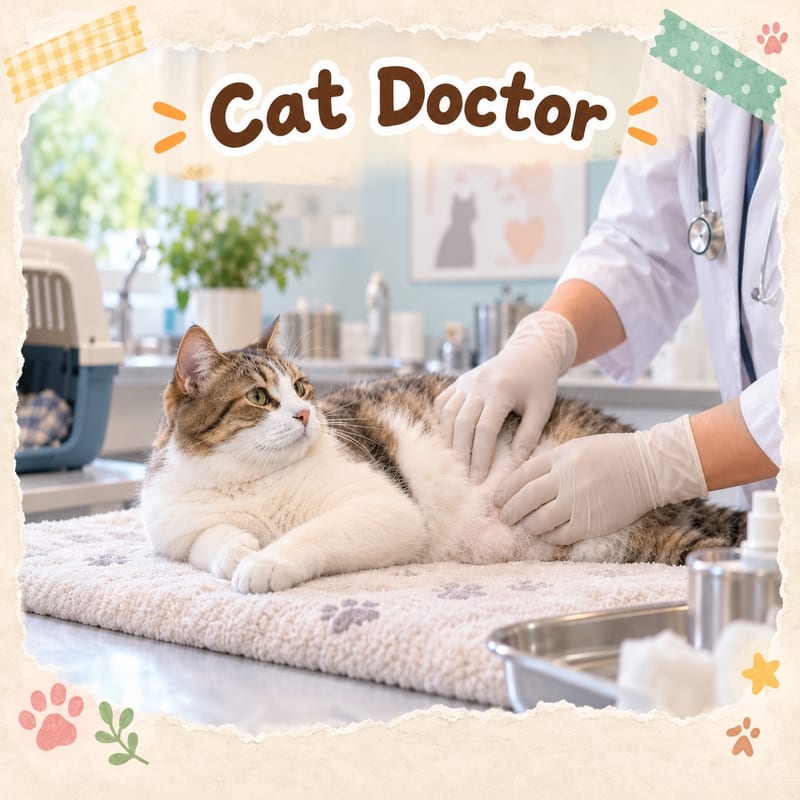
Hong Kong small-flat practicalities: a 24-hour gastroenteritis care checklist for small units
Hong Kong homes are small, and when a cat comes down with gastroenteritis it is easy to panic. Here is a practical workflow for units under 300 sq ft — follow it and you will not go wrong.
1. Immediate isolation area
Find a small room or bathroom to be the "sick cat isolation room":
- Lay down disposable pet pee pads so you can observe stool form and change them immediately.
- Put in a small water bowl + a flowing water fountain (Hong Kong water pressure is stable, and a fountain is quiet enough not to disturb the isolation room).
- Set the small room's air-conditioning to 25°C to avoid stuffiness making the cat more stressed.
2. Lazy food prep pack
No time to boil chicken every day? Go downstairs to ParknShop/Welcome and buy "ready-to-eat skinless chicken breast" vacuum packs; after opening, heat in a water bath for 30 seconds. Or buy vet-prescribed gastrointestinal canned food from a pet shop (Royal Canin Gastrointestinal or Hill's i/d).
- First 24 hours: feed 1–2 teaspoons every 2–3 hours, supporting the cat's head with your palm to avoid eating too fast with the head down and vomiting again.
- Days 2–3: if no more vomiting, increase each meal and start transitioning by mixing with the original dry food at a 1:4 ratio.
3. Stool collection technique
Most Hong Kong vet clinics want a fresh sample within 1–2 hours:
- Use a small plastic spoon (a McDonald's ice cream spoon works) to scoop a small amount into a clean zip-lock bag.
- Write the time on the outside of the bag, store in the fridge (not the freezer), and take it to the clinic within 2 hours.
4. Red lines — see a vet now
There are not many 24-hour emergency vets in Hong Kong; bookmark these in advance:
- Kowloon: CityU Veterinary Medical Centre (Sham Shui Po)
- Hong Kong Island: AM AH in the Southern District or the 24-hour Eastern District hospital
- New Territories: VES in Tai Wai or the 24-hour Tseung Kwan O vet If your cat shows red-line symptoms (persistent vomiting, bloody stool, poor demeanour), grab the stool sample + zip-lock bag and head out immediately — do not wait until morning.
5. Tips to prevent relapse
- Hong Kong spring humidity is 90%; after opening dry food, use a vacuum container + desiccant and store in a wardrobe to keep moisture out.
- Order deworming tablets online every 3 months (Drontal or Milbemax), delivered to your home in one go, no queueing.
- Stick a "seven-day transition chart" on the fridge door when changing food, record daily intake, and avoid the temptation to switch all at once.
Follow this checklist and you can handle cat gastroenteritis steadily even in a small flat, without rushing around.
Choosing cat probiotics: strains, CFU and real prices (checked 2026-10-02)
The word "probiotic" does not mean effective — strain number and CFU (colony-forming units) per dose are the key. Below are real Hong Kong prices for cat probiotics available locally, with daily cost:
| Product | Strain/formula on label | Hong Kong price | Per pack/stick | Daily cost for a 4kg cat |
|---|---|---|---|---|
| Wang Miao Xing Qiu Gut Probiotic (chicken flavour) 2g (discontinued) | Labelled 7 patented strains + Bifidobacterium longum BB536, BC30 Bacillus coagulans + digestive enzymes | $7.5 | $7.5/stick | About $3.8 (0.5 pack daily) |
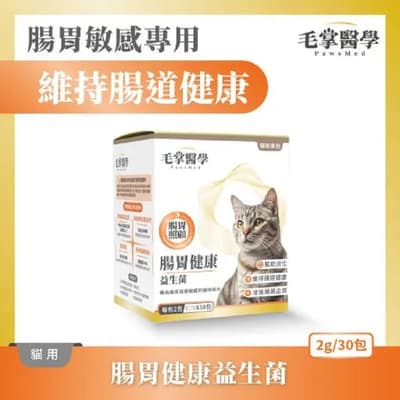
| Mao Zhang Yi Xue Cat Gut Health Probiotic 2g×30 packs | Labelled kefir symbiotic probiotic + L137, encapsulation technology | $141 | $4.7/pack | About $4.7 |
| Wang Miao Xing Qiu Body Management Probiotic 2g×30 (discontinued) | Body management formula (cat and dog) | $94 | $3.1/pack | About $3.1 |
| Natural Pet BIO-3 Probiotic 60g (discontinued) | Powder (for cats) | $144 | $2.4/g | Per label dose |
| Under the Weather Probiotic Nutritional Powder for Cats 72g | Powder (for cats) | $189 | $2.6/g | Per label dose |
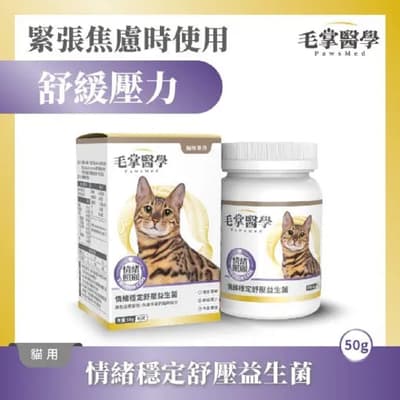
| Mao Zhang Yi Xue Cat Calming Stress Relief Probiotic 50g | Mood/gut formula | $121 | $2.4/g | Per label dose |
| Guai Shou Bu Luo OK! Probiotic 1.5g (1-stick pack) (discontinued) | Cat and dog supplement (trial pack) | $6 | $6/stick | About $3 (0.5 stick daily) |
| Mao Zhang Yi Xue Probiotic Health Meat Paste 6g×4 sticks | Meat paste type (cat and dog) | $41 | $10.3/stick | By body weight (<5kg 1 stick daily) |
How to read strains? The most frequently cited cat strain in international research is Enterococcus faecium SF68 (commercial products label activity around 1×10⁸ CFU/g; the daily dose used in the literature is about 1 g). Studies show that in shelter cats supplemented with SF68, the proportion with diarrhoea lasting more than two days fell from 20.7% to 7.4%; supplementing SF68 alongside antibiotics also helps reduce diarrhoea days. Another commonly used combination is a multi-strain product with 7 strains and no less than 5 billion CFU (5 × 10⁹ CFU) per dose.
Buying principles: ① a clear strain name or number (not just "lactic acid bacteria"); ② a expected CFU count (how many billion per pack/gram); ③ labelled for cats; ④ encapsulated or light-protected packaging.
How long should antibiotics and probiotics be spaced apart?
The usual approach is at least 2 hours apart, because antibiotics (especially amoxicillin-clavulanate) kill probiotics, and taking them together is as good as not giving them. Practical arrangement:
- Antibiotics are usually given twice a day; choose a middle time for probiotics (for example 2 hours after medication or before the next meal)
- After the course finishes, continue probiotics for 1-2 weeks to help the gut flora recover
- If your vet uses probiotic capsules/powder, follow the clinic's instructions exactly; do not adjust on your own
Note: probiotics can reduce the number of days of antibiotic-associated diarrhoea, but they do not change the effectiveness of the antibiotic itself, nor can they replace completing the full course.
Storage (especially important in Hong Kong's humid weather)
| Form | Storage requirements |
|---|---|
| Powder/stick packs | Cool, dry, away from light; Hong Kong is humid, so do not store in the kitchen or bathroom |
| Opened powder | Sealed clip + desiccant, use within the time limit on the pack |
| Meat paste/treat type | Store at room temperature, consume immediately after opening; some products need refrigeration, follow the pack |
| Capsules | Keep the original bottle sealed, avoid moisture, do not pre-portion |
Watch the temperature and water temperature too: when mixing into food, the food should not be too hot (<40°C); high heat kills live bacteria.
Daily cost comparison: probiotics vs staple food
Daily staple food cost for a 4kg cat (calculated from labelled calories): dry food about $10.5-16.8/day, all-canned about $68-74/day; probiotics about $3-5/day. That means probiotic spending is roughly 10-30% of daily food spending. So the priority should be: ensure staple food quality first, then consider supplements.
If your cat's gut problems keep recurring because the staple food is poor quality (insufficient protein, hard to digest), putting the budget into upgrading the staple food usually works better than adding probiotics.
Sources
- Bybee SN, Scorza AV, Lappin MR (2011), J Vet Intern Med 25(4):856-60 — in shelter cats supplemented with Enterococcus faecium SF68, the proportion with diarrhoea lasting more than two days fell from 20.7% to 7.4%.
- Torres-Henderson C et al. (2017), Vet Dermatol/PubMed 29291771 — supplementing SF68 during antibiotics (amoxicillin-clavulanate) reduced diarrhoea days.
- PMC10822518 (multi-strain synbiotic, cats with chronic diarrhea) — multi-strain product with no less than 5 billion CFU (5 × 10⁹ CFU) per dose; over a 21-day course, 72% of owners reported improvement in diarrhoea.
- WSAVA Global Nutrition Guidelines — principles of nutritional assessment and dietary management for cats with gastrointestinal disease.
- Product prices, strains, dose labels: PetChill product pages (checked 2026-10-02).
This article is general information and does not constitute veterinary diagnosis or prescription.
Further reading
- Which cat food is best in Hong Kong? 2026 top ten popular cat food brands guide →
- 12 popular cat foods recommended by scenario (Hong Kong real prices) →
- Canned vs dry cat food: moisture, water intake and daily cost →
- Carrageenan, guar gum and 6 other gums at a glance →
- Taurine and fish oil: how much per day? →
- Phosphorus and kidneys: mg/100kcal comparison and prescription diet choices →
- Freeze-dried vs air-dried: process, rehydration and daily cost →
- The truth about grain-free cat food: grain-free ≠ low-carb →
- Cat probiotics: strains, CFU doses and antibiotic spacing →
- Kitten food guide: feeding curve and 14-day food transition SOP →
- Senior cat food guide: protein, phosphorus and water after age 7 →
📌 Key takeaways
- ✅ Typical cat gastroenteritis means vomiting and diarrhoea together
- ✅ Fasting does not apply to cats; resume small meals as soon as vomiting is controlled
- ✅ Enterococcus faecium SF68 is the most studied probiotic in cats
- ❌ Human probiotic products are not suited to the cat gut; feeding them casually adds risk
- ❌ Probiotics are only supportive and cannot replace veterinary treatment
⚠️ Some products mentioned in this article are discontinued (marked "discontinued"); the prices shown are pre-discontinuation records. For other products, please refer to the current price shown on the online store.
 Royal Canin full guide →
 Hill's full guide →

 K9 Natural full guide →