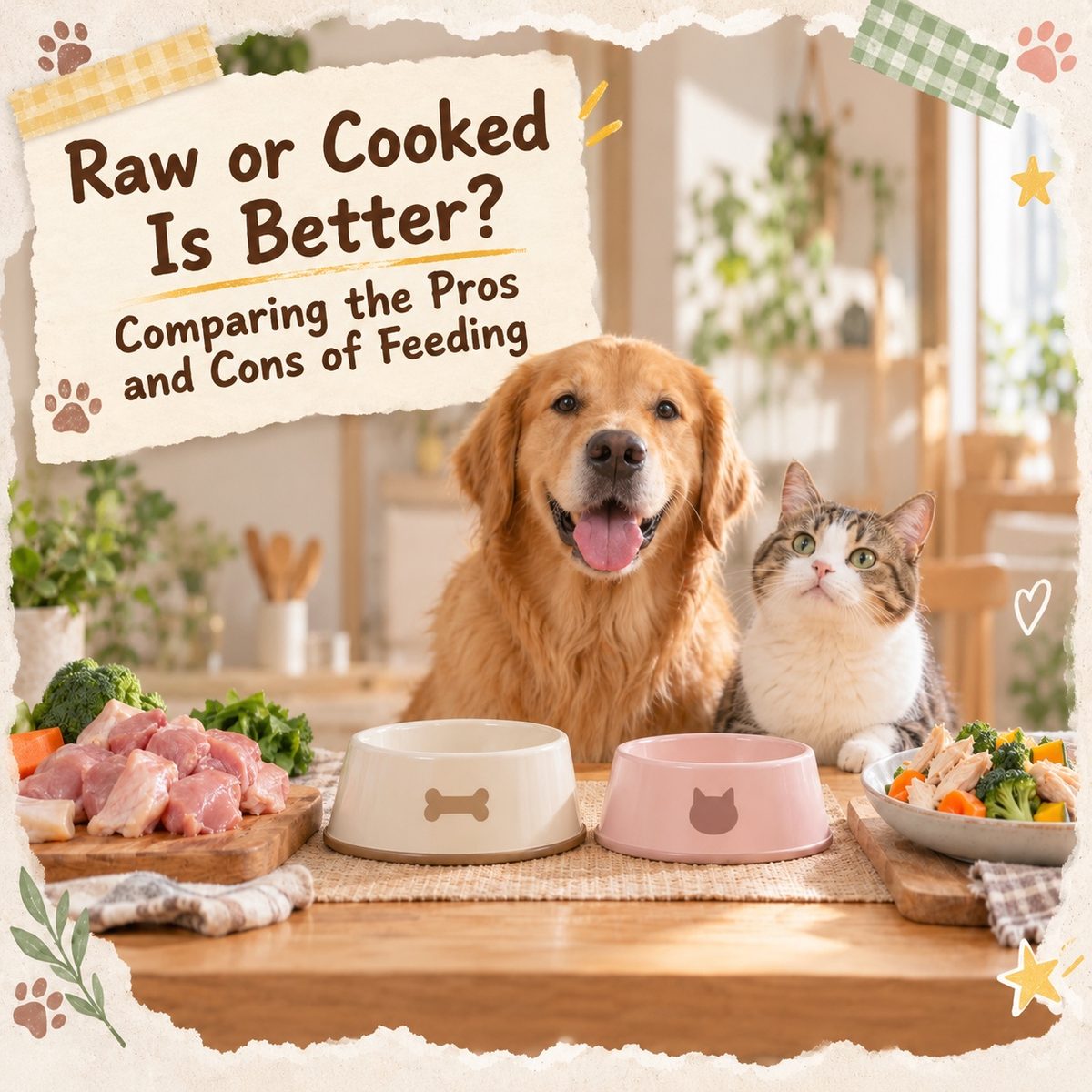
Quick answer: Raw food is closer to the natural prey diet but carries high bacterial risks; cooked food is safer and easier to control but prone to nutritional imbalance. Neither is morally superior—the key is whether the owner can execute high-quality sourcing, strict hygiene, and a complete balanced recipe.
"Should I feed raw (BARF) or cooked food?"—this is a question many owners have. Fairly speaking: both have pros and cons, neither is morally superior—raw food is closer to the natural prey diet but has high bacterial risks; cooked food is safer and easier to control, but homemade cooking can easily lead to nutritional imbalance and high temperatures may destroy some vitamins. Which to choose depends on your risk tolerance, handling ability, and family situation. This article compares them clearly in one go.
Raw vs Cooked Food Overview Comparison
| Raw (BARF) | Cooked | |
|---|---|---|
| Nutrition | Preserves natural enzymes | May lose vitamins |
| Bacterial risk | High (Salmonella etc.) | Low (sterilized) |
| Mimics nature | Close to prey diet | Average |
| Handling | Complex (sourcing/refrigeration) | Simple |
| Zoonotic transmission | Risk exists | Safer |
| Nutritional balance | Requires precise combination | Homemade also easily imbalanced |
The raw feeding camp argues: cats and dogs have a digestive system suited to a prey diet; raw meat and bones provide natural calcium and intact enzymes. The cooked food camp argues: heating sterilizes, digestibility is stable, and commercial cooked foods have complete nutritional science backing. Both sides have valid points; the key lies in execution quality.

What exactly is raw food (BARF)?
BARF generally refers to "Biologically Appropriate Raw Food": raw meat, edible raw bones, organs (small amounts of liver, kidney, etc.) combined in proportions, with some recipes adding vegetables or supplements. A well-designed BARF can be balanced, but the premise is "well-designed"—wrong proportions will cause problems in the long run.
The biggest risk of raw food: bacteria
The biggest risk of raw food is microorganisms—contaminated raw meat can cause:
- Salmonella, Listeria, E. coli—cats and dogs may suffer diarrhea, vomiting, fever after eating
- Zoonotic transmission—people handling raw meat, children licking their hands, family members touching dog bowls are all at risk; pregnant women, the elderly, and immunocompromised individuals should especially avoid handling raw food
- Cats and dogs can carry bacteria without symptoms—no diarrhea does not mean no shedding; household hygiene must be handled at epidemic-prevention level
Environmental parasites and bone risks must also be considered: raw freshwater fish carries parasite risks; raw bones are safer than cooked bones (cooked bones are more likely to splinter and cut the intestines), but large bones still pose a choking risk and must be handled according to body size.
Risks of cooked/homemade fresh food: nutritional imbalance
Cooked food is not zero-risk; the biggest problem is nutritional imbalance:
- Homemade "meat + rice + vegetables" commonly lacks calcium, lacks taurine (essential for cats), and has insufficient vitamin E
- Cats and dogs have different needs: cats are strict carnivores and cannot lack taurine, vitamin A, or arachidonic acid; feeding a dog's recipe to a cat is a common mistake
- High-temperature cooking destroys some vitamins, which need to be compensated by recipe or supplements
So whether raw or cooked, "complete and balanced" is the bottom line—commercial foods have AAFCO/FEDIAF standards backing; homemade meals should follow a recipe designed by a veterinary nutritionist and be reviewed regularly.
Cats and dogs have different needs: recipes cannot be shared
Many owners think cats and dogs eating from the same plate is family harmony, but the nutritional needs of the two species are very different:
| Cat | Dog | |
|---|---|---|
| Dietary positioning | Strict carnivore | Omnivore leaning carnivore |
| Taurine | Essential; deficiency causes heart and eye disease | Can partially synthesize |
| Protein ratio | Higher demand | More flexible |
| Raw bone risk | Small bones easily choke; caution needed | Handle according to size |
| Cooked food misconception | Plain meat and rice easily lacks calcium and taurine | Same but slower |
In one sentence: A dog's recipe cannot be directly fed to a cat, and cats' resistance to bacteria in raw food is not as strong as legend says—"cats can eat anything" is a myth. If cats and dogs in one household need different meals, feed them in separate locations and at separate times, and remove leftovers immediately to prevent stealing food and disrupting the recipe.
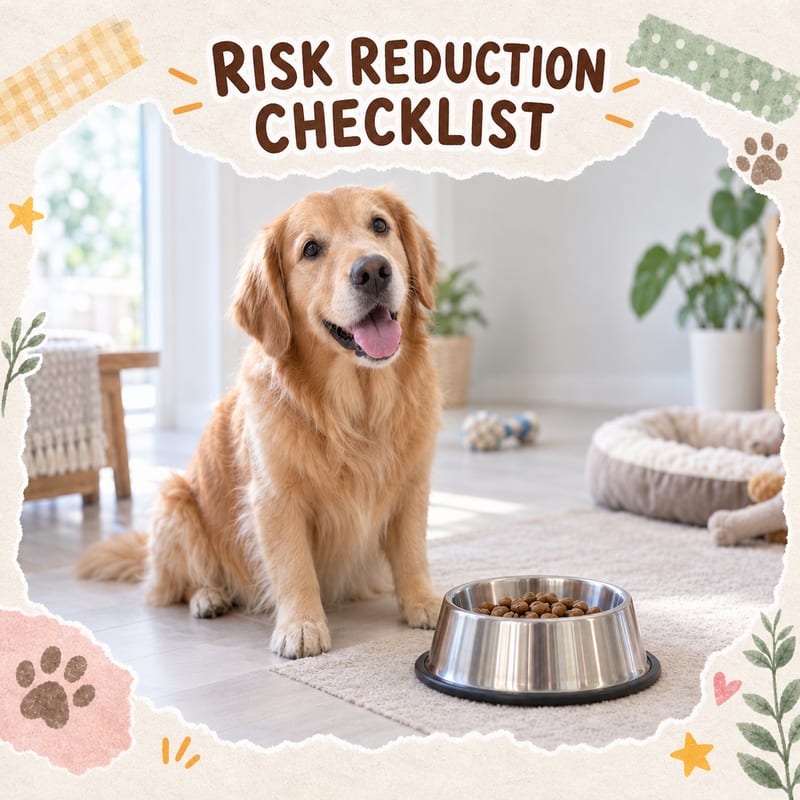
Checklist to reduce raw food risks
If after evaluation you still choose raw food, please meet the following standards:
- Reliable sourcing: Use human-grade meat with traceable sources; avoid cheap unbranded raw meat
- Cold chain throughout: Store frozen at -18°C, portion and thaw per meal, do not refreeze after thawing
- Hygienic handling: Dedicated cutting board, knife, and bowls; after handling, disinfect countertops with hot water and detergent, and wash hands thoroughly
- Feed immediately: Do not leave raw food at room temperature for long; discard leftovers immediately
- Wash bowls every meal: Wash cat and dog bowls immediately after feeding; do not leave residual juices
- Handwashing education for the whole family: Especially children must not lick dog bowls; wash hands after touching dogs
- Regular health checks: Monitor stool condition; have a veterinarian perform fecal tests if necessary
- Supplements according to recipe: Add calcium-phosphorus ratio, taurine, vitamins per recipe; do not guess
The third way: commercial raw food, freeze-dried, and semi-moist food
Between "cutting raw meat yourself" and "cooking rice yourself," there are actually intermediate options:
- Commercial frozen raw food: Large manufacturers treat raw meat with technologies like HPP (high pressure processing), reducing bacterial risk compared to homemade raw food, and recipes are nutritionally balanced—higher budget required
- Freeze-dried food: Raw meat-based diet dehydrated at low temperature, preserving most nutrients; moisture removed makes bacterial growth difficult, convenient for storage and travel, suitable for owners who want to be close to raw but worry about hygiene
- Fresh food delivery/low-temperature cooked meals: Some brands steam human-grade ingredients and add nutrients; labels should state "complete and balanced"
- Dry food as staple + moderate wet food: The most stable and popular combination; cost-controllable and nutritionally backed by standards
In other words, "raw vs cooked" is not a binary opposition—you can choose "safely processed raw" or "nutritionally backed cooked," and avoid "raw without quality control" and "cooked without a recipe."
When is cooked food/commercial food recommended?
Cooked food needed (raw not recommended):
- Beginners (not yet familiar with hygienic handling)
- Kittens and puppies, the elderly, weak, sick, or disabled (weaker immunity)
- Households with pregnant women, children, elderly, or immunocompromised family members
- Living environments without separate refrigerator space or unable to regularly disinfect
- Households with multiple cats and dogs sharing bowls (large cross-contamination surface)
Threshold for raw food (if chosen):
- High-quality sourcing + cold chain
- Balanced recipe instructed by a veterinarian/pet nutritionist
- Strict hygienic handling and whole-family cooperation
Transitioning from dry food to fresh food: also take it slow
Whether switching to raw or cooked, the digestive system needs time to adapt. A 7-10 day transition is recommended: increase the new meal proportion from one quarter daily, observing stool formation and appetite; if soft stool or vomiting occurs, slow down. Kittens, puppies, senior dogs, and individuals with sensitive digestion need even longer. During the transition, do not change both brand and form at the same time (e.g., switching to raw and changing protein source); change only one variable at a time to identify the source of problems.
When to see a doctor?
- Cats and dogs with persistent vomiting, diarrhea (especially bloody), lethargy, fever—seek medical attention immediately and inform the veterinarian that raw food is fed
- Family members with suspected food poisoning (Salmonella infection)—when seeing a doctor, explain the cat and dog diet as well
- Long-term homemade meals (raw or cooked) without supplements—regular health checks to track nutritional indicators
This article is for reference only; consult a registered veterinarian for problems.
What you can do starting today
- Use the comparison table in this article to score your own situation: do you have a cold chain, high-risk group members, and time for hygiene?
- Before deciding raw or cooked, ensure the current meal is a "complete and balanced" staple.
- If switching to fresh food (raw or cooked), adopt a 7-10 day gradual transition and observe stools.
- Keep meat packaging labels and source records for traceability.
- To compare commercial fresh food/dry food/wet food for your pet, browse PetChill's fresh food guide and reviews.
Related Product Recommendations
The most important thing when choosing food is your pet's age, digestion, and taste response. Below are products related to this article, available at PetChill:
- Fuji One Freeze-Dried Cat & Dog Food Raw Bone Meat Staple Duck Recipe 500g (Fuji One) — Freeze-drying locks in nutrition
- Nutriplan Cat Canned Food Nutrition Project Daily Nutrition Can Adult Cat Immunity & Joint Formula 85g (64656) (Nutriplan Nutrition Project) — Joint health formula
Want to see more: Fuji One Brand Guide
Product prices and latest offers are subject to the product page; this article is for reference only.
Further Reading
PetChill Pet Nutrition Team — Hong Kong's most authoritative pet knowledge platform
 Fuji One full guide →


 Fuji Cat full guide →


 Nutriplan full guide →