
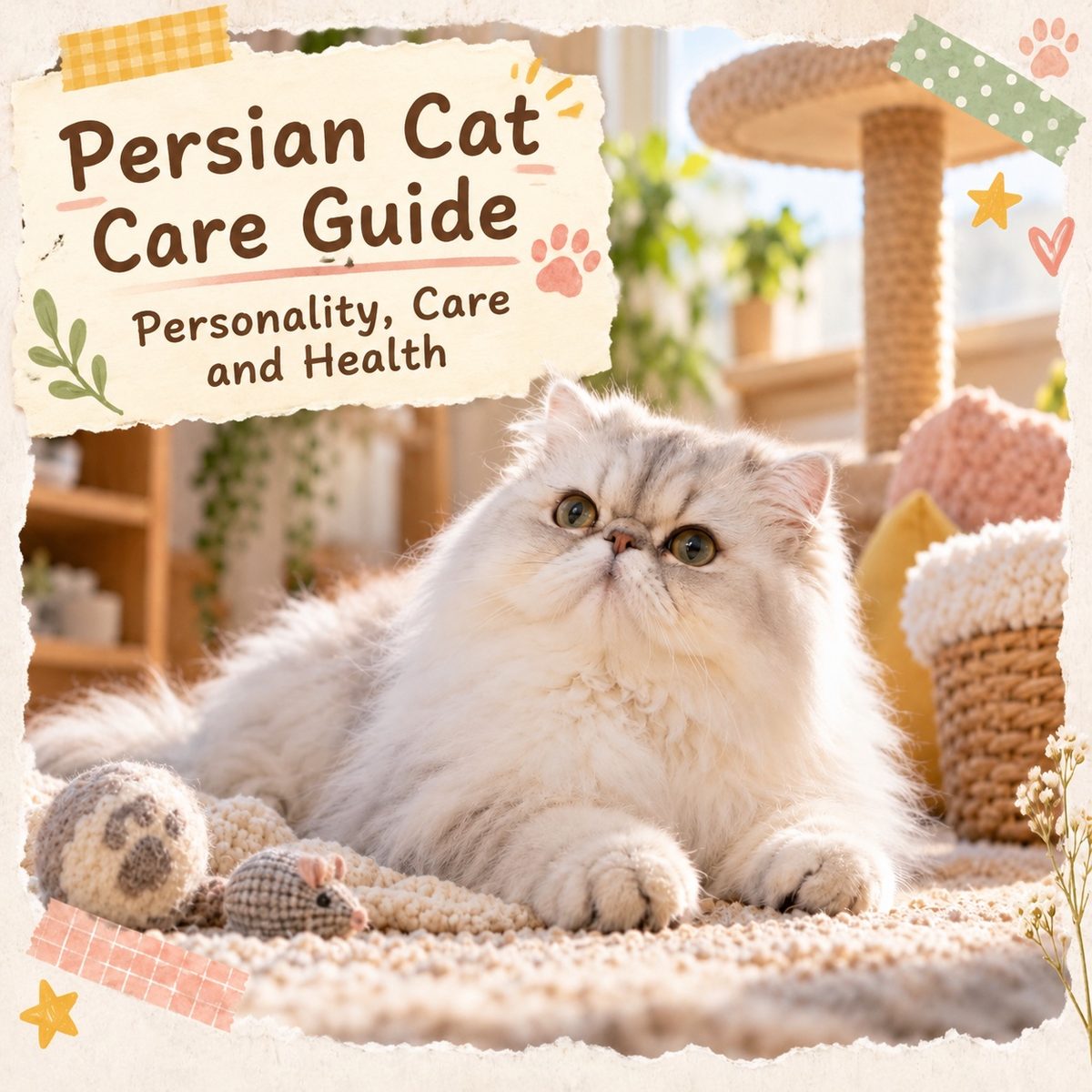
Quick answer: The Persian is a quiet aristocrat, but it needs daily brushing, tear-stain cleaning, PKD kidney screening and an air-conditioned room for the summer. It suits owners with time for grooming; if you want an easier option, choose a short-haired breed.
The Persian is a classic long-haired cat: round face, flat nose, a fluffy long coat and a quiet, gentle personality. The trade-off is a lot of work — daily brushing, daily tear-stain cleaning and PKD genetic screening are all essential. It suits owners who have time for grooming and enjoy quiet company; if you're out all day and want an easy option, a short-haired breed (such as the Exotic Shorthair) is far more practical.
Persian Appearance and Build: The Aristocrat of Cats
| Item | Details |
|---|---|
| Origin | Persia (modern-day Iran), one of the oldest breeds |
| Coat | Very long, fluffy, multi-layered |
| Face | Round face, flat nose, large round eyes |
| Build | Medium to large, sturdy and cobby |
| Weight | About 3–5.5 kg |
The flat face (brachycephalic structure) is the Persian's signature, but it is exactly this feature that brings the respiratory and eye health work described later.
Persian Personality: The Quiet Aristocratic Roommate
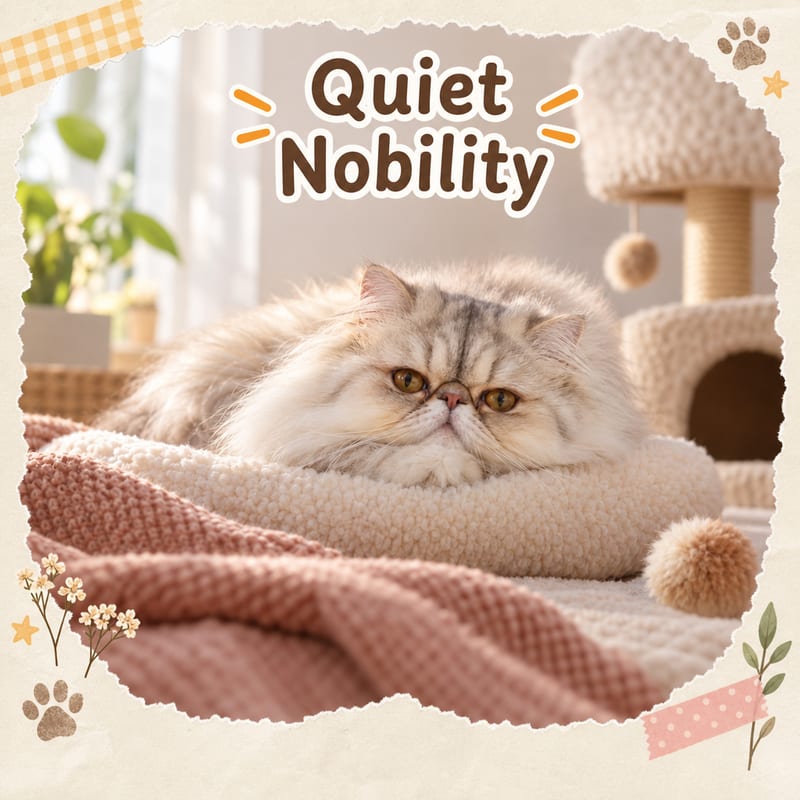
- Gentle and quiet: Not constantly meowing; prefers a stable, undisturbed environment
- Elegant and calm: Slow movements, soft voice, with an aristocratic sense of distance
- Affectionate but polite: Likes you to sit nearby rather than pouncing around
- Not destructive: Low activity level; a windowsill and the sofa are its whole world
The Persian suits a slow-paced household: loud children or frequent changes of environment will stress it greatly.
Persian Care Essentials: Coat, Exercise, Diet
Coat (the biggest task)
- Daily brushing: Use a comb and brush in the direction of the coat, reaching the undercoat; never yank at mats.
- Dealing with mats: Do not cut out felted mats yourself — hand the cat to a professional groomer or veterinarian.
- Bathing and drying: Bathe every 1–2 months; after bathing you must dry the coat thoroughly (damp fur against the skin easily leads to skin problems).
- Daily tear-stain cleaning: The flat face has short tear ducts; wipe the eye corners with damp cotton wool and keep the area dry.
Exercise
Activity level is low; a gentle daily play session (playing with a wand toy close to the ground) plus weight maintenance is enough. Persians gain weight quickly, and obesity worsens respiratory and joint strain.
Diet
- A high-protein, balanced cat food, fed at set times and in set amounts to prevent obesity
- Flat-faced cats eat with difficulty: use a shallow, wide bowl
- Long-haired cats are at higher risk of hairballs: use hairball gel or cat grass regularly, and consider a hairball-control formula (see PetChill's cat food reviews)
Genetic Diseases and Medical Care: When to See a Vet
| Risk | What to watch for |
|---|---|
| Polycystic kidney disease (PKD) | The most common genetic disease in Persians; requires screening proof plus regular kidney checks |
| Respiratory problems | The flat nose has short nasal passages; prone to snuffling, laboured breathing and heatstroke |
| Tear duct / eye problems | Tear stains that stay wet for long periods easily become inflamed; check regularly |
When to see a vet:
- Noisy breathing, open-mouth breathing, or prolonged panting after exercise
- Red, swollen eyes or yellow-green eye discharge
- A sudden increase in drinking and urination (an early sign of PKD)
- Poor appetite, weight loss, vomiting
- Lethargy or drooling in summer (warning signs of heatstroke — cool the cat down immediately and take it to the vet)
Always ask for a PKD ultrasound or genetic screening report before buying; after adoption, have kidney tests regularly from 3 years of age.
Hong Kong Environment Tips: Humidity and Heat Are the Biggest Enemies
- Summer: Long coat + flat nose = a double heat-sensitive combination. Keep the indoor air-conditioning dry (24–26°C recommended), do not leave the cat alone in a room without air-conditioning, and watch for heatstroke signs. Consider a light summer trim (a trim, not a shave) — discuss with your vet first.
- The damp 'returning south' season: Humid conditions make the long coat prone to matting and fungal growth — increase brushing frequency and keep the environment dry.
- Small flats are OK: Persians do not need much space, but they do need a quiet sleeping spot of their own.
- Daily hair management: Daily shedding adds up; do brushing in a fixed spot so it is easy to clean up.
Adopt or Buy?
- Buying: Prices in Hong Kong are about $10,000–$25,000 (see the cat breed guide). Choose a registered breeder, always ask about PKD screening, and observe whether the cat has heavy breathing sounds and clean eyes.
- Adopting: Persians and Persian crosses occasionally appear at rescue organisations; abandoned long-haired cats are mostly cases where grooming became too much — before adopting one, make sure you can commit to daily brushing.
- Reminder: Do not buy a flat-faced breed blindly at a high price; health proof matters more than coat colour and pedigree.
The Chinchilla, also part of the Persian family, can be compared by personality, drawbacks and price in What is a Chinchilla cat? Personality, drawbacks, lifespan and price.
What You Can Do Starting Today
- Buy a comb and start brushing for 10 minutes every day from today.
- Switch to a shallow, wide food bowl to reduce the strain on the flat face when eating.
- Ask your preferred breeder for the PKD screening report
before you commit. 4. Stick the summer air-conditioning settings and heatstroke warning signs on the fridge so the whole family knows.
For how to choose long-haired cat food and hairball products, PetChill's cat food reviews have practical comparisons.
This article is for reference only; consult a registered veterinarian for any concerns.
Further Reading
- Cat Breeds at a Glance →
- British Shorthair Guide →
- Russian Blue Guide →
- Domestic Cat (Hong Kong Cat) Guide →
Practical Checklist for Hong Kong Small Flats: Start Today
1. Set up a brushing zone
- Choose a corner of the living room and place a small stool plus a bin so hair falls straight into the bin instead of flying around.
- Brushing time: before dinner each evening, when the cat is hungry and more cooperative; reward with a treat afterwards to build the habit.
2. Tear-stain cleaning station
- Stick a 'daily eye-wipe checklist' on the fridge door and have the whole family take turns signing it so no one forgets.
- Keep a small box with damp cotton wool and saline solution by the sofa so you can wipe while watching TV.
3. Air-conditioning and ventilation
- Add a thermometer sticker to the air-conditioner and set it to 24–26°C; use a phone app to switch it on remotely before you go out so the temperature does not rise suddenly.
- In the damp season, use a dehumidifier with a target humidity of 50–60% to reduce fungal growth.
4. Food bowl placement
- Use a shallow, wide ceramic bowl placed 10 cm from the wall so the cat's whiskers do not touch the wall and it can eat comfortably.
- Put a silicone mat under the bowl so long hair that sweeps the floor is easy to clean.
5. Emergency vet bag
- Prepare a 'Persian emergency bag' in advance: towel, ice pack, small syringe (for giving water), vet card.
- In summer, if the cat is open-mouth panting or drooling, immediately wrap its body with an ice pack and get to a 24-hour clinic within 15 minutes.
6. Buying/adoption checklist
- Breeder: ask for the original PKD ultrasound or genetic report, and listen for any abnormal breathing sounds on site.
- Rescue organisation: ask clearly about the cat's previous matting situation, and confirm your daily brushing schedule before signing.
Follow these steps and you can manage even in Hong Kong's hot, humid climate!



