Quick answers
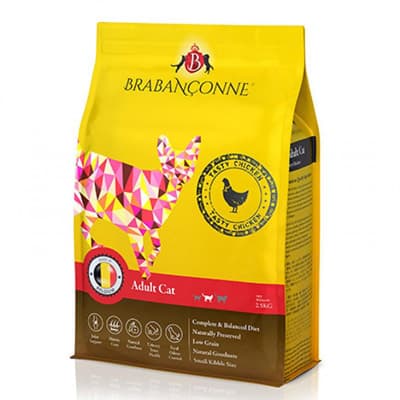
- The brand was founded in 2016, and its products are made by an IFS-certified contract manufacturer in Belgium using ingredients sourced from Europe.
- The Everyday Adult Chicken formula lists 29% crude protein and 16% fat, which converts to about 31.9% on a dry-matter basis, above the AAFCO adult maintenance minimum of 26%.
- Carbohydrates estimated by difference are about 33% to 36% (the 881 Enhanced Digestion formula officially lists 36%), making this a medium-to-high carbohydrate dry food.
- Phosphorus is listed at 0.7% to 0.8%, which converts to about 0.77% to 0.88% on a dry-matter basis, higher than the 0.3% to 0.5% common in renal prescription diets.
- PetChill's online store lists the 2.5kg pack at HK$227 (881 range HK$261) and the 20kg pack from HK$896, about 50% cheaper per kilogram.
- A 4kg adult cat eats about 50 to 53 grams per day: the daily cost is about HK$4.6 to 5.4 with the 2.5kg pack and about HK$2.4 to 3.4 with the 20kg pack.
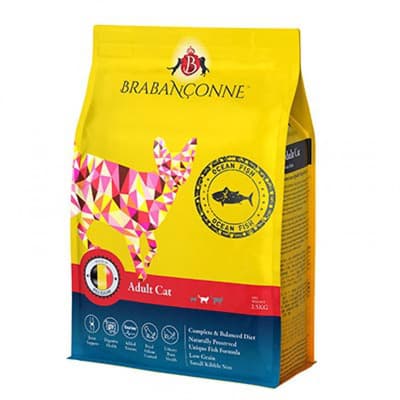
- 'No meat meal' and 'single protein' need to be checked sentence by sentence: the fish formula's ingredient list still contains animal fat (chicken) and hydrolysed salmon protein, so there are at least 2 animal sources.
Most people searching for 'Brabanconne cat food review' want one answer: is it really good enough to feed long-term? The direct answer: there is no conclusion that applies to every cat, but the brand's verifiable numbers are middling—protein meets the standard but is not high-protein, carbohydrates are on the high side, and phosphorus is on the high side. The Everyday Adult Chicken formula lists 29% crude protein (about 31.9% dry matter), 16% fat, 0.7% phosphorus (about 0.77% dry matter) and 4,142 kcal/kg; the 881 range's 32% protein and 2,500 mg/kg taurine are a step higher. All these numbers can be checked on the packaging; you don't need to rely on word of mouth.
Below we first break down the ingredients and converted numbers, then verify claims like 'no meat meal' and 'single protein' sentence by sentence, then list PetChill's current online prices, cost per kilogram and daily cost, and finally explain how to read online owner reviews and how to transition foods. If you want to build a framework for choosing food first, you can read our Pet Nutrition Guide and then come back to the numbers in this article.
Breaking down the ingredient list and nutrition numbers item by item
Looking at the marketing words on the front of the bag is not very useful; you need to turn it over and read the ingredient list. The first five ingredients in the Everyday Adult Chicken formula are: chicken, brown rice, lentils, animal fat (chicken), peas, followed by fresh salmon oil, hydrolysed salmon protein, easily digestible pea protein, dried chicory (a natural source of FOS and inulin) and flaxseed. A few points are worth noting:
- The first ingredient is chicken, so it starts with fresh meat, and the brand also states it does not use meat by-products.
- The second ingredient is brown rice and the third is lentils, meaning plant ingredients come right after the animal protein; this is not a high-meat structure.
- After the fifth ingredient come hydrolysed salmon protein and easily digestible pea protein, both processed or plant protein sources used to raise the overall protein percentage.
- In the fish formula (Adult Fish), the first ingredient is fish (five types: salmon, cod, saithe, redfish and plaice), and the second is again brown rice, but the animal fat is explicitly chicken fat, and there is also hydrolysed salmon protein.
For the expected analysis, the listed figures for five common formulas are as follows, converted to a dry-matter basis using the same formula: wet-weight percentage ÷ (100 − moisture percentage) × 100. This article uses 9% moisture, so the divisor is 91.
| Item | Everyday Adult Chicken | Everyday Adult Fish | Everyday Kitten Chicken | 881 All-Cat Health | 881 Enhanced Digestion |
|---|---|---|---|---|---|
| Crude protein | 29% | 29% | 32% | 30% | 32% |
| Crude fat | 16% | 18% | 20% | 22.5% | 14% |
| Crude fibre | 3.5% | 3% | 3% | 3.5% | 3% |
| Ash | 7.5% | 7.5% | 7.5% | 7.5% | 8.5% |
| Moisture | 9% | 9% | 9% | 9% | 9% |
| Calcium | 1% | 1% | 1.2% | 0.9% | 1.1% |
| Phosphorus | 0.7% | 0.7% | 0.7% | 0.8% | 0.8% |
| Taurine | 1,500 mg/kg | 1,500 mg/kg | 1,500 mg/kg | 2,500 mg/kg | 2,500 mg/kg |
| Metabolizable energy | 4,142 kcal/kg | 4,283 kcal/kg | 4,465 kcal/kg | 4,183 kcal/kg | 4,400 kcal/kg |
After converting to a dry-matter basis and calculating carbohydrates, the structure becomes much clearer:
| Item (dry-matter basis) | Everyday Adult Chicken | Everyday Adult Fish | Everyday Kitten Chicken | 881 All-Cat Health | 881 Enhanced Digestion |
|---|---|---|---|---|---|
| Crude protein | about 31.9% | about 31.9% | about 35.2% | about 33.0% | about 35.2% |
| Crude fat | about 17.6% | about 19.8% | about 22.0% | about 24.7% | about 15.4% |
| Carbohydrate (estimated by difference) | about 38.5% | about 36.8% | about 31.3% | about 30.2% | officially listed 36% (about 39.6%) |
| Phosphorus | about 0.77% | about 0.77% | about 0.77% | about 0.88% | about 0.88% |
Three interpretations. First, protein meets the standard but is not high-protein: the AAFCO minimum for adult maintenance is 26% dry matter and for growth is 30%; these formulas all pass, but compared with high-protein formulas on the market at 40% or more, they are mid-range. Second, carbohydrates are on the high side: estimated by difference (100 − protein − fat − ash − fibre − moisture), the Everyday range is about 33% to 36%, or about 37% to 39% dry matter; using 4 kcal/g protein, 8.5 kcal/g fat and 4 kcal/g carbohydrate, the energy distribution of Everyday Adult Chicken is roughly 30% protein, 35% fat and 36% carbohydrate. Third, phosphorus is worth noting: listed at 0.7% to 0.8%, or about 0.77% to 0.88% dry matter. Healthy adult cats generally do not need strict phosphorus restriction, but cats diagnosed with chronic kidney disease usually use prescription diets with 0.3% to 0.5% dry matter; these numbers should be shown to a veterinarian.
One more reminder: the expected analysis tables copied on different retail pages sometimes contain errors. For example, for the same kitten formula, some pages list 29% protein/16% fat while others list 32%/20%. When checking, always rely on the nutritional analysis on the packaging in your hand, and do not copy from web pages.

How to verify 'no meat meal' and 'single protein'
The brand's public statements are often quoted, but the ingredient list is the hardest evidence. Sentence by sentence:
| Brand statement | What the ingredient list actually shows | How to check |
|---|---|---|
| No meat meal or meat by-products | The ingredient list indeed has no 'meal' wording; the first ingredient is chicken or fish | Check the ingredient list for meal/by-product wording |
| Single protein, reducing the chance of allergies | The Everyday Adult Fish formula contains animal fat (chicken) and hydrolysed salmon protein, so there is more than one animal source | Check each animal source; cats sensitive to chicken should note that the fish formula still contains chicken fat |
| Fresh meat and fresh fish | The first ingredient is fresh meat, but the second and third are brown rice and lentils, followed by hydrolysed protein and pea protein | Look at the order of ingredients, not just the front-of-pack marketing |
| Developed by veterinarians and a team at the University of Cambridge | Brand materials state that veterinary consultants and nutritionists were involved in formula development; this is the brand's own account | Treat as an official statement; it is not the same as independent third-party certification |
| Human-grade, veterinarian-approved | Brand statements and origin testing; Hong Kong Brand Development Council information states that products are outsourced to an IFS-certified Belgian manufacturer | You can ask the retailer for test reports; 'professional range' is not the same as prescription diet |
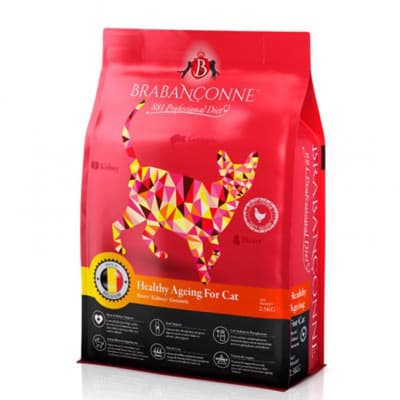
The point that needs the most clarification is the positioning of the 881 Professional range. Brand Development Council information states that the range was designed for common problems in Asian living environments (insufficient activity space, indigestion, sensitivity, ageing), with the original intention of letting owners choose 'professional-grade' food without a veterinary prescription. This is a market positioning; it does not mean it can replace veterinary diagnosis or prescription diets. If a cat has been diagnosed with kidney disease, heart disease, diabetes or a history of urinary tract disease, the formula's protein, phosphorus and sodium need to be adjusted according to the condition; you must follow veterinary instructions and not switch foods on your own just because the packaging says 'professional'.
As for whether 'hydrolysed protein' is necessarily bad? The answer is no. Hydrolysis uses enzymes to break protein into smaller molecules, reducing molecular weight; it is common in hypoallergenic and gastrointestinal formulas and is a reasonable process. But it is a different thing from 'fresh meat' and should not be treated as fresh meat. There are two practical implications for feeding: first, for cats sensitive to chicken, even if you choose the fish formula, the animal fat and hydrolysed protein in the ingredient list may still involve chicken, so try only under veterinary advice; second, the more protein sources there are, the harder it is to track allergens, so change only one thing at a time.
Hong Kong prices, cost per kilogram and daily cost
For price, look at 'cost per kilogram' and 'daily cost', not the pack price. Below are PetChill's online prices on 2026-10-12; cost per kilogram uses the same formula: price ÷ net weight (g) × 1000; daily cost is based on a 4kg adult cat eating about 218 kcal per day (maintenance energy requirement ≈ 198 kcal × 1.1).
| Product (size) | Online price | Cost per kilogram | Daily cost | Stock status |
|---|---|---|---|---|
| Everyday Adult Chicken 2.5kg | HK$227 | about HK$91 | about HK$4.8 | In stock |
| Everyday Adult Fish 2.5kg | HK$227 | about HK$91 | about HK$4.6 | In stock |
| Everyday Kitten Chicken 2.5kg | HK$227 | about HK$91 | — (kittens by weight) | In stock |
| 881 Professional All-Cat Health 2.5kg | HK$261 | about HK$104 | about HK$5.4 | Available for pre-order |
| 881 Professional Enhanced Digestion 2.5kg | HK$261 | about HK$104 | about HK$5.2 | Available for pre-order |
| Everyday Adult Chicken 20kg | HK$896 | about HK$45 | about HK$2.4 | In stock |
| Everyday Adult Fish 20kg | HK$1,080 | about HK$54 | about HK$2.8 | In stock |
| Everyday Kitten Chicken 20kg | HK$990 | about HK$50 | — | Available for pre-order |
| 881 Professional 20kg | HK$1,300 | about HK$65 | about HK$3.4 | Available for pre-order |
Links to in-stock products in the online store:
- Brabanconne Cat Food Everyday Adult Chicken 2.5kg (001749) — HK$227
- Brabanconne Cat Food Everyday Adult Fish 2.5kg (001758) — HK$227
- Brabanconne Cat Food Everyday Kitten Chicken 2.5kg (001757) — HK$227
- Brabanconne Cat Food 881 Professional All-Cat Health 2.5kg (001762) — HK$261 (available for pre-order)
Prices and stock are subject to the online store's current listed price.
Two key points can be seen from the table. First, the gap between 2.5kg and 20kg is nearly double: Everyday Adult Chicken drops from about HK$91 per kilogram to about HK$45, meaning the large pack is about 51% cheaper per kilogram; converted to monthly food cost (a 4kg adult cat eats about 1.55 to 1.6 kg per month), the 2.5kg pack costs about HK$143 per month and the 20kg pack about HK$71. Second, the 881 range is about 15% more expensive than the Everyday range (2.5kg rises from HK$227 to HK$261, about HK$104 versus HK$91 per kilogram); the difference buys 2,500 mg/kg taurine, lower fat (14%) and a set of prebiotic ingredients, and whether it is worth it depends on your cat's condition.
However, we do not recommend buying 20kg straight away before trying the food: 20kg will last a single-cat household several months, and if soft stools, food refusal or sensitivity reactions occur midway, the leftover food will be difficult to deal with. The reasonable order is to buy the 2.5kg pack first, observe palatability, stools and coat over 4 to 6 weeks, and only switch to the large pack once you confirm it suits your cat. To compare other routes at a similar price, see our CANAGAN cat food review.
If, after veterinary assessment, a prescription-level or weight-management formula is needed, here is another direction from the online store for reference only; it is not a recommendation:
- Hills Prescription Diet Cat Food w/d Multi-Benefit 4lbs (6159) — HK$376 (available for pre-order), a prescription diet to be used after veterinary assessment
- Schesir Cat Food Neutered Weight Control Fish 1.5kg (SCH13806) — HK$179 (available for pre-order)
- Monster Tribe Cat Food 98% Fresh Meat Complete Cat Food Horse Mackerel 250g (A172) (best-before 2026.11.27) — HK$87
How to read online reviews and owner feedback?
Does 'pet owners recommend it' automatically mean it is good? You need to distinguish what kind of content the recommendation is. Online content about Brabanconne falls roughly into three layers:
| Review source | Common statements | Reference value | How to check |
|---|---|---|---|
| Official specifications and brand materials | Made in Belgium, European ingredients, starts with fresh meat, no meat by-products | High; verifiable information, but manufacturer self-declaration | Compare with the nutritional analysis and ingredient list on the back of the pack |
| Owner experience | 'My cat will eat it', 'stools are better', 'coat looks better' | Medium; genuine but subjective, with large individual variation | Check for purchase records, sample size and feeding duration |
| Media or influencer round-ups | Unboxings, rankings, star ratings | Low to medium; may involve sponsorship or affiliate links | Check whether commercial relationships are disclosed and whether numbers can be verified |
To verify any review, look at at least four indicators:
- Whether there is a purchase record or real-name marker—an e-commerce platform's 'verified purchase' tag is more reliable than an anonymous comment.
- Sample size—inferring a 'common problem' from one or two reviews does not hold; use 20 reviews as a rough threshold, and treat fewer than that as individual cases. Retail pages often show high scores (for example, 5.0 from only 1 to 9 reviews), which is not enough to prove quality.
- Whether feeding duration and cat background are stated—information like 'fed for 3 months' or '8 years old, 4.5 kg' is what allows you to compare with your own situation.
- Whether there are specific specification numbers—'soft stools on day 3 of transition' is a verifiable statement; 'poor quality' is an emotion, not data.
Reverse signals also matter: the same block of text appearing unchanged on multiple platforms usually means copying or promotion; reviews appearing in large numbers within a short period may be manipulated. Conversely, the same food getting both praise and criticism for different reasons looks more like a real distribution. As for the most common negative reviews, they usually fall into three categories: palatability (the cat refuses to eat; individual preference), temporary soft stools from transitioning too fast (usually improves if extended to 7 to 14 days), and a gap between price and size expectations. To see how to verify reviews of another similar dry food, see HEROMAMA cat food review.
Which cats is it suitable for? Transition and storage
The following categorises by cat condition; it is directional guidance and cannot replace veterinary assessment:
| Cat condition | Suitable? | Reasons and points to note |
|---|---|---|
| Healthy adult cat (1 to 7 years) | Can be considered | Protein and fat meet standards; falls within the complete dry food category |
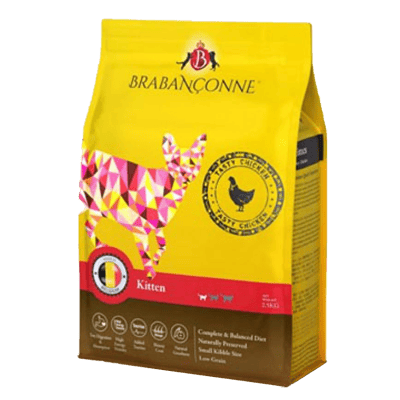
| Kittens 2 to 12 months | Kitten formula can be considered | Listed dry-matter protein about 35.2%, above the growth minimum of 30% |
| Senior cats over 7 years | Blood test first | Senior cats commonly have changes in kidney function; phosphorus and protein needs should be adjusted according to blood test results |
| Diagnosed chronic kidney disease | Not recommended to choose on your own | Dry-matter phosphorus about 0.77% to 0.88%, higher than the common range for renal prescription diets |
| Suspected food allergy | Not necessarily suitable | The fish formula still contains animal fat (chicken) and hydrolysed protein; try under veterinary advice |
| Easily gets soft stools | 881 Enhanced Digestion can be considered | That formula lists 14% fat but has 36% carbohydrate; transition slowly |
| Neutered, prone to obesity | Can be used but measure portions | Energy 4,142 to 4,465 kcal/kg is medium-high density; calculate grams based on ideal weight |
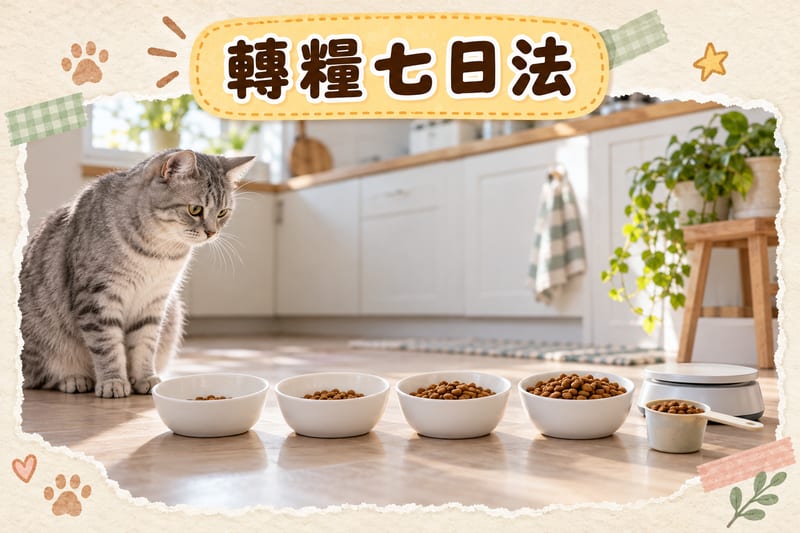
Transitioning food is where most people go wrong; the correct approach is to increase proportions step by step, not switch completely within a day or two:
| Stage | New food proportion | Old food proportion |
|---|---|---|
| Days 1 to 2 | 25% | 75% |
| Days 3 to 4 | 50% | 50% |
| Days 5 to 6 | 75% | 25% |
| Day 7 | 100% | 0% |
For kittens, senior cats or cats with sensitive stomachs, extend to 10 to 14 days; record stool shape, appetite and water intake daily, and if soft stools appear, go back to the previous proportion and pause for two days. For storage, Hong Kong is humid; after opening, we suggest pouring the food into an airtight container, adding a food-grade desiccant, keeping it in a cool place, and finishing it within one to two months; a 20kg bag can be divided into several small airtight bags, opening only one at a time to reduce fat oxidation.
The following situations should not be solved by changing food; stop feeding and contact a veterinarian immediately:
- Continuous vomiting or diarrhoea for more than 24 hours
- Complete loss of appetite for more than a day
- Blood in stool, vomiting blood, or frequent urination with no urine (urethral obstruction in male cats is an emergency)
- Cats with chronic diseases (kidney disease, diabetes, history of urinary tract disease): any dietary change should be discussed with a veterinarian first
Further reading
- Pet Nutrition Guide | How to choose by ingredient list, calories and prescription diets (2026)
- Natural Signature cat food review and controversy: ingredient analysis
- CANAGAN cat food review | Grain-free ingredients and Hong Kong price guide
- HEROMAMA cat food review: ingredients, owner feedback and notes
In an emergency, contact a veterinarian immediately; this article is for reference only and cannot replace veterinary diagnosis.
Information checked as of 2026-10-12Source: PetChill editorial team
 CANAGAN full guide →
 K9 Natural full guide →
 Feline Natural full guide →