Quick Answers
- The real threshold for low phosphorus is dry matter phosphorus below 0.5%: veterinary renal formulas are typically designed at 0.3–0.5% dry matter, while regular adult maintenance food is 1.0–1.5% dry matter.
- Packaging numbers cannot be compared directly; convert to dry matter using the formula "labeled phosphorus % ÷ (100 − moisture %) × 100". A wet food with 80% moisture labeled 0.08% equals 0.40% dry matter.
- IRIS guidelines suggest that stage 2 renal cats can already be considered for a renal formula; stages 3 and 4 are recommended; stage 1 has no consistent recommendation.
- Blood phosphorus targets relax with stage: stage 2 0.9–1.45 mmol/L (2.7–4.5 mg/dL), stage 3 0.9–1.6 mmol/L, stage 4 0.9–1.9 mmol/L; the lower-middle part of the range is generally ideal.
- "Low protein" is a misnomer: veterinary renal formulas typically contain 26–32% dry matter protein (regular food 35–45%); guidelines refer to "moderate restriction", not "the lower the better".
- If blood phosphorus is still not at target after 4–6 weeks of dietary control, IRIS guidelines recommend adding phosphorus binders, but whether and how much to add is entirely up to the veterinarian.
- Veterinary renal formulas must always be selected after veterinary assessment; they are intended for stage 2–4 renal cats; healthy adult cats, kittens, and pregnant or nursing cats should not use them.
The most honest answer to "What low-phosphorus, low-protein commercial cat foods are recommended?" is: yes, there are options, but they are all veterinary prescription-level formulas, and none should be bought and fed based on your own judgment. This is because "low phosphorus" and "low protein" are two different goals: the former is the core of chronic kidney disease diets, while the latter depends on stage and whether proteinuria is present, and can only be accurately judged by a veterinarian after reviewing blood and urine test reports.
First, a key point: dry matter phosphorus in veterinary renal formulas generally falls between 0.3–0.5%, while regular adult cat food on the shelf is 1.0–1.5%—nearly a threefold difference. This gap is not a marketing tactic but a result of the International Renal Interest Society (IRIS) guidelines explicitly recommending phosphorus restriction for stage 2–4 chronic kidney disease cats. This article does not rank any brands; below we explain what low phosphorus and low protein mean, how to use the dry matter conversion formula to see through packaging numbers, the positioning of 6 common commercial formula lines, IRIS blood phosphorus targets by stage, and the practical steps for transitioning and monitoring in Hong Kong.
What Is Low-Phosphorus, Low-Protein Cat Food? When Is It Needed and When Not?
"Low-phosphorus cat food" is not an official category but a nutritional goal: to reduce dietary phosphorus to a level that the remaining kidney function can handle. Chronically high blood phosphorus triggers renal secondary hyperparathyroidism, causing further kidney damage, so IRIS guidelines recommend phosphorus restriction for stage 2, 3, and 4 cats; the most effective way to restrict phosphorus is to switch to a specially designed renal formula, not to rely on medication to catch up.
Veterinary renal formulas typically do four things together: reduce phosphorus to 0.3–0.5% dry matter, moderately restrict protein, lower sodium, supplement potassium, and add omega-3 (EPA/DHA) from fish oil. These four must be considered together; you cannot focus on phosphorus alone.
As for "low protein", this term is actually inaccurate. Veterinary guidelines refer to "moderate protein restriction", mainly for stage 3–4 cats or those with proteinuria, because protein metabolism produces nitrogenous waste. The ISFM senior cat consensus specifically warns: cats over 13 may have increased energy needs, and severe protein restriction can cause lean body mass loss, so weight and muscle condition must be monitored throughout.
| Phosphorus level | Dry matter phosphorus | Relative phosphorus load | Suitable for (must be confirmed by veterinarian) |
|---|---|---|---|
| Therapeutic low phosphorus | 0.3–0.5% | Lowest | IRIS stage 2–4 renal cats, prescribed by veterinarian |
| Intermediate zone | 0.5–0.8% | Moderate | Some non-prescription "renal support" foods, not at therapeutic level |
| Regular adult cat food | 0.8–1.5% | Higher | Healthy adult cats |
| High-phosphorus foods | Above 1.5% | Highest | Organs, fish with bones, some dairy products; not suitable for renal cats |
Conversely, when is low phosphorus not needed? Healthy adult cats, kittens, and pregnant or nursing cats should not be on therapeutic low-phosphorus formulas long-term, because kittens need phosphorus for bone development, and there is no known benefit to restricting phosphorus in healthy cats without reason. Some owners switch to renal formulas on their own just because the cat is "getting old"—this should be avoided: first run blood tests to determine stage, then decide.

How to Calculate Phosphorus: Dry Matter Basis and Per 100 kcal
The "phosphorus 0.08%" on the package is an as-fed (including moisture) figure; comparing dry food and wet food directly is meaningless. To compare, first convert to dry matter:
Phosphorus (dry matter %) = labeled phosphorus % ÷ (100 − moisture %) × 100
- Example 1: Wet food labeled phosphorus 0.08%, moisture 80% → 0.08 ÷ 20 × 100 = 0.40% dry matter, within therapeutic range.
- Example 2: Dry food labeled phosphorus 0.90%, moisture 10% → 0.90 ÷ 90 × 100 = 1.00% dry matter, at regular adult cat food level.
The second common unit is "phosphorus per 100 kcal (mg)", because cats eat by calories, not weight, and this unit is fairest for comparing actual intake for the same cat. Conversion formula:
Phosphorus per 100 kcal (mg) = labeled phosphorus % × 10,000 × 100 ÷ calories per kg (kcal)
- Example: Formula labeled phosphorus 0.10%, calories 1,000 kcal/kg → 1,000 mg × 100 ÷ 1,000 = 100 mg/100 kcal.
Note that different sources have different specific mg/100 kcal thresholds for the "therapeutic range", and conversion results for dry and wet food cannot be directly applied to the same number. The safest approach is to request the manufacturer's complete nutritional data (including moisture, calories, and mineral analysis) from the supplier or veterinarian, rather than relying on the few lines on the back of retail packaging. Also, check the ingredient list for added phosphorus: additives such as sodium phosphate, potassium phosphate, and polyphosphates are usually more absorbable than naturally occurring phosphorus, so it is worth avoiding them when choosing a formula.

What Commercial Low-Phosphorus/Renal Formulas Are Available?
The table below is in alphabetical order by brand; it only summarizes the positioning and official public highlights of each line, and does not imply order, superiority, or recommendation. The same brand usually has several versions (e.g., Early Support, Special, Select) with differences in phosphorus content; check the actual nutritional label on the package before ordering.
| Brand line | Example feline series | Form | Official public highlights (dry matter; varies between versions) |
|---|---|---|---|
| Farmina Vet Life | Renal Feline | Dry, wet | Officially positioned as renal support formula, moderate restriction of phosphorus and protein |
| Hill's Prescription Diet | k/d, k/d Early Support, k/d + Mobility | Dry, wet | Officially disclosed phosphorus about 0.32% (wet) to 0.45% (dry), protein about 28–30% |
| Purina Pro Plan Veterinary Diets | NF Kidney Function, NF Early Care | Dry, wet | Officially disclosed phosphorus about 0.35–0.49%, protein about 27–28% |
| Royal Canin Veterinary Diet | Renal, Renal Special, Renal Select | Dry, wet | Officially disclosed phosphorus about 0.30–0.45%, protein about 25–30% |
| Specific | FKW Kidney Support | Dry, wet | Officially positioned as renal support, phosphorus and sodium controlled |
| Virbac Veterinary HPM | Renal | Dry | Officially positioned as renal support formula, moderate restriction of phosphorus and protein |
There is no ranking in the table because choosing a line depends on: IRIS stage, current blood phosphorus level, presence of proteinuria, concurrent diabetes or heart disease, the cat's taste, and your budget. In practice, the veterinarian usually selects 2–3 candidate formulas first, sees whether the cat will eat them, then fine-tunes based on recheck results—only a formula the cat will eat has a chance to work.
Another distinction to make: non-prescription "renal support" foods (more common among Japanese and European brands) are not the same as veterinary renal formulas. Some products still have dry matter phosphorus above 0.8%, not reaching the therapeutic level recommended by IRIS; if the cat has been diagnosed with kidney disease, these products should not replace a veterinary formula. The way to tell is simple: check whether dry matter phosphorus falls within 0.3–0.5%, not whether the front of the package says "renal".
Do Renal Cats Have to Eat "Low Protein"?
Not necessarily, and this is the easiest place to get wrong. IRIS guidelines focus on phosphorus restriction, while the timing of protein restriction is debated: some veterinarians advocate starting only when the cat shows clinical signs of uraemia (usually late stage 3 to stage 4), as early restriction has no clear benefit; cats with proteinuria (elevated urine protein/creatinine ratio, UPC) are the exception and usually need concurrent management of protein loss.
The cost of over-restricting protein is real: muscle loss, weight loss, and impaired immunity and tissue repair. Cats over 13 already face the risk of muscle loss, so the ISFM senior cat consensus recommends "moderate restriction" rather than "the lower the better", and requires regular monitoring of weight, body condition score, and muscle condition score.
Veterinary renal formulas actually do not push protein to extremely low levels: dry matter protein is usually maintained at 26–32%, lower than the 35–45% in regular food but not deficient; the key is using highly digestible protein sources so that the same amount produces less nitrogenous waste.
| Common saying | What guidelines and practice say |
|---|---|
| Renal cats must eat low-protein food | From stage 2, phosphorus restriction comes first; protein restriction depends on stage and proteinuria, decided by the veterinarian |
| The lower the protein, the better | Over-restriction causes muscle loss; cats over 13 especially need to preserve lean tissue |
| Once on a renal formula, no need for blood tests | Blood phosphorus, potassium, calcium, and renal indices must be checked regularly, most frequently in the first 4–6 weeks |
| The lower the phosphorus, the safer | Cats whose blood phosphorus is already at target may have an increased risk of hypercalcaemia when switched to renal formulas; veterinary monitoring is required |
Hong Kong Practicalities: How to Choose, Transition, and Monitor
After understanding the principles, the practical process has six steps:
- Confirm diagnosis and stage first: Blood tests (creatinine, BUN, SDMA), urine tests (concentrating ability, UPC), blood pressure measurement, to determine IRIS stage and blood phosphorus target.
- Have the veterinarian select the formula: Clearly communicate the stage, blood phosphorus figure, presence of proteinuria, other chronic diseases, and budget, and let the veterinarian choose a line and specific version.
- Transition over 7 to 10 days gradually: Change only 10% at a time; stop if soft stool or vomiting occurs, wait until normal before continuing; do not switch all at once.
- Do not mix foods or feed high-phosphorus foods: Organs (liver, kidney), dairy products, fish with bones, and some egg yolks are high in phosphorus; multi-cat households should feed separately and pick up bowls separately.
- Recheck blood phosphorus after 4 to 6 weeks: If at target, continue, then recheck about every 3 to 4 months (stage 2 may be 4 to 6 months); if not at target, the veterinarian decides whether to add phosphorus binders.
- Long-term monitoring: Watch water intake, urine output, weight, muscle condition, blood potassium, and blood calcium together; contact the veterinarian immediately if anything is abnormal.
When shopping, check against this list:
- Look at dry matter phosphorus (0.3–0.5% is the therapeutic range), not just the slogan on the front of the package.
- Avoid added phosphorus in the ingredient list (sodium phosphate, potassium phosphate, polyphosphates).
- Prefer wet food: 70–80% moisture versus only 8–10% in dry food, usually more beneficial for renal cats with insufficient water intake.
- Confirm it is a veterinary prescription formula, and do not treat non-prescription "renal support" food as a therapeutic formula.
- Check the version name and nutritional label (Early Support, Special, Select, etc.); phosphorus content differs between versions of the same brand.
PetChill's online store currently carries the following products as a starting reference; note that prescription foods are always "to be used after veterinary assessment":
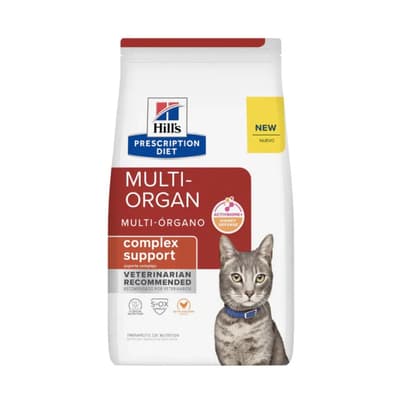
- Hill's Prescription Diet Cat Food k/d Early Support Multi-Organ Care Formula 4lbs (609528) — HK$329 (currently out of stock, available for pre-order)
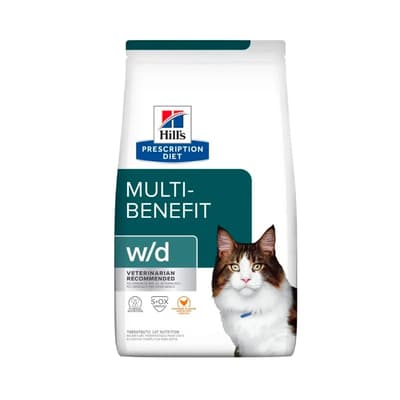
- Hill's Prescription Diet Cat Food w/d Multi-Benefit Management Formula 4lbs (6159) — HK$376 (currently out of stock, available for pre-order)
- Absolute Holistic Cat Food Grain-Free Complete Food Chicken + Hoki 500g (AD-6697) (Best Before 2026.11.23) — HK$173
Prices and stock are subject to the online store's current listed price.
To clarify the positioning of the above three products: k/d Early Support belongs to the renal care series and is consistent with a renal diet direction; w/d Multi-Benefit Management Formula is officially positioned more toward weight, fibre, and blood sugar management, and is not a renal formula; Absolute Holistic Grain-Free Complete Food is a general all-life-stage complete food, not a low-phosphorus or renal formula. If the cat has been diagnosed with kidney disease, the latter two should not replace the formula selected by the veterinarian, and you should check with the veterinarian again before buying.

Further Reading
- Pet Nutrition Guide | How to Choose Ingredients, Calories, and Prescription Foods (2026)
- Which Hydrolyzed Protein Cat Food Is Best? Comparison of Formulas for Sensitive Digestive Tracts
- Hong Kong Cat Food Recommendations: Budget, Channels, and Trial Strategies
- Cat Food Buying Guide: How Hong Kong Cat Owners Must Read Ingredient Lists
- Senior Cat Care Guide: Diet, Joints, and Regular Check-ups for Cats Over 7
In emergencies, contact a veterinarian immediately; this article is for reference only and cannot replace veterinary diagnosis.
Information checked as of 2026-10-12Source: PetChill editorial team
 Royal Canin full guide →
 Hill's full guide →

 Feline Natural full guide →