Quick Answers
- Hong Kong's veterinary hydrolyzed protein cat foods mainly come from 5 brands: Hill's Prescription Diet (z/d), Royal Canin (Hypoallergenic and AN24), Purina Pro Plan Veterinary Diets (HA), Virbac Veterinary HPM (Hypoallergy Cat A2), and Farmina Vet Life (UltraHypo).
- To judge whether hydrolysis is thorough enough, look at molecular weight: literature indicates the target average molecular weight should be below 10 kDa; Royal Canin AN24's official figure is that 99% of finished protein is below 6 kDa.
- Adverse food reactions require an elimination diet trial for diagnosis, with guidelines typically requiring a full 8 weeks; a review study indicates that extending to 8 weeks can lead to complete remission in over 90% of cats and dogs.
- Functional food is not the same as prescription food: N&D Quinoa Digestion lists hydrolyzed fish protein, but it is a daily hypoallergenic functional food, a different grade from the 5 prescription-grade hydrolyzed foods above.
- Transition foods using a 7- to 10-day gradual method, adding only 10% at a time; stop if stool softens, do not force it.
- Hydrolyzed protein tastes bitter; the same brand usually offers 2 forms: dry and wet; if refused, switch form first, then consider changing brand.
- Prescription-grade hydrolyzed food should be used under veterinary guidance, generally with an 8-week evaluation period; do not increase the dose, stop, or feed long-term without monitoring on your own.
The question "which hydrolyzed protein cat food is best" is not answered by a brand name, but by a decision chain: first diagnose, then choose the degree of hydrolysis, and finally match a formula the cat will eat.
Every major brand with a veterinary line actually has a hydrolyzed protein line. In the Hong Kong market, cat hydrolyzed protein formulas mainly come from 5 brands: Hill's Prescription Diet z/d, Royal Canin Hypoallergenic and AN24 Anallergenic, Purina Pro Plan Veterinary Diets HA, Virbac Veterinary HPM Hypoallergy Cat A2, and Farmina Vet Life UltraHypo. As for N&D, which many people mention casually, its Quinoa Functional Feline Digestion ingredient list does include hydrolyzed fish protein and hydrolyzed pork liver, but it is positioned as a daily functional food, a different grade from the prescription-grade hydrolyzed foods above. This article will not rank any brand, because "which is best" actually depends on the cause diagnosed by the vet, the cat's weight and taste, and whether you have other cats at home that need to eat together. Below, we will explain the principles of hydrolyzed protein, the formula differences among the 5 brands, the difference between hydrolyzed food and single novel protein food, how to conduct an 8-week elimination diet trial, and the questions to ask your vet before buying in Hong Kong.
What Is Hydrolyzed Protein? Why It Helps Sensitive Guts
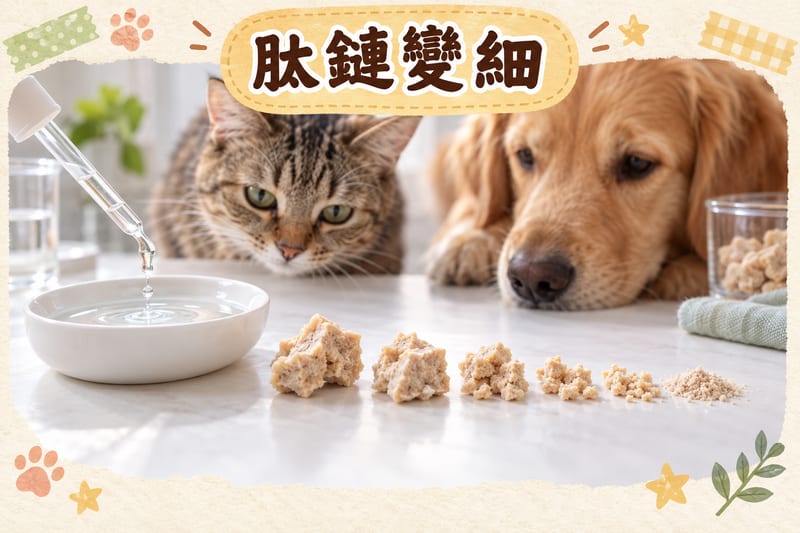
Hydrolysis uses enzymes, heat, or acid/alkali treatment to break complete proteins into short peptides and amino acids. The mechanism of food allergy is that the immune system recognizes a certain structure on the protein (antigen epitope); if broken down small enough, the antigen epitope is destroyed, the immune system "does not recognize" this protein, and the reaction naturally decreases. This is the biggest difference between hydrolyzed food and ordinary hypoallergenic food—not changing the protein source, but changing the size of the protein. Molecular weight is the most practical indicator, and the watershed for judging "whether hydrolysis is sufficient":
| Protein Form | Approximate Molecular Weight | Immune System Reaction | Common Examples |
|---|---|---|---|
| Complete protein | Above 50 kDa | Can trigger full allergic reaction | General chicken, fish foods |
| Partially hydrolyzed | 10 to 50 kDa | Reduced reaction, but still possible | Some daily foods labeled "hydrolyzed" |
| Highly hydrolyzed | Below 10 kDa | Very low reaction | Purina HA, Hill's z/d |
| Mainly amino acids | Below 1 kDa | Almost non-allergenic | Royal Canin AN24 |
Literature (Cave, Journal of Nutrition, 2006) indicates that the target average molecular weight of hydrolyzed food should be below 10 kDa. Some reviews also remind that the academic community has no unified threshold for "how small is truly hypoallergenic," but agrees that high hydrolysis is necessary; "partial hydrolysis" alone is insufficient for diagnostic use. There is also a practical trap to mention: a study using DNA and protein analysis to examine commercially labeled "highly hydrolyzed" products found that cross-contamination levels in some products were sufficient to affect the results of elimination diet trials (Veterinary Sciences, 2018). So "label says hydrolyzed" does not equal "certainly thorough enough"; choosing a line with published molecular weight data and clinical research support is safer. Also note that hydrolyzed and hypoallergenic are not completely equivalent. Hydrolysis mainly addresses protein allergenicity, but if the cat's problem comes from other ingredients, a formula designed with purified starch (e.g., purified rice starch) is needed to reduce other antigen sources.
Comparison of Cat Hydrolyzed Protein Formula Brands
The table below is organized by brand, hydrolyzed protein source, and official published key points, for you to compare with your vet; it does not represent order or superiority.
| Brand | Cat Line | Hydrolyzed Protein Source | Official Key Points | Form |
|---|---|---|---|---|
| Hill's Prescription Diet | z/d Skin/Food Sensitivities | Highly hydrolyzed single animal protein | Official: highly hydrolyzed with single carbohydrate (brewer's rice), soy-free, research suggests it helps avoid adverse food reactions | Dry, wet |
| Royal Canin | Hypoallergenic / Hydrolyzed Protein HP | Hydrolyzed soy protein isolate (about 23.5% in ingredient list) plus hydrolyzed poultry liver | Official: low molecular weight peptides, extremely low allergenicity | Dry |
| Royal Canin | AN24 Anallergenic | Feather protein hydrolysate | Official: 88% of protein source is pure amino acids, 99% of finished protein below 6 kDa | Dry |
| Purina Pro Plan Veterinary Diets | HA St/Ox Hypoallergenic | Hydrolyzed soy protein plus purified rice starch | Official: single hydrolyzed protein, low molecular weight; protein digestibility and overall digestibility over 90%, suitable for all life stages including kittens | Dry |
| Virbac Veterinary HPM | Hypoallergy Cat A2 | Hydrolyzed fish protein | Official: high protein, low carbohydrate design, mainly animal protein, can be used for elimination diet | Dry |
| Farmina Vet Life | UltraHypo Feline | Hydrolyzed fish protein plus rice starch | Official positioning as elimination diet (diagnostic use), also for chronic intestinal inflammation etc. | Dry, wet |
After reading the table, you may ask "which is strongest," but the answer is: all six have official data support; the difference lies in hydrolysis source, carbohydrate design, and palatability, not brand superiority. The hydrolysis source—soy, fish, feather, or poultry—depends on what the cat has been exposed to before; for example, a cat that has eaten fish food long-term would have reduced value from a fish hydrolyzed formula, and vets usually avoid the protein source the cat eats most. So "which is best" is actually "which suits your cat's exposure history." There is another easily confused point to clarify: Trovet's hydrolyzed protein formula is in the Intestinal line (dry), while its Hypoallergenic and Unique Protein lines use single animal protein; the mechanisms differ, so check the product name before buying—do not assume "hypoallergenic" means hydrolyzed.

How to Choose Between Hydrolyzed Protein Food and Single Novel Protein Food
Both approaches are used for adverse food reactions, but the thinking is completely different. Hydrolysis is "breaking down"; single novel protein (L.I.D.) is "switching to something unseen."
| Item | Hydrolyzed Protein Food | Single Novel Protein Food (L.I.D.) |
|---|---|---|
| Principle | Break protein into small pieces, destroying antigen epitopes | Use a complete protein the cat has never encountered, bypassing known allergens |
| Examples | Hill's z/d, Purina HA, Royal Canin Hypoallergenic and AN24, Virbac Hypoallergy A2 | Hill's d/d duck, venison with green pea formulas |
| Suitable for | Cats already exposed to multiple proteins, suspected food allergy, need high-spec diagnostic tool | First suspicion, need simpler solution, cat willing to eat complete protein |
| Limitations | Bitter taste, usually higher cost, hydrolysis degree varies among brands | Once the cat has eaten that protein before, the plan fails |
| Common practice | Paired with purified starch, all treats locked away | Paired with single carbohydrate source, also lock away treats |
In practice, vets consider three things: how many proteins the cat has eaten, whether symptoms are mainly skin or gut, and whether the owner can achieve 8 weeks of full lockdown. If multiple cats share bowls at home, hydrolyzed food is usually easier to implement than L.I.D., because you do not worry about other cats sneaking complete protein. Neither allows mixing food midway; once mixed, it is as if the trial was never done.
How to Conduct an 8-Week Elimination Diet Trial
Hydrolyzed protein food is not a "buy and try" product; it is a diagnostic tool. The process is usually:
- First rule out other causes: parasites, intestinal infections, thyroid or endocrine problems; do not assume food allergy before these are ruled out.
- Vet selects one hydrolyzed formula, calculates daily calories by weight and condition, feed at set times and amounts, no free feeding.
- Lock away all other foods: treats, human food, other cats' food, even some flavored medications, all must be confirmed by the vet. One sneaky feed means starting the 8 weeks over.
- Record weekly: stool shape, vomiting frequency, scratching frequency, skin condition; take photos, more reliable than memory.
- Evaluate after 8 weeks: if symptoms improve significantly, the vet will arrange a "re-challenge" test with the original food to confirm cause and effect.
- Only after diagnosis set a long-term plan: if no improvement after 8 weeks, re-evaluate; do not switch to a 3rd or 4th food or add medication on your own.
A systematic literature review indicates that extending the elimination diet trial to 8 weeks can lead to complete remission in over 90% of cats and dogs with adverse food reactions (related review in BMC Veterinary Research). This figure explains why vets do not tell you to stop after 3 days—judging too early easily misses a diagnosis.
Transition and Feeding Practice
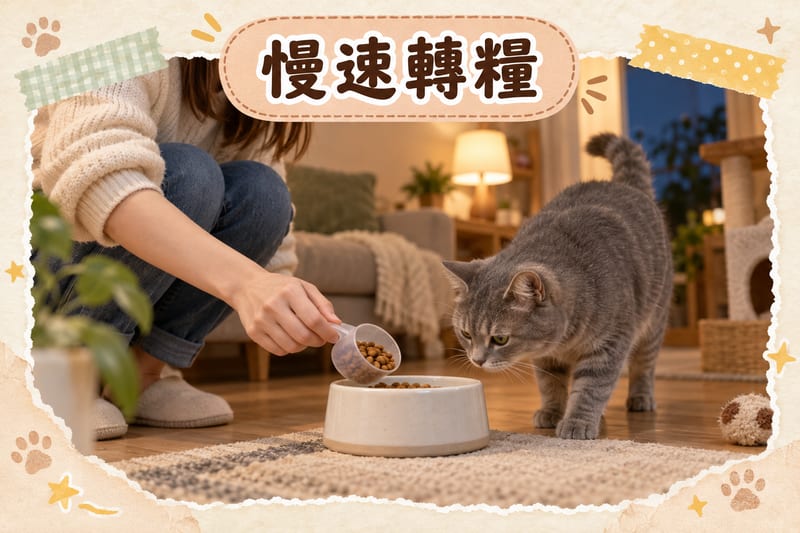
- 7- to 10-day gradual transition: change only 10% at a time; if stool is normal the next day, increase; if soft, stop and wait for firm stool before continuing.
- Bitter taste is normal: the higher the hydrolysis, the more pronounced the bitterness. Try slightly warm to near room temperature (do not use high heat), or switch to the wet version of the same brand.
- Do not delay if refused: if a cat eats nothing for over 24 to 48 hours, see a vet immediately; do not rely on "hunger will make it eat."
- Separate feeding in multi-cat homes: separate rooms, separate bowls, remove bowls immediately after eating; store other cats' food and treats out of reach.
- Do not adjust on your own: dosage, formula, duration—all follow veterinary instructions; if you think it is expensive or the cat refuses, discuss alternatives with your vet, do not switch yourself.
Buying in Hong Kong and Questions to Ask Your Vet
Hydrolyzed protein prescription food in Hong Kong mostly requires veterinary prescription or pre-order, not a general shelf product. Before ordering, bring these 5 questions to your vet:
- Are my cat's symptoms adverse food reaction, gastrointestinal disease, or skin disease? Is hydrolyzed food needed for diagnosis?
- Should we choose highly hydrolyzed (below 10 kDa) or single novel protein?
- Which hydrolysis source is safest (soy, fish, feather, or poultry)? Should we avoid the protein it eats most?
- During the 8-week trial, what treats and medications can I give?
- After a successful trial, is the long-term plan to continue hydrolyzed food, switch to L.I.D., or gradually try other proteins?
The following are related prescription and functional formulas currently available on PetChill's online store, to help you start; note that these are not hydrolyzed protein formulas, only related to gastrointestinal, kidney, or weight management, and actual use should be judged by a vet:
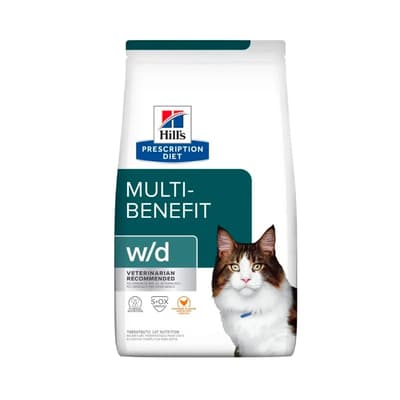
- Hill's Prescription Diet Cat Food w/d Multi-Benefit 4lbs (6159) — HK$376 (currently out of stock, available for pre-order)
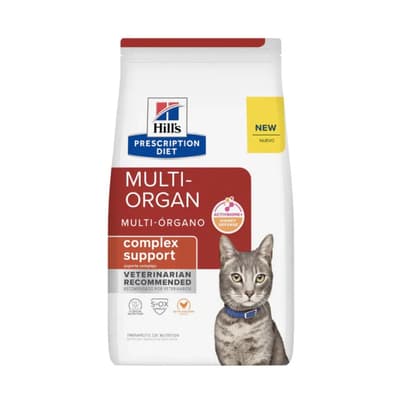
- Hill's Prescription Diet Cat Food k/d Early Support Multi-Organ Care 4lbs (609528) — HK$329 (currently out of stock, available for pre-order)
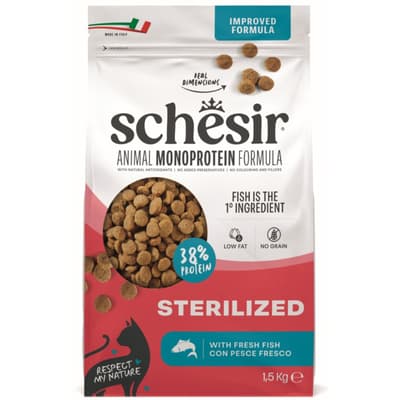
- Schesir Cat Food Neutered Weight Control Formula Fish 1.5kg (SCH13806) — HK$179 (currently out of stock, available for pre-order)
Prices and stock are subject to the online store's current listed price. True hydrolyzed protein prescription foods (e.g., Hill's z/d, Royal Canin Hypoallergenic and AN24, Purina HA, Virbac Hypoallergy A2, Farmina Vet Life UltraHypo) mostly require ordering through a vet or supplier; before ordering, check whether your cat is suitable.
Further Reading
- Pet Nutrition Guide | How to Choose Ingredients, Calories, and Prescription Food (2026)
- Cat Food Buying Guide: How Hong Kong Cat Owners Must Read Ingredient Lists
- Which Cat Food Is Best? Breakdown by Age, Weight, and Health Condition
- Hong Kong Cat Food Recommendations: Budget, Channels, and Food Trial Strategies
For emergencies, contact a vet immediately; this article is for reference only and cannot replace veterinary diagnosis.
Information checked as of 2026-10-12Source: PetChill Editorial Team
 Royal Canin full guide →
 Hill's full guide →

 Feline Natural full guide →