Quick answers
- Human foods fall into three categories: can be given in small amounts, handle with caution, and absolutely dangerous—each requires a completely different approach.
- Absolutely dangerous: allium foods such as onion, garlic and chives; grapes/raisins (including raisins and grape juice); alcohol; citrus peel and essential oils; milk and dairy products; and non-digestible items such as cotton, thread and plastic bags.
- Handle with caution: oats, pumpkin, blueberries, peas, pork liver, olive oil and concentrated green tea extract—only plain, in small amounts, occasionally, and never as a substitute for a main meal.
- After accidental ingestion of a dangerous item, there is only one principle: do not induce vomiting yourself, contact a veterinarian immediately, and have the packaging, estimated quantity and time of ingestion ready.
- Some poisoning symptoms are delayed; "looks fine right now" does not mean safe, so do not adopt a "wait and see overnight" attitude.
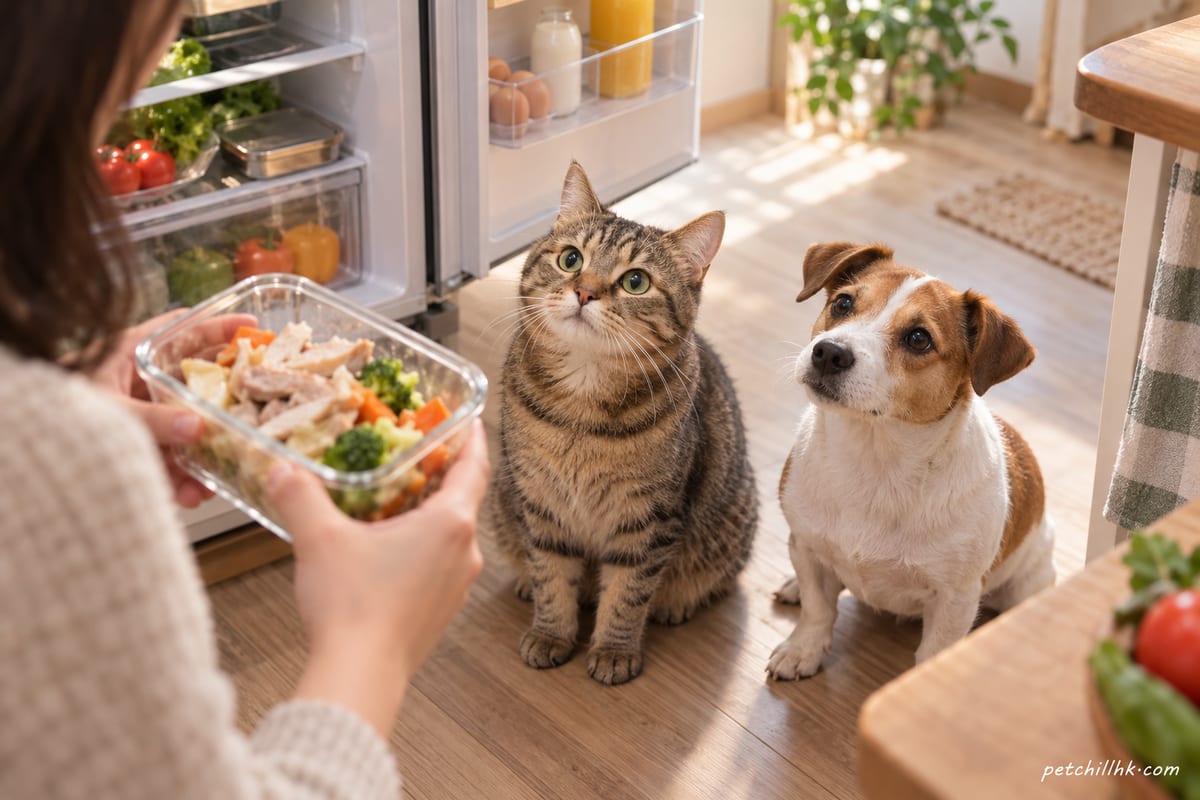
Hong Kong homes are small, and people share the same kitchen and dining table with cats and dogs, so the chance of accidental ingestion of human food is higher than you might think. Many owners assume that "it was fine last time" means it is safe, but food risk depends on body weight, quantity, processing method and even individual differences. For example, the same piece of onion might only cause stomach upset in a large dog, but in a small cat it can already affect red blood cells; and for grapes and raisins, the toxic mechanism is not fully understood—only that they damage the kidneys—so the safest approach is not to try at all.
Below is a three-category summary table, then a breakdown of dangerous foods, foods that need caution, and finally emergency principles after accidental ingestion and home protection. This article only covers handling principles and when to seek veterinary care; it does not provide any dosage or self-medication advice—those must be decided by a veterinarian.
Three-category food table: small amounts, caution, absolutely dangerous
| Category | Examples (human food) | Main risks | Handling principle |
|---|---|---|---|
| Can be given in small amounts | Steamed pumpkin, unsweetened oats, blueberries (cut), plain cooked chicken breast, plain yoghurt (small amount) | Too much causes gastrointestinal upset, excess calories, nutritional imbalance | Plain, no salt, sugar or seasoning; treat only, not a meal replacement |
| Handle with caution | Peas, pork liver, olive oil, green tea extract, nut butter, cheese | High fat, high vitamin A, processed additives, caffeine or concentrated ingredients | Small amounts, occasional, plain; ask a vet before long-term feeding |
| Absolutely dangerous | Onion, garlic, chives, spring onion, shallot, garlic powder and onion powder, grapes/raisins, raisins, alcohol, citrus peel and essential oils, milk, cotton, thread, plastic bags | Damage red blood cells, kidney damage, affect central nervous system, gastrointestinal irritation, intestinal obstruction or suffocation | Do not feed; if ingested, treat as an emergency, do not induce vomiting, contact a vet immediately |
Remember two key concepts: first, risk is related to body weight—the same amount is a much greater burden on a small animal; second, processing changes the risk—for example, fresh garlic versus concentrated garlic powder, the latter can be many times more concentrated. So the table is only a starting point; actual situations must be assessed by a veterinarian.
Absolutely dangerous (1): onion, garlic, chives and other allium foods
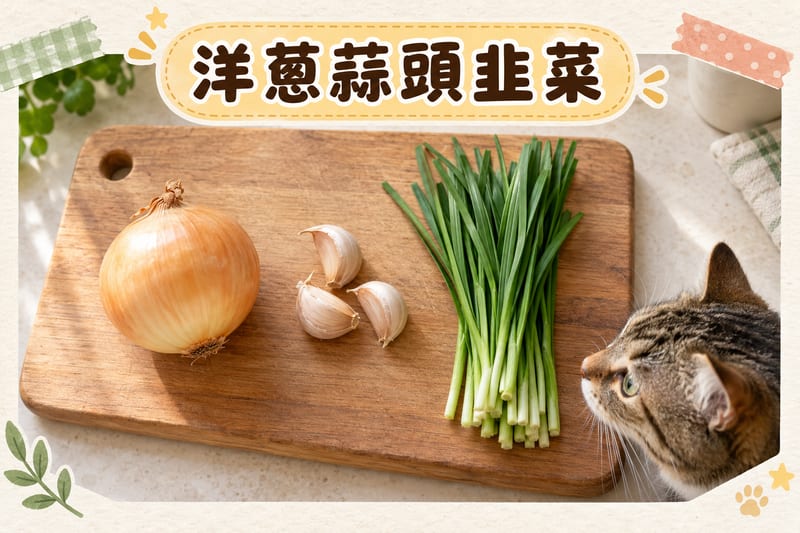
Onion, garlic, chives, spring onion, shallot, yellow chives and garlic sprouts are all allium foods; red shallots and some spices are also related. These contain sulphur compounds that damage red blood cells, causing haemolytic anaemia. Both cats and dogs are affected, and cats are generally considered at higher risk.
The easiest to miss are "hidden sources": soup bases, braising liquid, meatballs, sausages, dumpling fillings, canned soup, instant noodle seasoning packets, baby food, dog biscuit recipes, and even some homemade pet food recipes include garlic powder or onion powder. Powdered and concentrated forms usually carry higher risk than fresh chopped, because the concentration is higher and the amount is hard to estimate.
Symptoms may appear immediately or may be delayed for one to several days, including lethargy, weakness, pale gums, rapid breathing, dark urine, loss of appetite, vomiting or diarrhoea. Because symptoms can be delayed, even if your pet seems fine after ingestion, you should contact a veterinarian to decide whether blood tests are needed. Do not induce vomiting yourself, and do not feed any "antidote" food.
Absolutely dangerous (2): grapes/raisins, alcohol, citrus and milk
Grapes/raisins: including fresh grapes, raisins, grape juice, raisin bread and raisin oatmeal. These are nephrotoxic to cats and dogs and can damage the kidneys, but the toxic mechanism is still not fully understood and no "safe amount" has been found. Some animals are affected by small amounts, others react only to larger amounts; individual differences are large, so the safest approach is not to feed at all. Watch for vomiting, loss of appetite, lethargy, and changes in drinking and urine output.
Alcohol: not just alcoholic drinks. Fermenting bread dough, alcoholic desserts, liqueur chocolates, some sauces and mouthwash, and alcohol hand sanitiser all contain alcohol. Alcohol affects the central nervous system, blood sugar and body temperature, and even very small amounts can cause problems. Takeaway drunken chicken, fermented rice balls and red wine braised meat are all high-risk foods.
Citrus: the peel, leaves, stems and essential oils of lemon, orange, mandarin, grapefruit and pomelo contain irritating compounds that irritate the skin and gastrointestinal tract. Citrus essential oils used in diffusers pose a higher risk to cats because cats have limited ability to metabolise these compounds. A small amount of flesh is generally not an emergency, but the sweet-sour taste and fibre can easily cause gastrointestinal upset, so it is not recommended as a treat.
Milk and dairy: many adult cats and dogs are lactose intolerant and will develop diarrhoea, gas and vomiting after drinking milk or eating large amounts of dairy. Milk is also not an ideal food for cats; long-term use as a substitute for water or main food will cause nutritional imbalance. Kittens should drink mother's milk or kitten formula, not human milk.
| Food | Common hidden sources | Main risks | What to do |
|---|---|---|---|
| Grapes/raisins | Raisins, grape juice, raisin bread, mixed nuts | Kidney damage, mechanism not fully understood, no recognised safe amount | Never feed; if ingested, contact a vet immediately |
| Alcohol | Fermenting dough, fermented rice, drunken chicken, alcoholic desserts, mouthwash, hand sanitiser | Affects central nervous system, blood sugar and body temperature | Never feed; treat ingestion as an emergency |
| Citrus | Peel, leaves, essential oils, diffuser products, jam | Irritates skin and gastrointestinal tract; essential oils higher risk | Do not feed flesh either; keep essential oils away from pets |
| Milk | Fresh milk, milkshakes, ice cream, some cheese | Lactose intolerance causes diarrhoea, gas, vomiting | Do not use milk as a substitute for water or main food; use kitten formula for kittens |
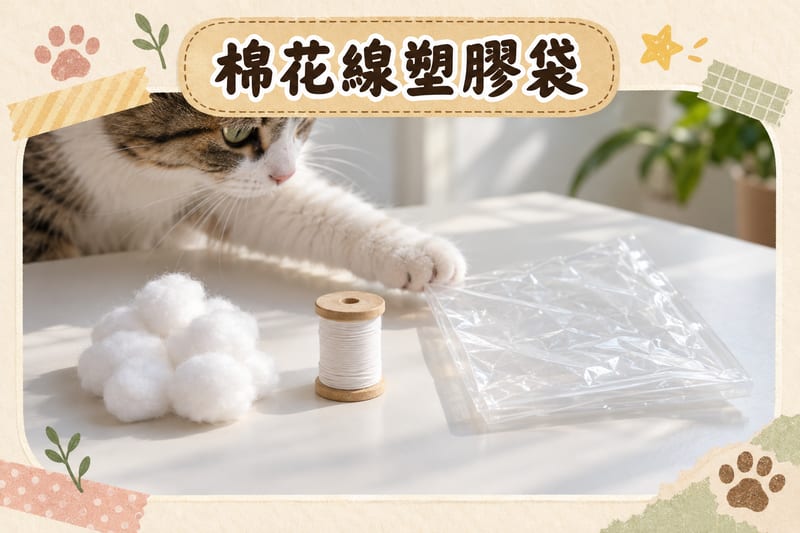
Absolutely dangerous (3): cotton, thread, plastic bags and other non-digestible items
This category is not "food", but it is a common cause of veterinary emergencies, and many cat and dog homes have these items.
- Cotton, cotton pads, cotton swabs, gauze, adhesive bandages: not digestible, may accumulate in the stomach or intestines and cause obstruction.
- Thread, string, yarn, fishing line, ribbon, foam cord: the most dangerous "linear foreign bodies"; once one end is caught in the intestine, the intestine contracts with peristalsis and may be cut or perforated.
- Plastic bags, packaging film, cling film, aluminium foil: may cause obstruction; also watch for food odour and oil residue on bags that attract cats and dogs to lick. Plastic bags over the head can also cause suffocation.
- Rubber, foam, slipper fragments, toy fragments: also non-digestible, and sharp shapes are more dangerous.
Common symptoms include repeated vomiting, loss of appetite, lethargy, abdominal bloating or pain when touched, drooling, no bowel movements or diarrhoea, and vomiting of foreign material fragments. In these cases do not wait: go to the vet clinic immediately, do not induce vomiting yourself (inducing vomiting with linear objects may further cut the intestine), and do not pull on any thread that is half-swallowed. Bring the remaining object and packaging so the vet can assess material and size.
Handle with caution: oats, pumpkin, blueberries, peas, pork liver, olive oil
These foods are not "toxic", but that does not mean they can be fed freely. The common principles are: plain, no salt, no sugar, no seasoning powder, cut small, small amount at a time, and treats only—never a substitute for a main meal.
- Oats: must be cooked, unsweetened and unseasoned. Contains dietary fibre, but cats have a low carbohydrate requirement; oats cannot replace a meat-based main meal, and long-term large amounts will skew the nutritional ratio. Instant sweetened oatmeal usually contains added sugar and flavouring and is not suitable.
- Pumpkin: steamed or baked, mashed, unsweetened and unspiced. A small amount of fibre can help with bowel movements, but pumpkin pie filling and pumpkin soup (usually with onion, garlic and salt) are not allowed. For canned pumpkin, check the ingredient list for added sugar.
- Blueberries: washed, stemmed, cut, unsweetened and unprocessed. Too many may cause gastrointestinal upset or soft stool; dried blueberries and blueberry jam usually contain added sugar and some contain xylitol, which is harmful to dogs, so never feed. For a first try, offer only one or two small pieces and observe for 24 hours for vomiting, soft stool or itching.
- Peas: a non-essential food. A small amount of plain, unsalted, oil-free peas is generally not a problem, but too much can cause gas, soft stool or diarrhoea; pea shoots, stir-fried peas and pea soup usually contain garlic and onion, so they must not be fed.
- Pork liver: liver contains high concentrations of vitamin A and copper; long-term or frequent large amounts accumulate and may cause vitamin A toxicity, affecting bones and liver. Must be thoroughly cooked, unseasoned, and not suitable as a main food.
- Olive oil: a small amount of plain olive oil can be mixed into food, but too much causes diarrhoea and adds calories. Do not use it as a self-administered laxative; if your pet has constipation, consult a veterinarian first. (See Cat constipation management and daily prevention)
- Concentrated green tea extract: completely different from drinking a cup of weak green tea; concentrated extract contains caffeine and high levels of catechins and should not be given on your own. Any supplement should be discussed with a veterinarian first. (Further reading: How to choose pet vitamins and supplements)
| Food | Version that can be given in small amounts | Watch out for | Version that must never be fed |
|---|---|---|---|
| Oats | Cooked, unsweetened, unseasoned plain oats | Carbohydrate ratio, risk of replacing main meal | Instant sweetened oatmeal, products with milk and sugar |
| Pumpkin | Steamed and mashed, unsweetened, unspiced | Quantity, canned ingredient list | Pumpkin pie filling, pumpkin soup with onion and garlic |
| Blueberries | Fresh blueberries washed, stemmed and cut | Sugar content, one or two small pieces at a time | Dried blueberries, blueberry jam, products with xylitol |
| Peas | Plain, unsalted, oil-free, small amount | Gas and soft stool | Pea shoots, stir-fried peas, pea soup |
| Pork liver | Thoroughly cooked, unseasoned, occasional small amount | Vitamin A and copper accumulation | Long-term large amounts, braised or soy-marinated pork liver |
| Olive oil | Small amount of plain oil mixed into food | Calories and diarrhoea | Self-administered as a laxative, large amounts poured in |
Emergency principles after accidental ingestion: do not induce vomiting, contact a vet immediately
This section is the most important part of the article. Whether the ingested item is onion, grapes, alcohol, or cotton, thread and plastic bags, the principles are the same:
- Separate immediately: move remaining food, packaging and vomit away from the pet to prevent further eating. Do not force water or milk to "wash it out".
- Do not induce vomiting yourself: inducing vomiting may cause secondary harm, such as sharp objects scratching the oesophagus, chemical burns, or linear objects cutting the intestine. Whether to induce vomiting must be decided by a veterinarian.
- Do not self-administer medication, oil or activated charcoal: these may interfere with the vet's assessment and treatment.
- Call a veterinarian or 24-hour emergency clinic immediately: clearly state "what was eaten, approximately how much, what time, approximate pet weight, and any symptoms".
- Prepare information to take to the clinic: food packaging or label, vomit sample, pet medical history and medication records, names of usual food and treats.
- Care on the way: keep quiet and warm, watch breathing, consciousness and gum colour. If the pet has seizures, difficulty breathing or loses consciousness, leave immediately.
| Information to give the vet | Specifics | Why it matters |
|---|---|---|
| What was eaten | Food name, brand, packaging label, ingredient list | Determine toxic components and concentration |
| Approximate quantity | Use specific descriptions like "how many pieces/slices/half a packet" | Risk is related to body weight; quantity is key |
| Time of occurrence | What time eaten, when discovered, whether eaten again | Determine the time window for symptoms |
| Pet details | Weight, age, chronic illness or current medication | Affects risk assessment and handling |
| Current symptoms | Number of vomits, energy, bowel movements, breathing, gum colour | Determine whether poisoning has already occurred |
How to distinguish "seek vet immediately" from "continue observing"?
Treat the following as emergencies without waiting: repeated vomiting or vomiting blood, bloody diarrhoea or black stool, pale gums, rapid breathing or open-mouth breathing, seizures, unsteady standing or staggering, excessive drooling, hard or painful abdomen or not allowing touch, lethargy and unresponsiveness, no bowel movements, abnormal body temperature, ingestion of grapes/raisins, alcohol, allium foods or foreign objects.
Conversely, "continue observing" only applies when a veterinarian has already assessed the situation and instructed you to observe at home, for example after eating a small piece of plain pumpkin with no abnormalities. During observation, watch energy, appetite, drinking, bowel movements and timing; if any of the above occurs, seek veterinary care immediately.
Also note: delayed symptoms are common, especially with allium foods and grapes/raisins. So "nothing happened a few hours after eating" does not mean you can relax; follow veterinary instructions, such as scheduled rechecks or blood tests. (Further reading: Pet annual health check guide)
Hong Kong home protection: placement, food waste, outings and family communication
- Cover food waste: bins should have lids; food waste bags should not be left at pet height.
- Do not put allium foods on the floor: many families keep onions, garlic and potatoes in baskets or cardboard boxes on the kitchen floor, where cats and dogs can easily bite them.
- Store raisins and nuts safely: these snacks are often kept in low cabinets or on coffee tables, which are high-risk locations.
- Do not leave shopping bags around: plastic bags, packaging film and takeaway bags should be put away immediately, not left on the floor.
- Store thread and cotton: sewing boxes, cotton pads, cotton swabs and bag ties should all go in lidded drawers.
- Extra care during festivals: during Mid-Autumn, Lunar New Year, Christmas and birthday parties, food and alcohol are concentrated; guests are most likely to feed pets casually.
- Tell family and domestic helpers clearly: post a "do not feed" list on the fridge door, including grapes, chocolate, alcohol, onion and garlic, and milk.
- Record emergency information: write your vet clinic and local 24-hour emergency clinic contacts on the fridge door or phone notes so you are not searching in a panic.
To reward your pet, the safest approach is to use pet-specific treats and complete wet food rather than human food. Here are examples to consider:
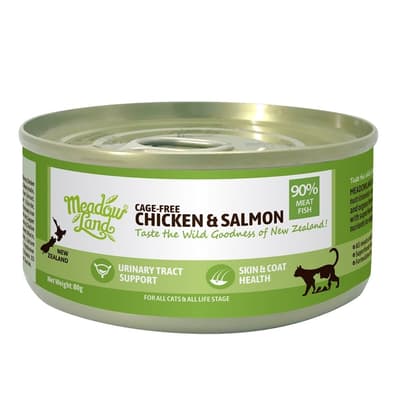
- Meadowland Cat Canned Food Complete Wet Food for Cats Classic Pâté Series Chicken + King Salmon 80g — HK$18. Prices and stock are subject to the online store's current listed price.
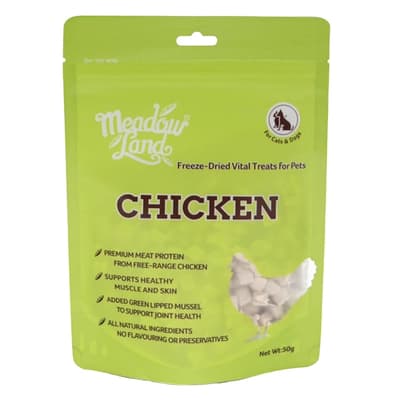
- Meadowland Cat and Dog Treats Freeze-Dried Chicken 50g — HK$55. Prices and stock are subject to the online store's current listed price.
- CIAO Cat Treats Japan INABA Churu Spoon Tuna 14g×3P — HK$15. Prices and stock are subject to the online store's current listed price.
Further reading
- Complete cat and dog nutrition guide: main food, treats and weight management
- Complete guide to cat and dog digestive health
- Causes and management of vomiting in cats
- Pet medication safety essentials
- Guide to itchy skin and allergies in cats and dogs
Veterinary warning: In an emergency, contact a veterinarian immediately; this article is for reference only and cannot replace veterinary diagnosis. Information checked as of 2026-10-13Source: PetChill editorial team