Quick answers
- Cat litter-related reactions fall into 2 categories: immune system 'allergy' and dust/fragrance 'irritation' — symptoms look similar but are handled differently.
- At least 6 ingredient types are worth noting: bentonite dust, fragrance, deodorizing beads and baking soda, pine litter volatiles, crystal litter particles, and soy protein in tofu litter.
- 3 most typical signs: fur loss on the chin and neck, sneezing more than 5 to 10 times a day, and immediate paw licking and scratching after leaving the litter box.
- The troubleshooting method is 'change only one variable at a time', observing continuously for 14 to 21 days after switching litter, and recording symptom changes daily.
- Switching rhythm: 4 stages, adding 25% new litter each stage, about 14 days in total — don't switch all at once.
- If there is noisy breathing, open-mouth breathing, facial ulcers, or more than 5% weight loss within 4 weeks, don't wait — see a veterinarian immediately.
The answer to 'How can I tell if my cat is allergic to cat litter ingredients?' is not a blood test but an orderly elimination process: first, look at the relationship between symptoms and 'contact time' — that is, whether symptoms always appear after pouring or scooping litter or after the cat leaves the litter box; second, rule out other more common allergens, including food, fleas, and environmental dust mites; third, do a single-variable litter switching test, confirmed over 14 to 21 days. After these three steps, you can basically tell whether it's a cat litter ingredient problem or whether the direction isn't cat litter at all.
If your cat only sneezes occasionally and its skin is completely normal, most likely no action is needed. What really needs follow-up is 'the same set of symptoms recurring, with a clear time relationship to the litter box, and improvement after switching litter'. This article will first clarify the difference between allergy and irritation, then use tables to list the risks and alternative directions for 6 common cat litter ingredients, 7 signs to watch for, 5 steps for home self-check, a 14-day gradual litter switching schedule, and finally 5 veterinary warning signs that shouldn't be waited on. The whole article takes the perspective of ingredient and environmental troubleshooting; if you want to first see how to read nutrition and ingredient labels, you can refer to Pet Nutrition Guide | How to Choose Ingredients, Calories, and Prescription Food (2026).
Cat litter ingredient reactions: true allergy or dust irritation?
'Allergy' and 'irritation' are two different things, but owners easily confuse them. Allergy is an abnormal immune system response to an ingredient, which can be inhalant (dust particles, mold spores, fragrance molecules) or contact (litter particles staying against the chin, belly, paw pads for long periods). Irritation does not involve immune memory; it is purely dust particles rubbing the nasal mucosa, chemicals in fragrances and deodorizers irritating the skin, or sharp edges of litter scratching the paw pads. The symptoms can look similar, but the handling differs: irritation usually improves with 'reducing exposure', while allergy may require completely avoiding the ingredient and possibly veterinary intervention.
Cat litter is particularly prone to problems because it involves 'inhalation + contact' dual-route exposure. Pouring and scooping litter kicks up dust, and when cats crouch to sniff and dig, their faces are only a few centimeters from the litter surface; at the same time, litter particles stick to the abdomen, inner hind legs, and paw pads, and licking paws immediately after leaving the box means ingesting litter particles and whatever is attached. So the same litter can cause both respiratory and skin symptoms.
Timing is the best clue. If symptoms appear within 15 to 30 minutes after pouring or scooping litter (sneezing, runny nose, watery eyes), it's mostly inhalant irritation; if redness on the chin or fur loss on the neck appears hours to 1 to 2 days after contact, it's mostly a contact reaction; if symptoms are year-round and completely unrelated to litter changes, focus on food and environmental allergens. Some cats are at higher risk: short-nosed breeds (Persian, Exotic Shorthair), cats with a history of feline asthma, cats with skin barrier problems or a history of miliary dermatitis, and kittens and senior cats. These cats have inherently fragile skin and respiratory tracts; you can refer to Cat and Dog Skin Health Guide | Itching, Fur Loss, Rashes, Fungus All in One (2026) to address underlying skin issues first, then deal with litter factors.
One point to clarify: clinically, 'true allergy' caused by cat litter is not the most common; rather, dust and fragrance irritation, litter box hygiene problems, and cats' preference for litter texture account for most cases. So the first step is not to buy the most expensive litter, but to distinguish which category it is and treat accordingly.
6 common cat litter ingredients and allergy risk comparison
The table below is organized by ingredient type so you can check each item against the ingredient list on the bag you have. Remember the table is an aid to judgment and cannot replace veterinary examination.
| Ingredient/Type | Commonly found in | Possible reactions in sensitive cats | Alternative directions to consider |
|---|---|---|---|
| Sodium bentonite (clumping clay litter) dust | Most clumping clay litters | Sneezing, runny nose, conjunctivitis, red itchy paw pads | Clay litter labeled low-dust or dust-treated; larger particles have less dust |
| Fragrance/perfume | Scented cat litter, deodorizing litter | Respiratory irritation, red itchy skin, litter box refusal | Choose unscented formulas; leave odor control to daily scooping |
| Deodorizing beads, baking soda granules | Additive deodorizing products, litter box bottom layer | Contact dermatitis on paw pads, risk of ingestion | No deodorizing beads; instead scoop daily and change all litter regularly |
| Pine, wood volatiles | Wood pellet litter, wood shaving bedding | Respiratory irritation; asthmatic cats more likely to react | High-temperature processed pellet wood litter, or switch to paper litter |
| Silica particles (crystal litter) | Crystal litter | Dust irritation, risk of ingestion | Larger-particle crystal litter, or switch to other materials |
| Legumes, plant protein (pea fiber, corn starch, etc.) | Tofu litter, plant litter | A few cats sensitive to plant protein; odor changes after absorbing moisture, prone to mold | Switch to another plant material, or switch to clay litter |
| Recycled paper (paper litter) | Paper litter, paper pellet bedding | Lower dust; some cats dislike the texture | A low-dust option, can be used as a control litter |
When reading ingredient lists, pay special attention to 3 points. First, fragrances and deodorizers are usually written as 'perfume', 'fragrance', or specific scent names, not directly as 'allergens', so you need to actively choose 'unscented'. Second, dust amount is usually not labeled; the most practical method is to see how much dust rises when pouring litter, or after pouring litter into the box, gently stir with your hand and observe dust within 30 seconds. Third, Hong Kong's humid weather means plant litters like tofu and corn litter easily clump and mold after absorbing moisture; mold spores themselves are common allergens, so after opening, be sure to store sealed and not in a bathroom corner. If the litter box itself already smells and the litter layer is not changed for long periods, the problem is often not the ingredients but cleaning frequency.

7 signs to watch for: skin, respiratory, and behavioral
'Discomfort' can manifest very differently. The table below organizes the 7 most noteworthy signs by location, and indicates when they are most obvious, to help you judge whether it's inhalant or contact.
| Sign | Specific manifestation | Most obvious when | Points to |
|---|---|---|---|
| Sneezing, runny nose | Continuous sneezing, nasal discharge clear or blood-tinged | 15 to 30 minutes after pouring or scooping litter | Inhalant irritation |
| Red eyes, watery eyes, frequent blinking | Conjunctiva red, increased eye discharge | Same as above | Inhalant irritation |
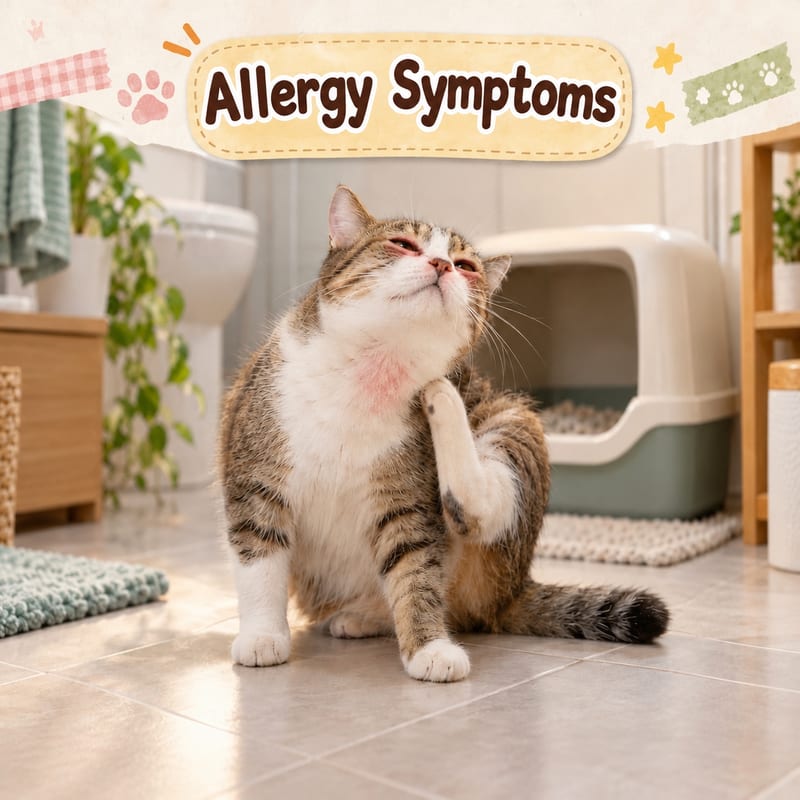
| Red rash and fur loss on chin, neck, abdomen | Skin turns red, fur thins, small scabs in severe cases | 1 to 2 days after continuous contact | Contact reaction |
| Red swollen paw pads, excessive paw licking | Licks paws immediately after leaving litter box, paw pads red | After each litter box use | Contact irritation |
| Small scabs on neck and back (miliary dermatitis) | Small scabs felt by touch, cat scratches frequently | Lasts for weeks | Allergic tendency, also common in food allergy |
| Litter box refusal, elimination outside box | Rushes out after using litter, scratches box edges, uses other corners | Every toileting | Discomfort reaction, needs immediate attention |
| Coughing, noisy breathing, open-mouth breathing | Crouches with neck extended, labored breathing | At rest or just after using litter box | Warning sign, see veterinarian immediately |
In the table above, behavioral signals are most easily misunderstood as 'being naughty' or 'throwing a tantrum'. Cats don't express discomfort verbally; if your cat used the box fine before and suddenly refuses to enter, scratches the edge for ages without crouching, or dashes out and licks paws frantically after leaving, it mostly means pain or irritation during toileting. Cleaning the litter box and switching litter is not 'spoiling' but the first step in addressing the problem.
Also remember an important fact: these 7 signs are not necessarily caused by cat litter. Food allergy can also cause chin and neck fur loss and miliary dermatitis; fleas, dust mites, and pollen can also cause similar itching; severe respiratory problems may be feline asthma itself. So the troubleshooting order is usually: first confirm the underlying condition of skin and respiratory tract, then simultaneously review cat litter, diet, and environment. If symptoms are accompanied by weight loss or appetite changes, consider dietary and metabolic factors; you can also refer to Cat Weight Loss Diet | Essential for Hong Kong Cat Owners: RER × 0.8 Calorie Calculation + Safe Weight Loss Rhythm and Orijen Cat Food Review 2026 | Hong Kong Price, Ingredient Pros and Cons Full Analysis to see exactly what your cat eats daily from the ingredient list perspective.
5 steps for home self-check: 14- to 21-day elimination method
If symptoms are mild and spirit and appetite are normal, you can first do a home check. The key to the following 5 steps is 'controlling variables', not 'trying several more litters'. Many owners switch 3 litters in a week and end up unable to tell which one is the problem, delaying veterinary care.
Step 1: Record a 3-day baseline. For 3 consecutive days, write down: daily sneeze count, whether there is watery eyes, locations of skin problems (phone photos are most accurate), how many times the litter box is used per day, and whether elimination outside the box occurs. Also photograph the ingredient list and batch number of the current cat litter packaging for future reference. This record is the comparison basis for the whole troubleshooting; without it there is no comparison.
Step 2: Change only one variable at a time. After deciding to switch litter, keep the litter box, location, litter depth, diet, treats, and cleaning products all unchanged. Also pause other 'by the way' changes, such as adding new supplements, changing food, or changing shampoo. The reason is simple: if you change two things, you won't know which one helped.
Step 3: Choose a control litter. Prioritize unscented, lower-dust formulas: larger-particle clay litter, dust-treated clumping litter, or paper litter. If you were using scented litter, the first step is actually just switching to an 'unscented version' without changing material. Do this for 7 days and see if symptoms change initially.
Step 4: Observe continuously for 14 to 21 days and record quantitatively. Don't just write 'better'; write numbers: sneezes drop from 8 to 2 per day, scratching drops from 4 to 1 per hour, litter box use returns to normal. Numbers are the only evidence you can present to a veterinarian. Normally, if the cause is truly cat litter, symptoms will start to improve noticeably from day 5 to 10.
Step 5: Retrospective confirmation. If there is clear improvement, switch back to the original litter for 3 to 5 days (location, diet, litter box all unchanged); if symptoms return, the ingredient is basically confirmed. If there is no difference at all, change direction: consider food elimination trials, environmental allergens, and veterinary examination (skin scraping, ear canal or skin cytology, parasite checks, etc.). Repeatedly switching litter without symptom change is the most typical 'wrong direction' signal.
During troubleshooting, don't do two things: first, don't give antihistamines, steroids, or human medications on your own; second, don't stop veterinarian-prescribed medication on your own just because symptoms improve — stopping or adjusting medication must follow veterinary instructions.
How to switch litter: 14-day gradual schedule
After identifying the problem, switch litter gradually. Cats are very sensitive to litter texture, smell, and feel underfoot; switching all at once often leads to litter box refusal and elimination outside the box, making it hard to even see whether 'skin and respiratory symptoms have improved'.
| Stage | Days | Old/new litter ratio | What to watch |
|---|---|---|---|
| Stage 1 | Days 1 to 3 | 75% old litter + 25% new litter | Mix evenly and put back in original location, watch for refusal |
| Stage 2 | Days 4 to 7 | 50% each | Record sneeze count, scratching, litter box use count |
| Stage 3 | Days 8 to 11 | 75% new litter | If symptoms worsen, go back to previous stage and observe for 3 days |
| Stage 4 | Days 12 to 14 | 100% new litter | Keep a small bag of old litter for 3- to 5-day retrospective confirmation |
| Observation period | Days 15 to 21 | All new litter | Confirm stability, watch for any new symptoms |
During the switch, note 5 more points. First, don't change the litter box and location at the same time, especially in multi-cat households; a location change can trigger territorial conflict. To reduce litter box and litter problems, the most basic work is a fixed cleaning schedule: scoop at least 1 to 2 times daily, completely change litter and wash the box every 2 to 4 weeks; for the rhythm of daily care like grooming and cleaning ears and eyes, refer to Cat and Dog Daily Care Guide | Grooming, Bathing, Nail Trimming, Ear and Eye Cleaning Schedule (2026). Second, for clumping litter, keep the litter layer 5 to 7 cm deep; too thin sticks to the bottom, too thick increases dust. Third, the number of litter boxes should ideally be 'number of cats plus one', e.g., 3 boxes for 2 cats, placed separately, away from food and sleeping areas. Fourth, pour litter slowly and close to the surface to greatly reduce dust; adding an exhaust fan near the litter box or opening windows for 15 minutes daily also helps. Fifth, if the cat has a history of asthma, covered litter boxes trap dust and odor; generally recommend switching to uncovered boxes and placing them in a ventilated spot.
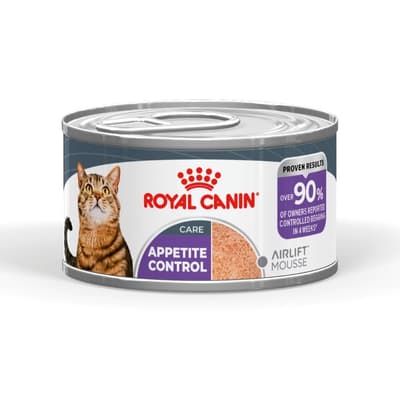
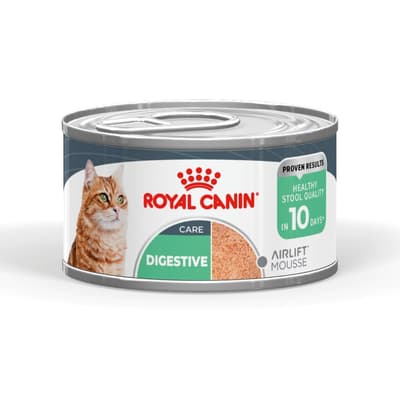
If symptoms persist after ruling out cat litter, the next step is diet. Veterinarians generally arrange an 8- to 12-week dietary elimination trial, during which no treats or human food can be given, and strict records must be kept. Below are daily staple food options available at PetChill's online store; these are general staple products, not 'anti-allergy' or therapeutic uses — confirm protein sources and your cat's actual situation with your veterinarian before choosing:
- Royal Canin AIRLIFT Cat Wet Food Adult Hairball Care 85g (4240700) — HK$24
- Royal Canin AIRLIFT Cat Wet Food Adult Digestive Care 85g (4241300) — HK$24
- Absolute Holistic Cat Food Grain-Free Staple Chicken + Hoki 500g (AD-6697) (Best Before 2026.11.23) — HK$173.6
Prices and stock are subject to the online store's current listed prices.
When to see a veterinarian immediately and daily prevention
In the following 5 situations, don't wait, and don't try the elimination method for weeks first: 1) open-mouth breathing, noisy breathing, or crouching with neck extended; 2) ulcers or oozing on the face, mouth area, or nose bridge; 3) more than 5% weight loss within 4 weeks; 4) whole-body fur loss, skin pus, or the cat unable to eat or sleep well due to itching; 5) coughing and breathing changes in kittens, senior cats, or cats known to have feline asthma. These may be asthma, infection, or other diseases, and are outside the scope of home troubleshooting.
Daily prevention is actually not complicated; focus on reducing exposure and keeping the environment stable: choose unscented, lower-dust cat litter; scoop 1 to 2 times daily; completely change litter and wash the box every 2 to 4 weeks with water or neutral detergent, avoiding bleach odor residue; keep the litter box away from food, water bowls, and sleeping areas; keep the litter box area ventilated; store new litter sealed after opening to avoid moisture and mold. Finally, adult cats are recommended to have an annual physical examination, more frequently after age 7; chronic skin and respiratory problems are often discovered during routine check-ups.

Further reading
- Pet Nutrition Guide | How to Choose Ingredients, Calories, and Prescription Food (2026)
- Cat and Dog Skin Health Guide | Itching, Fur Loss, Rashes, Fungus All in One (2026)
- Cat Weight Loss Diet | Essential for Hong Kong Cat Owners: RER × 0.8 Calorie Calculation + Safe Weight Loss Rhythm
- Orijen Cat Food Review 2026 | Hong Kong Price, Ingredient Pros and Cons Full Analysis
For emergencies, contact a veterinarian immediately; this article is for reference only and cannot replace veterinary diagnosis.
Information checked as of 2026-10-12 · Source: PetChill Editorial Team
 Royal Canin full guide →

 Fuji One full guide →


 Orijen full guide →